A heat pump is easy to describe and easy to buy badly. It moves heat instead of making heat directly, which is why a well-designed system can heat and cool with impressive efficiency. The equipment is only one part of that result, though. A heat pump lives inside a house, and the house decides how hard the system has to work.
The common mistake is treating a heat pump like a boxed appliance: choose a brand, choose a size, schedule the swap, and expect comfort to improve. In reality, it is an HVAC system tied to climate, insulation, air leakage, ductwork, room-by-room loads, thermostat behavior, and the backup heat plan. The best proposal reads less like a receipt and more like a design response to a specific building.
Climate and sizing
Start with your coldest ordinary weather, not the average winter day. A modern cold-climate heat pump may be able to serve a home in places where older equipment struggled, but it still needs to be selected for the local design temperature. At that temperature, the installer should be able to explain how much heat the unit can deliver, how efficiently it will run, and when any backup heat would take over.
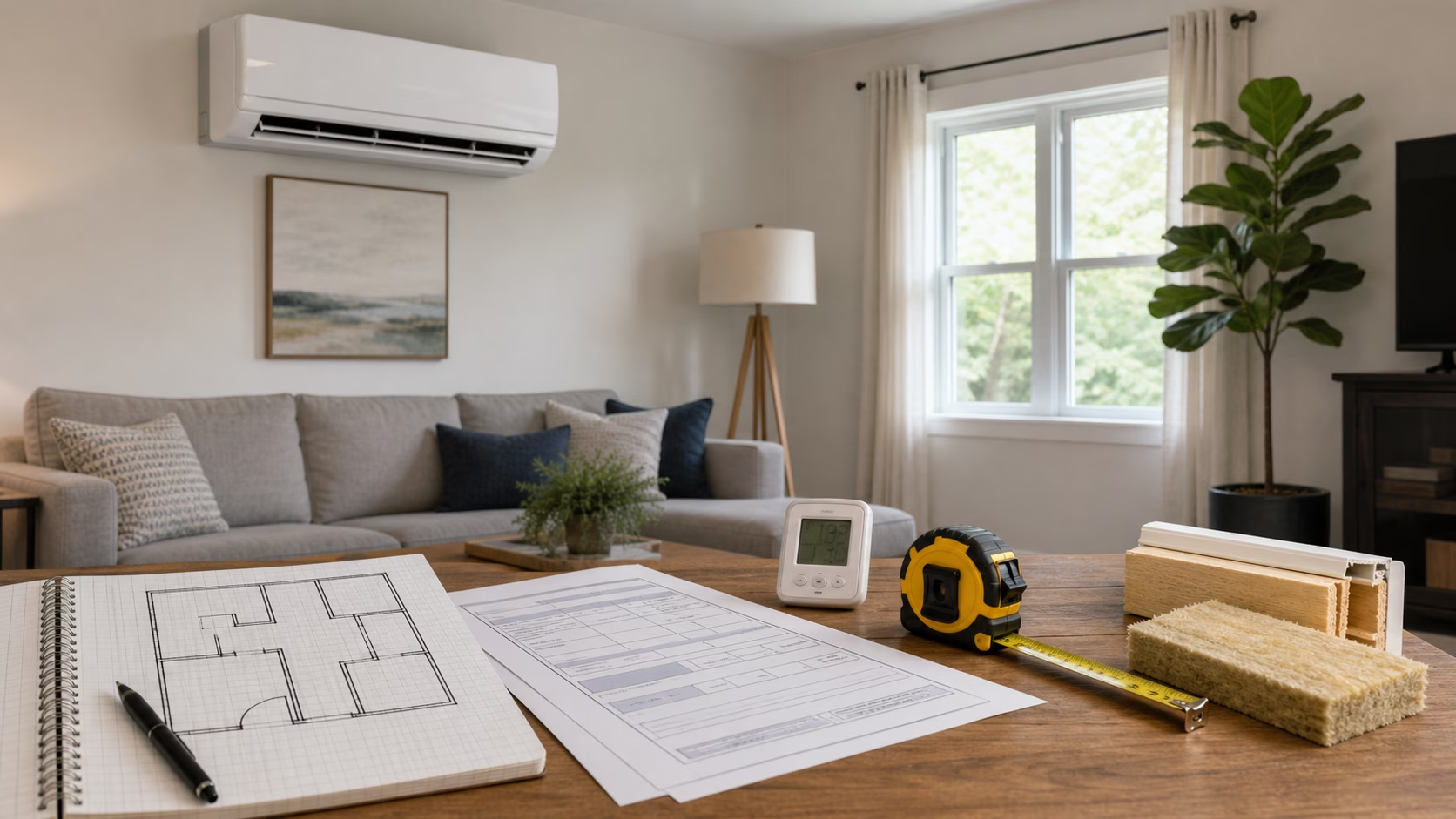
Sizing is where many comfort problems begin. Bigger is not automatically better. An oversized system can short-cycle, manage humidity poorly in cooling season, and leave rooms uneven. An undersized system may lean too often on backup heat or fail to recover after a cold night. A real load calculation, supported by a look at the house rather than a guess based on the old unit, is the line between a sales bid and a design.
DOE notes that heat pumps transfer heat rather than generate it, and that modern systems can work across climates when properly selected. That does not remove the need for local design. It makes the design more important.
Ducted or ductless
Ducted heat pumps make sense when the existing ducts are worth reusing. That means the ducts are sealed, sized well enough for the airflow the new system needs, and insulated where they pass through hot attics, cold crawlspaces, or other punishing areas. If a house already has rooms that are too hot, too cold, or starved for airflow, a new outdoor unit will not magically fix the distribution problem.
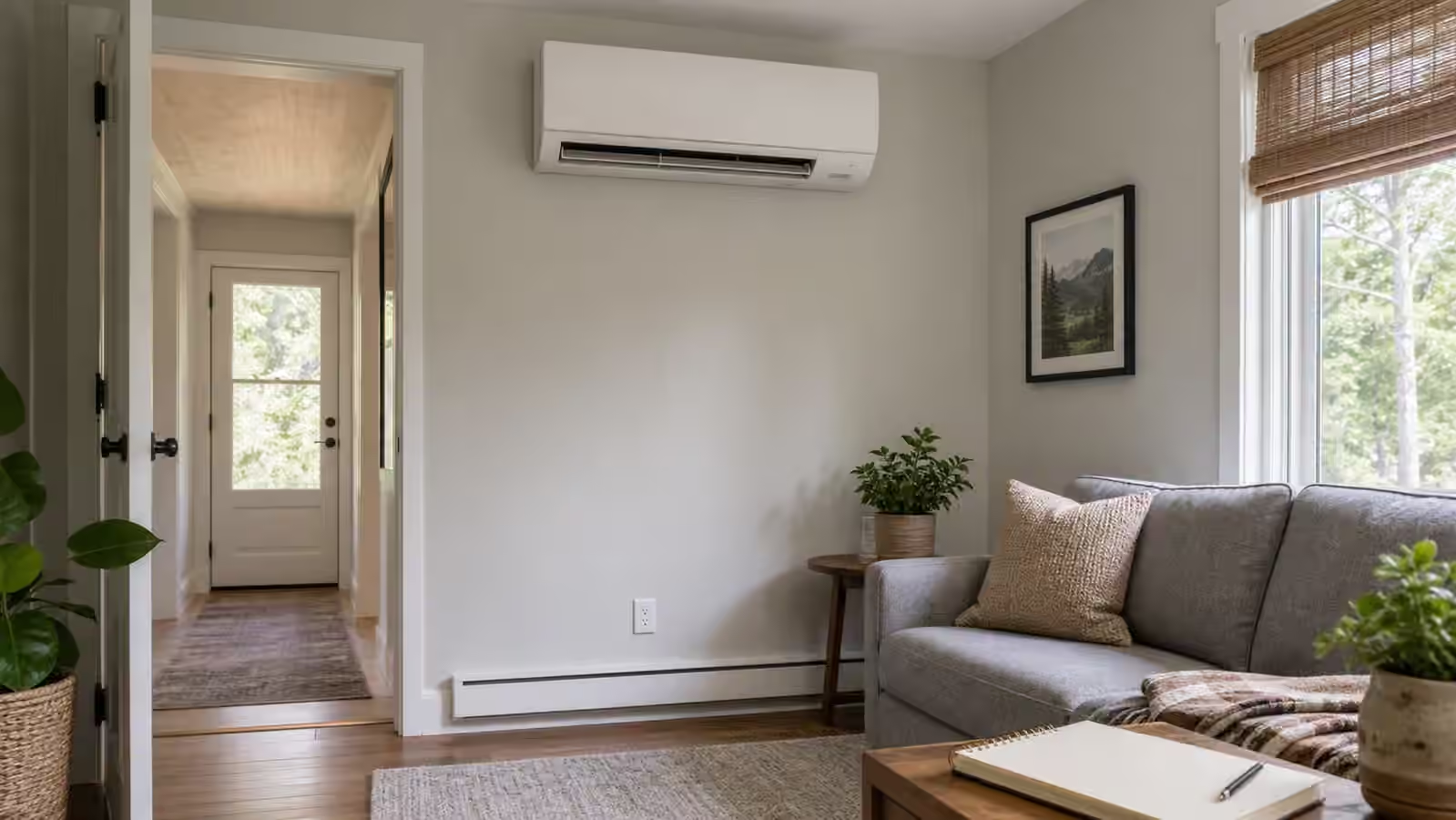
Ductless mini-splits solve a different kind of problem. They are often excellent for additions, workshops, small homes, rooms with poor duct access, or targeted comfort upgrades where extending ducts would be expensive or awkward. Multi-zone systems can serve several rooms, but they still need thoughtful placement and realistic expectations about doors, hallways, sun exposure, and how people actually use the space.
Hybrid systems sit between those paths. A heat pump may handle most heating and cooling while a furnace or other backup source covers unusual cold, electrical limits, or a staged electrification plan. The value of a hybrid system depends on the controls. If backup heat comes on too early or too often, the house may lose much of the efficiency benefit that made the heat pump attractive in the first place.
Installer quality
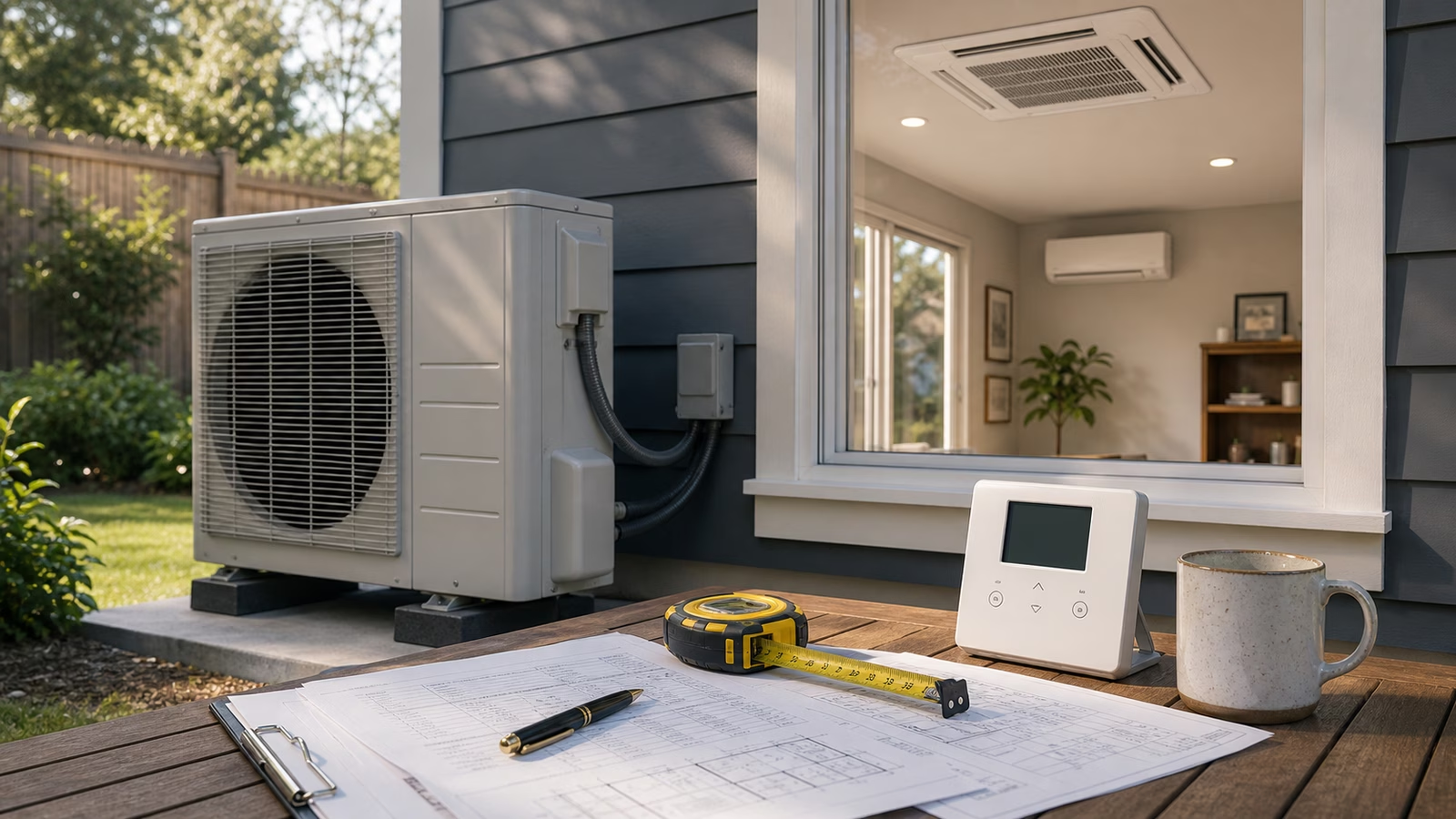
Choose the installer as carefully as the equipment. A good installer can explain the load calculation, the winter design point, the duct plan, the thermostat settings, the defrost behavior, the backup heat lockout, and the maintenance you will be expected to perform. They should also make the system serviceable, with clear filter access, labeled equipment, warranty documentation, and enough commissioning work to prove the installation matches the design.
Be cautious with bids that skip sizing, ignore ducts, or promise comfort without inspecting the home. Also be cautious with proposals that treat rebates as the center of the decision. Incentives can change the price, but they do not make a poorly selected system comfortable. The right heat pump is the one that fits the house, the climate, the people living there, and the next decade of electrical planning.
For small-space HVAC tradeoffs, read Tiny Home Heating and Cooling .
Apply this guide as a decision record
Use Heat Pump Buying Guide: Comfort, Climate, Installer Quality, and Controls to turn a vague household question into a checkable one. Its scope is specific: A practical guide to choosing a heat pump by climate, sizing, ductwork, controls, backup heat, and installation quality. Before changing the setup, write down the condition you are trying to change, the constraint that matters most, and the evidence you still lack.
For a first pass through heat pump buying guide, compare the current state with a relevant baseline and record one observation, measurement, or conversation. Make the smallest reversible change available. Keep the manual, model number, room condition, schedule, or maintenance note beside the decision so a future check does not depend on memory. Keep heat pump, HVAC, buying guide in view as separate signals instead of treating them as one verdict.
A useful follow-up asks whether Heat Pump Buying Guide: Comfort, Climate, Installer Quality, and Controls improved the named problem without creating a new one. Check the tradeoff that fits this subject — heat, noise, comfort, water, power, wear, effort, or cost — and describe the result in plain language. If a boundary is safety-critical, stop at the guide’s limit and bring the details to a qualified local professional.
The conclusion for heat pump buying guide should stay narrow. Record what was observed, which condition made the result possible, what maintenance keeps it dependable, and what would make you revisit the choice. That turns a guidebook into a decision record you can use again rather than a promise to remember.