Heat pump sizing is a comfort decision, not a bragging contest. A bigger outdoor unit does not automatically mean a better house. The right system is the one that can carry the home through local design conditions without wasting the mild days, short-cycling, ignoring humidity, or leaning too casually on backup heat.
The mistake is understandable. Furnaces and air conditioners have trained many homeowners to think in simple capacity labels. Heat pumps punish that shortcut. An oversized system can blast the house quickly, shut off, and leave rooms uneven. It may miss dehumidification targets in cooling season because it does not run long enough. It may cycle more than it should, which can hurt comfort and equipment life. An undersized system has the opposite failure: it runs constantly and still cannot keep up when the weather reaches the edge of the local design range.
The Home Decides The Size
A heat pump is not sized for square footage alone. The load comes from climate, insulation, air sealing, windows, shading, ceiling height, room layout, ventilation, internal gains, duct condition, and how the household actually uses the space. Two houses with the same floor area can need very different equipment if one is leaky with old windows and the other has a tight envelope and shaded glass.
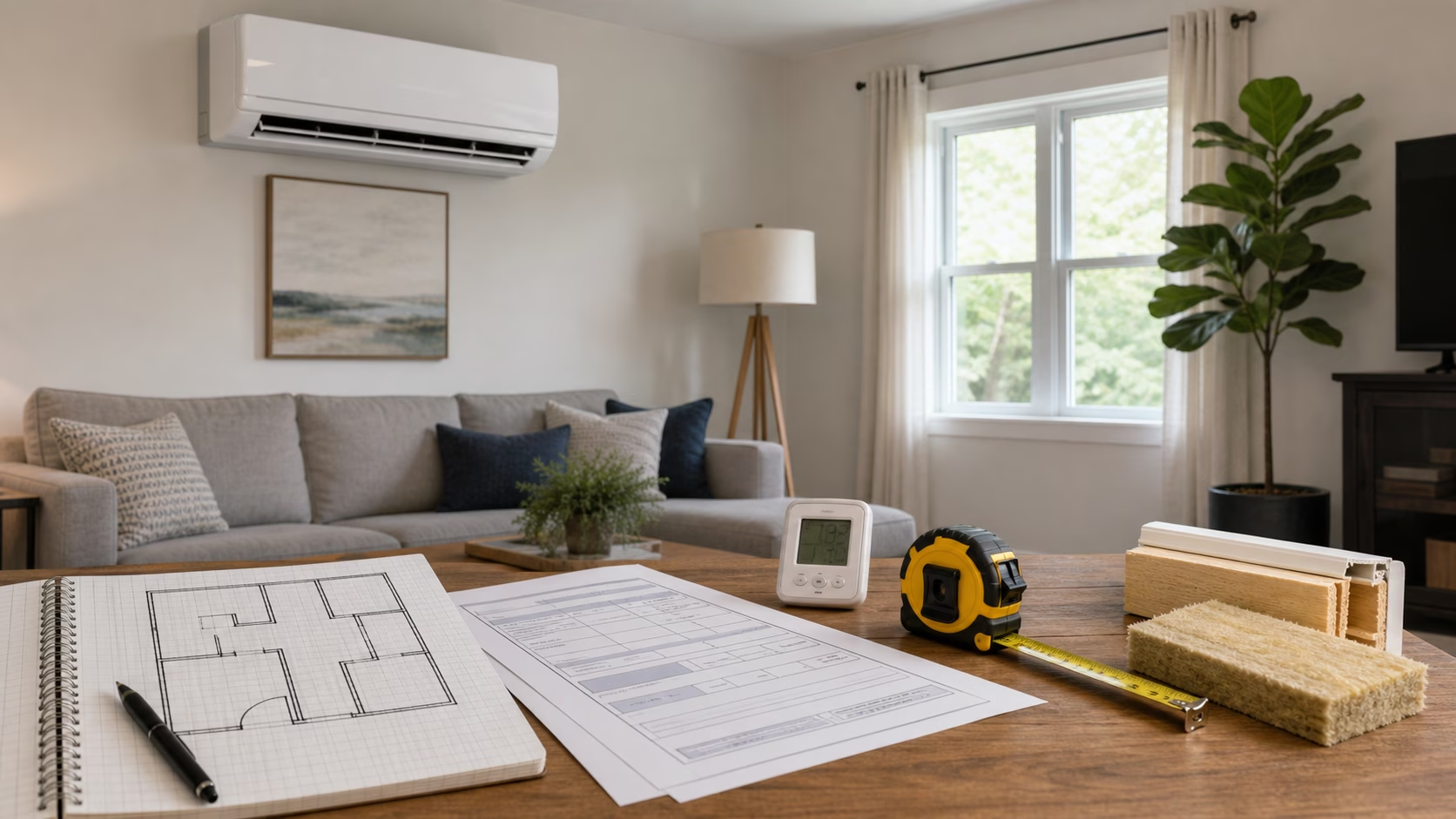
This is why a real load calculation matters. It turns the house into a set of heat gains and losses instead of a guess. It also gives the installer a reason to talk about the uncomfortable bedroom, the sunny west-facing room, the basement that stays damp, or the addition that never quite matches the rest of the house. Good sizing is local and specific.
Ducts Can Make Or Break The Result
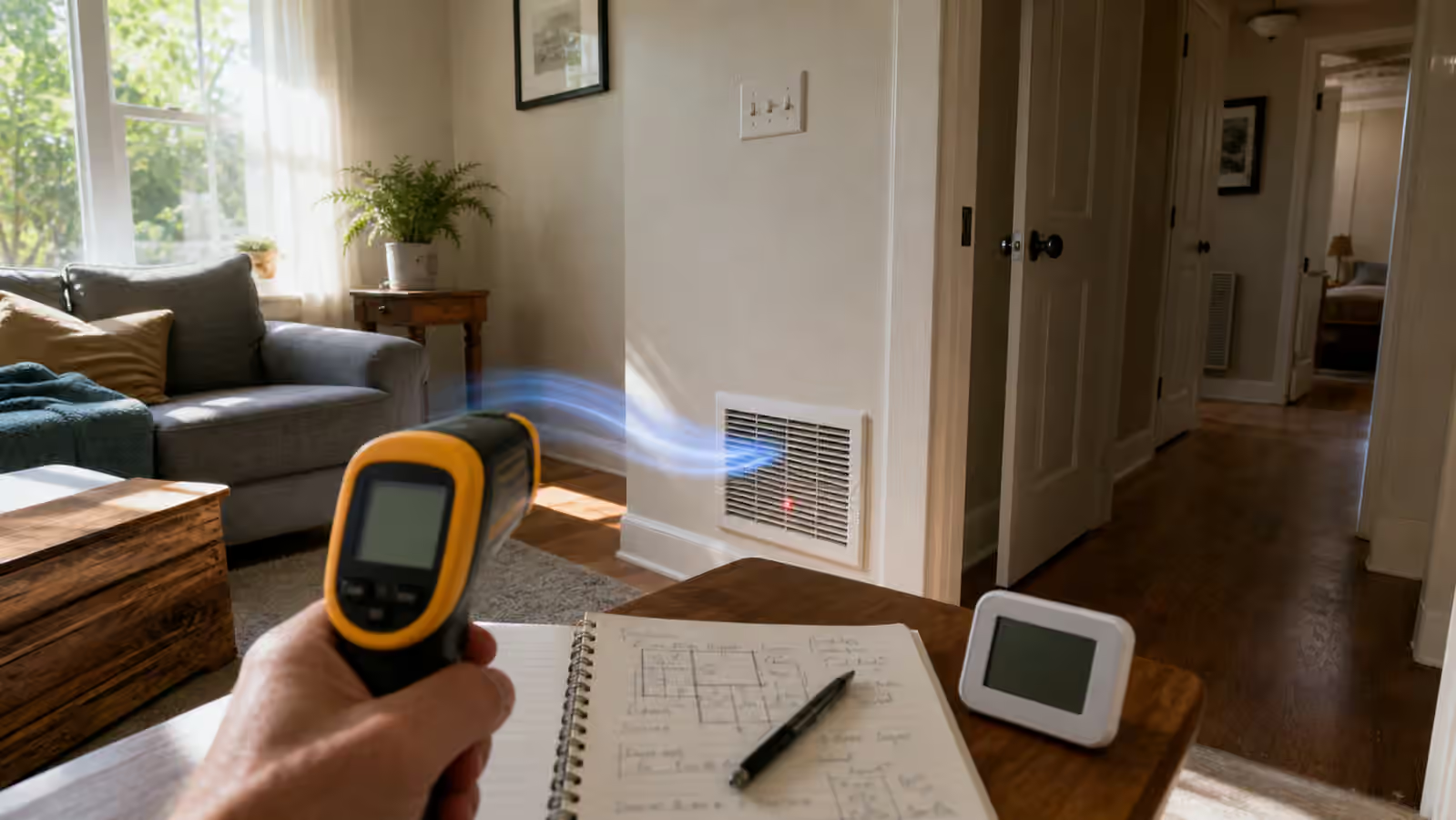
A high-quality heat pump connected to bad ducts is still a bad comfort system. Leaky ducts waste conditioned air. Undersized ducts create noise and poor airflow. Uninsulated ducts in punishing spaces can lose energy before it reaches the room. Poorly balanced ducts can leave one room over-served while another never catches up.
Ask whether the bid includes duct inspection, sealing, balancing, or changes. If it does not, ask why. A contractor who talks only about the outdoor unit and never about the delivery system may be missing the part of the home you actually feel.
Cold Weather Is A Design Conversation
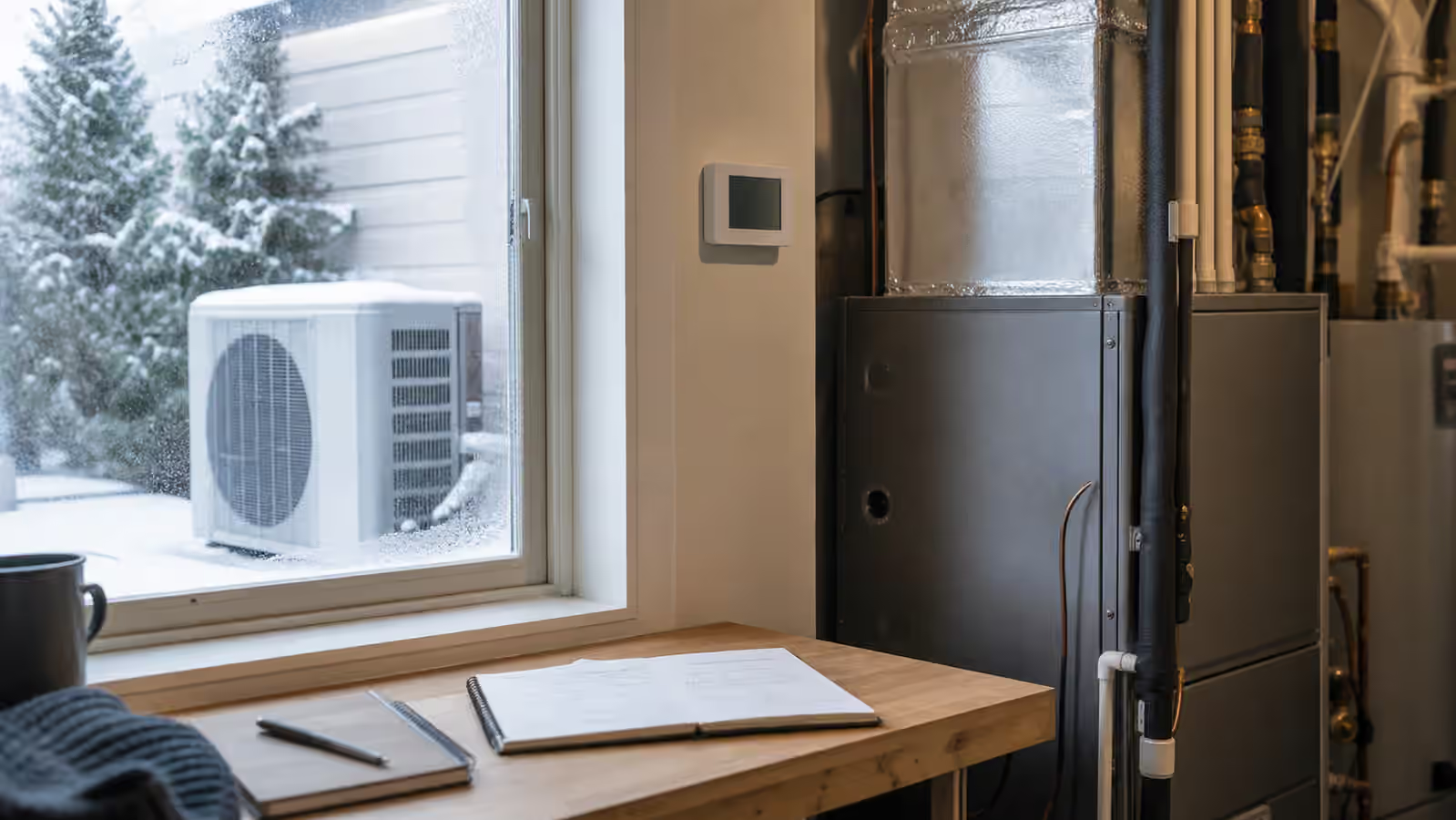
Cold-climate performance depends on the specific equipment and local winter design conditions. Ask how much heating capacity the system delivers at the temperatures your area actually sees, not only at a pleasant lab condition. Ask whether backup heat exists, when it turns on, and how the thermostat controls it. Ask what defrost cycles will feel like and how the system avoids comfort swings.
DOE advises avoiding thermostat setbacks that trigger inefficient backup heat. The details depend on the design, but the larger lesson is simple: controls are part of the system. A smart thermostat can help or hurt depending on how it is configured.
What A Good Bid Feels Like
A good sizing conversation includes the load calculation, room-by-room comfort issues, ductwork, outdoor unit placement, condensate management, filter access, service access, noise expectations, and backup heat strategy. It should feel like someone studied the house, not like they priced a box from a catalog.
If an installer does not inspect the home, does not discuss loads, and does not ask where comfort is failing now, get another opinion. Heat pumps can be excellent, but they are not magic. They reward careful design.
For ownership care after installation, read Heat Pump Maintenance .
Apply this guide as a decision record
Use Heat Pump Sizing Basics: Why Bigger Is Not Automatically Better to turn a vague household question into a checkable one. Its scope is specific: A practical explanation of heat pump sizing, load calculations, ducts, climate, backup heat, and comfort risks. Before changing the setup, write down the condition you are trying to change, the constraint that matters most, and the evidence you still lack.
For a first pass through heat pump sizing basics, compare the current state with a relevant baseline and record one observation, measurement, or conversation. Make the smallest reversible change available. Keep the manual, model number, room condition, schedule, or maintenance note beside the decision so a future check does not depend on memory. Keep heat pump, sizing, HVAC in view as separate signals instead of treating them as one verdict.
A useful follow-up asks whether Heat Pump Sizing Basics: Why Bigger Is Not Automatically Better improved the named problem without creating a new one. Check the tradeoff that fits this subject — heat, noise, comfort, water, power, wear, effort, or cost — and describe the result in plain language. If a boundary is safety-critical, stop at the guide’s limit and bring the details to a qualified local professional.
The conclusion for heat pump sizing basics should stay narrow. Record what was observed, which condition made the result possible, what maintenance keeps it dependable, and what would make you revisit the choice. That turns a guidebook into a decision record you can use again rather than a promise to remember.