Induction cooking feels almost suspicious the first time it works well. Water climbs toward a boil quickly, a skillet responds to a lower setting without the slow drift of a hot coil, and the glass surface wipes clean after dinner. The magic is not magic; compatible cookware is being heated directly by a magnetic field. That directness is why induction can feel fast, controlled, and calm.
The buying decision is still practical. Before you fall in love with the clean surface, answer two ordinary questions: will your pans work, and will your kitchen support the appliance you want?

Try The Cooking Feel Before Replacing The Kitchen
If your situation allows it, a portable induction cooktop is the gentlest first step. It lets you test pan compatibility, control feel, noise, simmer behavior, and counter workflow without turning the kitchen into a project. Some people discover they love induction immediately. Others learn that their favorite pan does not work, that touch controls annoy them, or that they want a different burner layout than they expected.
This is especially useful if you cook simple repeatable meals. Rice bowls, eggs, skillet dinners, quick reheats, and weeknight protein bowls are where induction’s speed and cleanup can shine. If that is your style, Boy Kibble Kitchen is a useful cross-link because it lives in exactly that practical cooking world.
Choose The Form That Fits The Household
A full induction range is the cleanest replacement path when the existing range space, circuit, ventilation, and delivery route all cooperate. A drop-in cooktop can be elegant, but it may involve countertop fit, cabinet clearance, and separate oven decisions. A portable burner is flexible and inexpensive, but it does not replace a whole cooking surface for every household.
Controls deserve more attention than spec sheets usually give them. Some cooks strongly prefer physical knobs. Others are fine with touch controls as long as they respond quickly and are easy to clean. Low-power simmer behavior matters if you cook sauces, grains, beans, or anything that needs gentle heat. Maximum boost power is exciting, but daily usability often comes from the quiet middle settings.
Cookware Is The First Reality Check
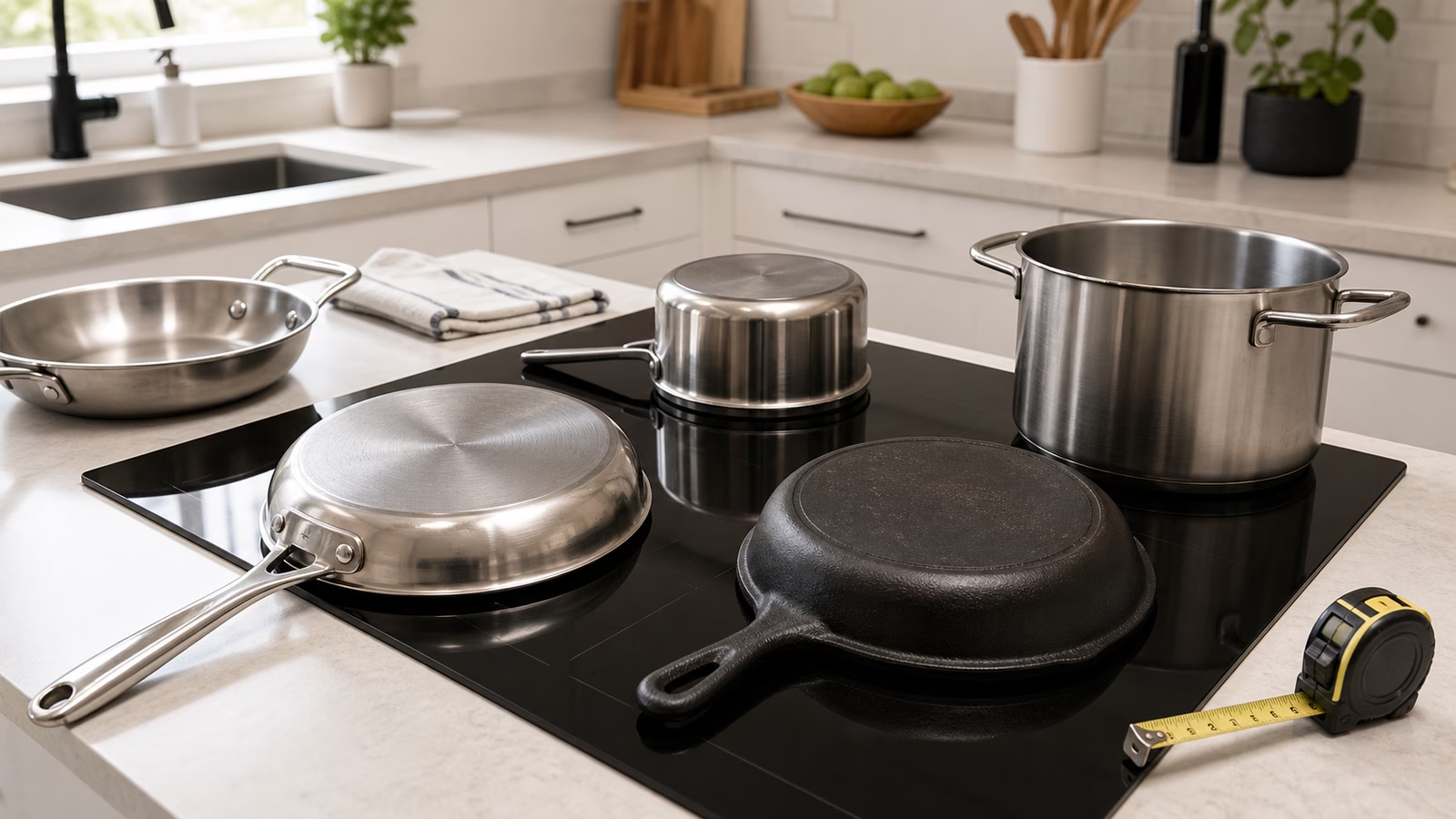
Use a magnet. If it sticks firmly to the bottom of the pan, the pan is likely induction-compatible. Flat bottoms matter too, because pan shape affects contact and performance. Cast iron, many stainless pans, and clearly labeled induction-compatible cookware can work well, while aluminum, copper, glass, and some older stainless cookware may not.
You do not need to replace every pan on day one. Start with the pieces you actually use. A good cast iron skillet for induction or a focused induction-compatible cookware can be a better purchase than a giant set that fills cabinets with pieces you never touch.
The Appliance Is Also An Electrical Decision
Pause if panel capacity is unclear, the existing circuit rating is unknown, the preferred range requires different wiring, countertop work is needed, or ventilation is weak. Induction removes combustion at the burner, but cooking still produces moisture, particles, grease, and odors. A better cooktop does not erase the need for a ventilation plan.
Choose induction if you want electric cooking with responsive control, compatible cookware, easier cleanup, and a kitchen that can support the installation. For the electrical side, read Induction Electrical Capacity before you treat a full range as a simple appliance order.
Apply this guide as a decision record
Use Induction Cooktop Buying Guide: Range, Portable Burner, Cookware, and Circuit to turn a vague household question into a checkable one. Its scope is specific: How to compare induction cooking options by cookware, electrical capacity, control feel, ventilation, and installation needs. Before changing the setup, write down the condition you are trying to change, the constraint that matters most, and the evidence you still lack.
For a first pass through induction cooktop buying guide, compare the current state with a relevant baseline and record one observation, measurement, or conversation. Make the smallest reversible change available. Keep the manual, model number, room condition, schedule, or maintenance note beside the decision so a future check does not depend on memory. Keep induction cooking, buying guide, kitchen in view as separate signals instead of treating them as one verdict.
A useful follow-up asks whether Induction Cooktop Buying Guide: Range, Portable Burner, Cookware, and Circuit improved the named problem without creating a new one. Check the tradeoff that fits this subject — heat, noise, comfort, water, power, wear, effort, or cost — and describe the result in plain language. If a boundary is safety-critical, stop at the guide’s limit and bring the details to a qualified local professional.
The conclusion for induction cooktop buying guide should stay narrow. Record what was observed, which condition made the result possible, what maintenance keeps it dependable, and what would make you revisit the choice. That turns a guidebook into a decision record you can use again rather than a promise to remember.