Making Your Own Hot Sauce: Complete Guide
Making hot sauce at home is one of the best “small crafts” in food: it’s cheap, creative, and immediately rewarding. The same jar of peppers can become a bright, green, herb-forward sauce for eggs, a smoky cooked sauce for tacos, or a funky fermented bottle you’ll be proud to pour for friends.
This guide gives you three reliable methods (fresh, cooked, fermented), how to build balanced flavor, and the safety practices that keep hot sauce fun instead of risky.
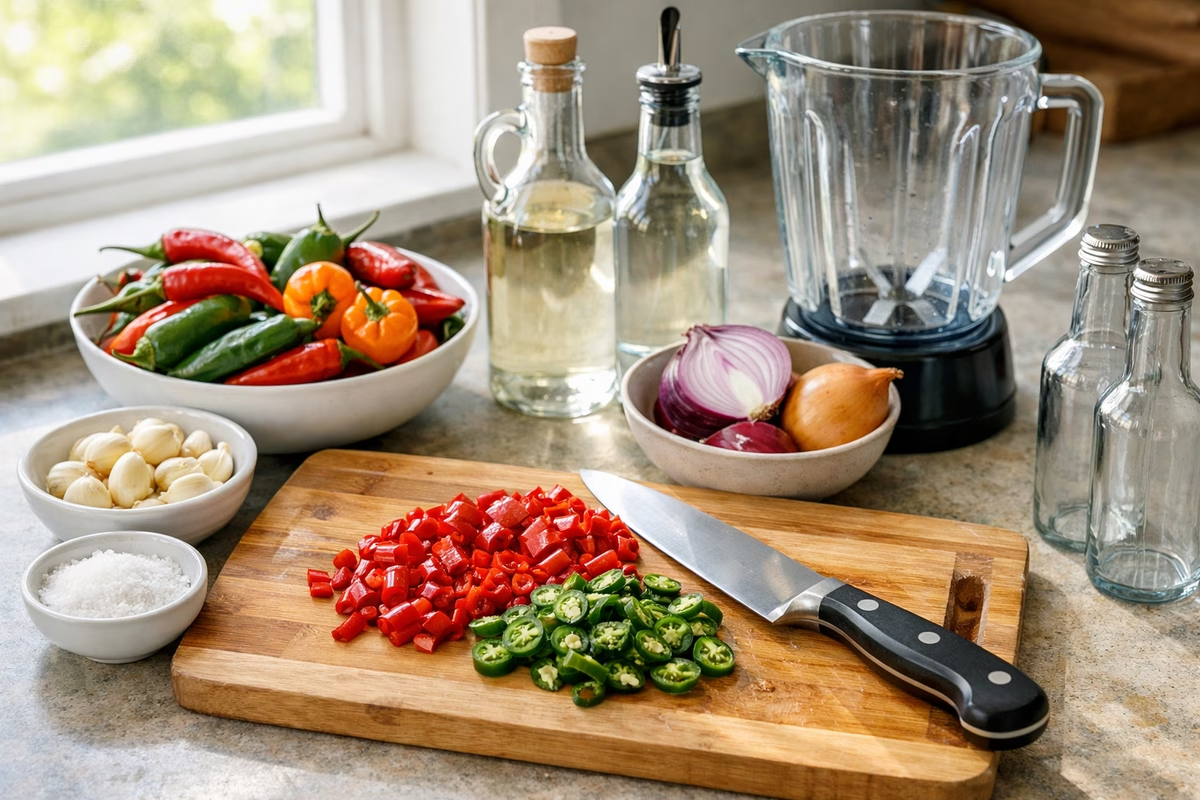
Why Make Your Own Hot Sauce?
Hot sauce is seasoning with personality. When you make it yourself, you control:
You control heat (pepper choice, seeds/pith, dilution), flavor direction (bright/vinegary vs smoky vs fruity vs funky), texture (smooth, chunky, pourable, thick), and salt/acid balance (often the difference between “good” and “I keep reaching for it”).
It’s also a great gifting food because it stores well, scales easily, and invites fun naming.
Essential Equipment
You don’t need a factory. You need clean tools, a way to blend, and (for fermentation) a way to keep peppers submerged.
Basic Tools (Under $50)
You don’t need a factory. A blender or food processor (immersion blender works too), glass jars with lids (Mason jars are ideal), a saucepan for cooked sauces, and a funnel plus bottles will get you most of the way. A fine mesh strainer is optional if you want ultra-smooth sauce. Gloves are worth it—nitrile is best for hot peppers.
Advanced Tools (Optional)
If you ferment often or want to validate shelf stability:
- fermentation weights and/or airlock lids
- pH strips (cheap) or a pH meter (more accurate)
Hot Sauce Styles
Think of these as three “paths,” each with a different personality.
Fresh (Raw) Hot Sauce
Fresh sauces taste like the produce aisle: bright pepper aroma, sharp citrus or vinegar, and a lively top note. They’re quick and expressive, but they belong in the fridge and have the shortest shelf life.
Cooked Hot Sauce
Cooking mellows harsh edges, integrates garlic/onion, and can deepen sweetness. Cooked sauces are often the easiest “daily driver” style: flavorful, stable in the fridge for months, and forgiving to adjust.
Fermented Hot Sauce
Fermented sauces develop tang and complexity from lactic acid (not vinegar). They’re slower, but they’re the “why does this taste so alive?” category. Done well, fermentation gives depth, aroma, and long shelf life (still usually refrigerated at home unless you follow validated canning procedures).
Fresh Hot Sauce Method
Fresh sauce is the fastest win. The key is balance: pepper + acid + salt, then optional aromatics and sweetness.
Basic Fresh Sauce Recipe
A good starting ratio (by feel):
- peppers as the base
- enough acid (vinegar/citrus) to make it pourable and bright
- salt to make flavors “stand up”
Example ingredients:
- 1 lb fresh peppers (jalapeño, serrano, habanero, etc.)
- 1–2 cups vinegar (white, apple cider, or rice vinegar)
- 4–6 cloves garlic
- 1 Tbsp salt
- optional: onion, lime juice, a little sugar or fruit
Method:
- Prep peppers (gloves on): remove stems; remove seeds/pith for less heat.
- Blend everything until very smooth, adding vinegar as needed for texture.
- Taste, then adjust: more salt for “presence,” more acid for “lift,” a touch of sweetness if heat feels sharp.
- Bottle and refrigerate. Fresh sauce improves after a day as flavors meld.
Fresh Sauce Variations
- Bright green: jalapeño/serrano + cilantro + lime + rice vinegar
- Tropical: habanero + mango/pineapple + lime + a pinch of salt
- Garlic-forward: add roasted garlic or a small amount of raw garlic and rest overnight
Cooked Hot Sauce Method
Cooking is where hot sauce becomes “food.” Aromatics soften, flavors integrate, and the sauce becomes easier to keep and use.
Basic Cooked Sauce Recipe
Example ingredients:
- 1 lb peppers
- 1 cup vinegar
- 1/2 cup water
- 4 cloves garlic
- 1 Tbsp salt
- optional: 1 tsp sugar (helps round acidity and heat)
Method:
- Prep peppers (gloves on): stem and chop roughly.
- Simmer peppers, vinegar, water, garlic, and salt until peppers are very soft (often 15–20 minutes).
- Blend until smooth. Return to the pot.
- Simmer gently to thicken and concentrate. Taste and adjust.
- Bottle in clean containers and refrigerate.
Cooked Sauce Variations
- Louisiana-style: cayenne + vinegar + garlic + salt (simple, classic)
- Chipotle-style: include smoked peppers (or rehydrated dried chipotle) for depth
- Buffalo-style: finish with butter (for immediate use rather than long storage)
Fermented Hot Sauce Method
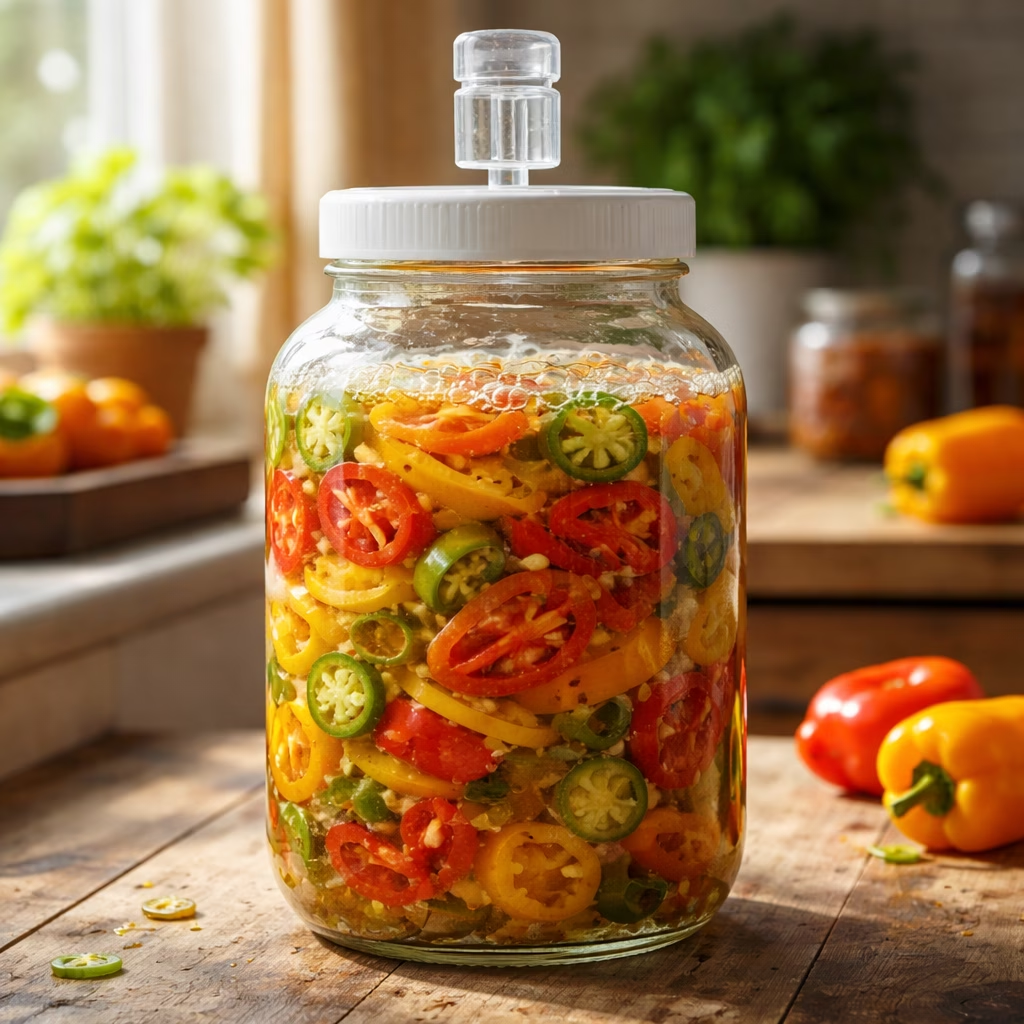
Fermentation is a flavor multiplier. The goal is to create an environment where beneficial lactobacillus thrives: salty enough to discourage spoilage, and anaerobic enough (submerged) to prevent mold.
The Fermentation Process
In plain language:
- peppers sit under a salt brine
- natural bacteria consume sugars
- lactic acid builds, making the environment tangy and inhospitable to bad microbes
- you blend and season the finished ferment into sauce
Basic Fermented Sauce Recipe
Ingredients:
- 1 lb peppers, chopped
- 2–4 cloves garlic (optional)
- 3–5% brine (salt + water)
- vinegar (optional, after fermentation for brightness)
Method (reliable workflow):
- Make brine and dissolve salt completely. Use non-chlorinated water (filtered is easiest).
- Pack peppers (and garlic) into a clean jar, leaving headspace.
- Pour brine to cover completely.
- Weigh peppers down so nothing floats above the brine.
- Cover with an airlock or a loose lid (burp daily if sealed).
- Ferment at cool room temperature (often ~60–75°F) until tangy (commonly 7–14 days; longer for deeper flavor).
- Blend peppers, thinning with reserved brine to desired texture. Add vinegar if you want sharper, more immediate acidity.
- Bottle and refrigerate.
Troubleshooting Fermentation
- White film: often kahm yeast (usually harmless). Skim and keep everything submerged.
- Fuzzy or colored mold: discard the batch. Submersion and cleanliness are the main prevention.
- No bubbling: it may still be fermenting slowly; causes include cold temperatures, chlorinated water, or overly salty brine.
Safety and pH
Understanding pH
Acidity is what keeps hot sauce safe. The key threshold often cited for shelf-stable acid foods is pH < 4.6. Many hot sauces aim for roughly 3.5–4.0 for both safety margin and flavor.
Achieving safe acidity
- Vinegar is the most reliable acidifier for home hot sauce.
- Fermentation can lower pH naturally, but you should still test if you’re relying on acidity for safety.
- Citrus juice can help flavor, but it’s less predictable as a sole safety control.
Testing pH
pH strips are inexpensive and good enough for a rough check; a meter is more accurate if you make sauce frequently.
Test after blending (the sauce needs to be uniform). If you’re above your target, add vinegar, blend, and test again.
Flavor Development
Great hot sauce is balanced, not just hot. A useful way to design flavor is to give each “layer” a job:
- Heat: pepper variety and amount
- Acid: vinegar, citrus, or fermentation tang
- Salt: makes flavors “pop”
- Sweet (optional): rounds sharp heat and acid (sugar, honey, fruit)
- Aromatics: garlic, onion, ginger, herbs
- Smoke/spice (optional): chipotle, cumin, coriander, black pepper
A simple balancing routine
When a sauce tastes “off,” it’s usually missing one of three things:
- Salt (it tastes flat)
- Acid (it tastes heavy)
- Sweetness (heat feels sharp and aggressive)
Adjust in tiny increments and rest before making final judgments—especially for garlic-heavy sauces.
Bottling and Storage
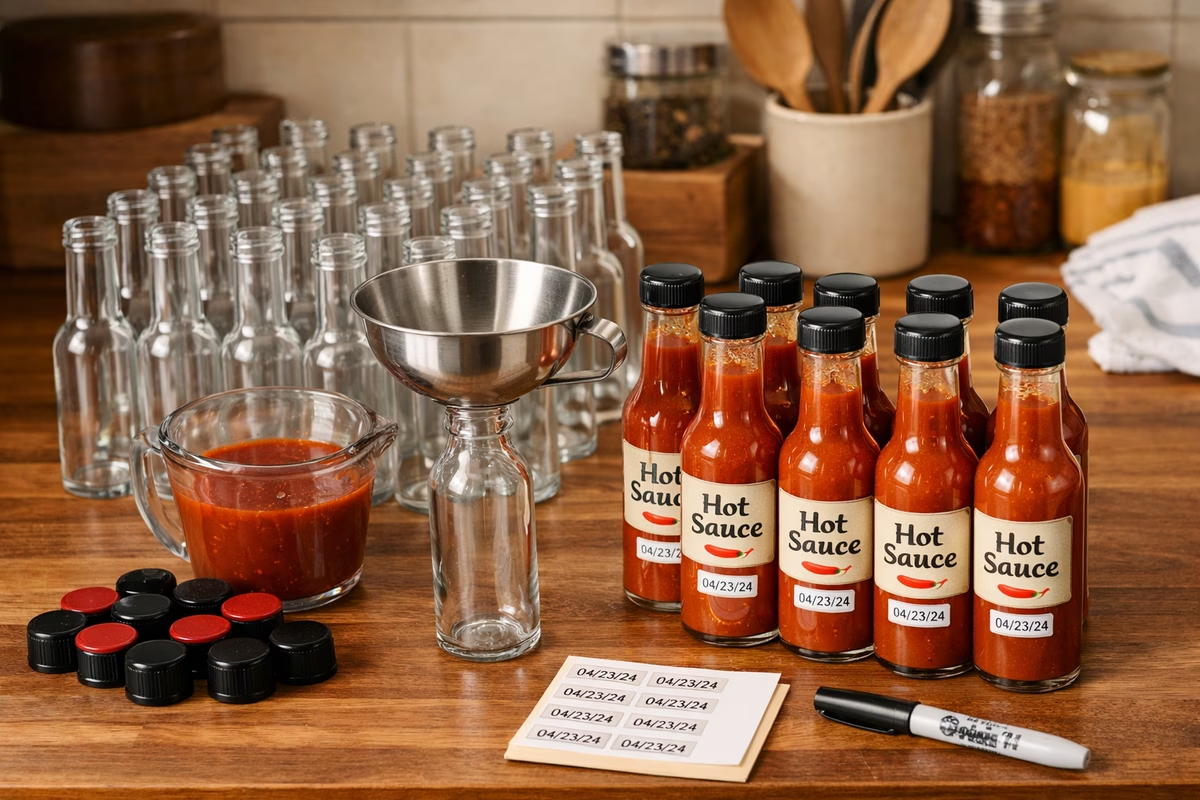
Use clean bottles, label them, and store cold unless you’re following validated shelf-stable canning.
Typical home storage expectations:
Fresh sauces are usually best within 1–2 weeks (they can go longer with more vinegar, but still refrigerate). Cooked sauces often keep for months in the fridge. Fermented sauces commonly keep 6–12+ months refrigerated, and the flavor can continue to evolve.
If you see gas build-up, off smells (rotten, chemical), or visible mold, discard.
Creative Recipe Ideas
Use these as starting points and swap peppers to match your heat preference.
Try a mango-habanero (habanero, mango, lime, salt), a bright carrot-habanero (habanero, carrot, vinegar, garlic), a smoky chipotle (rehydrated chipotle, tomato, apple cider vinegar, cumin), a herby jalapeño (jalapeño, cilantro, scallion, lime, rice vinegar), or a fermented garlic-serrano (serrano, garlic, 3–5% brine, then blend with a splash of vinegar).
Scaling and Consistency
When you scale recipes, the two things that must remain consistent are salt (especially for fermentation) and acidity (for flavor and safety). Weighing ingredients is the easiest way to keep batches repeatable.
Common Mistakes and Solutions
If sauce is too thin, simmer cooked sauces to reduce, or blend with less brine/vinegar next time. If it’s too thick, thin with vinegar, brine, or water in small additions. If it’s too hot, dilute with more base ingredients (carrot, fruit, roasted pepper) rather than trying to “sugar your way out.” If it tastes harsh, add a touch of sweetness or let it rest a day—harshness often settles. If it’s not flavorful, adjust in this order: salt first, then acid, then aromatics.
Gifts and Presentation
Homemade hot sauce gifts well if it feels intentional.
Labeling
Include at least: name, date, ingredients, an honest heat note, and “refrigerate after opening.”
Gift packaging
Small bottles as a “flight” (mild/medium/hot) are more fun than one big bottle. Add a pairing note (eggs, tacos, pizza) and you’ve made it memorable.
Legal considerations
Gift-giving is usually simpler than selling, but regulations vary. If you plan to sell, research your local requirements (kitchen rules, labeling, licensing, liability).
Making hot sauce is addictive. Start simple with a fresh or cooked sauce, then graduate to fermentation for maximum complexity. After a few batches, you’ll stop following recipes and start building sauces like you build a dish: by taste, balance, and intent.