Most indoor insect problems announce themselves as a feeling before they announce themselves as a bug. You notice the plant looks slightly off, or a leaf is stippled where it used to be even, or something sticky has appeared on the windowsill below a pothos, and only then do you lean in and start hunting. The hunt is worth doing slowly, because the single most useful thing you can do about a mystery insect is identify it correctly before you reach for anything in a spray bottle.
Reading the damage before you find the culprit
Insects leave signatures, and the signature is often easier to read than the insect itself, which may be a fraction of a millimeter long and hiding on a leaf underside. Aphids gather in soft clusters on the newest growth, on flower buds, and along tender stem tips, and they tend to be pear-shaped and slow-moving, in shades of green, black, pink, or pale yellow. Where aphids feed, you often find a shiny, sticky film called honeydew on the leaves below them, and sometimes a sooty gray mold that grows on that film later. Thrips leave a very different mark. They rasp at the leaf surface and leave silvery or pale streaks and tiny black flecks of frass, so an infested leaf can look scratched, bleached, or dusted with pepper. The thrips themselves are slivers, like animated commas, and they scatter when disturbed.
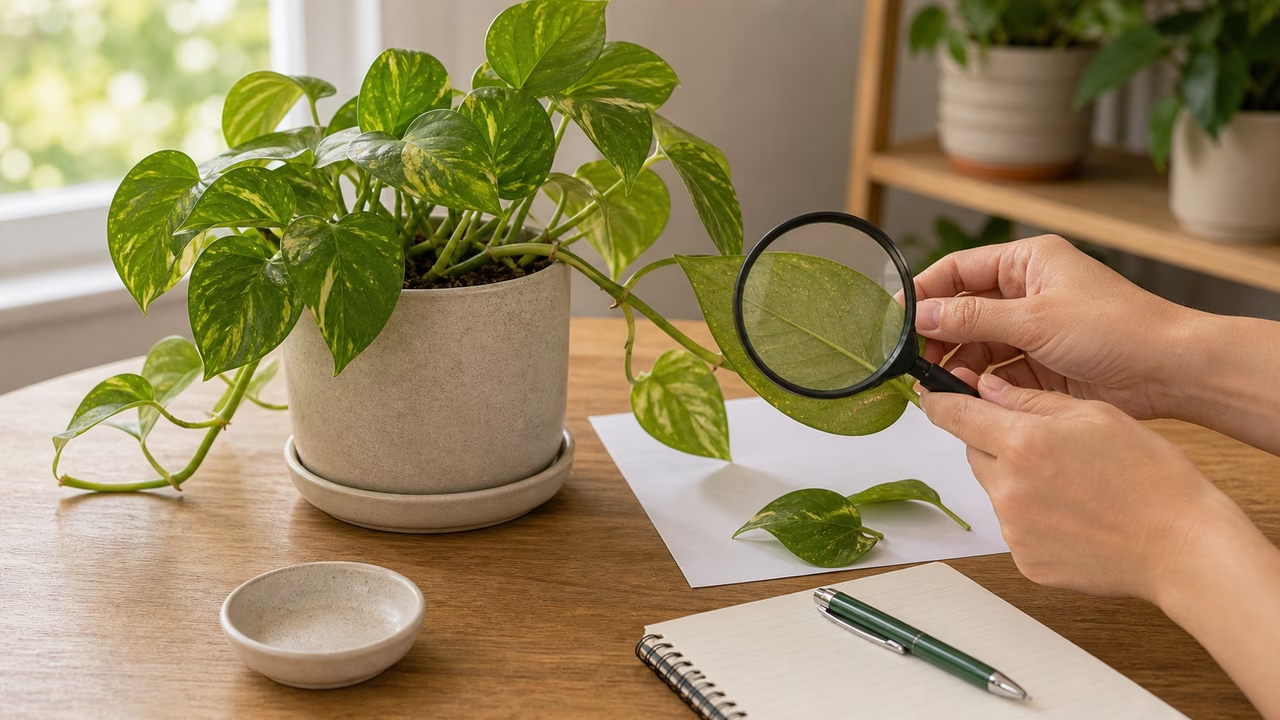
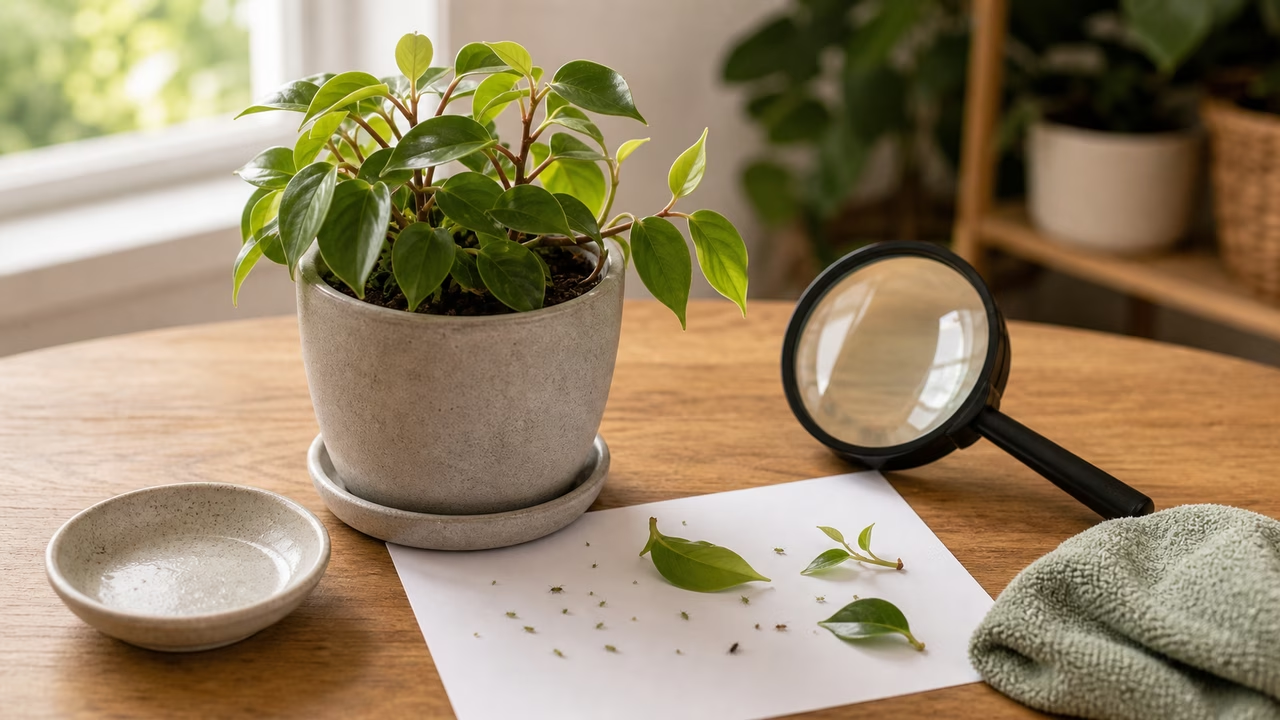
When you cannot see anything at all, tap a suspect stem over a sheet of white paper and watch for a few seconds. Specks that stay put are debris; specks that walk are the thing you are looking for. A cheap loupe or the macro setting on a phone camera turns an unidentifiable dot into an insect with legs, and that difference is what lets you stop guessing.
Where the newcomers usually come from
A houseplant that has lived in the same room for a year rarely erupts with insects on its own. The far more common story is a new arrival. A plant bought last month, a cutting from a friend, a bouquet of cut flowers on the same table, or a pot that summered outdoors and came back in the fall are the usual doorways. This is why quarantine matters even when the new plant looks flawless. Aphid and thrips populations can be nearly invisible for a couple of weeks and then bloom, and by the time you notice, they have had a clear path to every plant within reach.
If you can build the habit of keeping any newcomer apart from the collection for two to three weeks, checking its undersides and new growth every few days, you will catch most trouble while it is still confined to one pot. That single boundary prevents more indoor infestations than any product does.
Choosing one calm response
Once you have a name, the response gets simpler and less dramatic. For a light aphid cluster on a sturdy plant, a firm rinse in the sink or shower physically removes most of them, and repeating it every few days interrupts the population before it rebuilds. Wiping tender growth with a soft, damp cloth does similar work at a smaller scale. Thrips are more stubborn because they tuck into buds and unopened leaves, so the honest expectation is a campaign of several weeks rather than a single treatment, and the plant that recovers will do so through clean new leaves rather than the healing of scarred old ones.
If you decide a treatment product is warranted, read and follow its label exactly, treat the isolated plant away from other plants and away from pets, and give the insects time to answer rather than escalating every day. Mixing products, or reaching for a stronger one because yesterday’s did not produce an overnight miracle, tends to stress the plant more than the pests. Restraint is a real technique here, not a failure of effort.
What recovery actually looks like
Do not measure success by the old damaged leaves, which will keep their silvery scars and sticky residue long after the last insect is gone. Measure it by the newest growth. A leaf emerging clean, evenly colored, and undistorted is the plant telling you the population is under control. Keep checking undersides and tender tips at the same time each week, keep the plant isolated until two or three sets of clean new leaves have appeared, and only then return it to the shelf. If you find you can stabilize watering and light at the same time, the plant will have more energy to push out that healthy growth, which is why a pest problem is often also a good moment to double-check the basics of watering rhythm .
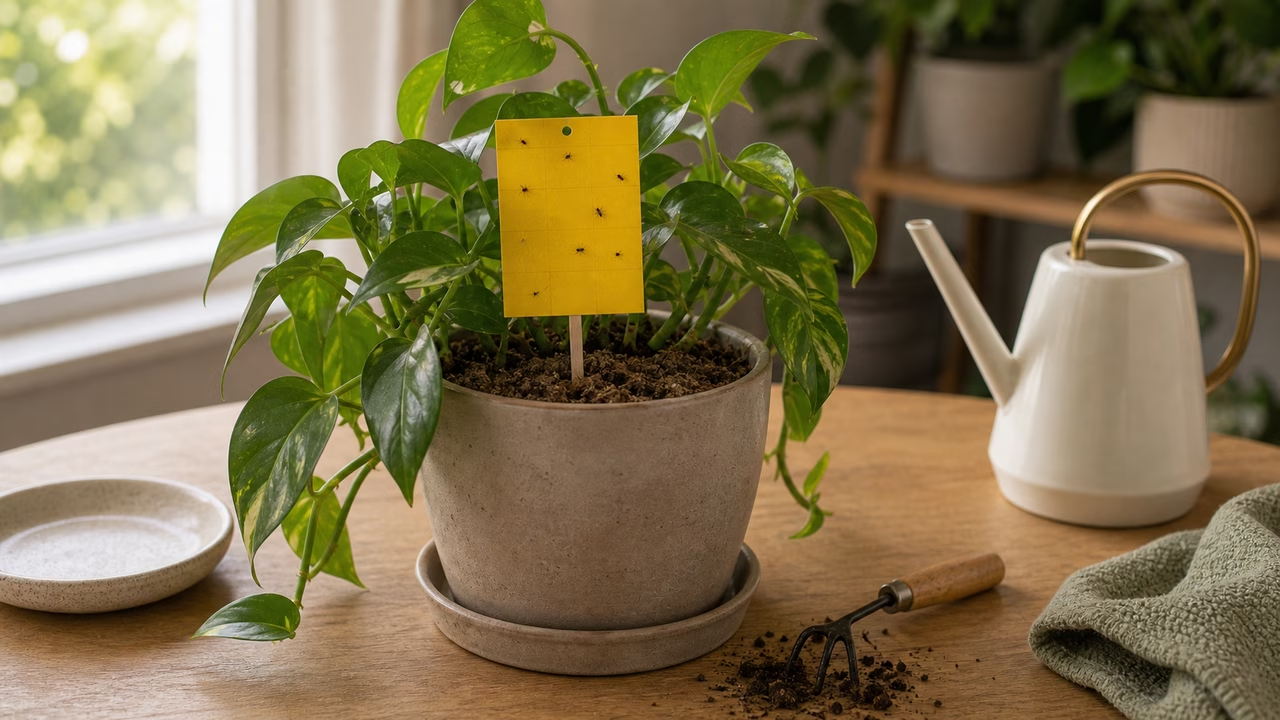
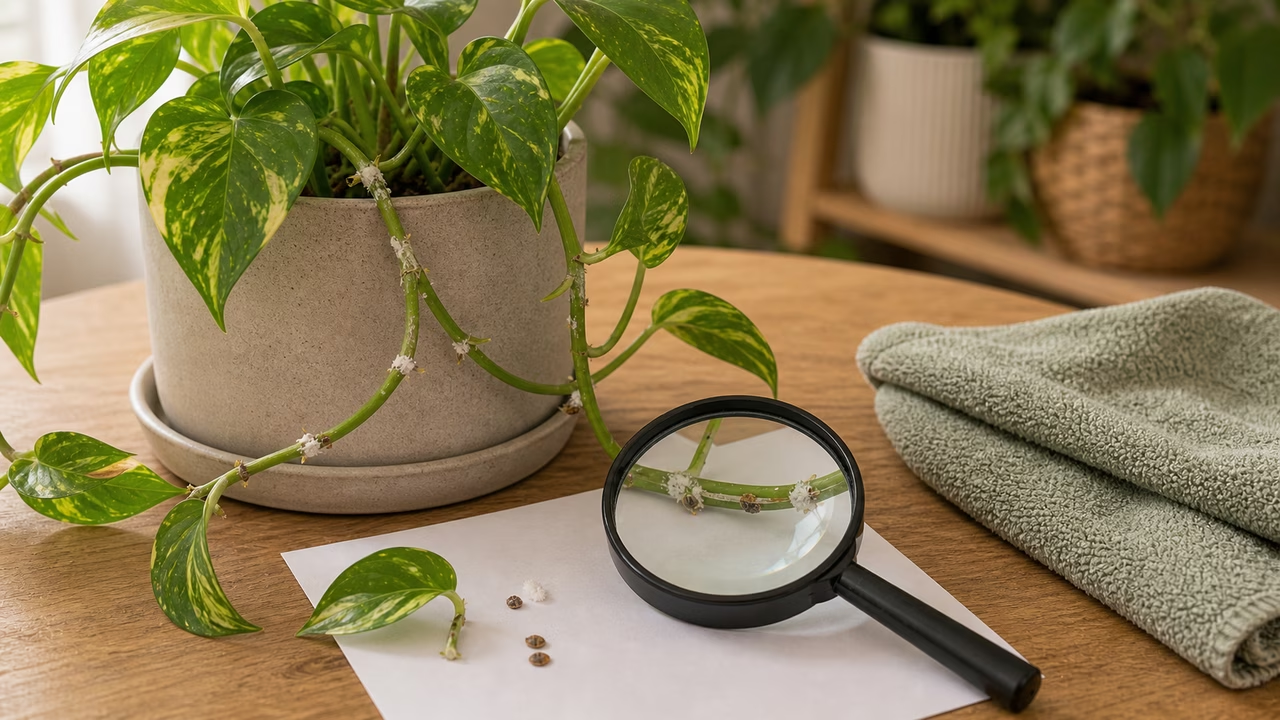
Because tiny indoor bugs are easy to confuse, it helps to know how the neighbors look. Fine webbing and dusty stippling point toward spider mites rather than thrips; cottony white tufts in leaf joints or hard brown bumps along stems are the calling cards of mealybugs and scale ; and clouds of small flies rising from the soil when you water are almost always fungus gnats , which live in wet soil rather than on the leaves and call for a different fix entirely. When you are new to all of this, the calm, methodical approach in the beginner’s clinic guide pairs well with pest work.
When to stop the home experiment
There is a boundary worth naming plainly. If a pet has been chewing the affected plant, if anyone in the home has a serious pesticide exposure or a severe allergic reaction, if the infestation is spreading through the house faster than you can contain it, or if a plant keeps declining after you have corrected light, water, and isolation, this stops being a hobbyist troubleshooting exercise. Contact a veterinarian, a clinician, your landlord, or a licensed pest-control professional as the situation warrants. A houseplant guide can help you organize what you are seeing and choose a first response. It is not a substitute for professional help once ingestion, exposure, or an unsafe infestation is on the table.