Fertilizer is the most misunderstood product on the houseplant shelf. It gets bought in a hurry, usually because a plant looks tired and feeding feels like doing something kind. But fertilizer is not food in the way we mean food. A plant makes its own sugars from light; the bottle only supplies the mineral raw materials it uses to build tissue once it already has the energy to grow. That single distinction settles most fertilizer questions before they start. If a plant is not growing, adding minerals rarely wakes it up, because the thing it is short on is almost never the thing in the bottle.
Growth is the permission slip
The clearest signal that a plant is ready to be fed is that it is already producing new leaves. New growth means the roots are working, the light is sufficient, and the plant is spending energy building. That is precisely the moment when extra minerals get used rather than left to accumulate in the soil. When a plant is standing still, minerals are not being drawn up, and anything you add simply sits between the roots as dissolved salt. Over weeks that salt concentrates, and instead of feeding the plant you slowly make its soil harder to drink from.
This is why the honest first question is never “which fertilizer” but “is this plant growing at all.” If the answer is no, your attention belongs upstream. A pothos that has not pushed a new leaf in two months is telling you about its light or its roots, not its diet. Move it toward a brighter window, check whether the pot drains, feel whether the soil ever actually dries, and watch. If growth resumes, the plant will tell you when it is hungry by growing faster than the current soil can support.
Reading the difference between hunger and something else
True nutrient hunger has a look, and it is worth learning so you stop treating unrelated problems with plant food. Classic nitrogen shortage shows as a uniform, gentle paling that starts on the oldest, lowest leaves, because the plant is moving its limited supply up to the newest growth. It is even and slow, and it appears on a plant that is otherwise trying to grow. Compare that with the symptoms people most often mistake for hunger. Yellow lower leaves on a plant sitting in wet soil are usually a root and watering story, covered in more detail in Why Are My Houseplant Leaves Turning Yellow? . Small, pale, widely spaced new leaves that reach toward the glass are a light story. Crispy brown tips on an otherwise green plant are often a mineral excess or dryness story, not a deficiency.
The tell that separates real hunger from a light problem is where the weakness lives. A hungry plant has healthy new growth and fading old leaves. A light-starved plant has the opposite: it sacrifices nothing from below but produces disappointing, stretched new growth up top. If you feed a light-starved plant, you get the same weak leaves plus a rising load of salt in the pot. That combination is how a well-meaning owner slowly poisons a plant that only needed to be moved three feet.
Feeding lightly and flushing honestly
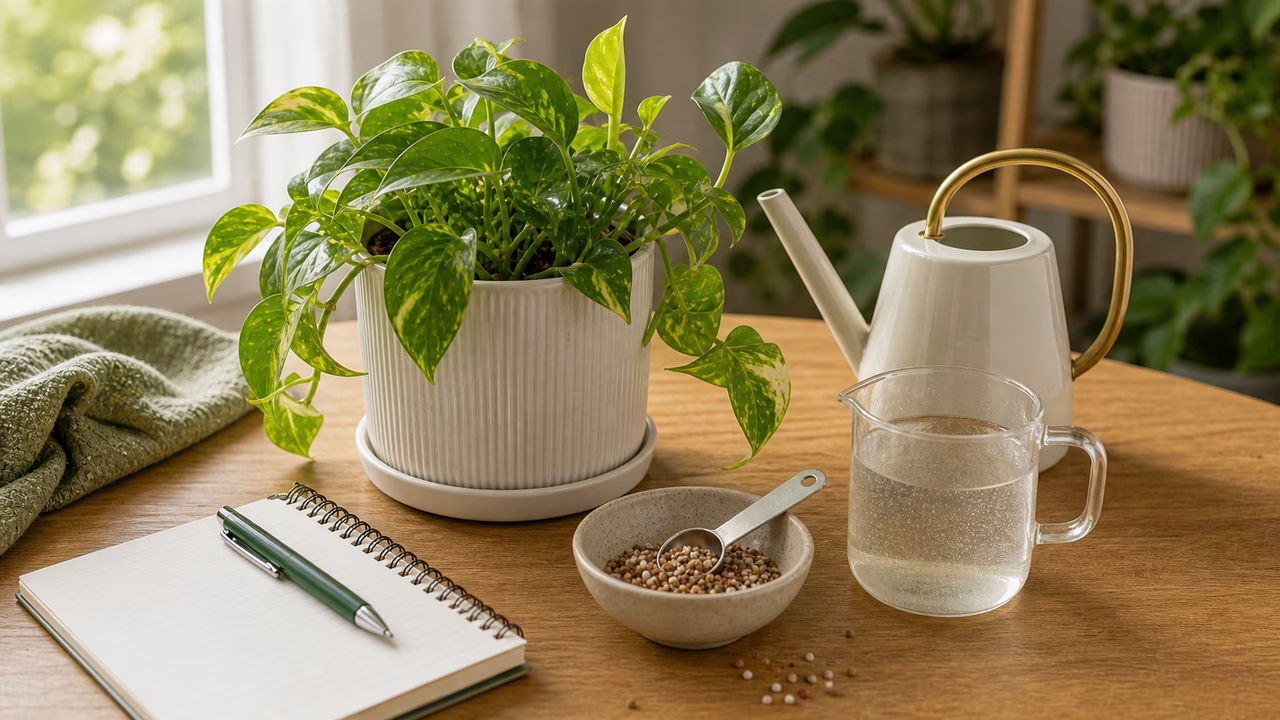
When a plant has earned a feeding, the safest posture is dilute and infrequent. A balanced liquid fertilizer at half the label strength, applied only during the active growing months and only to soil that is already moist, covers the great majority of common houseplants without drama. Feeding dry soil concentrates minerals against thirsty roots and is the fastest route to burned tips. Feeding at full label strength assumes a fast-growing plant in strong light, which most indoor plants are not. Erring weak costs you almost nothing, because a plant that wants more will simply grow through the reserve and ask again with faster growth.
Because indoor pots never get rained through, salts have nowhere to go, so flushing matters. Every so often, water heavily enough that a good volume runs out the drainage holes, and let it drain fully rather than sitting in a saucer. That rinse carries accumulated minerals out the bottom instead of leaving them to crust on the soil surface and around the rim. If you already see a pale crust or a white ring on the pot, that crust is the plant’s way of telling you the feeding was heavier than the growth could use. The setup underneath this, including whether a decorative outer pot is quietly holding runoff against the roots, is worth understanding through Drainage Holes and Cachepots Explained .
When fresh soil is the real answer
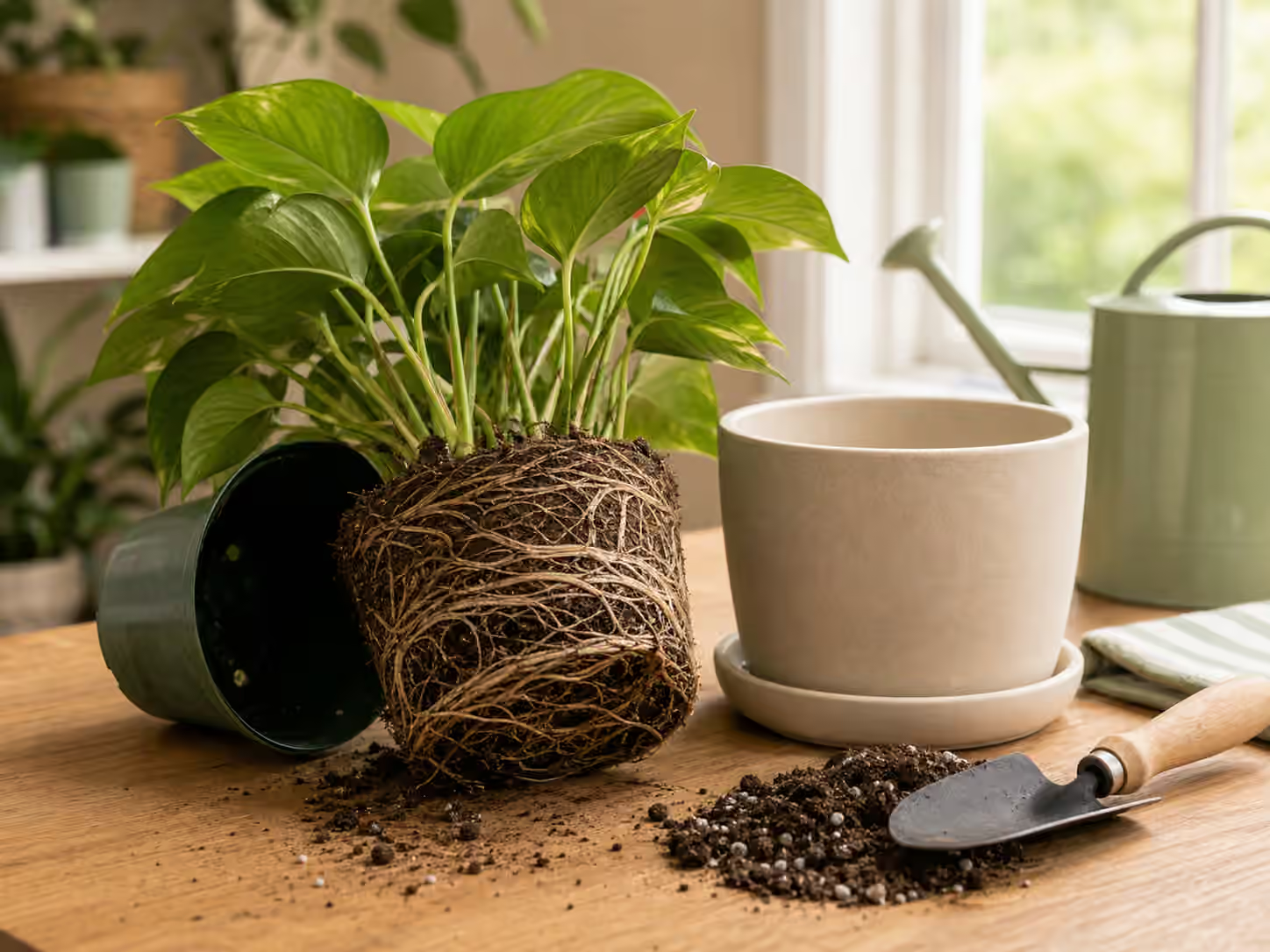
There is a reason nurseries barely fertilize young stock: fresh potting mix already carries a modest nutrient charge, and many mixes include a slow-release component that feeds for weeks or months. A plant that was recently potted into good mix does not need supplemental feeding to prove you care; it needs to be left alone to root in. The genuine case for feeding arrives later, when a plant has lived in the same tired soil long enough to exhaust that charge and its roots have filled the pot. At that point the honest fix is often a soil refresh or a repot rather than a stronger dose, because you are also giving the roots room and fresh structure. The reasoning behind mix choice sits in Potting Mix for Houseplants , and the broader habit of watching before reacting runs through Houseplant Clinic for Beginners .
A calm next action
If your plant looks weak, resist the bottle for one more week. Confirm it is actively growing, confirm the light is genuinely bright, and confirm the roots are firm and the soil is not perpetually wet. Only when all three are true does feeding become a sensible move, and even then, feed lightly, into moist soil, during the growing season, and flush the salts periodically so the pot stays drinkable. Fertilizer is a finishing touch on conditions that are already right. It is never a substitute for light, and it cannot rescue a plant whose real problem is at the roots or on a schedule instead of a need, which is why Stop Watering Houseplants on a Schedule belongs in the same conversation.
When to get help or stop
If a plant keeps declining after the light, water, and root setup are corrected, stop escalating the feeding and step back to reassess rather than adding more product. And if the situation ever crosses into pet chewing or ingestion, pesticide exposure, heavy mold, severe allergies, or an unsafe infestation, that is no longer a fertilizer question. A houseplant guide can help you organize observations and slow down your hand, but it should not replace a veterinarian, clinician, landlord, remediation professional, or licensed pest-control professional when those boundaries are involved.