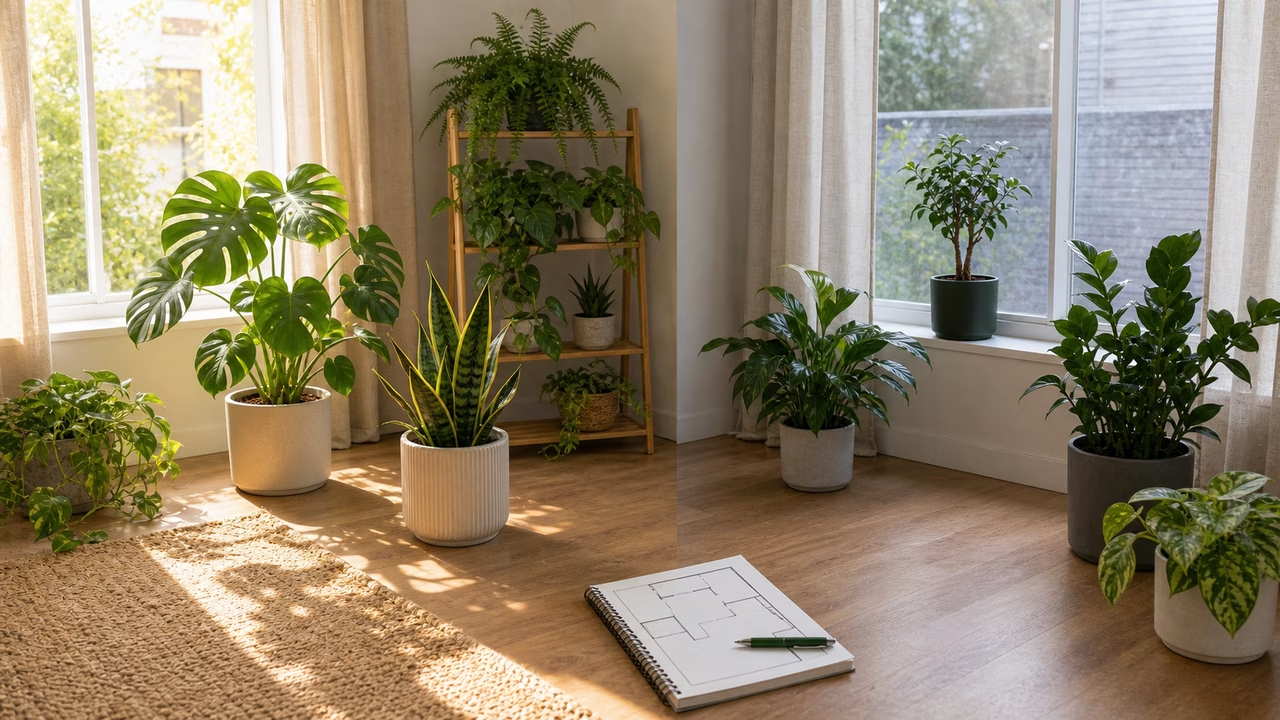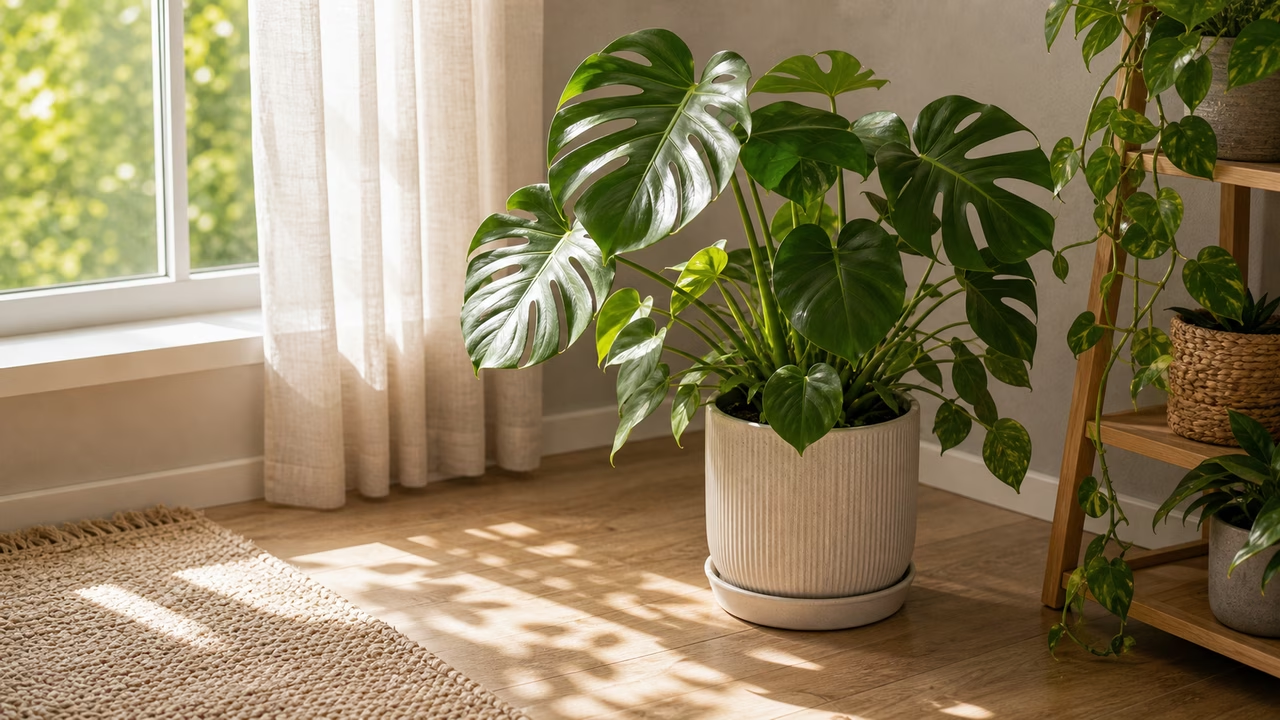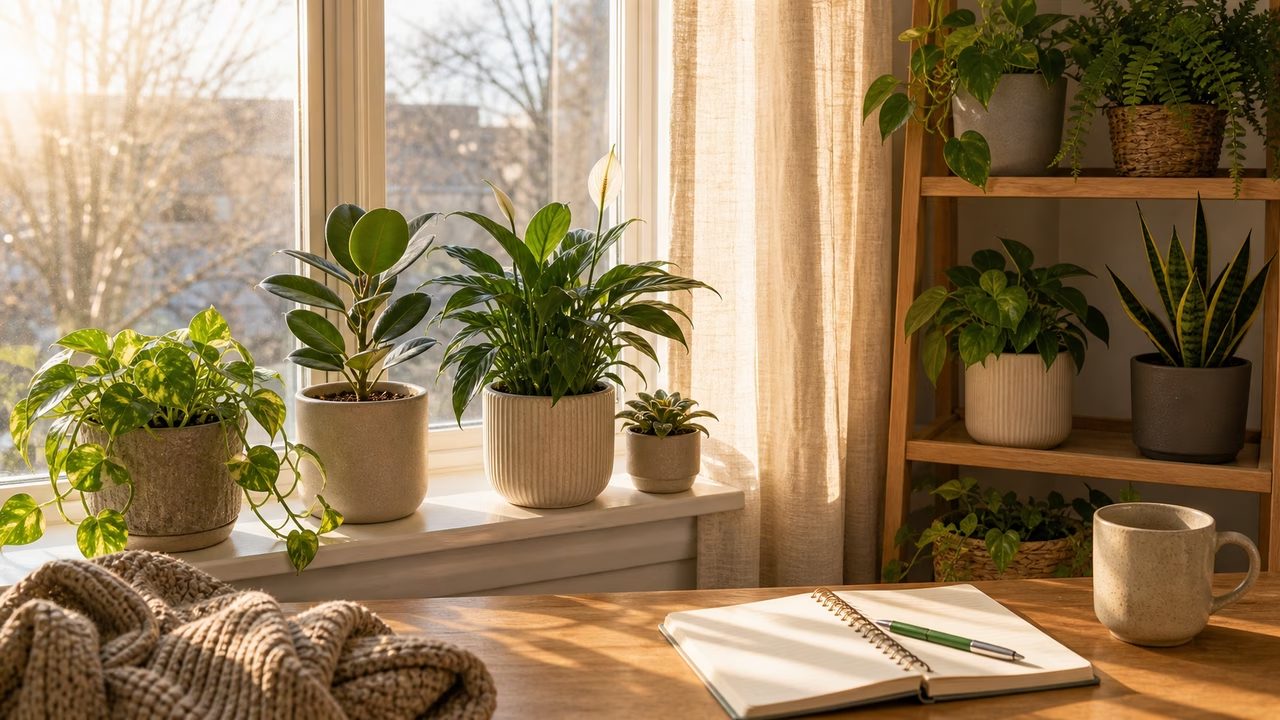
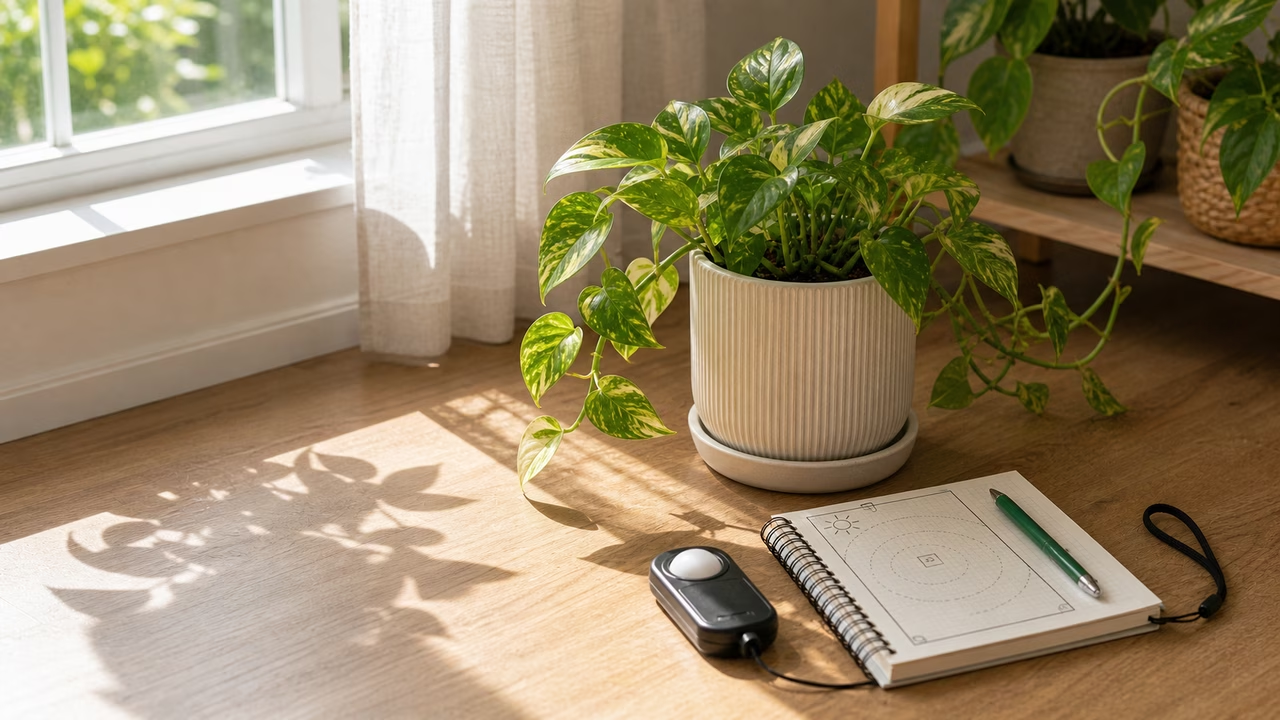
Human eyes are terrible light meters, and that is the root of most indoor light problems. Our vision adjusts so smoothly that a spot several feet from a window still reads as a bright room to us, while to a plant it may be a fraction of the light it needs. A plant that fails to thrive despite careful watering and feeding is very often simply sitting somewhere too dim, and no amount of attention to the other variables will fix a light shortage. Learning to judge light by something other than your first impression is the most useful placement skill you can develop, and it costs nothing but a little observation.
Start with the direction the window faces
Window orientation sets the ceiling on how much light a spot can ever deliver, so it is the first thing to establish. In the northern hemisphere, a south-facing window receives the most light for the longest part of the day and can support the brightest-loving plants, though it may be strong enough to scorch tender leaves pressed against the glass. East-facing windows offer gentle, direct morning sun and comfortable brightness after, which suits a wide range of foliage plants and forgives beginners. West-facing windows deliver intense afternoon sun that runs hot, useful for high-light plants but harsh for delicate ones. North-facing windows give the softest, most even light and never much direct sun, which is fine for genuinely low-light tolerant plants but a struggle for anything hungry. A window’s compass direction is fixed and worth knowing for every plant you place, and the tradeoffs are worked through in more detail in North, South, East, and West Windows .
Distance quietly halves everything
The variable people forget is distance from the glass, and it matters more than almost anyone expects. Light falls off sharply as you move into a room, far faster than intuition suggests, so a plant a couple of feet back from a bright window can be receiving a small fraction of the light available right at the sill. This is why “it’s near the window” is not a useful description; three feet back from that same window is a completely different environment. When you assess a spot, think about it as a distance from the glass as much as a direction, and understand that pushing a plant even a foot or two closer can be a larger change than switching windows. A plant that is stretching or declining several feet into the room is very often just too far back, not in the wrong room.
The shadow test, done at plant height
Because your eyes deceive you, use a physical test instead. On a bright day, hold your hand or a sheet of paper where the plant’s leaves actually sit and look at the shadow it casts. A crisp, sharply defined shadow means strong, fairly direct light. A soft shadow with fuzzy edges indicates the medium, diffused brightness that most foliage plants want, the condition usually labeled bright indirect light. A shadow so faint you can barely tell it is there, or none at all, means the spot is genuinely low light regardless of how bright the room feels to you. The key detail is to run the test at the plant’s leaf height and location, not at the sill, because that is where the plant is living. This simple shadow check is a far more honest gauge than impression, and it makes the abstract phrase “bright indirect light” concrete, which is exactly what Bright Indirect Light Explained sets out to do.
What blocks the light you think you have
A window’s theoretical light is often reduced by things you stop noticing. Sheer curtains, blinds, and even reasonably clean glass cut the amount reaching the plant. Outside, a tree in leaf, a neighboring building, a deep eave, or a balcony overhead can shade a window for much of the day, so a south window that should be bright behaves like a much dimmer one. Take a moment to look at what stands between the sky and your plant, both inside and out, because the sky exposure a window actually has matters more than the direction it nominally faces. A window with a wide, open view of the sky outperforms one of the same orientation that stares at a wall six feet away.
Light is a moving target across the year
The other thing the shadow test captures only in a snapshot is that light changes with the seasons, and dramatically so. The sun sits lower and travels a shorter path in winter, days are shorter, and skies are often grayer, which means a spot that was comfortably bright in summer can become a low-light corner by December. A plant that was thriving may start to stretch or stall simply because the season changed around it, not because anything you did was wrong. It is worth reassessing your placements as the year turns and being willing to move plants closer to the glass, or to a better window, for the darker months. When even your brightest available window cannot keep a plant satisfied through winter, supplementing with a grow light is a legitimate answer rather than an admission of failure, and the practicalities are covered in Grow Lights for Houseplants .
Move in small steps and watch the water
When you do decide to relocate a plant toward better light, do it gradually. A plant acclimated to a dim corner can be shocked or scorched by a sudden jump into strong direct sun, so moving it in stages over a week or two lets the leaves adjust. And watch what happens to your watering after any light change, because the two are linked: a plant in brighter light works harder, transpires faster, and dries its soil sooner, so the same watering habit that suited the old spot may leave it thirsty in the new one. Letting soil moisture, rather than the calendar, drive your watering becomes even more important after a move, which is the whole point of Stop Watering Houseplants on a Schedule . Map your room’s actual light over a day, place the plant deliberately, and then observe, in keeping with the patient approach of Houseplant Clinic for Beginners .
When to get help or stop
Light is one of the more forgiving variables to experiment with, since a wrong placement rarely kills a plant quickly and is easy to reverse. The main caution is patience: give a plant weeks in its new spot before judging, because it answers in new growth, not overnight. If a plant keeps declining after you have honestly corrected its light and watering, the cause is likely elsewhere and worth reinvestigating rather than moving the plant again and again. And if any part of your situation crosses into pet chewing or ingestion, pesticide exposure, heavy mold, severe allergies, or an unsafe infestation, that is outside everyday care. A houseplant guide can help you read your light honestly, but it should not replace a veterinarian, clinician, landlord, remediation professional, or licensed pest-control professional when those boundaries are involved.