Few things unsettle a new plant owner as much as bringing home a healthy plant, or simply moving one across the room, and watching it start dropping leaves within days. It feels like a betrayal, or like proof you have already killed it. In most cases it is neither. Leaf drop after a move is usually the plant recalibrating to a changed environment, and it is often a normal, temporary response rather than a fatal one. The trick is to understand why it happens, so that you can tell ordinary adjustment apart from a real problem and, crucially, so that you do not respond in the ways that make it worse.
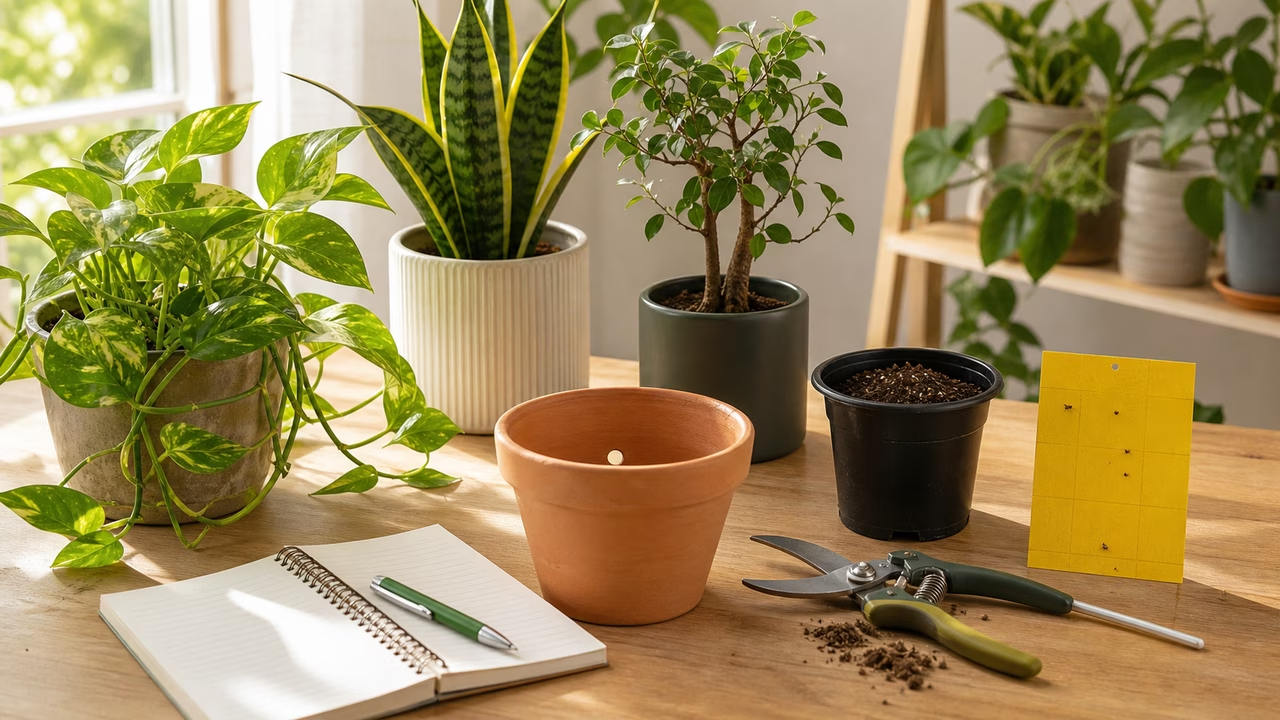
Why a move triggers dropping at all
A plant grows its leaves to suit the exact conditions it is living in, tuning each one to a particular level of light. When you move it, especially from a bright nursery or a sunny window into a dimmer spot, some of those leaves are suddenly more than the plant can support at the new light level. Rather than spend energy maintaining leaves it can no longer pay for, the plant sheds them and will, in time, grow replacements calibrated to the new conditions. This is why leaf drop so often follows the largest environmental change in the move, the change in light, and why the size of the drop tends to track how big the difference between the old spot and the new one was. Understanding the plant’s dependence on light, and how to judge whether the new spot is bright enough, is worth pairing with How to Check Indoor Plant Light .
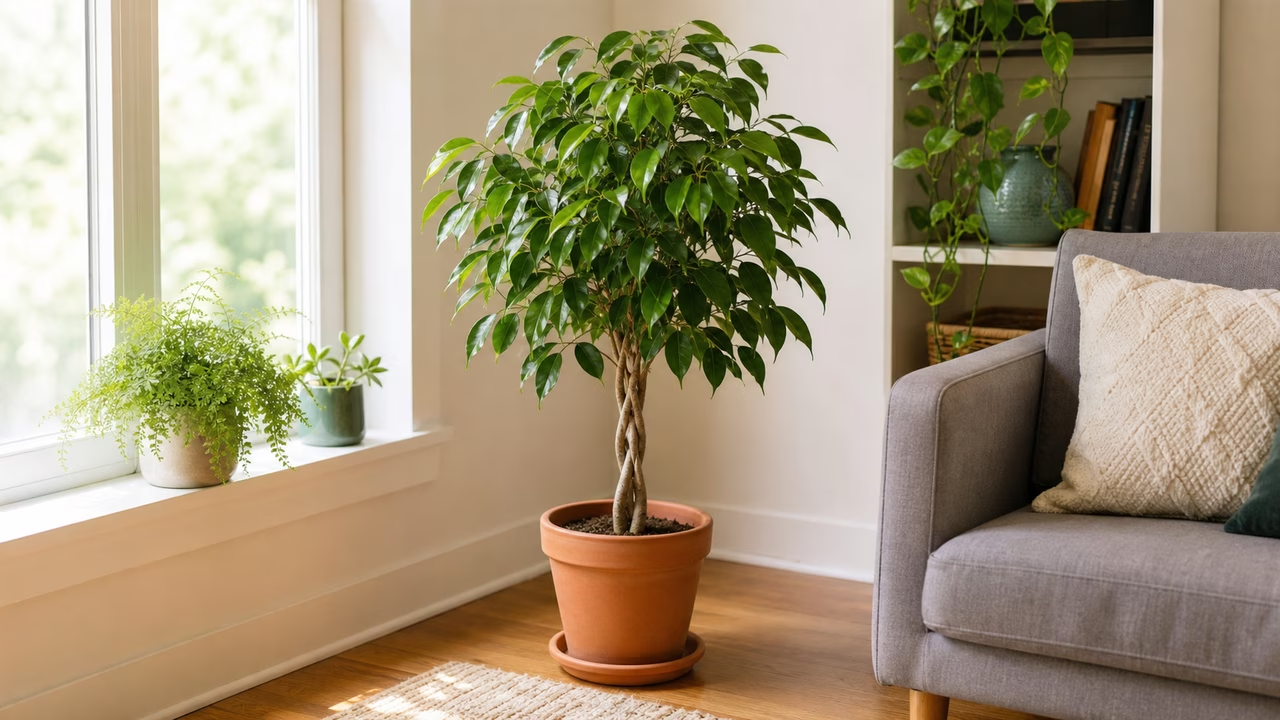
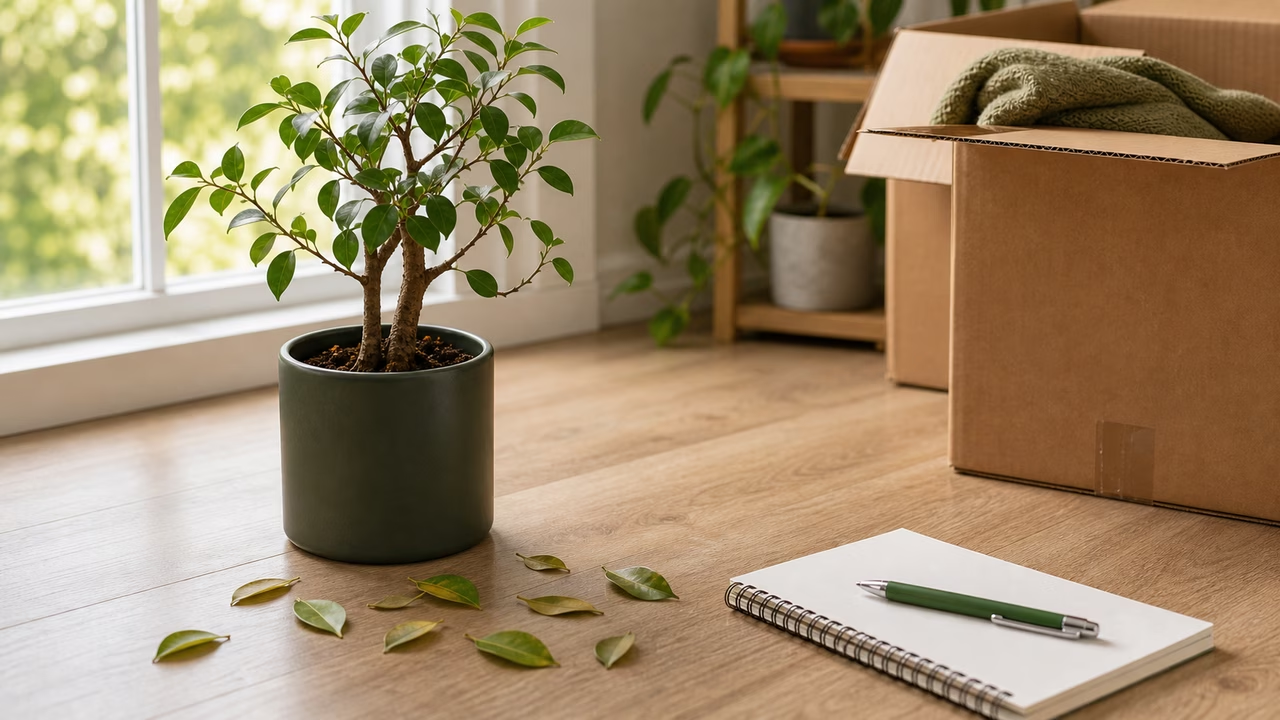
Some plants take this much harder than others. Figs, and ficus in particular, are famous for it; a ficus will protest almost any change, including a move of a few feet or a rotation, by dropping a flush of leaves, and then recover once it settles. Knowing that a given plant is a dramatic shedder helps you keep your nerve when it lives up to its reputation.
Sort the causes before you react
Light is the usual headline, but a move bundles several stresses together, and it is worth separating them. The physical transport itself can chill a plant if it traveled through cold air, even briefly, and tropical plants are sensitive to that. The new location may sit in the path of a draft from a door or window, or in the dry, fluctuating airflow of a heating or cooling vent, both of which stress a plant and prompt leaf drop. And the move is often accompanied by a change in watering, either because the new light dries the soil at a different rate or simply because the routine got disrupted. Any of these can contribute, and often several combine. Take a moment to check each: how far the light changed, whether the plant caught a chill in transit, whether it now sits near a draft or a vent, and whether your watering has drifted since the move.
Old leaves falling is a different message than new ones
Which leaves drop tells you how worried to be. A plant shedding some of its older, lower, or interior leaves after a move is doing the expected thing, trimming what it can no longer support while it adjusts, and this is generally not cause for alarm. It looks alarming in volume but is a managed retreat. The more concerning pattern is when new growth is dropping, or when leaves are yellowing and falling rapidly across the whole plant, because that points beyond simple acclimation toward a deeper problem, frequently at the roots. If the falling leaves are also yellow, the overlapping causes are worth reading through in Why Are My Houseplant Leaves Turning Yellow? , and if the remaining leaves are browning at the edges or drooping rather than dropping, compare against Brown Tips on Houseplants and Drooping Houseplant Leaves to make sure you are reading the right symptom.
The mistakes that turn adjustment into decline
The instinct to help is exactly what tends to hurt here. The most common mistake is to respond to leaf drop by watering more, on the theory that the stressed plant must be thirsty. But a plant that has just shed leaves has fewer leaves drawing water, so it uses less, not more, and adding water to soil that is already staying wet invites root rot on top of the acclimation stress. Watering by what the soil actually tells you, rather than by anxiety, matters more than ever during this period, which is the enduring point of Stop Watering Houseplants on a Schedule .
The second mistake is to repot a plant that is already adjusting. Unless the roots genuinely demand it, adding the significant stress of a repot to a plant that is still recovering from a move stacks two disruptions and slows the recovery. Let it settle first. The third and subtlest mistake is to keep moving the plant, chasing improvement from spot to spot. Every move restarts the acclimation clock, so a plant that is shuffled repeatedly never gets the stable stretch of time it needs to adjust to anywhere. It also never gives you clean data, since you can never tell which location it was responding to. Choose the best spot you can, then commit to it.
Hold steady and let new growth answer
The single most helpful thing you can do after a move is, paradoxically, very little. Pick a good location, keep the conditions stable, water according to the soil rather than the calendar, tidy away the fallen leaves so you can see clearly, and then wait and watch. The real verdict comes from new growth: once a plant has adjusted, it begins producing fresh leaves suited to its new home, and that new growth is the sign that the drop was acclimation and the plant has turned the corner. Give it weeks, not days, to reach that point, because a plant responds on its own timeline. This deliberate patience, resisting the urge to keep intervening while a plant settles, is the same clinic habit described in Houseplant Clinic for Beginners .
When to get help or stop
Most post-move leaf drop resolves on its own once the plant stabilizes and you avoid overwatering and repeated moves. But if a plant keeps declining well after it should have settled, if new growth continues to fail, or if the roots turn out to be soft and rotting, the problem has moved past ordinary acclimation and the plant may not recover no matter how carefully you wait. And if the situation ever crosses into pet chewing or ingestion, pesticide exposure, heavy mold, severe allergies, or an unsafe infestation, that is beyond everyday care. A houseplant guide can help you keep calm and read the signs, but it should not replace a veterinarian, clinician, landlord, remediation professional, or licensed pest-control professional when those boundaries are involved.