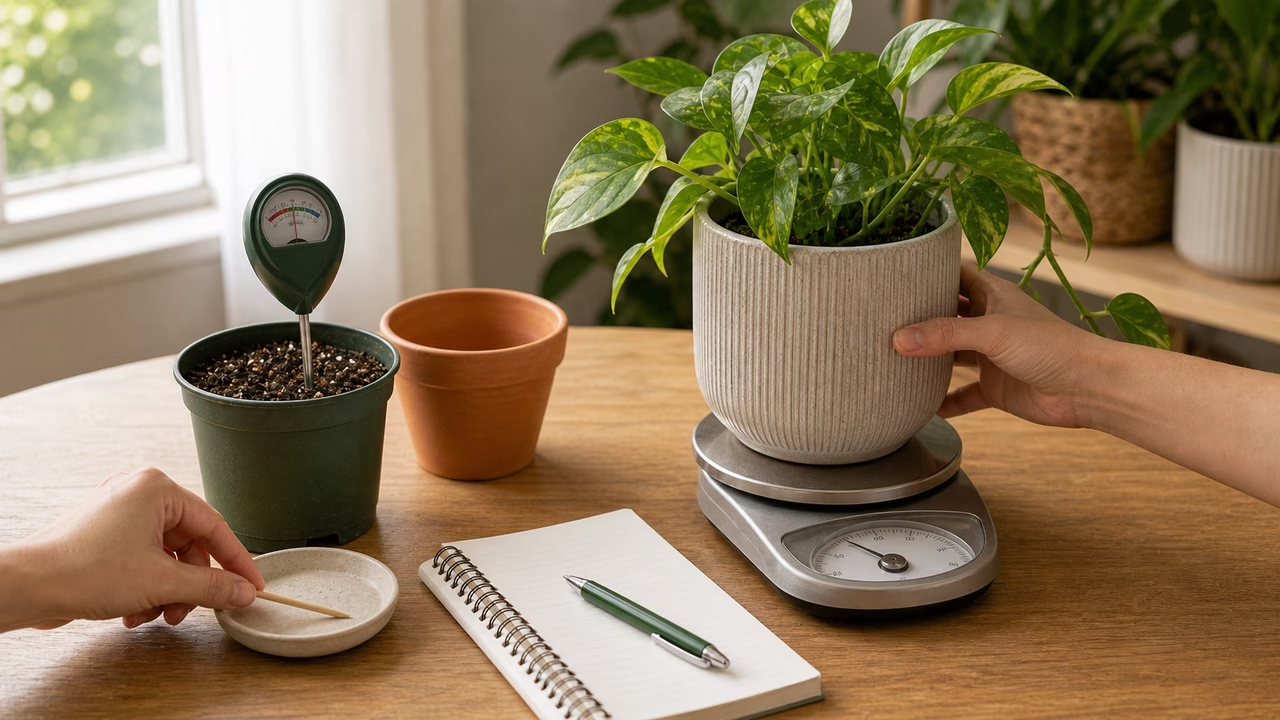
The question underneath every “how do I know when to water” is really a question about measurement, and the honest answer is that no single method reads a pot perfectly. Your finger, a wooden skewer, the weight of the pot in your hands, and a probe meter each measure a slightly different thing, and each one lies to you in a predictable way. Understanding how each one is wrong is what turns watering from guesswork into a habit you can trust.
What your finger actually tells you
Sinking a finger into the soil is the oldest check and, for small pots, one of the most reliable. The catch is that your finger only reaches an inch or two down, and the surface of a pot dries out long before the root zone does. A pot can feel bone dry at the top while the bottom third, where most of the roots live, is still holding plenty of water. That mismatch is responsible for a huge share of overwatering: the surface says “dry,” the person waters on schedule, and the roots quietly stay soggy. The finger test is genuinely useful, but only if you read it as information about the top inch, not the whole pot.
For a plant that wants to dry down most of the way between waterings, a shallow finger check is fine, because you are waiting for that top layer to dry anyway. For a deeper pot or a plant that likes even moisture, the finger simply cannot reach the part that matters, and you need a longer probe.
The wooden skewer trick
A plain bamboo skewer or a thin wooden chopstick, pushed all the way to the bottom of the pot and left for a minute, is the cheapest deep-moisture reading there is. Pull it out and look: soil clings to the damp portion and darkens it, while the dry upper section comes out clean and pale. This gives you a rough cross-section of the whole pot rather than just the surface, and it works because wood takes on moisture visibly. It is slower than a finger and it leaves a small hole, but for tall pots and dense root balls it often tells the truest story of any method. If the skewer comes out clean and dry to the bottom, the plant genuinely needs water. If the bottom inch is dark and cool, waiting is the safer choice.
Why pot weight is the check most people underuse
The most underrated tool is your own sense of weight. Water is heavy, and a freshly watered pot can weigh noticeably more than the same pot a week later. Lift each plant right after you water it, and lift it again when the soil has dried to the point you want, and your hands start to build a memory of “full” versus “ready.” Within a couple of watering cycles you can often tell a plant needs water simply by picking it up, no probe required. Weight has a real advantage over every surface reading: it integrates the entire pot at once, top to bottom, because it is literally measuring the total water still in the soil. It is especially valuable for plants in plastic nursery pots, where the swing between heavy and light is dramatic and easy to feel.
The moisture meter, and why it deserves suspicion
Probe-style moisture meters are appealing because they promise a number, and a number feels objective. In practice, the inexpensive ones are crude. They respond to the dissolved salts and fertilizer in the soil as much as to water, so a recently fertilized pot can read “wet” when it is fairly dry, and a pot of chunky, airy mix can read “dry” simply because the probe is sitting in an air pocket rather than against damp soil. The reading also depends heavily on where in the pot you push it. None of this makes a meter useless, but it does mean the number should never be the only voice in the room.
If the observation points to a setup gap, compare moisture meters as a category, not as a miracle fix. Buy only when the tool answers the exact problem you found. A meter earns its keep in one specific situation: a large, deep pot you cannot easily lift and cannot reach the bottom of with a finger. There, a probe that reaches the root zone gives you data you otherwise would not have, as long as you treat its reading as one input and not a verdict.
Cross-checking, and what to do when the tools disagree
The real skill is holding two checks against each other. Lift the pot and push in a skewer. Use the finger and the weight. When two methods agree, you can act with confidence. When they disagree, that disagreement is itself the answer: it means wait and look again rather than water on a hunch. A meter reading “dry” while the pot feels heavy in your hands almost always means the pot is still wet and the meter is confused, so you hold off. Over a few weeks of this, the tools become training wheels. Your hands learn the weight, your eyes learn the surface, and you find yourself needing the meter and even the skewer less and less.
The goal is not to find the one perfect gadget. It is to stop trusting any single signal blindly, because every method has a blind spot, and the blind spots do not overlap. Two cheap checks used together beat one expensive check used alone, every time.
When to step back
An indoor plant clinic can help you read a pot, but it is not the last word. If a plant keeps declining after you have genuinely corrected the watering, or if the trouble crosses into rot, pests, mold, or a pet chewing on foliage, stop the casual experiment and bring in the appropriate qualified help.
For related reading, see the clinic’s guides on overwatered vs underwatered houseplants , drainage holes and cachepots , and why it helps to stop watering houseplants on a schedule .