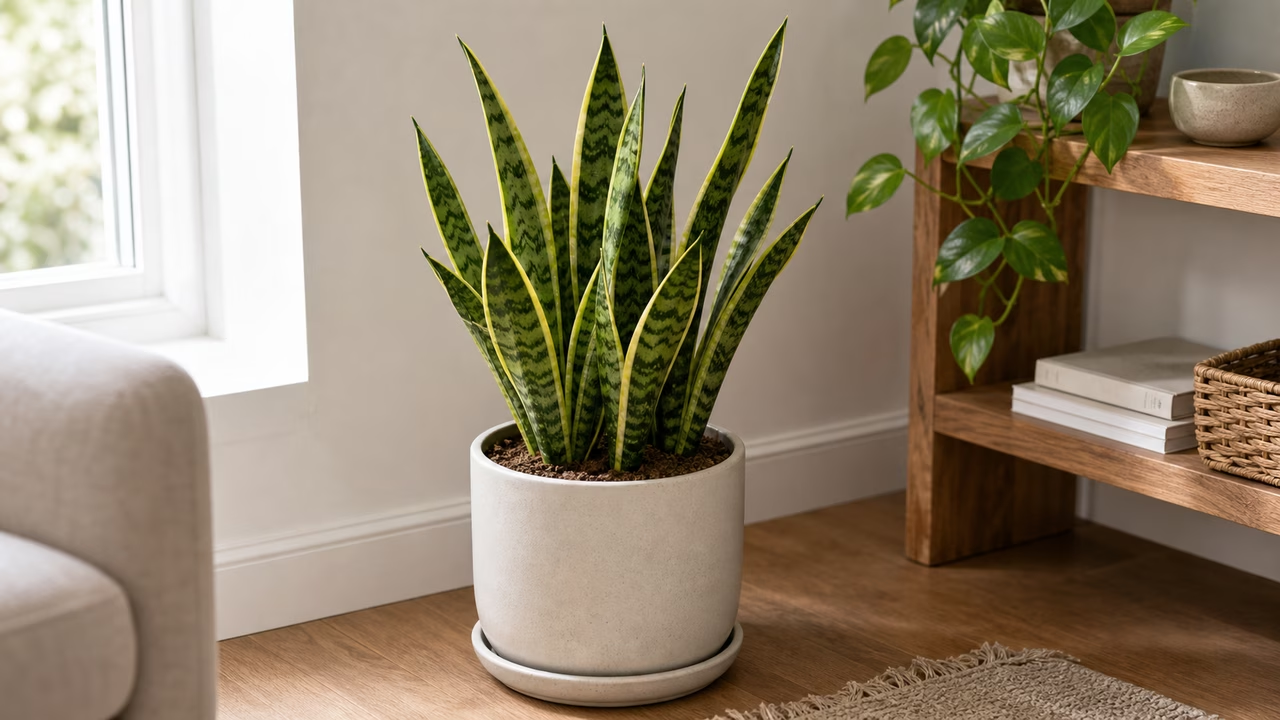
The snake plant, sometimes still sold as Sansevieria and now botanically grouped with Dracaena, is the plant most often recommended to people who believe they cannot keep anything alive. It earns that reputation honestly, but the reputation also gets it killed, because “impossible to kill” is quietly rewritten in most owners’ minds as “cannot be overwatered,” and overwatering is very nearly the only thing that reliably kills one. Understanding what this plant actually is, a stiff-leaved succulent built for drought, is the whole of caring for it well.
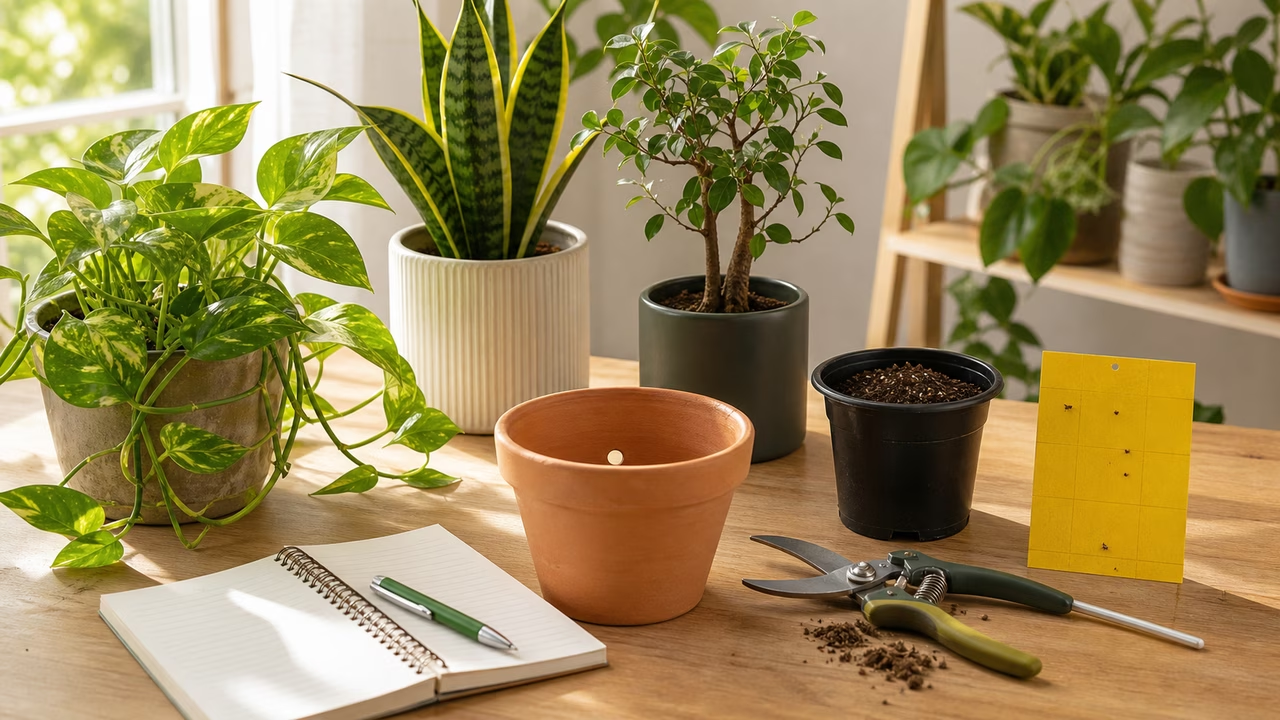
What kind of plant you are actually keeping
Those thick, upright leaves are water tanks. A snake plant stores moisture inside its blades so that it can coast through long dry spells, which is exactly what it does in its native dry regions, where rain is occasional and the soil drains fast. Everything sensible about its care follows from that single fact. It expects to be soaked and then left alone until it is genuinely dry, not kept evenly moist. It resents sitting in wet soil the way a cactus would. And because it holds its own reserves, it is far more forgiving of neglect than of attention. If you treat it like a thirsty tropical vine, watering whenever the surface looks dry or on a comforting weekly rhythm, you will keep its root zone perpetually damp and the base of the leaves will eventually turn soft, mushy, and yellow as rot sets in from below. The plant that supposedly cannot be killed dies this way constantly, and always from kindness.
Watering: the one thing to get right
If you remember nothing else, remember to let a snake plant dry out completely between waterings, all the way through the pot rather than just at the top. When you do water, water thoroughly so the whole root ball is moistened and let the excess drain away, then wait, and keep waiting, until the soil is bone dry again before the next drink. In a bright spot in summer that cycle might be every couple of weeks; in a dim corner in winter it can stretch to a month or more, and that is normal. The plant is not suffering during the dry stretch; it is doing exactly what it is built to do. Judge by the soil, not the calendar, in the spirit of our guide on not watering on a schedule . Lifting the pot to feel its weight is one of the most reliable tells, since a dry pot is noticeably light, and pushing a finger deep into the mix beats trusting a dry-looking surface.
Because the danger is always excess water, drainage is not optional. The plant belongs in a pot with a drainage hole, and if you tuck that into a decorative cachepot, empty any water that collects so the roots never stand in a hidden pool. A gritty, free-draining mix, the kind sold for cactus and succulents or a regular mix cut with extra perlite or coarse sand, helps enormously by refusing to stay soggy. And keep the pot on the small side. An oversized pot holds a large volume of damp mix the modest root system cannot use, and that stagnant reservoir is where rot begins; our note on pot size and stability explains why restraint here matters, particularly for a top-heavy plant whose tall leaves can tip a light pot.
Light, and how it sets the pace
Snake plants are famous for tolerating low light, and they genuinely do survive in dim corners better than almost anything else, which is why they end up in offices and hallways far from any window. But tolerating is not the same as thriving. In low light the plant grows slowly or barely at all, and, just as importantly, it uses very little water, which means the soil stays wet for a long time and your margin for overwatering shrinks. In bright indirect light, or even some direct sun, the plant grows more steadily, drinks more, and dries out faster, giving you a wider and more forgiving watering window. A bright spot out of harsh midday sun is the sweet spot for most people. If you are moving one from a shop into a much brighter window, ease it over gradually, since a plant grown soft in dim light can scorch when thrown straight into strong sun. Our guide on bright indirect light covers what that phrase actually means in a real room.
Repotting slowly and reading stress
Snake plants are in no hurry to be repotted and are perfectly content a little crowded, so there is no need to move one on a schedule. They tend to fill out sideways with new shoots, and they can even push against and crack a pot when truly packed, which is a fair reason to move up a size. When you do repot, step up only modestly and resist the urge to reward the plant with a much larger home, for all the water-reservoir reasons above. Our guide to repotting without panic applies here with one added note: after repotting a drought-adapted plant, err strongly on the side of underwatering while it settles.
Learning to read this plant’s stress is mostly learning to distinguish two opposite problems that can look similar to a beginner. Leaves that go soft, mushy, and yellow, especially at the base, and a plant that feels loose in its pot, point to overwatering and rot; the response is to stop watering, check the roots, and if necessary repot into fresh dry mix. Leaves that wrinkle, curl inward, or crease and flop, by contrast, usually mean the plant has been dry for a very long time and has drawn down its reserves; a thorough watering revives it. When in doubt with a snake plant, wait rather than water, because it recovers readily from being too dry and rarely from being too wet.
When to get help or stop
Stop the home experiment when the issue involves pet chewing or ingestion, pesticide exposure, heavy mold, severe allergies, unsafe infestation, or a plant that keeps declining after the basic setup is corrected. A houseplant guide can organize observations. It should not replace a veterinarian, clinician, landlord, remediation professional, or licensed pest-control professional when those boundaries are involved.
Settling into a quiet routine
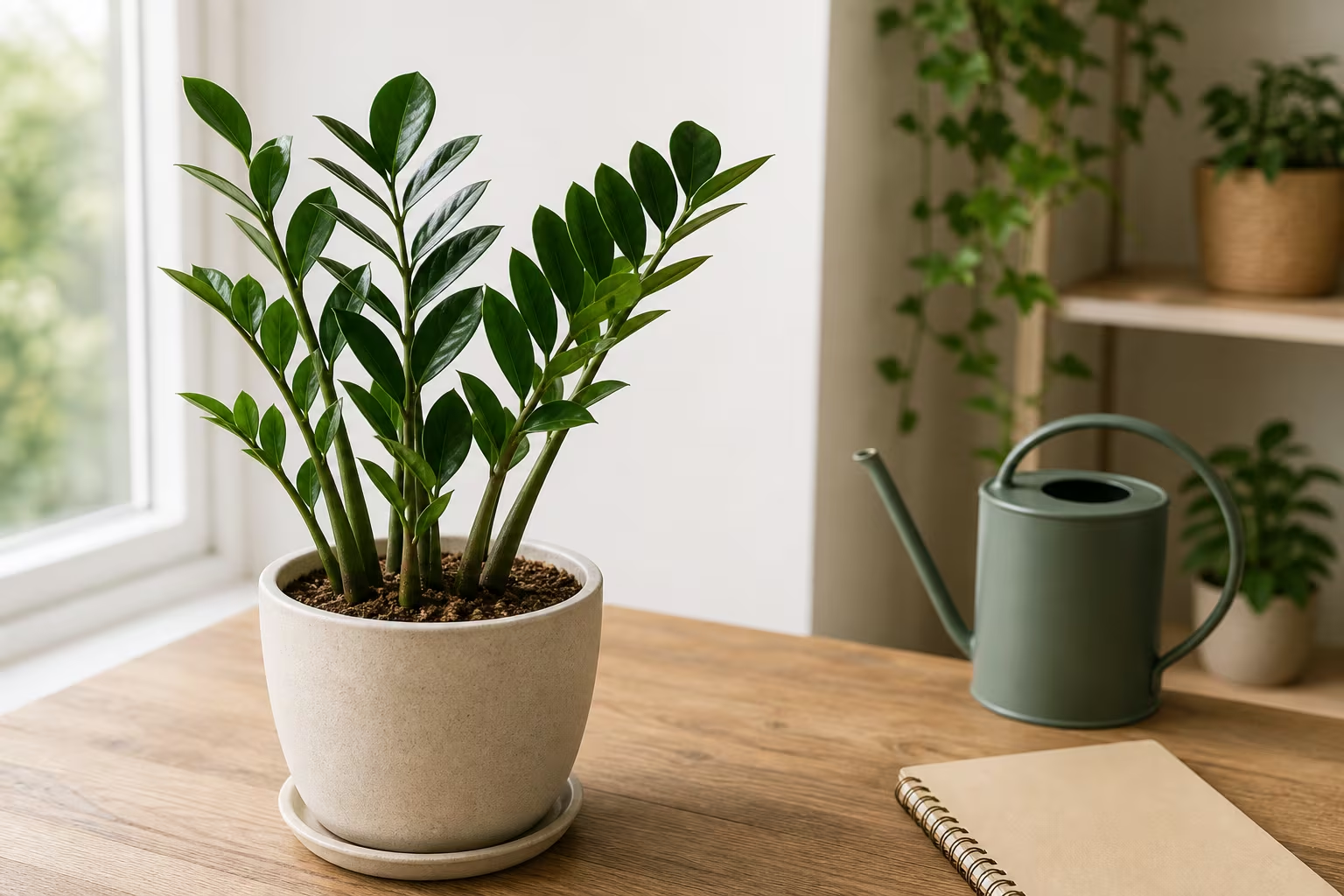
The pleasure of a snake plant is how little it asks once you stop overhelping it. Give it a bright-enough spot, a well-draining pot on the small side, and long dry stretches between deep waterings, and it will simply persist, throwing up a new blade now and then as its progress report. It rewards forgetfulness more than fuss, which makes it an ideal plant for learning the clinic habit of doing less and watching more. If you have killed one before, it was almost certainly by loving it with the watering can, and the fix is nothing more than patience. Related beginner-friendly plants that share this dry-tolerant, low-drama temperament include the ZZ plant and pothos , and our beginner’s clinic overview ties the shared habits together.