Spider mites are the pest most likely to get a good distance into a plant collection before anyone notices them, and that head start is the whole problem. They are barely visible, they hide on the undersides of leaves, and by the time they announce themselves with the webbing that gives them their name, the population is already large and has often spread to neighboring plants. Learning to catch them early, while the only sign is a faint dullness on a leaf, is worth far more than learning any particular treatment.
What they are and why they hide so well
Spider mites are not insects but tiny arachnids, relatives of spiders, which is why they spin silk and why they have eight legs if you ever get a close enough look. Most are well under a millimeter across, appearing as little more than moving specks of dust, and they cluster on the undersides of leaves where they are sheltered and out of sight. They feed by piercing individual plant cells and draining them, and each drained cell leaves a tiny pale dot. Multiply that across thousands of feeding punctures and you get the first real symptom: a fine, pale stippling or a dusty, faded look across the leaf surface, as though the color has been sanded away. Because the damage accumulates gradually and from below, an owner glancing at the tops of leaves can miss it entirely until the plant looks broadly unwell.
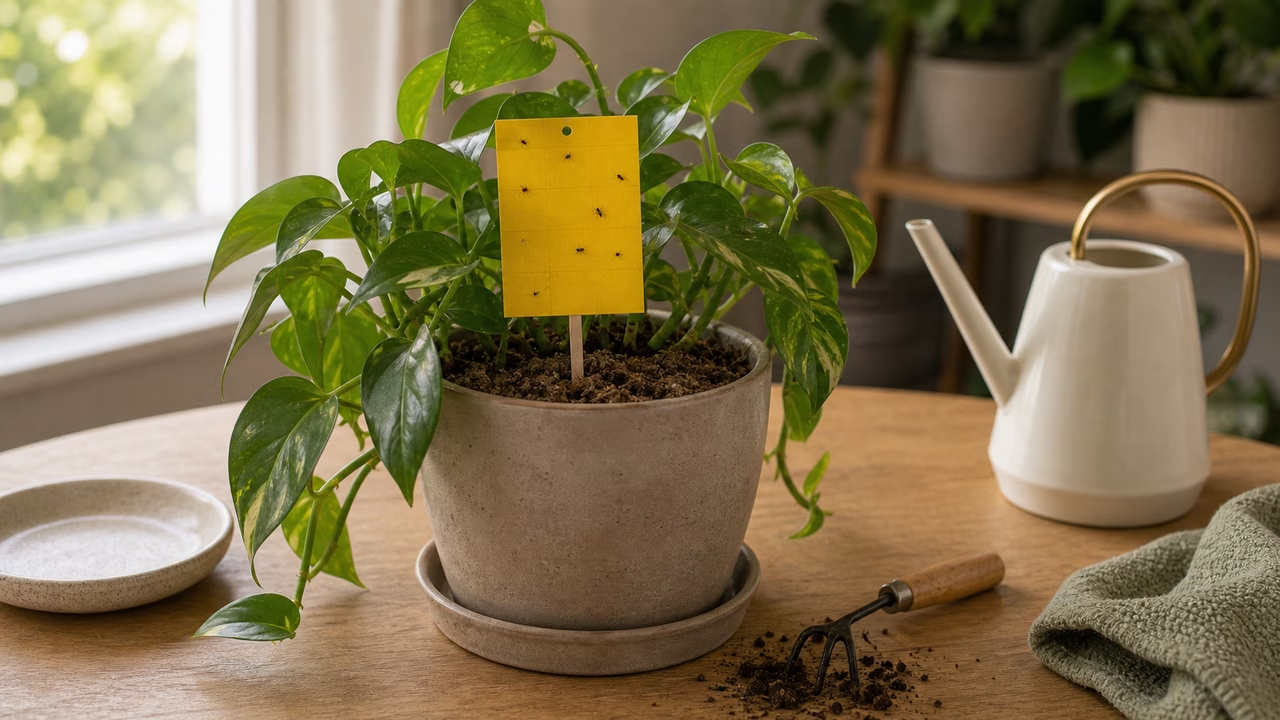
The other thing that makes them dangerous indoors is how fast they breed. Warm, dry indoor air is close to ideal for them, and a small starting population can balloon over a few weeks. This is why a plant can seem fine one week and be visibly struggling the next, and why they are so good at moving quietly onto the plant sitting next to the infested one. Speed and concealment together are what make early detection the entire game.
How to inspect properly
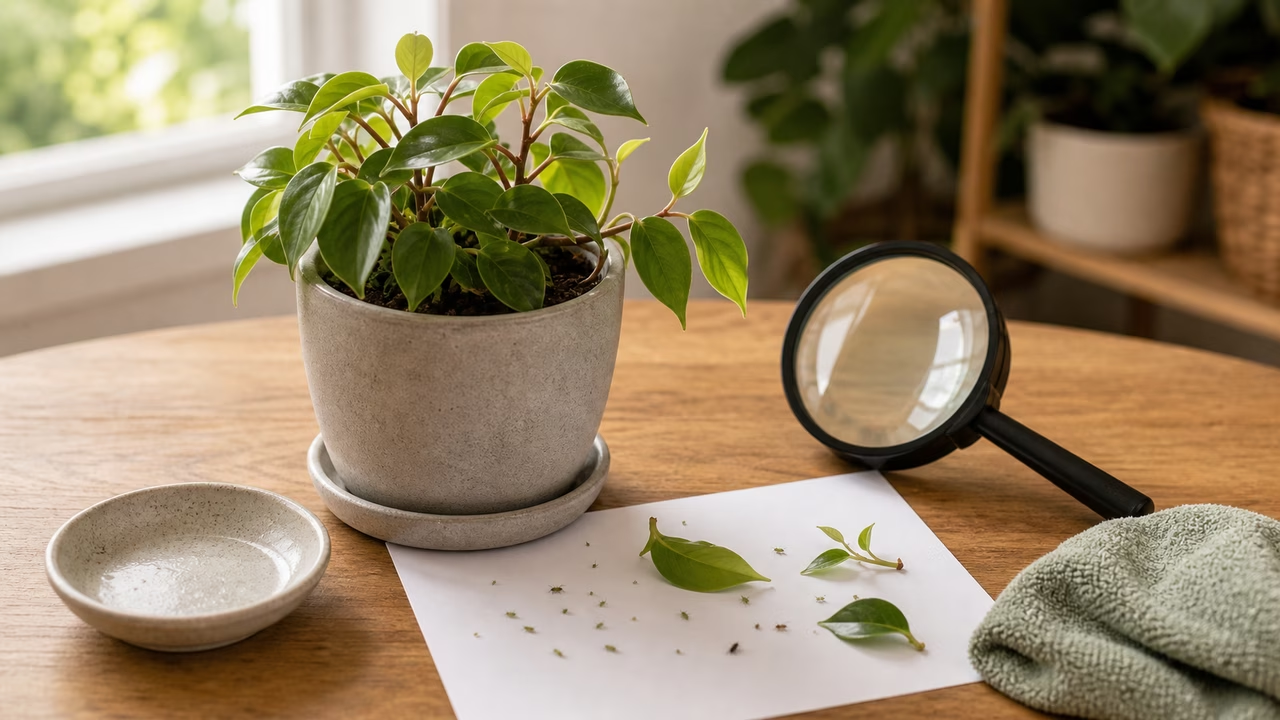
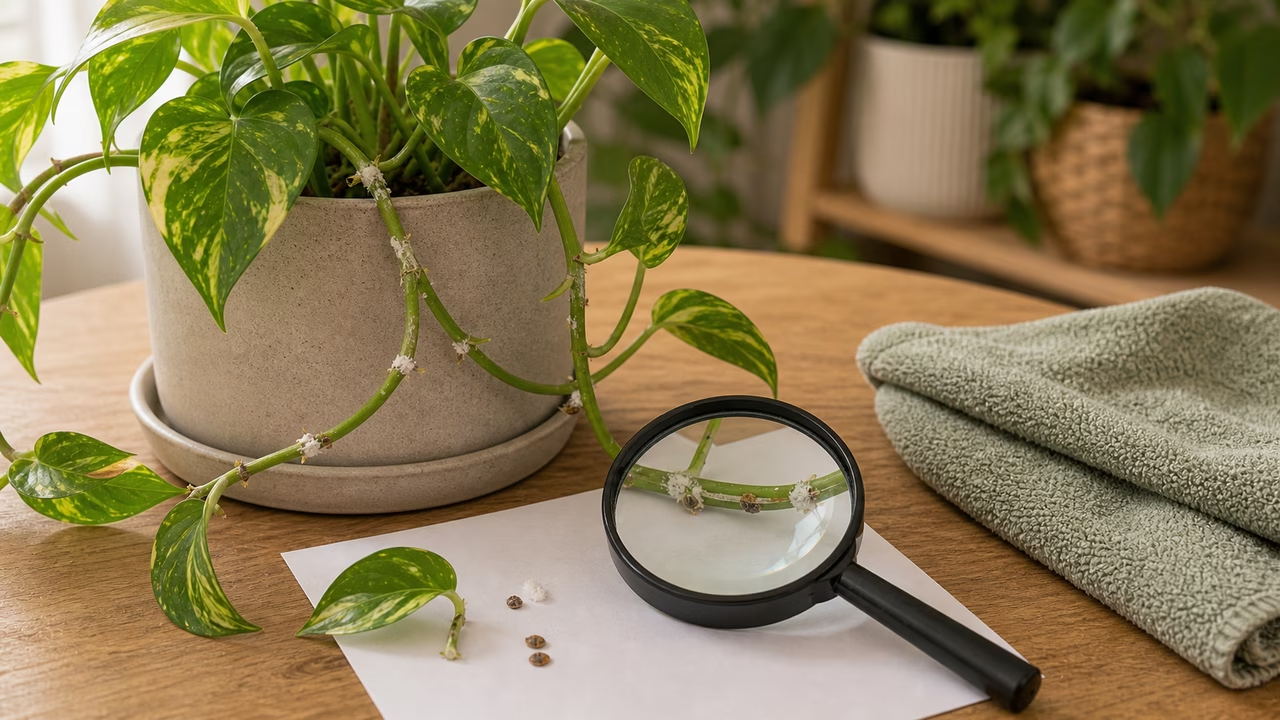
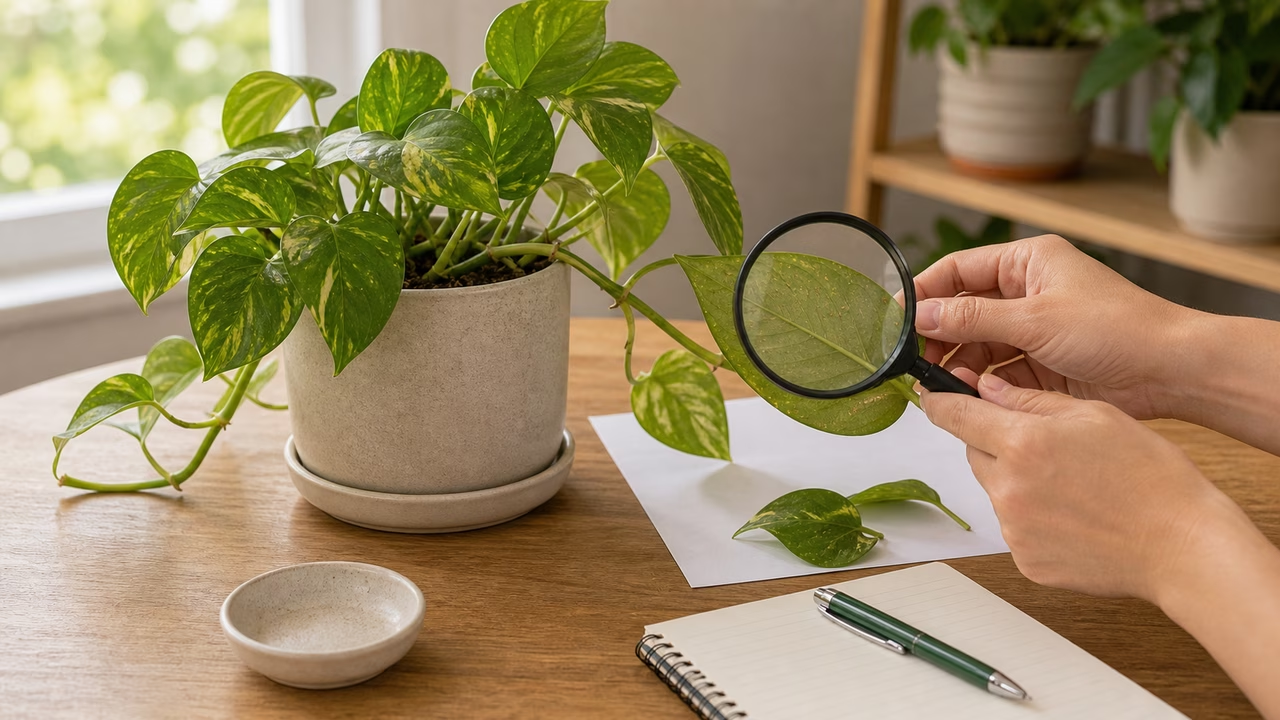
Reading the tops of leaves is not enough; you have to turn them over and look at the undersides where the mites actually live, ideally under a bright light and, if you have one, a hand lens or magnifier. On a heavily infested leaf you may see the mites themselves as slow-moving specks, along with fine webbing strung across leaf joints, the notch where leaf meets stem, and the growing tips. But webbing is a late sign, and waiting for it means waiting too long. Earlier, you are looking for that faint stippling on the upper surface and, on the underside, a scattering of tiny pale dots or a barely-there dustiness.
The single most useful trick costs nothing: hold a sheet of white paper under a suspect leaf and tap or gently shake the foliage. Dislodged mites fall onto the paper as tiny specks, and here is the tell, if those specks begin to crawl, you have living mites and a confirmed infestation. Motionless specks might be dust; moving specks are the pest. Doing this over white paper turns an uncertain “the leaf looks a bit off” into a definite yes or no, which is exactly the kind of confirmation you want before taking any action. Building this leaf-underside check into a regular routine, as our guide on a houseplant pest inspection routine describes, is what lets you catch mites at the stippling stage rather than the webbing stage.
The first move is isolation, not a spray
The strong instinct on finding a pest is to reach for a spray immediately, and it is the wrong first move. The right first move is to isolate the affected plant, physically separating it from every other plant in the home so that mites cannot walk or drift onto their neighbors while you deal with the source. Mites spread by proximity, so a plant that stays in the middle of a shelf keeps reinfecting the collection no matter how diligently you treat it. Once it is isolated, inspect its neighbors, the plants that were sitting closest, because there is a good chance the infestation has already jumped, and treating one plant while an untreated one sits nearby simply guarantees the cycle continues. Our note on quarantining a suspect plant covers the same instinct applied to newly arrived plants, which is where a great many mite problems originate in the first place.
Isolation also buys you the calm to confirm what you are dealing with before acting. Spider mite stippling can be mistaken for other kinds of leaf damage, and a plant that has merely been sunburned or splashed does not need to be sprayed at all; our guide on spots and marks on leaves helps sort a pest pattern from the many things that are not pests. Spraying first and identifying later is how people end up dousing healthy plants with products they never needed.
Treating carefully, by the label
Once you have confirmed living mites and isolated the plant, the gentlest effective approach starts with physical removal rather than chemistry. Because mites hate moisture and dislodge easily, thoroughly rinsing or wiping the leaves, undersides especially, knocks down a large share of the population and the webbing along with it. Cleaning the foliage this way, in the spirit of our guide on cleaning dusty leaves , is often the most useful single action and can be repeated every few days to interrupt their fast breeding cycle. Raising humidity around the plant tilts the environment against them as well, since they favor dry air.
If you move on to a treatment product, the non-negotiable rule is to follow the label exactly, on dosage, on the plants it may be used on, and on where it may be applied. Mite treatments typically have to be repeated at intervals, because they rarely kill eggs, and a single application lets a new generation hatch and rebuild; the label’s timing exists for this reason. Treat over multiple rounds spaced as directed, keep the plant isolated throughout, and keep inspecting the undersides so you know whether the population is actually falling. The boundary here matters: home care covers a modest infestation on a houseplant, but repeated failure, a heavy infestation you cannot bring down, or any question about pesticide exposure is where a licensed professional belongs.
When to get help or stop
Stop the home experiment when the issue involves pet chewing or ingestion, pesticide exposure, heavy mold, severe allergies, unsafe infestation, or a plant that keeps declining after the basic setup is corrected. A houseplant guide can organize observations. It should not replace a veterinarian, clinician, landlord, remediation professional, or licensed pest-control professional when those boundaries are involved.
Watching for the all-clear
Do not declare victory after one good rinse or one spray. Damaged leaves that were already stippled will not heal, so they are not your gauge of success; the newest growth is. Keep the plant isolated and keep tapping leaves over white paper every few days, watching for the moving specks to dwindle and then disappear. Fresh leaves emerging clean and evenly colored, with no new stippling and no returning webbing, are the real signal that the infestation is beaten. Only when several inspections in a row come up empty should the plant rejoin the others. Related pests worth learning to distinguish, since the inspection habit catches all of them, include fungus gnats , mealybugs and scale , and the aphids and thrips that show up on indoor plants.