A new mark on a leaf sets off a familiar chain of worry. The owner notices a spot, decides it must be a disease, and reaches for whatever spray is nearest, often treating a problem that was never alive to begin with. The truth is that leaf marks are one of the least specific symptoms a houseplant produces; a spot can come from a fungus, a pest, a splash of water, an hour of harsh sun, a cold windowpane, or nothing more than the leaf having been rubbed against a wall. The skill this guide teaches is not identifying a disease. It is reading the mark carefully enough to know whether it points to something living, something environmental, or something already over and done with.
Read the mark before you name it
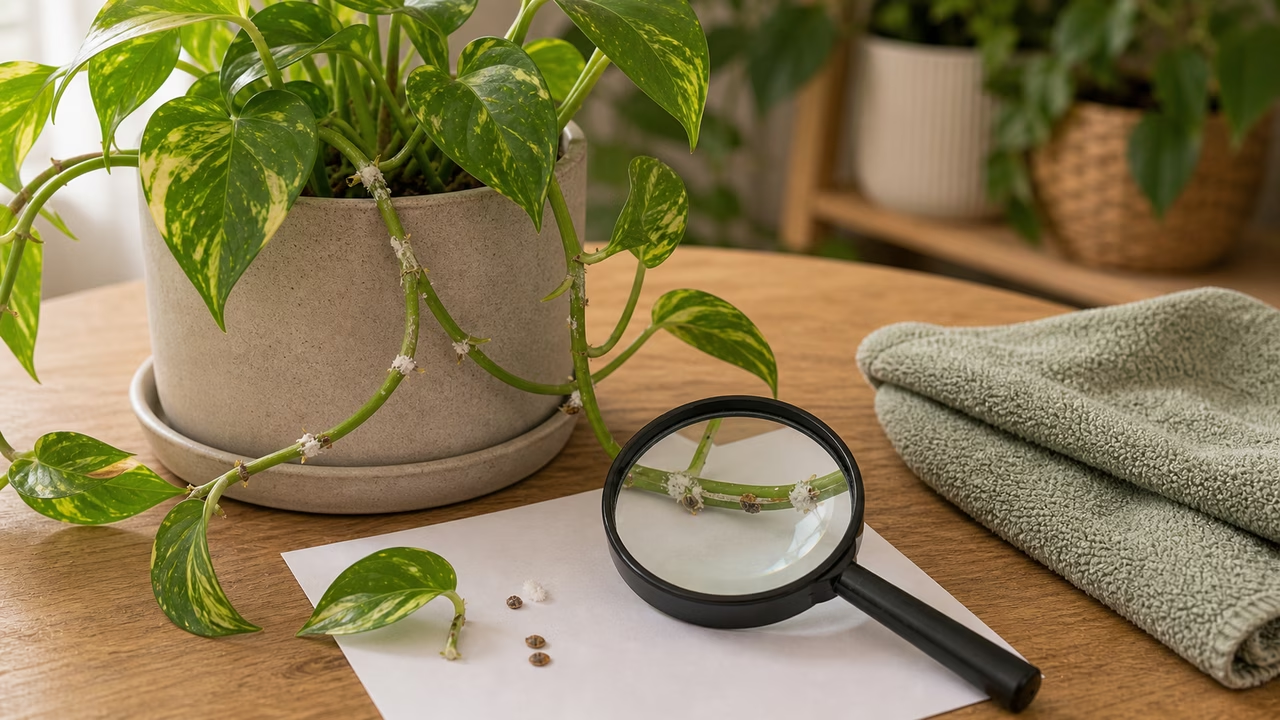
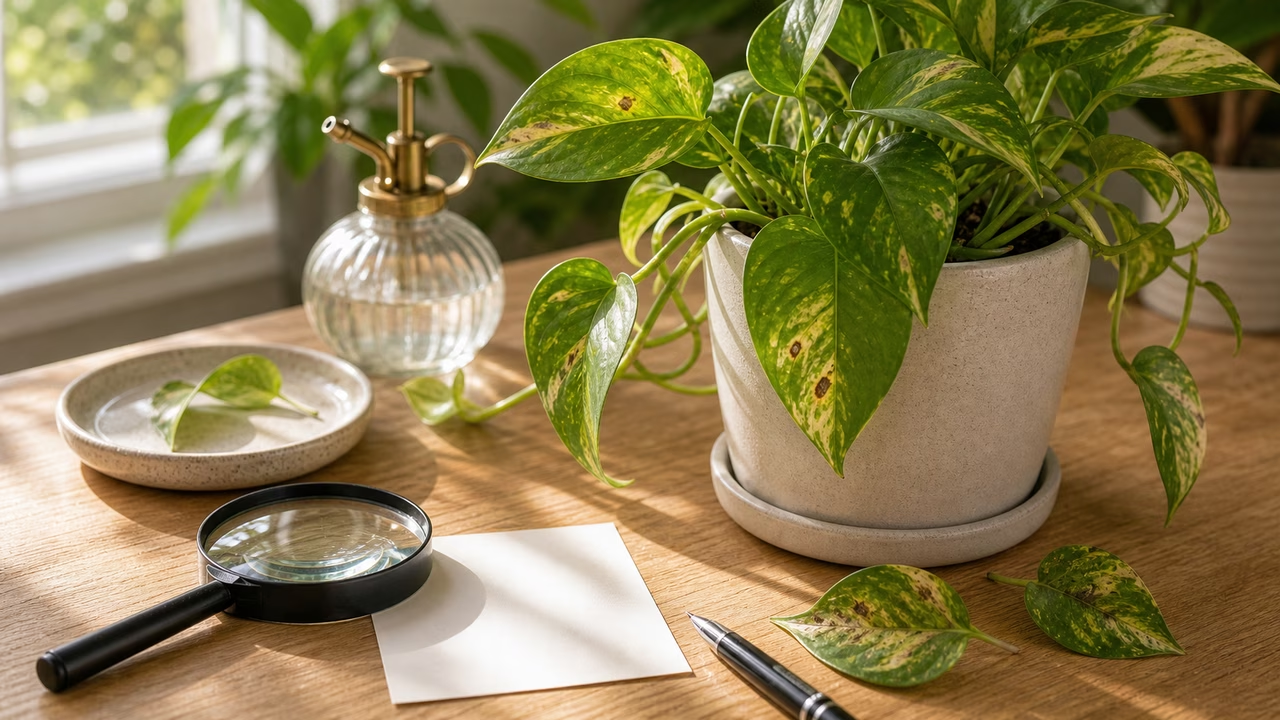
The most useful thing you can do is stop trying to diagnose from across the room and instead look closely at the physical character of the mark. Run a fingertip over it. Is it raised or sunken relative to the leaf surface? Is it wet-looking and soft, or dry and papery? Does it wipe away, or is it part of the leaf tissue itself? Each answer narrows the field considerably. A raised, waxy, or crusty bump that does not wipe off may not be a mark at all but a scale insect sitting on the leaf. A powdery or dusty coating that comes off on your finger suggests something on the surface rather than in the tissue. A sunken, dark, sometimes yellow-haloed spot in the tissue looks more like a fungal or bacterial leaf spot. A dry, bleached, or crispy patch on the side that faces the window points toward sun scorch rather than any organism.
Color and edges tell you more. Marks with a clear wet margin, or a yellow halo, or that seem to be actively enlarging behave like living problems. Marks with dry, brown, well-defined edges that are not changing behave like old physical damage that has already stopped. The pattern across the leaf matters too: scattered pale speckling, a fine stippling as if the color were sanded away, is a classic sign of pest feeding and should send you straight to the undersides.
Turn the leaf over
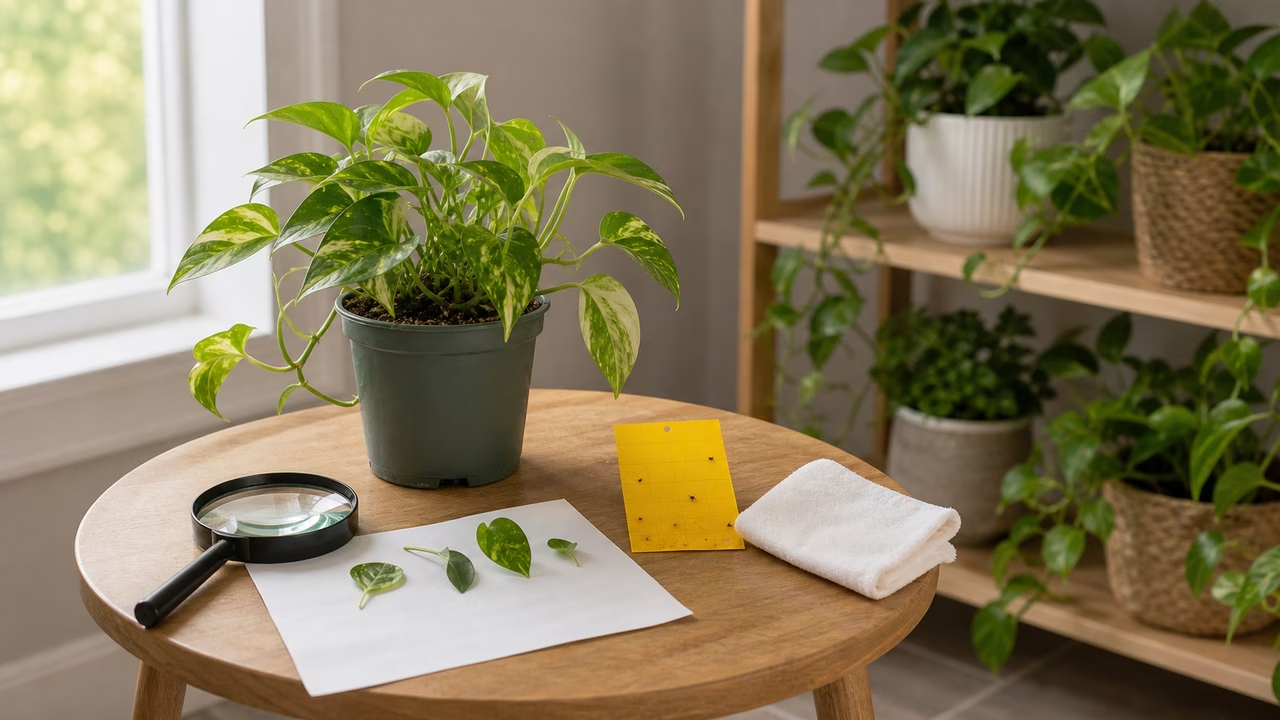
Whatever the top of the leaf shows, the underside is where the answers often hide, so make turning leaves over an automatic part of any inspection. Many of the pests that cause leaf marks, spider mites above all, live and feed on the undersides where they are sheltered, and the stippling visible on top is only the shadow of what is happening beneath. Look, under a bright light and ideally a magnifier, for tiny moving specks, fine webbing in the leaf joints, clusters of small bumps, or a scattering of dark dots. If a suspect leaf shows fine pale speckling on top, the leaf-underside check is what confirms or rules out mites, and our guide on spider mites covers the tap-over-white-paper test that turns suspicion into certainty. If instead you find raised bumps or cottony tufts, mealybugs and scale is the more likely culprit. Finding nothing living on the underside is itself informative; it pushes the explanation toward the environment rather than a pest.
Consider the boring explanations first
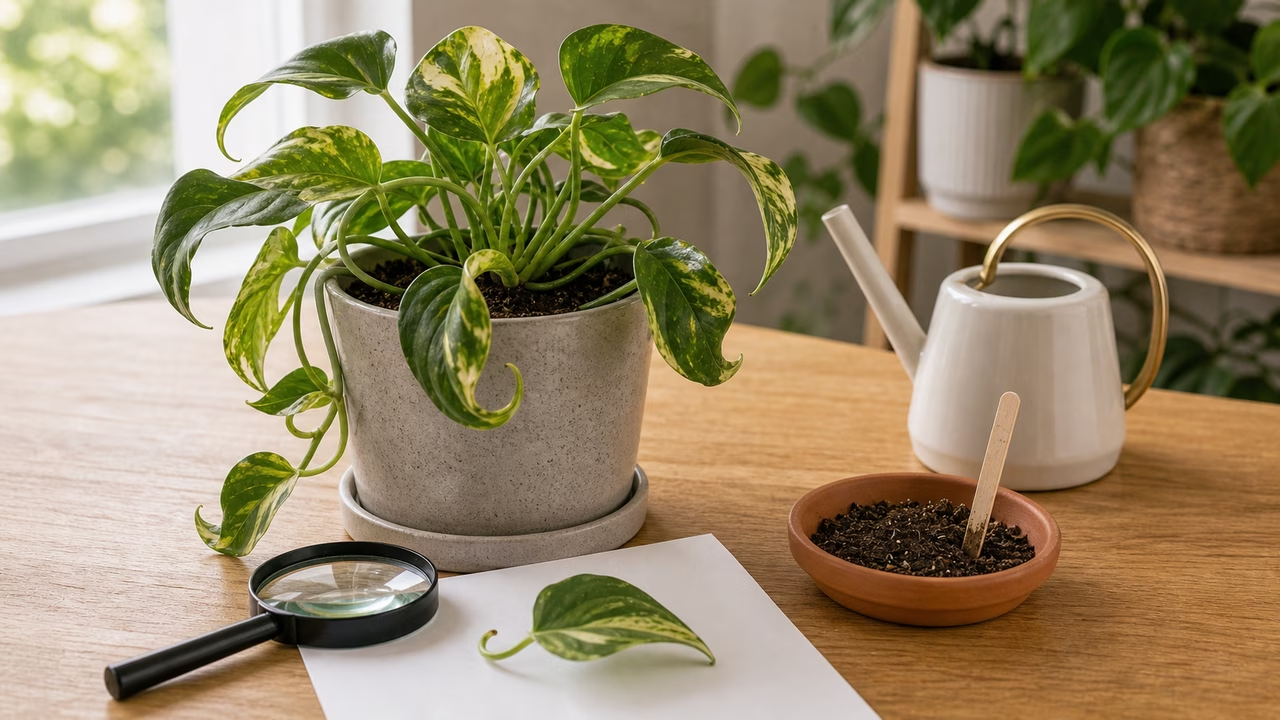
Before assuming disease, walk through the mundane causes, because they account for a large share of leaf marks and none of them call for a spray. Water sitting on leaves in strong light, or splashing during watering, can leave marks and can also spread fungal spots from leaf to leaf, which is a good reason to water the soil rather than the foliage. A leaf pressed against cold winter glass can develop a chilled, discolored patch right where it touched. A burst of harsh direct sun through a window can bleach or scorch the tissue on the exposed side, a pattern our guide on sunburned leaves describes in detail, and which is easily mistaken for something more sinister. Physical abrasion from a leaf rubbing a wall, a shelf, or a passing sleeve leaves marks that look alarming but are purely mechanical. Even the plant’s own aging shows as marks, since older leaves naturally decline and blemish before they are shed. Ruling these in or out first spares you from treating a plant for an infection it never had, and our broader guides on yellowing leaves and brown tips cover the environmental patterns that most often masquerade as disease.
Photograph, isolate if needed, and wait
The single most useful action once you have looked closely is to slow down and document rather than intervene. Photograph the mark, clearly and close up, so that you have a fixed record to compare against. Leaf marks are only meaningful in motion; a spot that is exactly the same in two weeks is old, settled damage, while a spot that has doubled or spread to new leaves is an active, living problem. A photograph turns your uncertain memory into evidence and lets you answer the one question that actually decides what to do: is this spreading?
If the mark looks pest-like, or if it is visibly moving to new leaves, isolate the plant from its neighbors while you watch, exactly as you would for any suspected pest, so that a living problem cannot spread through the collection while you deliberate. But hold off on treatment products until the pattern is clear. Spraying a plant for a disease it does not have, or dosing it with fertilizer in the hope that feeding will erase a mark, does nothing for the actual cause and can stress a plant that was merely scorched or splashed. The disciplined sequence is look closely, turn the leaf over, rule out the environmental causes, photograph, isolate only if warranted, and then wait for the pattern to declare itself before you act.
When to get help or stop
Stop the home experiment when the issue involves pet chewing or ingestion, pesticide exposure, heavy mold, severe allergies, unsafe infestation, or a plant that keeps declining after the basic setup is corrected. A houseplant guide can organize observations. It should not replace a veterinarian, clinician, landlord, remediation professional, or licensed pest-control professional when those boundaries are involved.
Letting the plant answer
Give the situation a couple of weeks and let the newest growth be your verdict. A leaf that was already marked will not repair itself, so do not watch the old damage for signs of healing that will never come; watch instead whether fresh leaves emerge clean or arrive already spotted. Clean new growth, and old marks that stayed exactly where they were, together say the cause was a one-time event, environmental or mechanical, and no treatment was ever needed. New leaves appearing already marked, or old spots spreading outward, say something is ongoing and points you toward a pest or an infection to address. Either way, the plant tells you far more over two weeks than a panicked spray could tell you in an afternoon, and the habit of reading before treating is the whole of what keeps a collection healthy. For a wider view of how to work through any puzzling symptom, our beginner’s clinic overview gathers the same observe-first approach in one place.