Cast iron has a strange reputation. People treat it as either indestructible or impossibly fragile, and both beliefs cause the same outcome: a perfectly good pan gets thrown out. It is one of the most forgiving objects in the kitchen precisely because almost everything that goes wrong with it is reversible. Rust comes off. Sticky seasoning can be cleaned and redone. A neglected pan from a yard sale, orange and grim, is usually just a few honest steps away from cooking again. The rescue is less about technique than about correctly reading what you are looking at, and refusing to panic-strip a pan that only needed a wash.

Diagnose before you scrub
Four different conditions get lumped together as “my pan is ruined,” and they call for four different responses, so the first job is to tell them apart. Light orange surface rust is cosmetic and comes off easily; deep pitting, where rust has eaten actual craters into the metal, is a more serious matter. A surface that is sticky or tacky is usually too much oil that never fully polymerized, not damage. A surface that is dusty, patchy, or uneven is often just tired seasoning that wants a refresh rather than a strip. And flaking, where dark bits lift off, is failed seasoning shedding, which needs to be removed rather than cooked over.
Separate these from the structural questions that actually decide the pan’s fate. Does it wobble when set on a flat counter, suggesting it has warped? Is there a crack, even a hairline one? Has it been through a fire or exposed to something that might have contaminated the metal? Those are the conditions that can end a pan, and they are worth checking for before you invest any effort. Everything in the cosmetic and seasoning column is fixable; the structural column is where you stop and reconsider. Writing down which of these you are actually dealing with, in a single plain sentence, keeps you from over-treating a pan that only needed cleaning.
The single technique underneath every cast iron fix
Almost every cast iron rescue is the same loop repeated: clean, dry completely, apply an extremely thin coat of oil, and heat. What makes it work or fail is thinness and dryness, and those two words do more for cast iron than any product ever will.
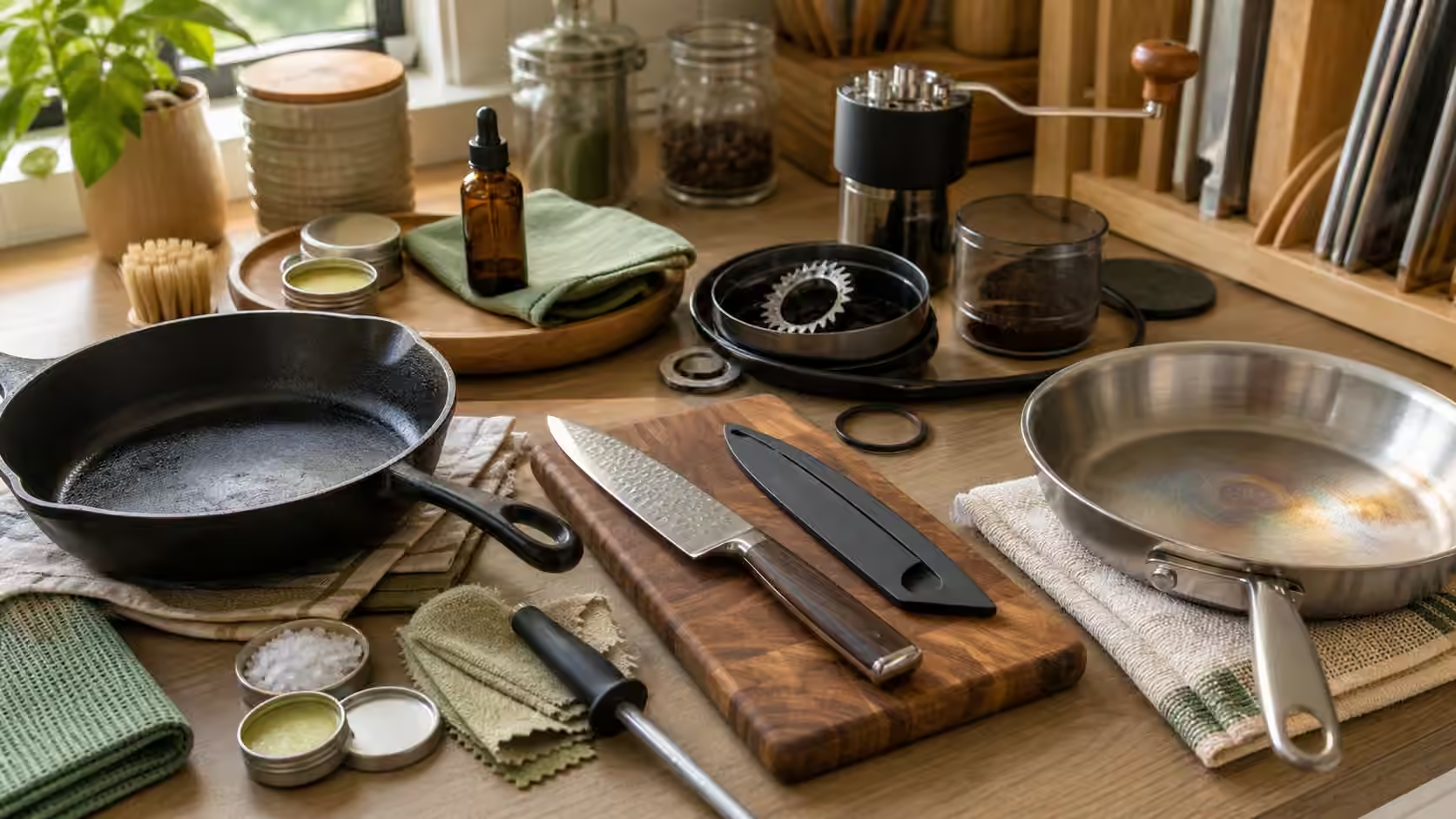
Start by washing and scrubbing off loose residue. It is perfectly fine to use a little mild soap here, despite the old warning against it; modern seasoning is a hardened layer that soap does not dissolve, and the no-soap rule is one of the myths worth dropping. For light rust, a stiff brush or a chainmail scrubber lifts it quickly, and you should rinse promptly rather than let the pan sit wet. Then dry it completely, and completely means completely, ideally by setting it over low heat until every trace of moisture is gone, because water left on bare iron is what started the rust in the first place. Now apply oil, and here is the step people get wrong: use a neutral oil, wipe it on, and then wipe it off again until the surface looks almost dry. The pan should not glisten with oil; it should look barely damp. That near-nothing film is what bakes into a hard, smooth layer. Heat it according to a reliable seasoning method, let it cool, and repeat the thin coats as needed. Several whisper-thin layers build a durable surface; one thick layer turns into the sticky varnish you were trying to escape.
The mistakes that turn a rescue into a mess
Two habits cause most self-inflicted cast iron problems. The first is soaking. Cast iron and standing water do not coexist; leave a pan submerged or wet in the sink and you will grow rust while you are not watching. Wash it, dry it, and move on. The second is applying oil too thickly, which is the direct cause of that tacky, gummy surface that never quite cures. If a pan feels sticky after seasoning, the cure is almost always to wipe far more oil off next time, not to add more.
The subtler error is confusing patina with dirt. A well-used pan develops a black, slightly glossy surface that is not grime but the seasoning itself, and scrubbing it back to bare grey metal in a fit of tidiness undoes years of good cooking. Learn to leave the black layer alone. And do not cook on flaking residue: if dark flecks are lifting loose and could end up in food, remove them and reseason that area rather than ignoring it. The panic move, stripping a whole pan down to raw iron because it looked a bit off, is rarely necessary and creates hours of work rebuilding a surface that only needed a wash and a thin re-oil.
When a pan is genuinely finished
Cast iron is hard to kill, but it is not immortal. A crack means the pan is done, because a cracked pan can fail under heat and is not worth the risk. Severe pitting that has hollowed out the cooking surface may be beyond a comfortable rescue, and a pan with an unknown coating, or one that has been through a house fire or possible contamination, is not something to gamble on with food. In these cases the keeper move is to retire the pan or seek expert advice rather than force it back into service. That restraint is not the opposite of the rescue mindset; it is the same mindset, applied to the pan that has actually reached its end.
Keep it easy forever after
The reward for one good rescue is that maintaining the pan afterward is almost effortless. Clean it after each use, dry it immediately over heat, add the lightest touch of oil only when it looks like it needs it, and store it somewhere dry rather than sealed damp. A pan cared for this way never needs rescuing again, because you are simply repeating the last, gentlest step of the rescue every time you cook. Most rescues cost little more than a bit of oil and some patience when the pan is structurally sound, which is what makes cast iron such a satisfying thing to save.
If restoring the pan has sparked an interest in keeping the rest of your kitchen tools in the same forgiving condition, the same steady, reversible-first approach carries straight into knife care , into cutting board care , and into knowing the honest limits of nonstick pans , where, unlike cast iron, a damaged surface really does mean the pan is done.