A drawer that fights you every morning is one of the most fixable annoyances in the house, and one of the most commonly misdiagnosed. People reach for oil when the real problem is a screw that backed out two millimeters, or they buy new hardware when a handful of sawdust and a candle stub would have solved it. The reason drawers get misread is that a single symptom, the drawer that sticks or drops or scrapes, can come from at least five unrelated causes, and each cause wants a different response. The skill here is not muscle. It is reading the drawer well enough to know which of those causes you are actually looking at before you touch anything.

Read the drawer before you fix it
Pull the drawer all the way out and set it on a table, empty. Half of what you need to know shows up in the first ten seconds of an empty drawer that a full one hides. Does it glide when there is nothing in it? Then your problem is load, not mechanism, and no amount of lubricant will help a slide rated for ten pounds that is carrying twenty pounds of hardware and cast-iron cookware. Does it still bind empty? Then look at the slides and the box itself. Sight down the drawer front while it is seated: if the gap around it is wider on one side than the other, the box has gone out of square or the cabinet has racked, and you are chasing alignment rather than friction.
The next thing to identify is what kind of slide you actually have, because the fix diverges completely from here. Old furniture often runs on bare wood runners, a strip of wood the drawer rides on with nothing between them but friction. Cheaper modern casework uses plastic guides and a center rail underneath. Better cabinets use side-mounted metal ball-bearing slides, and the nicest use undermount slides you cannot even see until you tip the drawer up. Each of these fails in its own way and asks for its own treatment, so name yours before you decide anything. A quick photo of the slide and any part number stamped into the metal will save you an hour later if you end up ordering a replacement.
Wood runners, metal slides, and what each one wants
Wood runners want cleaning and a dry lubricant, never oil. Oil soaks into bare wood, attracts dust, and turns into a sticky grey paste that is worse than the original friction and nearly impossible to remove. Rub a plain candle or a block of paraffin along the runner and the mating surface instead, or use a hard furniture wax. If a wood runner is worn into a groove, the drawer will drop and scrape at that spot; that is a repair, not a maintenance task, and it usually means gluing a thin hardwood strip onto the worn runner and shaving it to fit, which is genuinely satisfying work if you have the patience for a slow-drying glue joint.
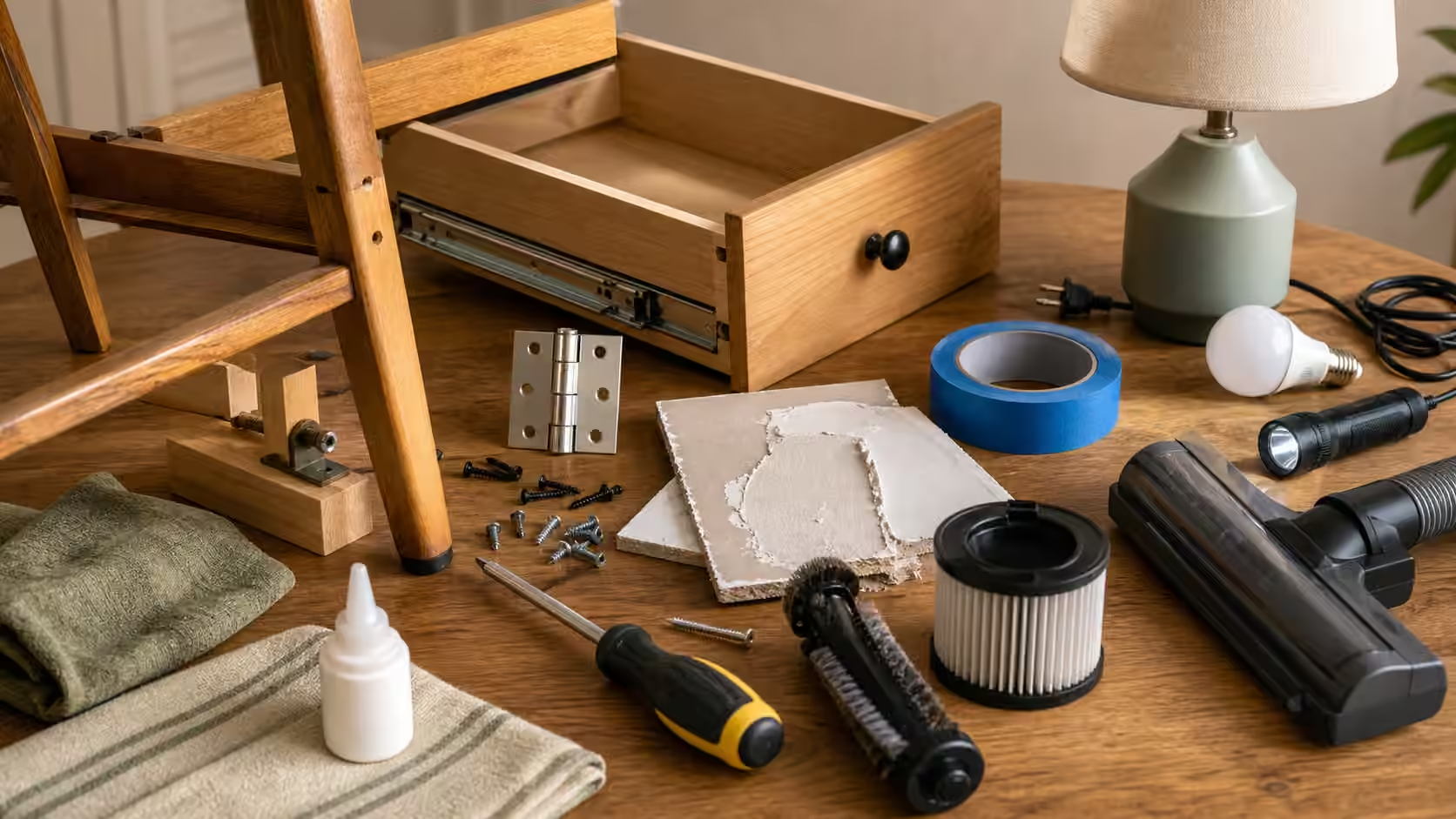
Metal ball-bearing slides want the opposite of oil too, but for a different reason. Grit is their enemy. Vacuum the track, wipe it with a dry cloth, and if the bearings feel gummy, a light spray of dry PTFE or silicone lubricant will bring them back; heavy grease just collects debris. If a ball-bearing slide feels notchy or the drawer only extends partway, a bearing carrier may have jumped its track, which sometimes resets by fully extending and reseating the drawer and sometimes means the slide is done. Slides are sacrificial parts sold in matched left-and-right pairs, and replacing a worn pair is a beginner job as long as you measure the length, the mounting style, and the load rating before ordering. Keep the old ones until the new ones are in and working.
The fastener check almost everyone skips
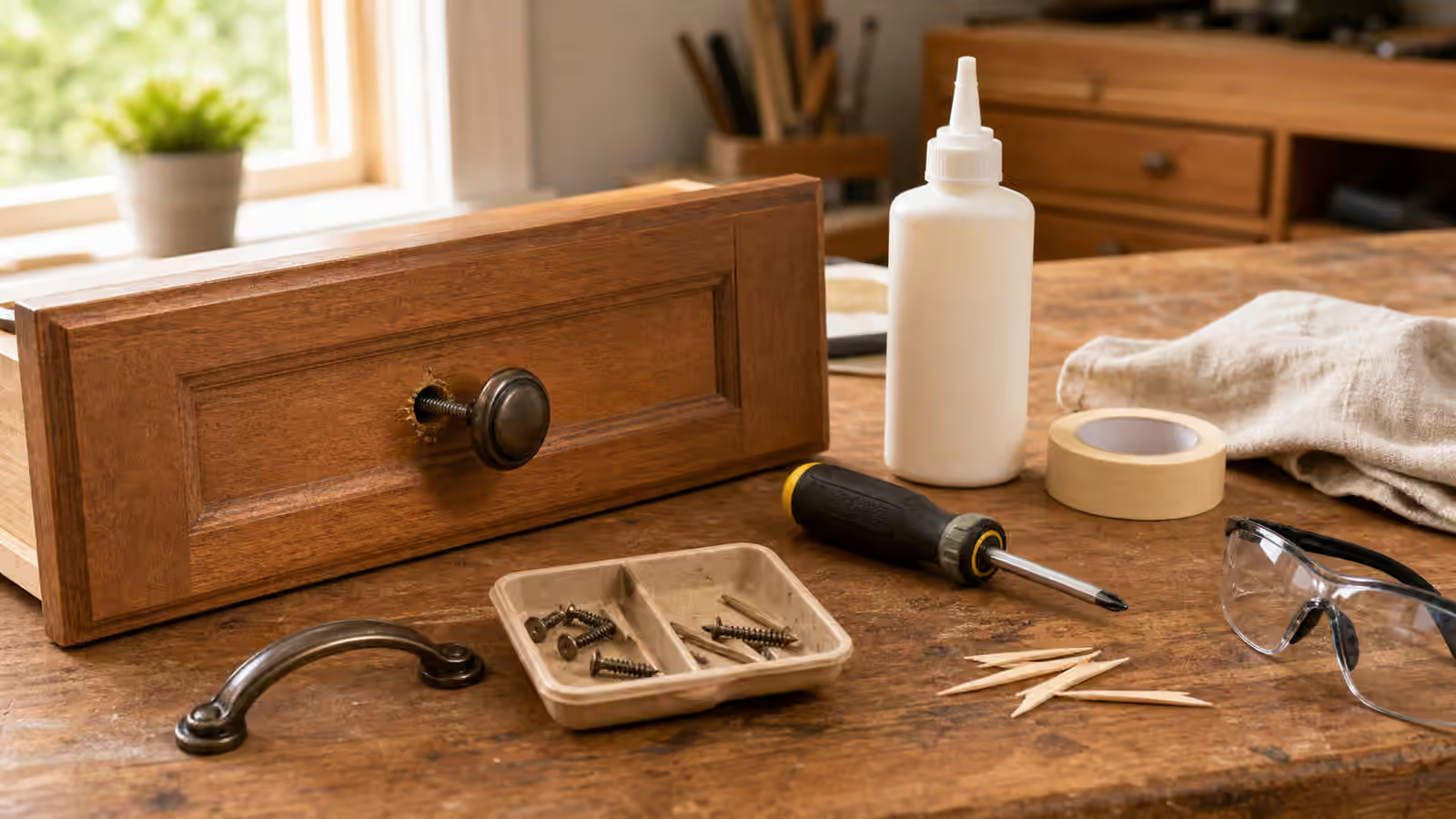
Before you conclude anything is broken, get a flashlight and a screwdriver and check every screw holding the slides to both the drawer and the cabinet. Drawers are cycled thousands of times, and that repeated shock walks screws loose. A slide with one loose screw tilts, and a tilted slide binds or lets the drawer sag exactly the way a broken one does. Snug each screw, but stop the instant it seats; over-tightening into particleboard strips the hole and creates a bigger problem than the one you started with. If a screw spins freely because the hole is already stripped, the classic reversible fix is to pack the hole with a couple of wooden toothpicks and a dab of glue, let it set, and drive the screw into fresh material. That small repair, done before you buy anything, resolves a surprising share of sagging drawers.
What not to force, and when to hand it off
The temptation with a stubborn drawer is to shove harder, and that is precisely how a recoverable problem becomes a permanent one. Forcing a crooked drawer until the slide bends, or leaning your weight on a drawer that is catching on a warped face frame, converts a five-minute alignment fix into a hardware replacement or worse. If the drawer resists, stop and find out why it resists rather than overpowering it. Work with the drawer on a stable surface, keep left and right slides clearly separated so you do not mount them reversed, and choose replacement screws no longer than the original so you do not punch through a finished cabinet side.
Some drawer problems are not really drawer problems. When a cabinet is pulling away from the wall, when a built-in has racked because the house itself has settled, or when the carcass is water-damaged and soft, you are past casual repair and into work that touches the structure of the cabinetry. That is the moment to bring in a carpenter or cabinet repairer, not because you failed, but because a drawer is not worth compromising the box that holds it. Handing off the structural part while you keep the tidy, reversible parts is the keeper move, not a retreat from it.
Once the drawer runs, a light seasonal rhythm keeps it that way: vacuum the tracks, wax the wood runners, snug the slide screws, and be honest about what you are storing in it. Write down the slide length and part number in your Save Log so the next repair, if there is one, starts from knowledge instead of guesswork. If your trouble turns out to be alignment shared with nearby doors, the companion guide on door hinge squeaks, sticks, and misalignment covers the same racking logic, and a genuinely wobbly cabinet may send you toward wobbly chair diagnosis for the joint-versus-fastener way of thinking.