Something has stopped working, and you are standing there with a vague sense that you should either fix it or throw it out. That fork, repair or replace, is where most people either overspend on a new thing they did not need or sink an evening into a fix that was never going to hold. The Keepers Guild approach is to refuse the fork for a moment and do something calmer first: gather a little evidence, make the smallest reversible move, and let the object tell you which path it belongs on. Almost every good repair decision comes from slowing down exactly here, before any money is spent and before anything irreversible is done.
Start with one written sentence
Before you touch anything, write down what actually happened in a single plain sentence: what changed, when it changed, what still works, and what the object was doing when it stopped. This sounds almost too simple to matter, but naming the failure in words is the step that separates a good repair from a guessed one. People who skip it tend to name a solution, “I need a new one,” or “it just needs glue,” before they have understood the problem, and then they spend against that premature conclusion. A written sentence also becomes the first line of a record you will be glad to have if this object breaks again, or if a similar one does.
Ask whether it is still safe, before whether it is fixable
The very next question is not “can I fix this” but “is this still safe to handle, plug in, wear, or use.” Those are different questions, and the safety one comes first because it can end the process instantly. A frayed cord showing copper, a battery that has swollen, a whiff of scorching from an appliance, a helmet that has taken an impact, a chair leg cracked through: these are not repair puzzles for a beginner, they are stop signs. If a wrong move could cause injury, fire, poisoning, or structural collapse, the object is not a candidate for casual repair no matter how attached to it you are. Getting this ordering right, safety before fixability, is the single habit that keeps enthusiasm from becoming danger.
Make the reversible first move
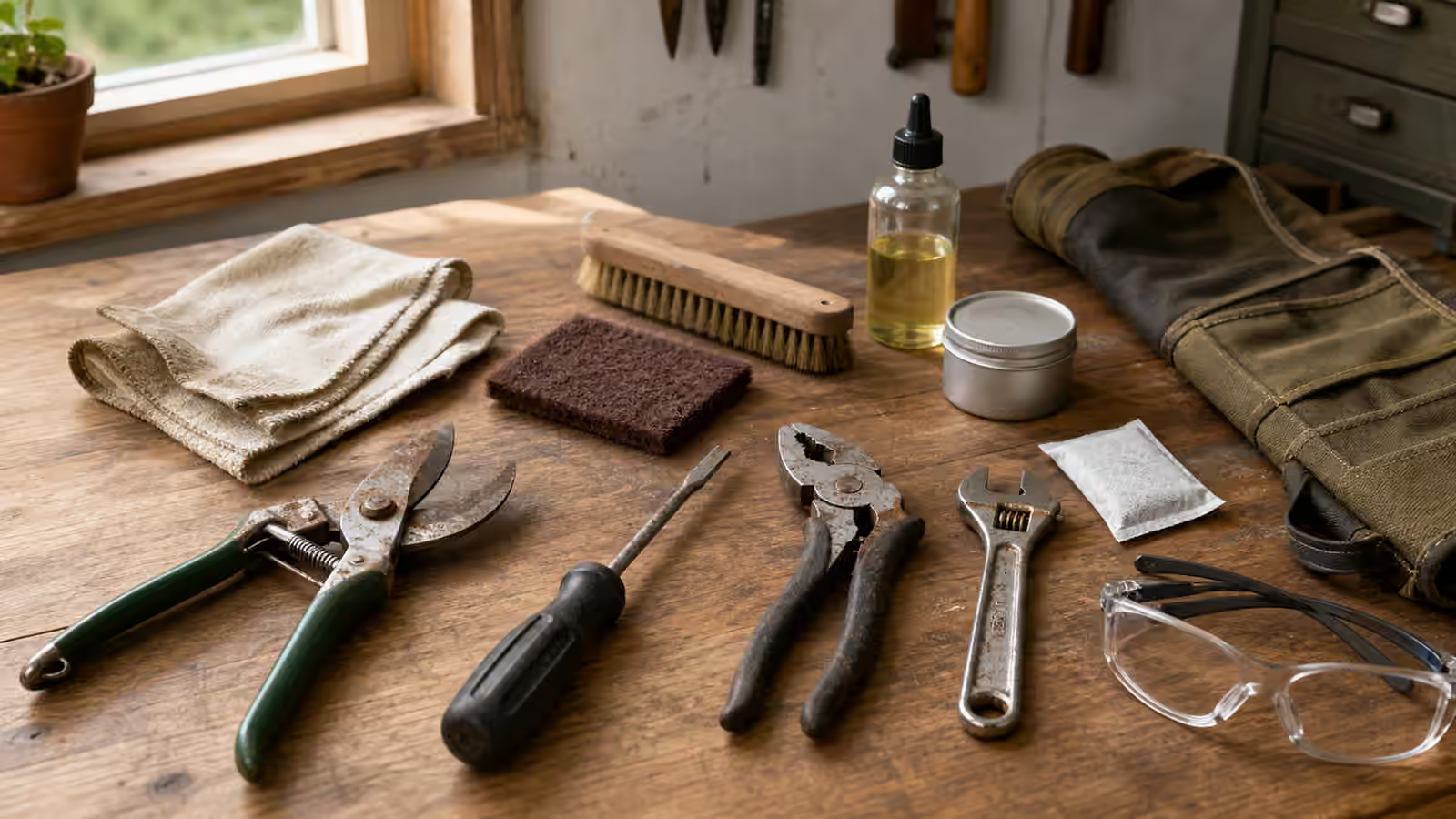
If the object clears the safety check, do the one move that cannot make anything worse. That almost always means cleaning, because a startling number of “broken” things are merely dirty, clogged, or gummed up, and cleaning reveals the real condition underneath. It can mean snugging an obvious loose fastener, clearing a visible clog, reseating a connector, or simply looking up the manual. Photograph the object first, though: the label and model number, the fasteners, the damaged area, and anything that might move when you take it apart. Photos cost nothing and repeatedly save people who cannot remember which screw came from where or how a part was oriented. The point of the reversible move is information. When you are done, you know a great deal more about whether this is a five-minute fix, a real repair, a job for a professional, or genuinely finished.
Price the smallest credible fix before shopping for a new one
Only now, with a clean object, a photograph, and a manual, does the repair-or-replace question deserve an answer, and it deserves a fair one. The common error is to price the replacement first, feel the sticker shock or the convenience, and rationalize backward. Instead, price the smallest credible repair: the single gasket, the pair of drawer slides, the heel tip, the modest professional quote. Weigh that against the honest cost of replacement, and weigh both against your own time and confidence. A thirty-minute repair you will enjoy is a different thing from a stressful three-hour ordeal that displaces work you care about more, and it is fair to factor that in. Replacement is genuinely the right answer sometimes, when parts are unavailable, when the material has failed beyond the local damage, when a fix would only hide risk; retiring a thing well is part of the keeper mindset, not a betrayal of it.
The habits that make every future decision easier
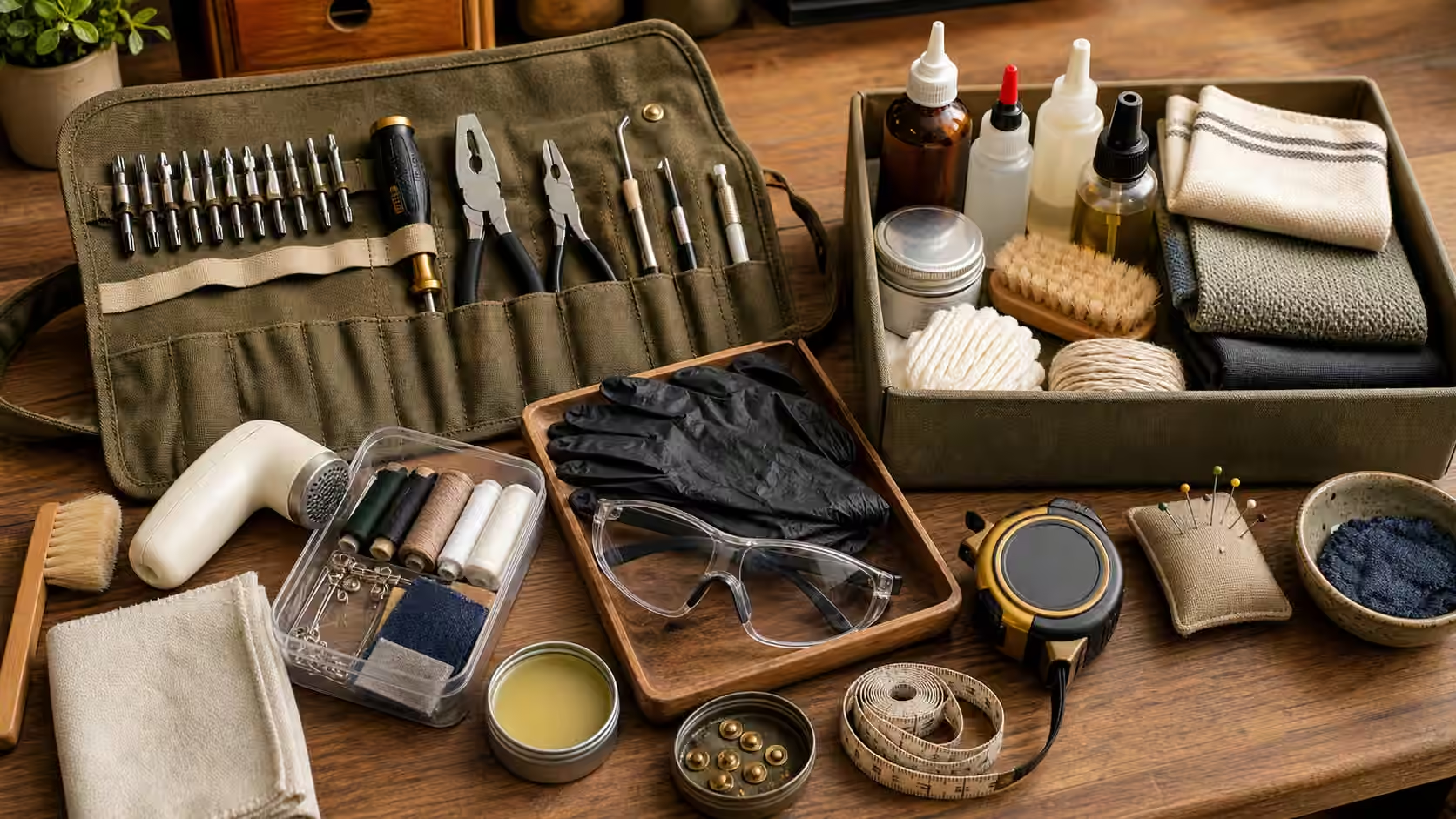
Two small disciplines make this whole process compound over time. The first is documentation: a Save Log with the object, the symptom, what you did, the part numbers, any repairer, the cost, the time, and one honest sentence about whether you would do it again. That last sentence quietly turns every repair into advice for your future self and changes how you buy the next version. The second is a light rhythm, one small weekly slot for a cleaning, a tightening pass, and a note, so that maintenance happens before failure rather than after it. Maintenance that lives only in your head evaporates during busy weeks; a calendar note or a tag on the object survives them.
Above all, resist the urge to try three fixes at once, which makes it impossible to know what worked, and resist starting with a purchase before you have checked model numbers, warranty status, and common parts. This quickstart is the front door to a larger set of guides that go deeper on each fork: the fast ten-minute triage for when you have less patience, the underrated skill of cleaning first , and the five beginner moves that handle most of what a home throws at you once you have decided a repair is worth trying.