The cheapest way to make future repairs easy is to make them possible in the first place, and that decision happens at the point of purchase, long before anything breaks. Most of the frustrating repairs a keeper meets are not hard because the fault is complicated; they are hard because the object was designed to be discarded. The gasket is not sold separately, the housing is welded shut, the manual never existed in a form you can find, and the only “authorized” fix costs more than the whole thing did new. None of that is visible in a product photo, and none of it shows up in the feature list. The repairability checklist is a short set of questions you ask while you still have the power to walk away, so that the durable goods entering your life are ones you can actually keep.
Can you find the manual before you own it?
The first test costs nothing and predicts a surprising amount. Before you buy, try to find the actual service or user manual for the exact model. If the manufacturer publishes clear documentation, exploded diagrams, and part lists, that is a company expecting the object to be opened, cleaned, and kept. If the only thing you can find is a marketing page and a phone number, that absence is itself information. A brand that hides its manuals tends to hide its parts too. Spending five minutes on this search before purchase saves you the far worse experience of hunting for documentation later, in a panic, on the kind of sketchy download sites that a companion guide, How to Find a Manual Without Downloading Malware , exists to help you avoid.
Are the wear parts sold on their own?
Every durable object has a handful of pieces destined to fail first: filters, gaskets, seals, belts, feet, knobs, blades, batteries, brushes. The question that separates a repairable design from a disposable one is whether those specific pieces can be bought separately, at a sane price, without buying the whole assembly around them. A vacuum whose filter is a two-dollar consumable is a different lifetime proposition from one whose filter only comes bonded to a forty-dollar module. Before you commit, look up two or three of the parts most likely to wear out and see whether they exist as line items. If a common gasket is only available as part of a major sub-assembly, you are looking at a machine that will be “not worth fixing” the first time it needs a five-cent rubber ring.
How is it held together?
Turn the object over, literally or in photographs, and study how it closes. Standard screws and visible access panels signal a design you can enter and reassemble. A seamless glued shell, hidden plastic clips that snap and crack on the way out, or specialty security fasteners signal the opposite. Premium price is not a reliable proxy for any of this; plenty of expensive objects are beautifully sealed shut, and plenty of humble ones come apart with a common screwdriver. What you are reading is intent. A body that invites entry usually pairs with available parts and a published manual, because those choices tend to travel together, and a body that resists entry usually travels with the other kind.
Is there anyone who can fix it?
Some repairs you will hand to a professional no matter how repairable the design, so it is worth knowing before you buy whether a service network exists near you. A brand with independent repairers, responsive manufacturer support, or a healthy secondhand parts market is one you can lean on when a fix exceeds your bench. A product that only one distant authorized center will touch, on their schedule and their pricing, is effectively unrepairable for most people even when it is technically fixable. Reviews are useful here, but read them for the right signal: skim past the star rating and look for mentions of parts availability, service experiences, and premature failure, which tell you far more about long-term ownership than a first-week impression does.
Read the warranty for what it excludes
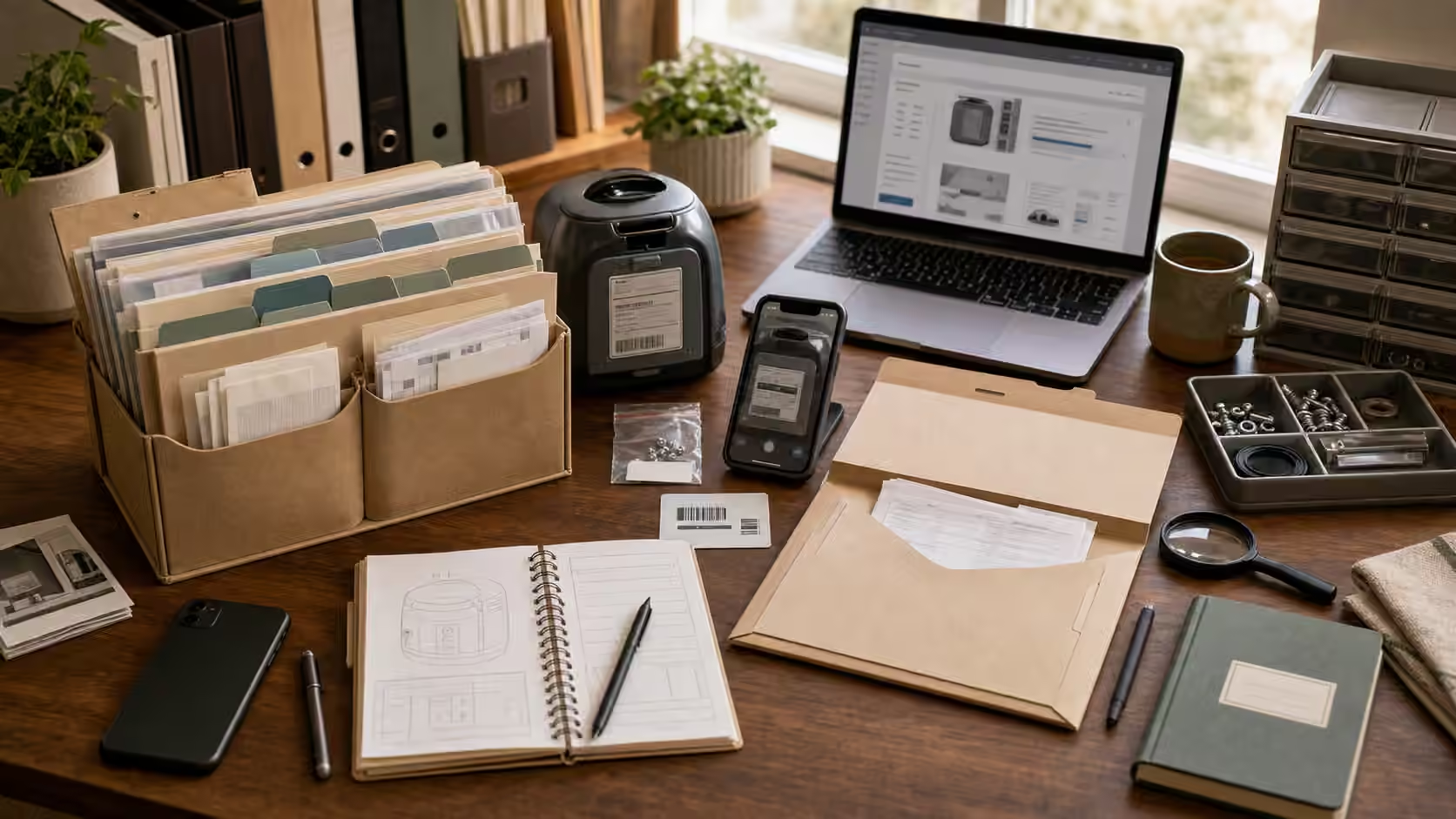
A warranty is worth reading less for its promises than for its boundaries. The exclusions tell you which failures the maker expects, how long they will stand behind the object, and whether ordinary maintenance or third-party parts void your coverage. A warranty that forbids you from opening the object or using non-branded consumables is quietly describing a machine built to keep you dependent. When you do buy, record the purchase in a warranty folder on day one rather than at the moment of failure, so the receipt, model number, and photos are waiting for you. The guide The Warranty Folder: Receipts, Manuals, Model Numbers, and Photos walks through setting one up, and How to Photograph a Problem Before You Take It Apart covers the habit that makes any later repair easier.
Fit the object to your real maintenance life
The most repairable object in the world is useless to you if its upkeep does not fit the life you actually live. A machine with a demanding maintenance schedule, bulky spare parts to store, and a consumable that costs more over a year than the machine did new can be a poorer choice than a simpler, sturdier design you will genuinely keep up with. Count the consumables honestly, count the storage and bench space, and count the time. Repairable goods sometimes carry a higher price at the register, but the number that matters is the total cost of keeping the thing running and pleasant to own, which repairable designs usually win once emergency replacements and low-grade frustration are added in.
The one category where bargains do not apply
There is a firm exception to all of this cost reasoning, and it concerns anything that protects a person from harm. Child car seats, climbing gear, helmets, medical devices, and other safety equipment should not be bought used casually or evaluated on repairability the way a toaster is. Their history and their compliance with current standards matter far more than their price, and an unknown past is disqualifying regardless of how good the deal looks. When the object’s job is to keep someone safe, buy it new or from a source whose history and standards you can verify, and treat any doubt as a reason to pass.
Let the record teach you what to buy next
Over enough purchases, your own Save Log becomes the most honest buying guide you will ever have, because it records which brands and designs actually stayed repairable in your hands rather than in a review. Note which objects fought you when they broke, which parts you could and could not find, and which makers earned a second purchase. That accumulated judgment is what turns a checklist you follow reluctantly into an instinct you barely notice, steering you toward things worth keeping before you have even reached the counter.