A repair that has stalled waiting for the right part is a familiar and avoidable frustration. You have the object open, you understand the fault, and then you spend a week and three orders discovering that the gasket you bought is a hair too thick, the knob has the wrong spline count, or the “compatible” belt is a centimeter short. Buying replacement parts well is a distinct skill from installing them, and it rewards patience at exactly the point where most people rush. The core of it is understanding what kind of part you are replacing, because the same shopping instinct that serves you fine for a drawer knob can be dangerous for anything that carries heat, current, pressure, or a person’s weight.

First, decide what kind of part this is
Before you compare sources or prices, put the part into a category, because the category sets the rules. A cosmetic part such as a cover or trim piece can be almost anything that fits. A wear item such as a filter or a belt tolerates good aftermarket alternatives when the specifications genuinely match. But a structural part that bears load, an electrical part that carries current, a food-contact part, a heat-exposed part, or anything safety-critical is a different animal, and for those the acceptable answers narrow sharply. The mistake to avoid is applying knob-shopping casualness to a part whose failure would cause a fire, a leak, a burn, or a collapse. Name the category out loud, honestly, before you open a single listing.
Get the exact identity before you shop
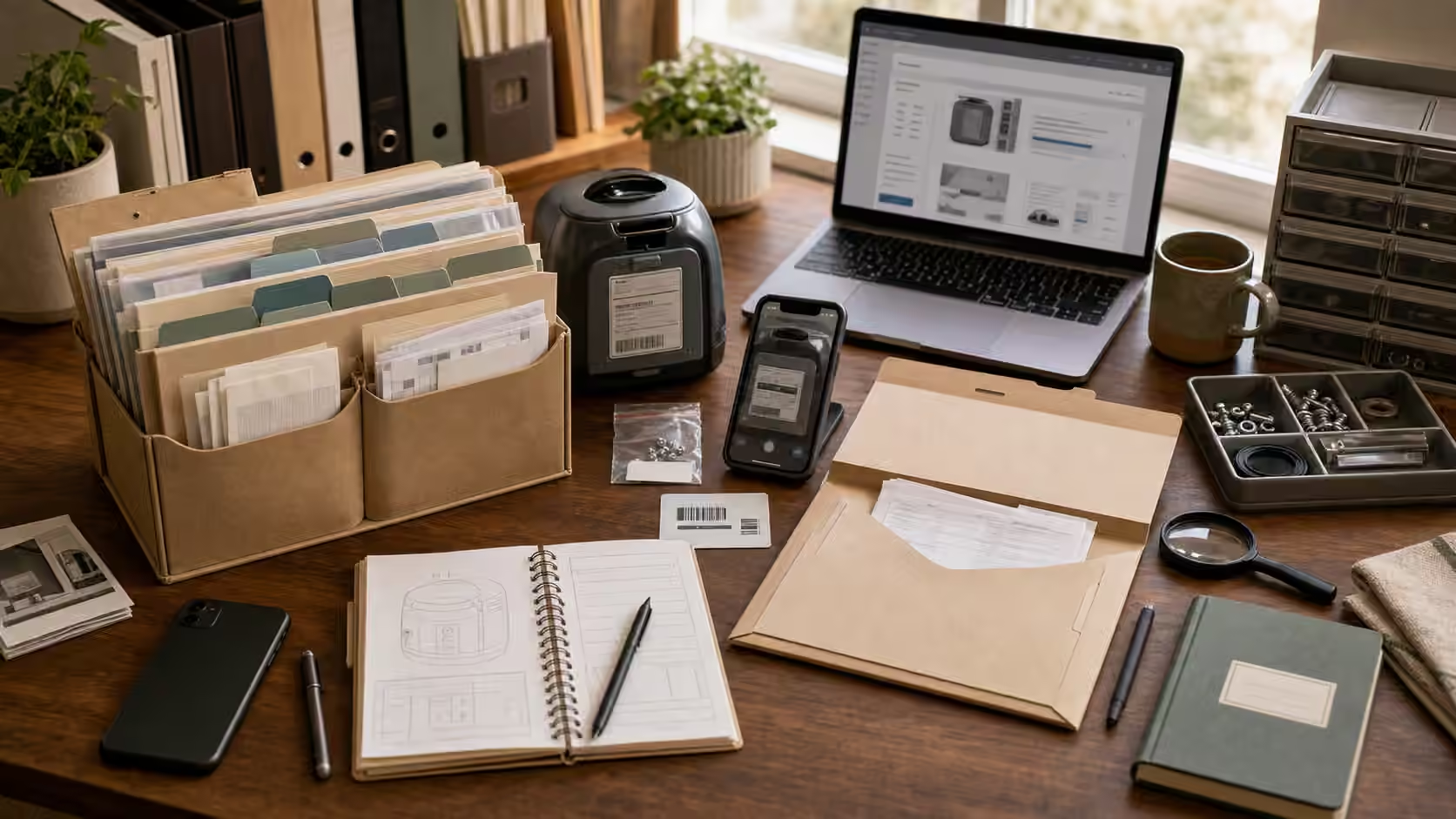
Almost every wrong-part order traces back to shopping before you knew precisely what you had. The model number on the marketing box is often not the full story; many products carry a suffix or revision code that changes the fit, and two units that look identical can take different parts. Find the real identification plate, usually tucked underneath, behind, or inside a panel, and record the complete string including any letters after the main number. Photograph the failed part next to a ruler, and where fit is tight, measure it with calipers rather than trusting a description. A part number that appears in the manufacturer’s own parts diagram is worth far more than a third-party listing that merely claims compatibility, because the diagram is tied to your exact model rather than a marketer’s optimistic “fits many.”
OEM, aftermarket, and salvage, and where each belongs
Original equipment parts, made or specified by the manufacturer, are the default for anything in the risk categories above. When a part touches safety, heat, electricity, food, or your warranty, the certainty of an exact match usually justifies the higher price, and the warranty language often demands it. Aftermarket parts, made by third parties to fit, can be an excellent value for low-risk wear items when the specifications truly line up, but they reward scrutiny: check the actual dimensions and materials rather than the promise of compatibility. Salvage parts, pulled from another unit, are a fine and thrifty choice when you can inspect their condition and the part is not safety-critical, since a used knob or panel that arrived intact is simply an intact knob or panel. The judgment is matching the source to the category, not chasing the lowest number across the board.
The red flags worth heeding
A few warning signs recur often enough to be worth naming. A price dramatically below every other seller for a supposedly genuine part is a reason for suspicion, not celebration, because counterfeit and out-of-spec parts cluster at the bottom of the price range. Listings with vague fitment (“universal,” “fits most”), stock photos that do not match what arrives, and no clear return policy are all reasons to pause. Buying a part by appearance alone, matching the picture rather than the specification, is how metric and imperial fasteners get mixed and how a slightly wrong seal ends up not sealing. And never ignore a recall: if the part or product you are repairing has an open safety recall, the correct action is the recall remedy, not a home substitution that reintroduces the hazard the recall was meant to remove.
The parts you should not substitute at all
Some assemblies are simply off-limits for improvised parts, and it is worth stating them plainly so the temptation never takes hold. Brakes, medical devices, child car seats, climbing gear, gas appliance components, and electrical safety assemblies are engineered and certified as systems, and swapping in a non-specified part can defeat the very protection they exist to provide. For these, the right move is the manufacturer’s specified part installed to spec, or a professional, not a clever equivalent from the bargain bin. When a repair reaches into a certified, pressurized, gas, electrical, or medical system, the keeper-like choice is to stop and route it to someone qualified, which protects the object and everyone who relies on it.
Keep the evidence until it works
Resist the urge to throw away packaging and receipts the moment the part arrives. Keep the box, the paperwork, and a photo of the old and new parts side by side until the repair is installed and tested under normal use. Wrong-part returns are far smoother with intact packaging, and if the new part turns out to be the wrong revision after all, you will want the receipt and the ability to send it back. Testing gently, under ordinary conditions rather than a dramatic stress test, tells you whether the match was truly correct before you commit to it.
A correct part beats three cheap wrong ones
The economics of parts buying are quietly counterintuitive. A single correct part, even at a somewhat higher price, almost always beats a string of cheaper wrong ones, once you count the return shipping, the reopened repair, and the days the object sat unusable on the bench. Spend the extra few minutes confirming the model suffix, the dimensions, and the parts-diagram number, and you spend less money and far less time than the shotgun approach costs. When you find a part that fits, write its number in your Save Log next to the object, so the next replacement is a lookup rather than an investigation.
For the steps that surround the part itself, How to Photograph a Problem Before You Take It Apart and How to Find a Manual Without Downloading Malware help you gather the identity you need, How to Ask for a Repair Quote covers handing the job off when a part turns out to be safety-critical, and The Repairability Checklist Before Buying Anything Durable helps you choose objects whose parts you can actually find next time.