A good sweater rarely dies of old age. It gets shrunk in a hot wash, stretched on a hanger until the shoulders sag into wings, felted into a stiff board by agitation, or slowly shaved into gauze by an over-eager pill remover. Every one of those endings is avoidable, and none of them requires special talent. Sweater care is mostly about understanding what the fiber can and cannot survive, then handling it a little more gently than feels necessary.

Know your fiber before you know your method
The single most useful thing you can do for a sweater is find out what it is made of and read the care label as if it were written by someone who tested it, because it was. Wool, cashmere, and other animal fibers are covered in microscopic scales that lock together permanently when heat, moisture, and agitation arrive at once; that irreversible locking is felting, and it is why a wool sweater comes out of a hot wash three sizes smaller and hard as cardboard. Cotton and linen do not felt but relax and stretch when wet and heavy. Acrylic and other synthetics resist shrinking but pill readily and can melt under high dryer heat. A cashmere-and-nylon blend behaves like neither parent cleanly. Before choosing water temperature, wash method, or drying position, name the fiber, and if the label says dry clean only on a structured or delicate piece, believe it rather than gambling the whole garment on a hunch.
Wash less, and wash cool
Sweaters are worn over other layers and rarely touch skin directly, so most of them need airing far more often than washing. A night on a drying rack near an open window clears odor and moisture, and a spot of trouble can be dabbed rather than laundered. When a wash is genuinely due, cool water and stillness are everything. Fill a clean basin, add a small amount of a gentle wool-safe detergent, submerge the sweater, and press it under the water without wringing, twisting, or swishing it around, because agitation is exactly what triggers felting in animal fibers. Let it soak briefly, drain, and rinse in water of the same temperature so the fiber never gets a thermal shock. A washing machine’s wool or hand-wash cycle inside a mesh bag can work for hardy knits, but the basin removes all doubt and takes only a few minutes.
Drying is where sweaters live or die
Never hang a wet sweater. Waterlogged wool or cotton is heavy, and gravity will pull the whole garment down into a stretched-out shape it may never recover. Instead, lift the sweater out supporting its full weight in both hands so it does not sag from one point, lay it flat on a clean towel, and roll the towel up like a sleeping bag, pressing gently to squeeze water into the towel. Then unroll, transfer the sweater to a dry towel or a flat mesh drying rack, and coax it back to its correct dimensions while it is still damp. This is the moment to block: nudge the body square, line up the sleeves, and match the ribbing so it dries in the shape you want rather than the shape it slumped into. Keep it away from radiators, direct sun, and dryer heat, all of which can shrink and stiffen the fiber even after washing went perfectly. Flat and patient beats fast every time.
De-pilling without shaving holes
Pills are not a sign of a cheap sweater or a failed wash. They are loose and broken fibers tangling together at points of friction, under the arms, along the sides, wherever a bag strap rubs. The goal is to remove the tangle without cutting into the healthy knit underneath. Lay the sweater flat and taut over a firm surface so the fabric cannot bunch up under the tool, then work in small, light passes rather than bearing down. A sweater comb or stone drags the pills off gently and is nearly impossible to damage the fabric with. A battery fabric shaver is faster but unforgiving; held in one spot or pressed too hard, it will happily eat straight through to a hole, which is the most common way people ruin an otherwise sound sweater. Stop the moment the surface looks even rather than chasing perfection, and never shave loose, lofty, open knits aggressively, because there is very little fabric between the pills and empty space.
Storage, moths, and the slow enemies
Sweaters suffer more damage in the closet than on the body. Clothes moths and carpet beetles lay eggs in wool, and the larvae chew the ragged holes that appear mysteriously over a summer of storage. Their two favorite conditions are darkness and dirty fibers, because body oils and food traces are what the larvae feed on. So the rule for long storage is to clean before you put away, never after, and to fold sweaters rather than hang them so the shoulders keep their shape. Store them somewhere dry and, ideally, sealed, and disturb the pile occasionally, since moths prefer the undisturbed corners. If you find active infestation or damage on a valuable or unfamiliar-fiber piece, a proper cleaner or textile specialist is worth the visit rather than a home experiment. For long-term rotation between seasons, a dedicated approach is worth reading in Seasonal Textile Storage .
The small repairs that keep a sweater in rotation
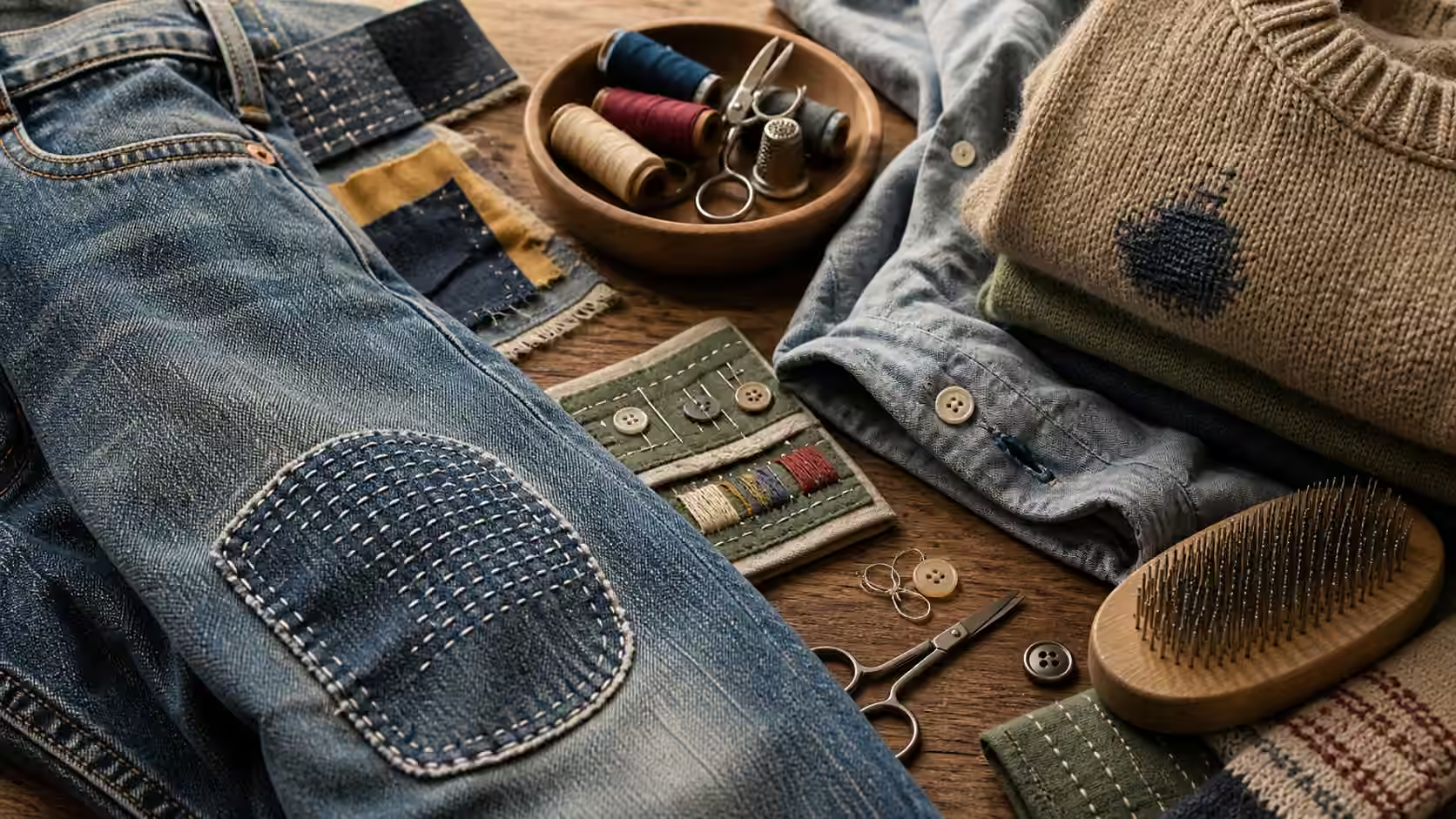
A snagged loop pulled through to the inside with a crochet hook or blunt needle, rather than cut, disappears completely. A small hole caught early can be closed with a few careful stitches or duplicate-stitch darning that follows the knit pattern, long before it becomes a run. These are the habits that separate a five-year sweater from a five-wash one, and the tools involved, a basin, a comb, a mesh bag, a flat rack, run only ten to forty dollars against the cost of replacing good knitwear. Count the time honestly and enjoy it; ten quiet minutes of hand-washing and blocking is a pleasant ritual, not a chore, and it beats the stress of watching a favorite sweater slowly deteriorate.
Whenever you do work on one, jot the fiber, the wash method, and any repair into your Save Log, along with one line on whether it worked, so the next sweater benefits from what this one taught you. For the repair skills that pair naturally with knit care, see Basic Hand-Stitching for People Who Don’t Sew , Visible Mending for holes worth showing off, Pilling, Snags, Holes, and Fraying for a fuller diagnosis, and Button Repair for cardigans.