

Most bad repairs are not caused by clumsy hands. They are caused by skipping the ten minutes at the start where you find out what actually broke. When something stops working, the instinct is to reach for a fix, and the fix is usually a guess dressed up as a decision. Triage is the discipline of slowing down just long enough to sort the problem into the right bucket, annoyance, maintenance, visible damage, or genuine safety risk, before spending a dollar or turning a single screw.
Why ten minutes, and why a timer
The time limit is not arbitrary, and it is not there to rush you. It is there to keep the inspection from turning into a repair. Set an actual timer for ten minutes and the mind stays in observation mode instead of drifting into disassembly, because you know you are only looking, not committing. The timer also does something quieter: it keeps a frustrating object from stealing your whole afternoon. When a drawer sticks or a lamp flickers, the annoyance itself pushes you to escalate, to yank and pry and force, and that escalation is where reversible problems become permanent ones. Ten calm minutes with a boundary around them is enough to gather every piece of evidence you need to make a good next decision, and short enough that you will actually do it every time.
The three questions, in order
Triage runs on three questions asked in a deliberate sequence, because the order protects you. First, what changed? Nothing fails in a vacuum. Ask what happened just before the trouble started. Was the thing dropped, washed, moved, left in the cold, plugged into a different outlet, used harder than usual, or simply worked for years and finally wore through? A vacuum that lost suction after a big cleanup is telling you it swallowed something. A chair that suddenly rocks after a move is telling you a joint let go in transit. The recent history is often the whole diagnosis, and it is the first thing people forget to check.
Second, what broke, exactly? Not your theory of what broke, the observable fact. Resist naming a solution, because naming a solution too early is the master mistake behind most poor repairs. Instead, describe the condition in plain words with no diagnosis attached: the zipper splits open behind the slider, the filter is packed grey with lint, the chair rocks on the rear right leg, the cord is warm near the plug. Writing the symptom rather than the cure keeps you honest and gives you something to search, to photograph, and to show a professional.
Third, and most important, what is still safe? This question outranks the other two, because it decides whether you are allowed to continue at all. Look and smell and listen for the signals that mean stop: heat where there should be none, a burnt or chemical odor, smoke, sparking, a swollen battery, a hiss or smell of gas or fuel, sharp new cracking in anything that bears weight, mold, or any instability in something a person leans on, sits on, or trusts not to fail. If any of those are present, the triage is over and the answer is professional help or safe disposal, not a home fix.
Look, do not open
Everything in a ten-minute triage happens with your eyes, nose, ears, and a light, not with a screwdriver. Separate the object from power, heat, water, pets, children, and any load the moment there is a safety question, then inspect the outside without taking anything apart. A flashlight raked across a surface reveals cracks and warping that flat light hides. Your nose catches an overheating motor before your eyes do. Gentle pressure tells you whether looseness is in a fastener or a joint. Spring-loaded, pressurized, electrical, and structural assemblies stay closed during triage, because opening them turns a contained problem into a scattered one and can release stored energy you were not braced for. The whole point is to gather evidence while everything is still in place, still labeled by its position, and still undamaged by a first hopeful attempt.
Do not confuse cosmetic and structural
One of the sharpest skills triage teaches is refusing to read damage by how ugly it looks. A wall with a dramatic-looking stain might be perfectly sound, while a hairline crack in a mounting bracket that you can barely see could drop a shelf. Cosmetic damage is not proof of safety, and unsafe damage is not always visible. Judge by function and load, not by appearance. Ask what the part is holding up, holding in, or protecting a person from, and whether the observed damage touches that job. A scratched casing on a stable object is an annoyance; a chip on the surface that seals out water or holds up weight is not.
Push the object gently, never harder
There is a strong temptation, once you have the thing in front of you, to recreate the failure by stressing it, to yank the drawer, flex the crack, run the motor longer, just to see. Do not. A failure that smells hot, arcs, leaks, or changes shape must not be poked back into life for a better look; you already have the answer. Testing under gentle, normal use is legitimate. Testing under a dramatic stress test is how a small fault becomes a fire or an injury. If the object needs force to reproduce the problem, the problem is not urgent enough to justify the force.
Turn the ten minutes into a decision and a note
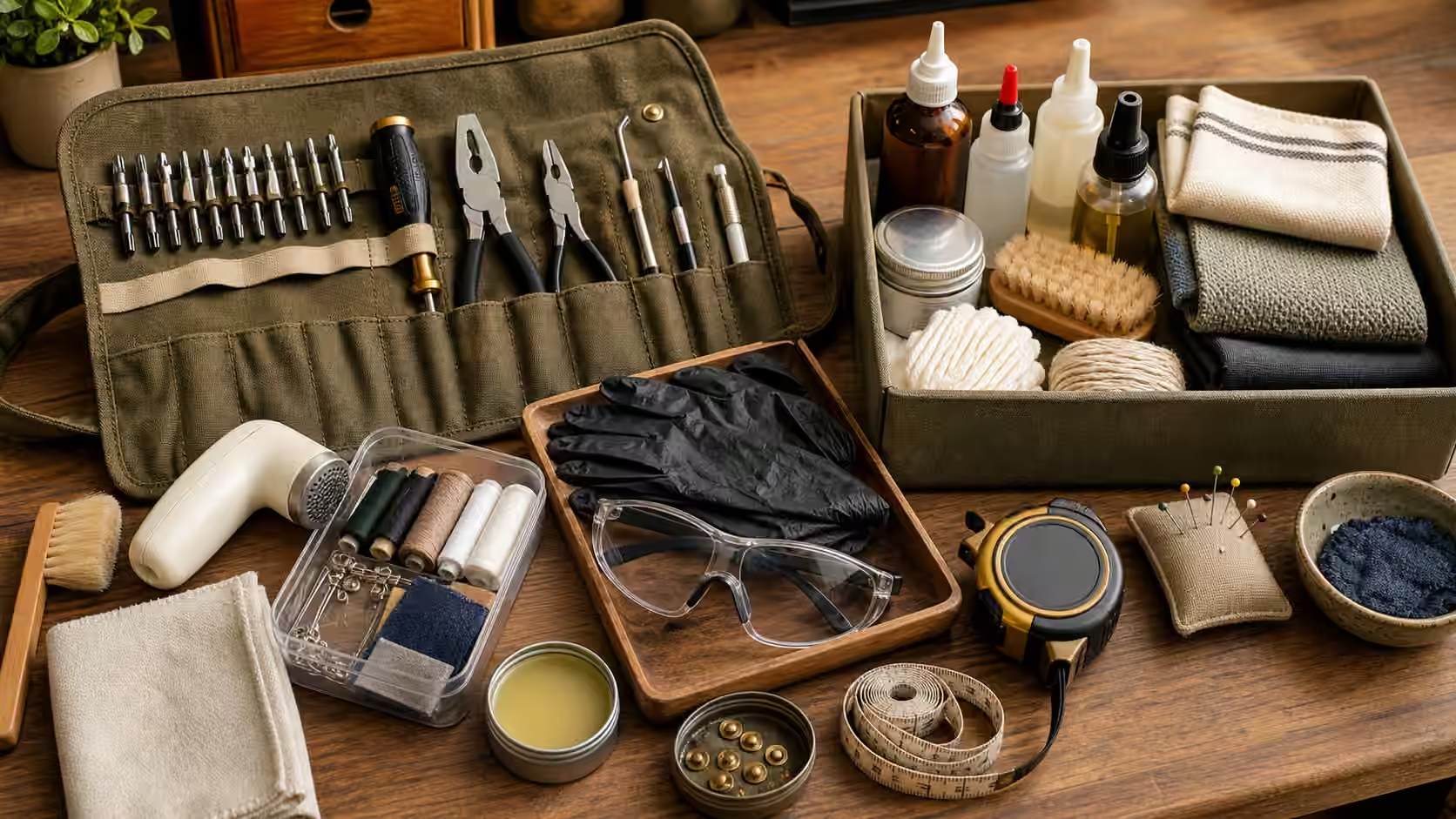
Triage ends not with a repair but with a chosen next step: find the manual, look up the part number, run a cleaning test, get a professional quote, or retire the object responsibly. Deciding only the next evidence step, rather than the whole repair, is the beginner version and it is enough. For anything that needs parts, cleaning, or a quote before it can move forward, a small triage shelf keeps stalled objects from becoming a mystery pile. The triage itself costs time, not gear, a timer, a light, a phone camera, and a pencil, and its real value is the hundred-dollar wrong fix it prevents.
Close every triage by writing it down, because the note is what makes the habit compound. Record the object, the date, what changed, the exact symptom, the safety check, and the next step you chose. One honest sentence now prevents an afternoon of re-diagnosis later, and it is the seed of every good repair decision that follows. For where to go next, the Keepers Guild Quickstart frames repair-versus-replace, Clean First is often the real fix, The Five Beginner Moves covers the reversible basics, and When Not to DIY draws the hard safety lines in detail.