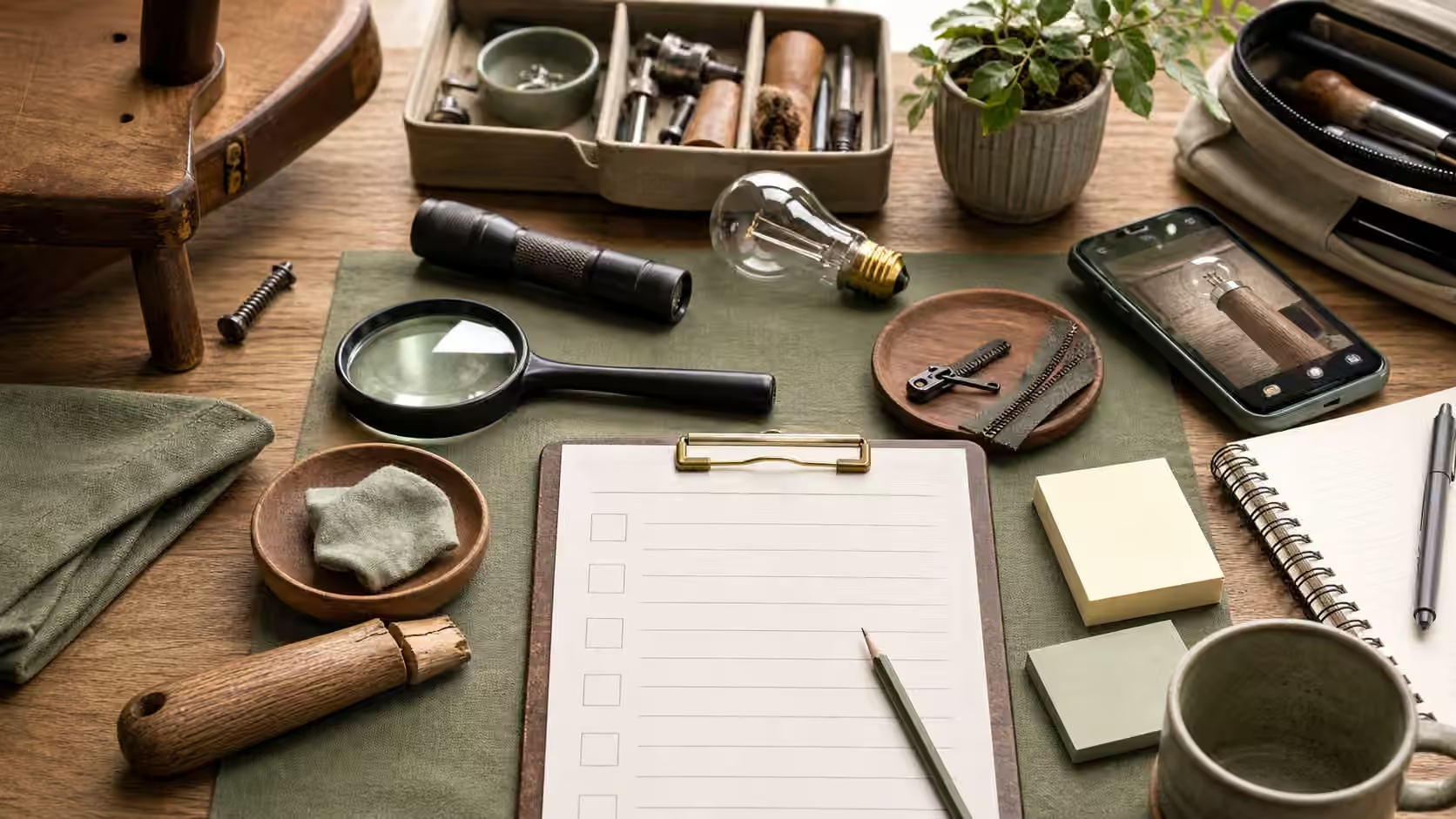
Most of Keepers Guild is an invitation to try: to clean first, look closely, tighten the loose screw, and save the thing you were about to throw away. This guide is the opposite. It is the short list of moments when the most skilled thing you can do is put the tool down, back away, and hand the job to someone licensed to take it. Knowing where that line sits is not a lack of nerve. It is the difference between a hobby that saves objects and one that puts people in the hospital, and reading the line correctly is itself a repair skill worth practicing.
The one question that sorts everything
Before any repair, ask a single question honestly: if this fix fails silently, could it hurt someone? A wobbly drawer that fails just annoys you. A rewired lamp that fails can start a fire inside a wall you cannot see. A cracked ladder rail that fails drops you from height. The danger in the second and third cases is not that the repair is hard. It is that the failure is invisible until the exact moment it matters, when a person is standing on the ladder or asleep in the house. Casual DIY works well precisely when mistakes are cheap and obvious. It becomes dangerous when mistakes are hidden and the stakes are a body.
That is why this guide talks in categories rather than difficulty. Some of the jobs below are technically simple. A confident person can swap a light switch or reinforce a sagging beam in an afternoon and feel accomplished. The problem is not the skill of the good outcome. It is the cost of the bad one, and the fact that you often cannot tell which you produced until it is too late to matter.
Electricity and stored charge
Mains electrical work sits behind licensing in most places for a reason. The risk is not only shock at the moment you touch it; it is the connection you make wrong, buried in a junction box, quietly heating up over months until it ignites the surrounding material. That failure mode is why “it worked when I tested it” proves almost nothing. If a repair involves house wiring, a breaker panel, or hardwired connections, it belongs to an electrician.
A specific and underappreciated hazard is stored charge. A microwave oven’s high-voltage capacitor can hold a lethal charge long after the appliance is unplugged and dark. This is not a case where care and patience make you safe; opening a microwave is genuinely dangerous even for people who understand it, and it is off the table as home repair.
Gas, combustion, and the things you cannot smell
Gas lines and gas appliances carry two overlapping dangers: an explosive leak, and carbon monoxide from incomplete combustion, a gas you cannot see or smell that can kill people in their sleep. Neither leaves room for trial and error. If you suspect a gas leak, the correct sequence is to leave, avoid switches and flames, and call the gas utility’s emergency line from outside, not to hunt for the source yourself. Repairs and inspections of gas equipment belong to qualified technicians, full stop.
Batteries and fire-damaged devices
Lithium-ion batteries fail in a way that punishes tampering. A swollen, hissing, hot, or leaking battery is on the edge of thermal runaway, a self-feeding fire that is extremely hard to extinguish and releases toxic gas. The keeper move here is isolation, not repair: stop charging it, move it away from anything flammable if you can do so safely, and follow local hazardous-waste guidance for disposal rather than puncturing, prying, or “draining” it. Anything already fire-damaged is likewise a job for professionals, because heat compromises materials and safety systems in ways you cannot see from the outside.
Structure, height, mold, and the safety-critical list
The same logic extends to a family of jobs where failure lands on a person. Structural, load-bearing repairs decide whether a floor, a shelf bracket, a bed frame rail, or a stair holds weight, and a cosmetic patch that merely looks solid is worse than an obvious break because it hides the risk. Ladders and other fall-protection gear that has cracked or bent should be retired, not reinforced. Mold is a contamination problem, not a stain: painting over it or scrubbing a large colony without proper containment spreads spores and skips the moisture source that caused it, so significant mold belongs to remediation professionals. And there is a category of safety-critical equipment where the whole point of the object is to protect a person: car brakes, child car seats, climbing gear, and medical devices. These are not DIY practice pieces. When one is involved, the correct action is documentation and qualified service.
What “stopping” actually looks like
Deciding not to DIY is not the same as doing nothing. There is a keeper-shaped way to stop well. Take the object out of service so no one uses it by habit. If, and only if, it is clearly safe, disconnect or isolate it, but never touch anything live, hot, leaking, swollen, or chemically contaminated. From a safe distance, capture the model number, serial number, symptoms, dates, and a few photos, which is exactly the evidence a professional will ask for and the same information worth keeping in your warranty folder . Then reach the right help for the category: an electrician, the gas utility, a remediation contractor, a mechanic, or the manufacturer’s official support line rather than a number from a search ad. Finally, record the advice, the quote, and your decision, so the next person facing the same failure starts from knowledge instead of guesswork.
Living with the boundary
The hardest part of this boundary is emotional, not technical. Confidence feels like competence, a well-made video makes a licensed trade look like a weekend project, and a neat-looking repair feels finished even when it is quietly unsafe. The antidote is to treat the high-risk categories as settled decisions made in advance, so you are not negotiating with yourself in the moment. Maintain those things through inspection, records, and scheduled professional service rather than improvised fixes, and budget for the occasional expert quote as part of the real cost of owning them. A professional bill can feel steep, but it is small next to a fire, a poisoning, a fall, or a failed brake. If you want to build the reflex from the ground up, start with the 10-minute triage for naming a failure clearly, keep cleaning first as your default low-risk move, and let the Keepers Guild quickstart frame the larger repair-maintain-replace choice. Knowing when to stop is the skill that makes every other skill safe to use.