Physical AI 76 guides Humanoids, Robot Hands, Home Robots, Warehouses & Safety

Physical AI Lab

Grounded guidebooks on humanoid robots, robot hands, home robots, warehouse robots, embodied AI, autonomy, robot safety, and what robots can actually do.

Jump straight into the Physical AI track in Learn with Fizz, then use the guidebooks when you want depth.

Physical AI Lab is a practical library for learning robots without the demo-hype fog. It separates what works today in warehouses and factories from what still struggles in homes, shows why hands are harder than wheels, and explains why autonomy is a stack of sensors, controls, policies, tests, and safety cases rather than a single breakthrough waiting to happen.

Start with What Robots Can Actually Do: A Grounded Physical AI Quickstart , which introduces the capability envelope: the honest boundary of tasks, objects, environments, and failure modes a given machine can handle. From there the shelf splits by setting. Humanoid Robots: The Practical Guide weighs the general-purpose form factor against its real costs, Home Robots: Useful, Narrow, and Hard explains why ordinary kitchens defeat machines that thrive in mapped aisles, and Robot Safety: Risk, Standards, and Good Boundaries covers the part every deployment ultimately answers to.

How to use the library

The deeper shelf reads like a deployment checklist: perception and sensor fusion, grasping and manipulation, teleoperation, fleet management, site readiness, commissioning, incident review, and data governance. The pages are written for people who evaluate, buy, deploy, or work alongside robots, and for readers who simply want to judge a robotics headline with steadier footing. Browse the full guidebook shelf for the reading path, deploy embodied units in the Kill Switch tower-defense game , or use the Physical AI Lab Learn with Fizz track to drill the core ideas: capability envelopes, humanoid tradeoffs, dexterous manipulation, home-robot constraints, warehouse workflows, embodied AI, autonomy levels, and safety design.

The editorial approach is grounded rather than breathless. Claims are framed around what a robot does repeatedly, in a real environment, with a safe failure mode, not what it did once on a staged table. Where the field is genuinely uncertain, the guides say so instead of rounding up.
Editorial Guide

What Physical AI Covers

Grounded guidebooks on humanoid robots, robot hands, home robots, warehouse robots, embodied AI, autonomy, safety, and what robots can actually do. Fondsites treats this topic as a practical library rather than a loose feed: each page is meant to explain the decision, show the vocabulary, and point toward the next useful guide.

The Physical AI shelf is organized for readers who want clear context before buying gear, changing a routine, or repeating a claim they saw elsewhere. Start with the quickstart material when the topic is new, then move into the more specific guidebooks when a real question appears.

There are 76 guidebooks in this library. Useful starting points include What Robots Can Actually Do: A Grounded Physical AI Quickstart, Humanoid Robots: The Practical Guide, Robot Hands and Dexterous Manipulation and Home Robots: Useful, Narrow, and Hard. Those pages show the house style: concrete examples, cautious boundaries, and links back into related topics when a short answer would be misleading.

Guidebooks

Guidebooks on what robots can actually do, humanoid robots, robot hands, home robots, warehouse robots, embodied AI, autonomy, and safety.

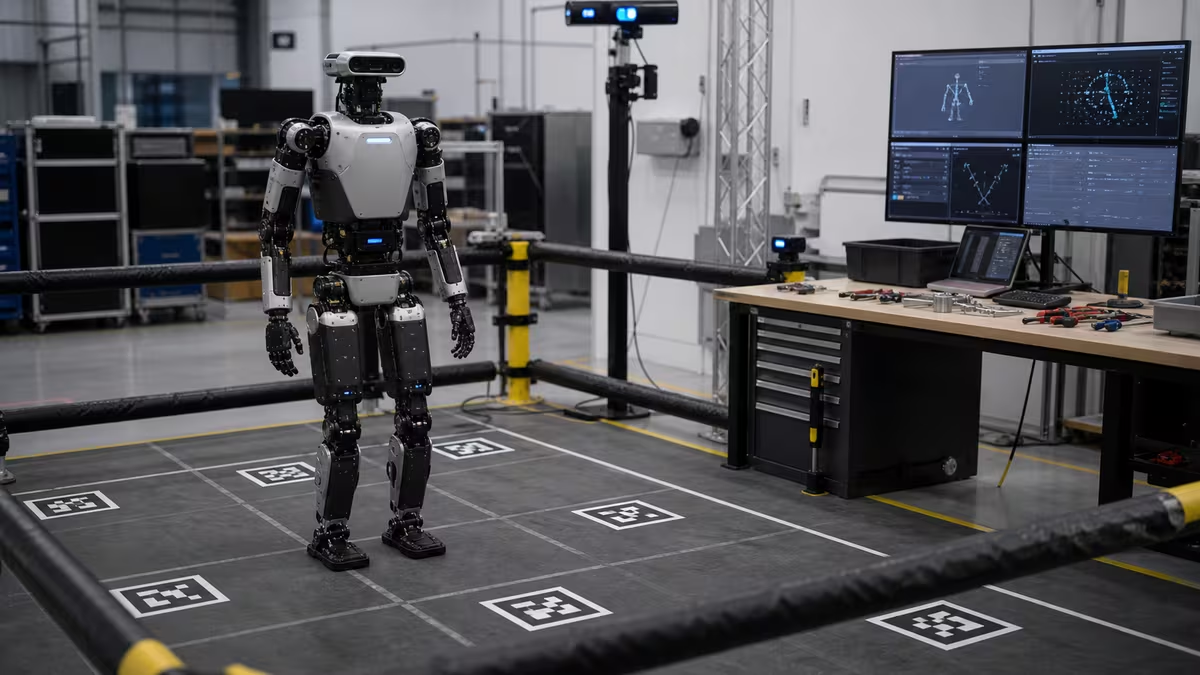
A humanoid robot test bay with a torso, legs, balance markers, workbench tools, and supervised safety boundaries.

Physical AI Lab

Humanoid Robots: The Practical Guide

A clear guide to humanoid robots: why the body shape is appealing, where it helps, where it hurts, and what to watch …

Beginner 5 min read
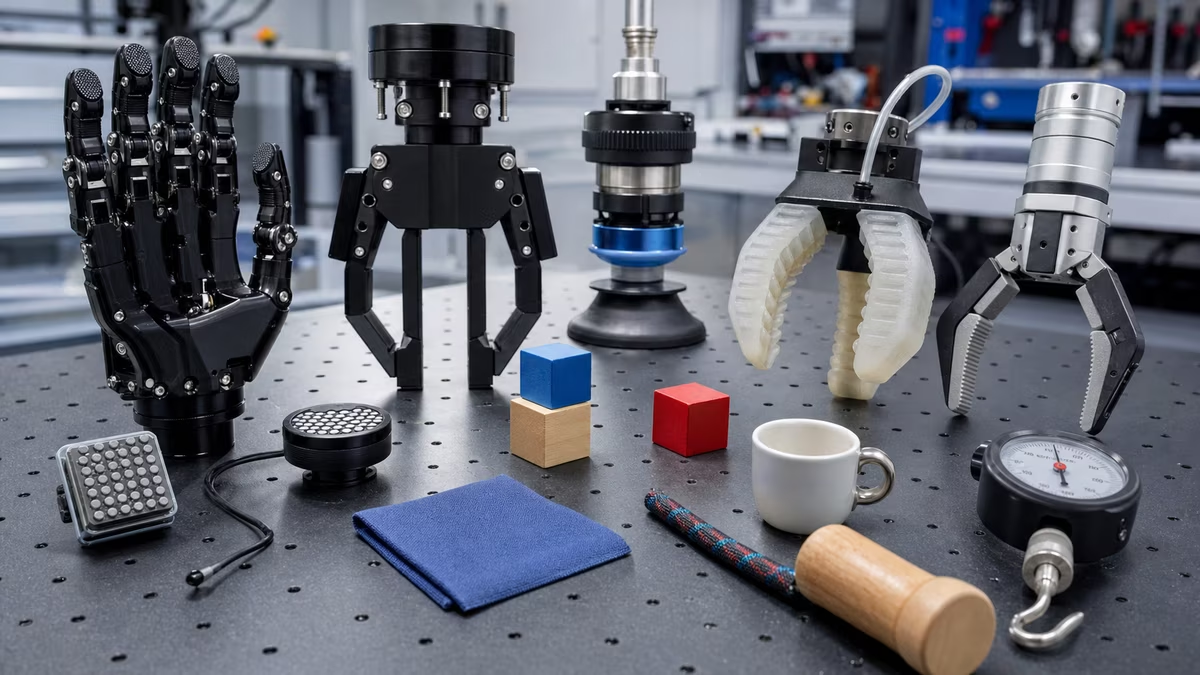
A robot hand and several end-effectors arranged beside blocks, fabric, tools, tactile sensors, and force diagrams.

Physical AI Lab

Robot Hands and Dexterous Manipulation

A practical guide to robot hands, grippers, tactile sensing, dexterous manipulation, and why picking things up is still …

Intermediate 5 min read
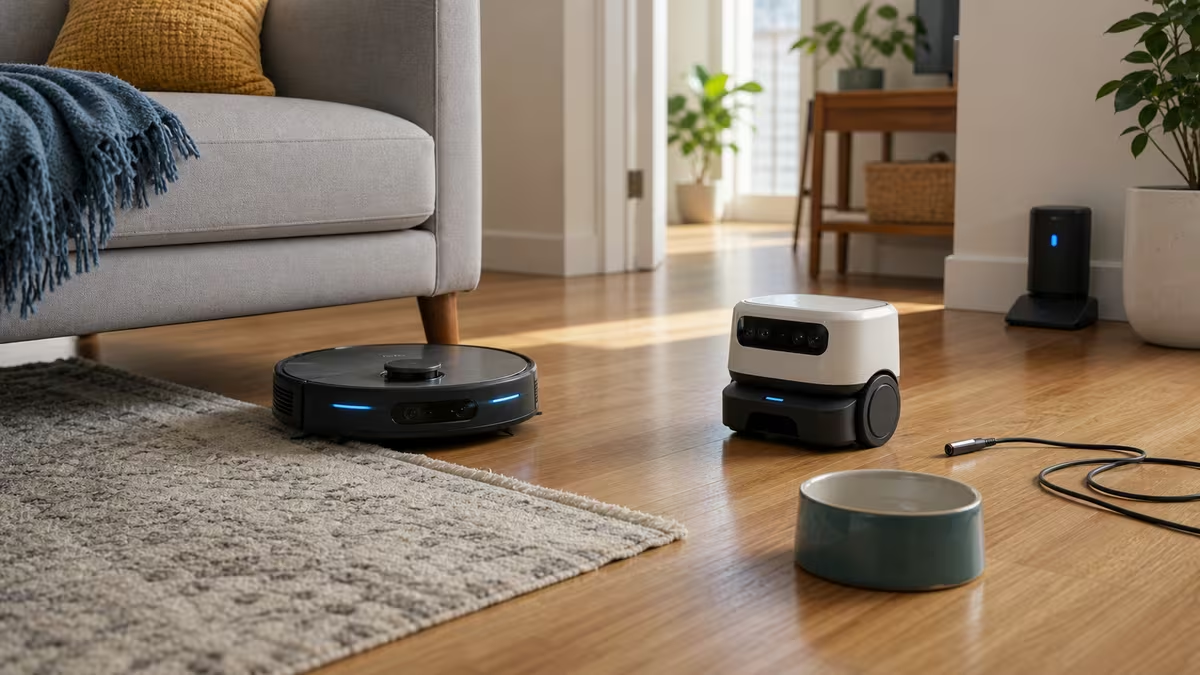
A home robot testing scene with a vacuum robot, small mobile assistant, furniture legs, pet bowl, cable, rug edge, and privacy marker.

Physical AI Lab

Home Robots: Useful, Narrow, and Hard

A practical guide to home robots, from vacuums and mowers to household assistants, with privacy, maintenance, safety, …

Beginner 5 min read
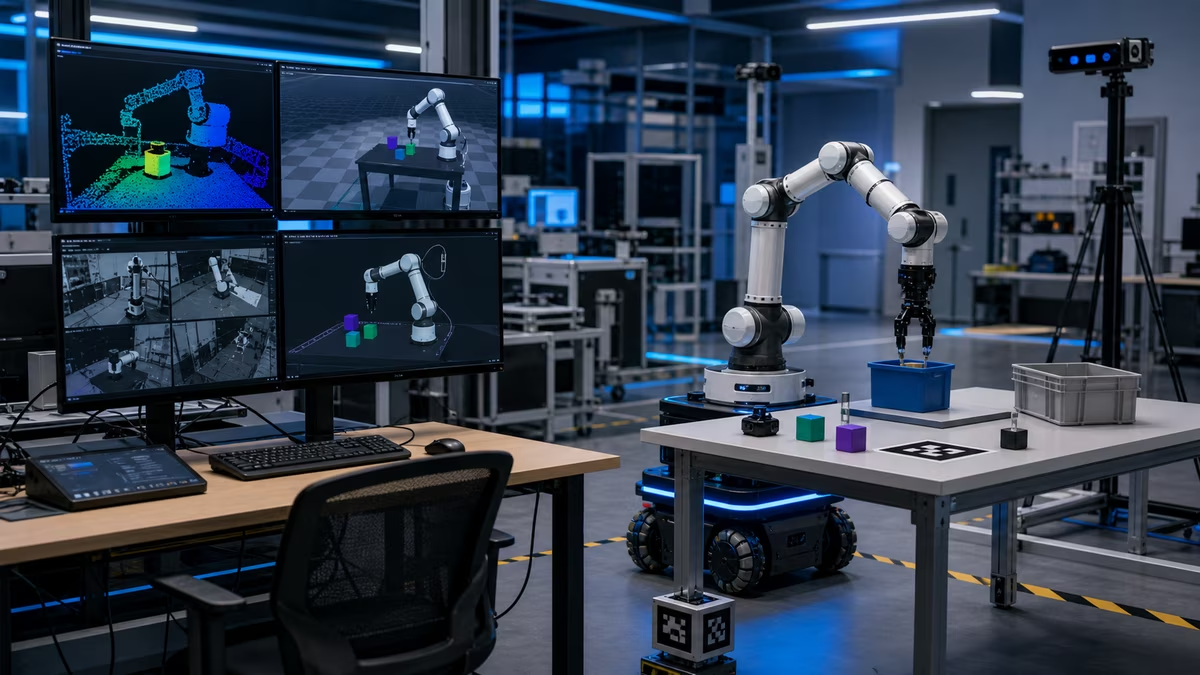
A visual embodied AI pipeline showing cameras, depth sensors, simulation, robot policy, gripper actions, and real-world feedback.

Physical AI Lab

Embodied AI: Models That Meet the World

A grounded guide to embodied AI, robot foundation models, simulation, perception, action policies, and why physical data …

Intermediate 5 min read
A layered robot autonomy stack diagram with sensors, maps, planning, control, safety, fleet management, and human approval gates.

Physical AI Lab

Robot Autonomy: The Stack Behind the Demo

A practical guide to robot autonomy, from sensing and mapping to planning, control, supervision, fleet management, and …

Intermediate 5 min read