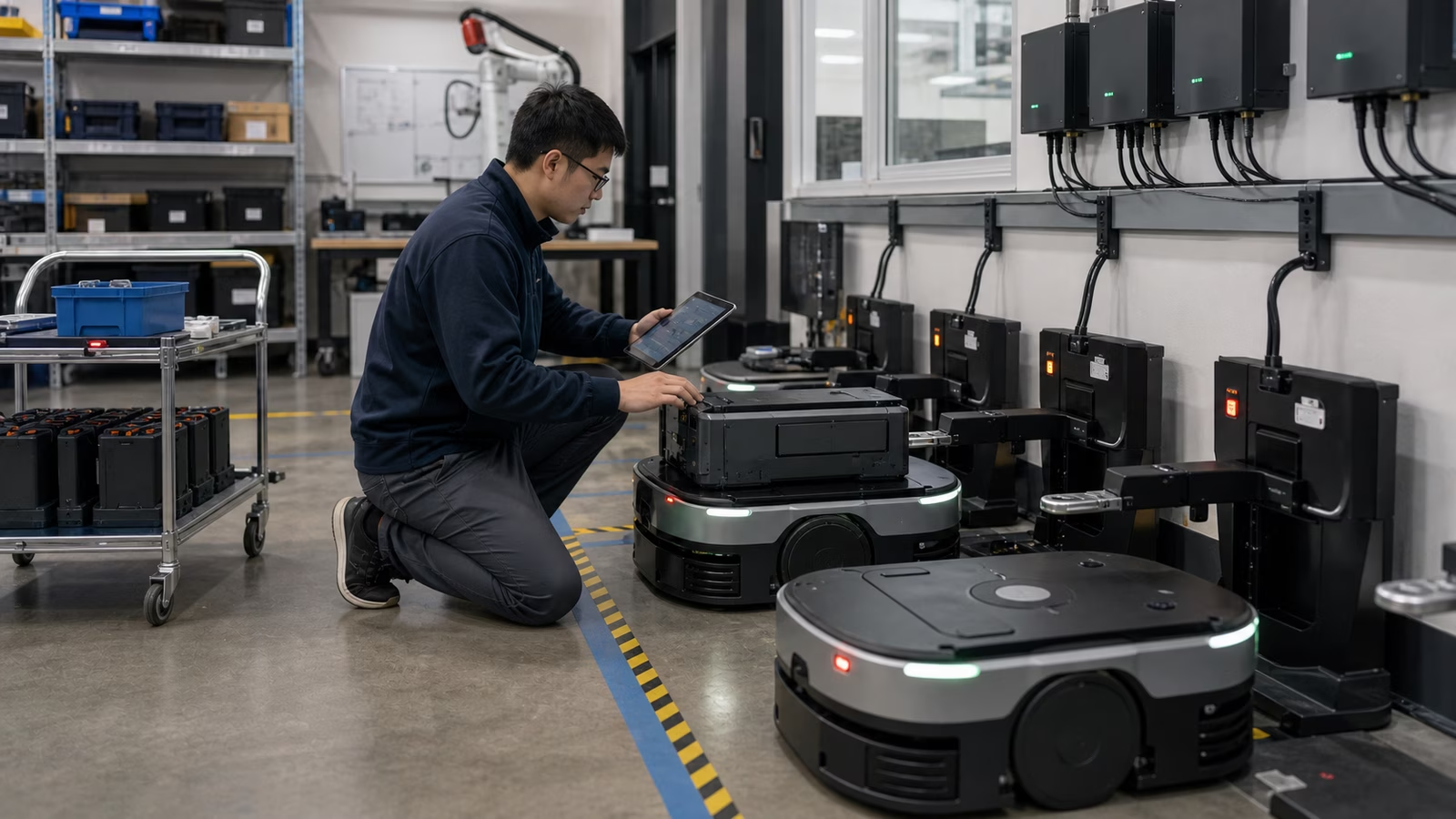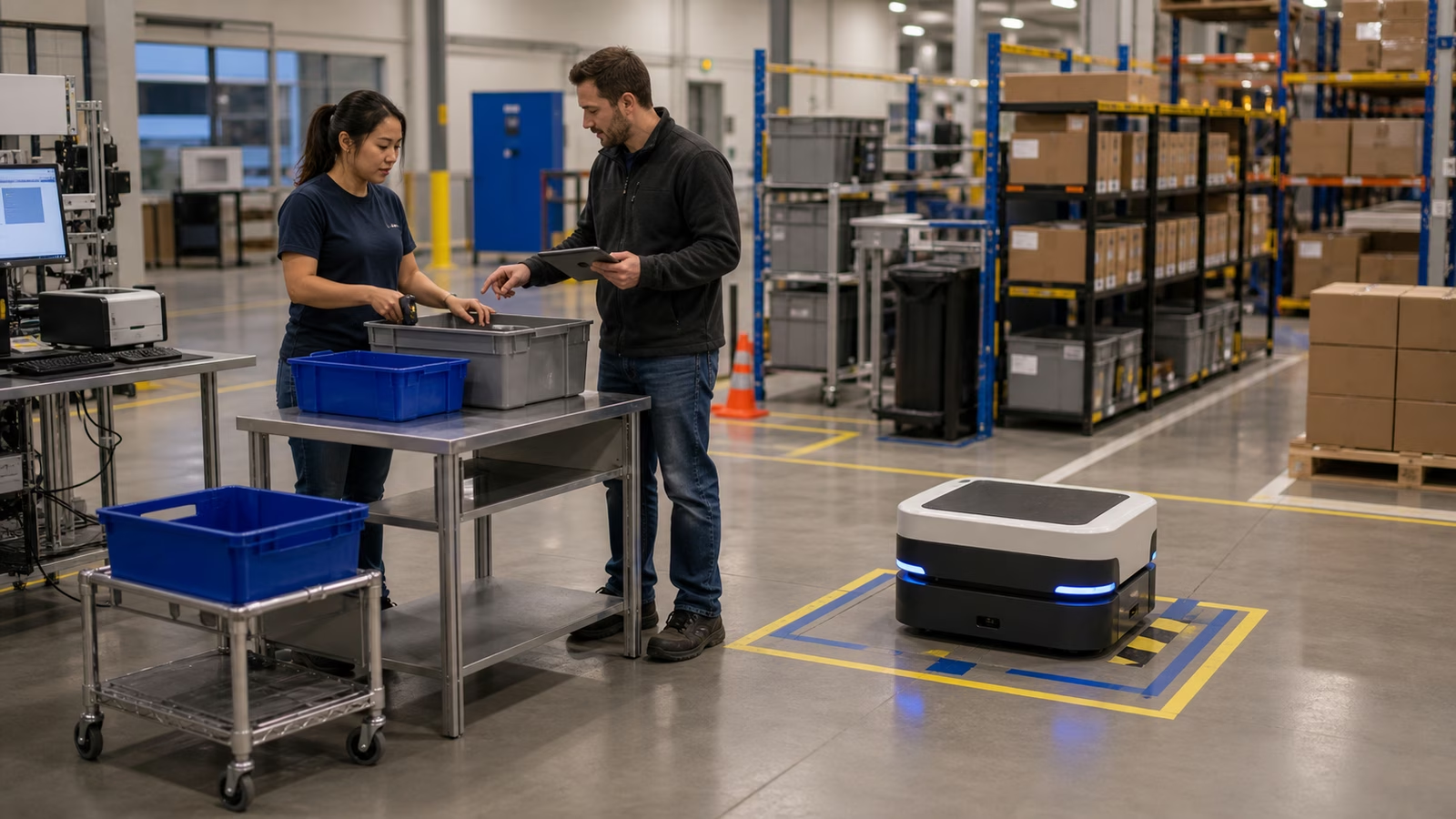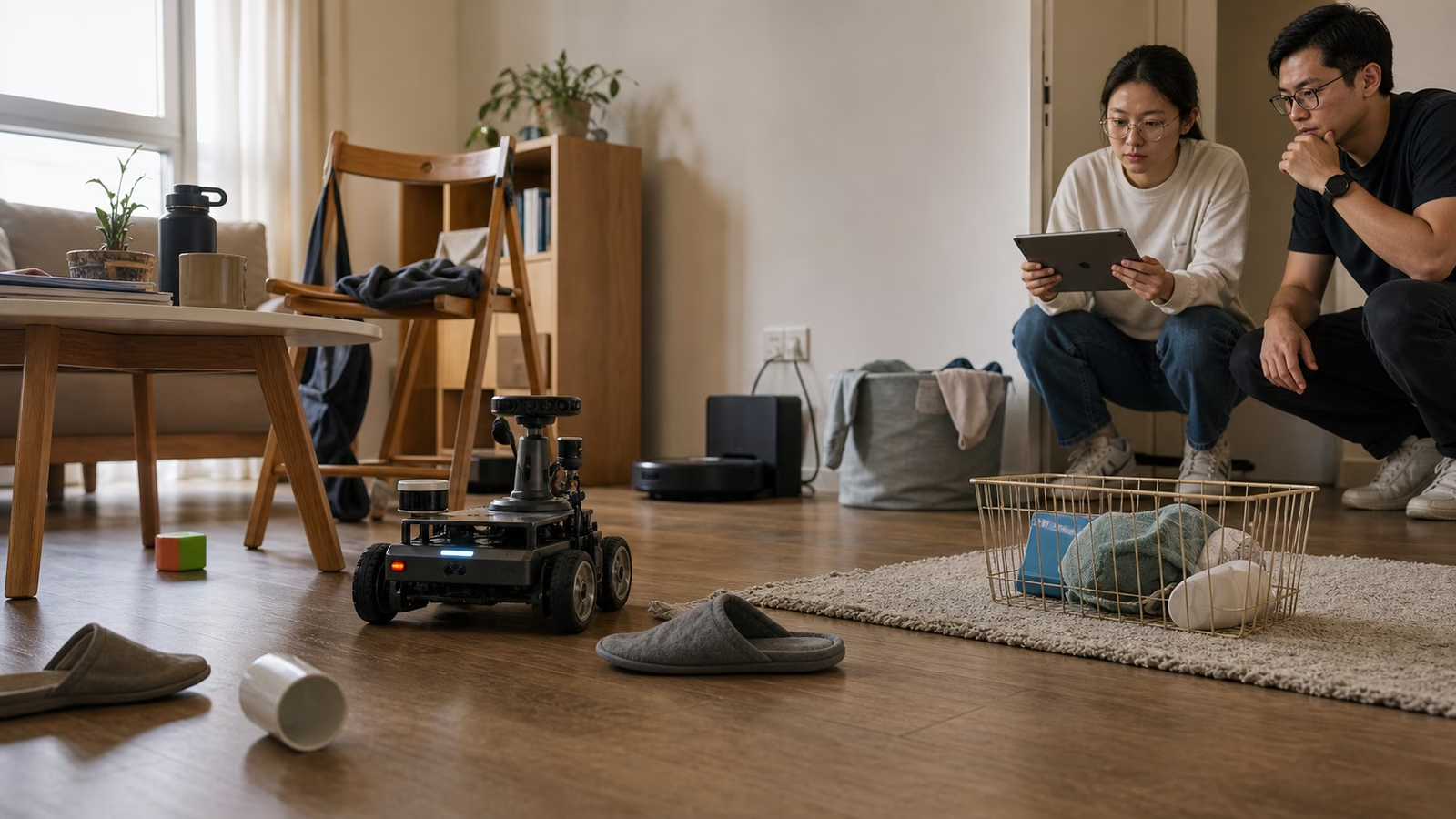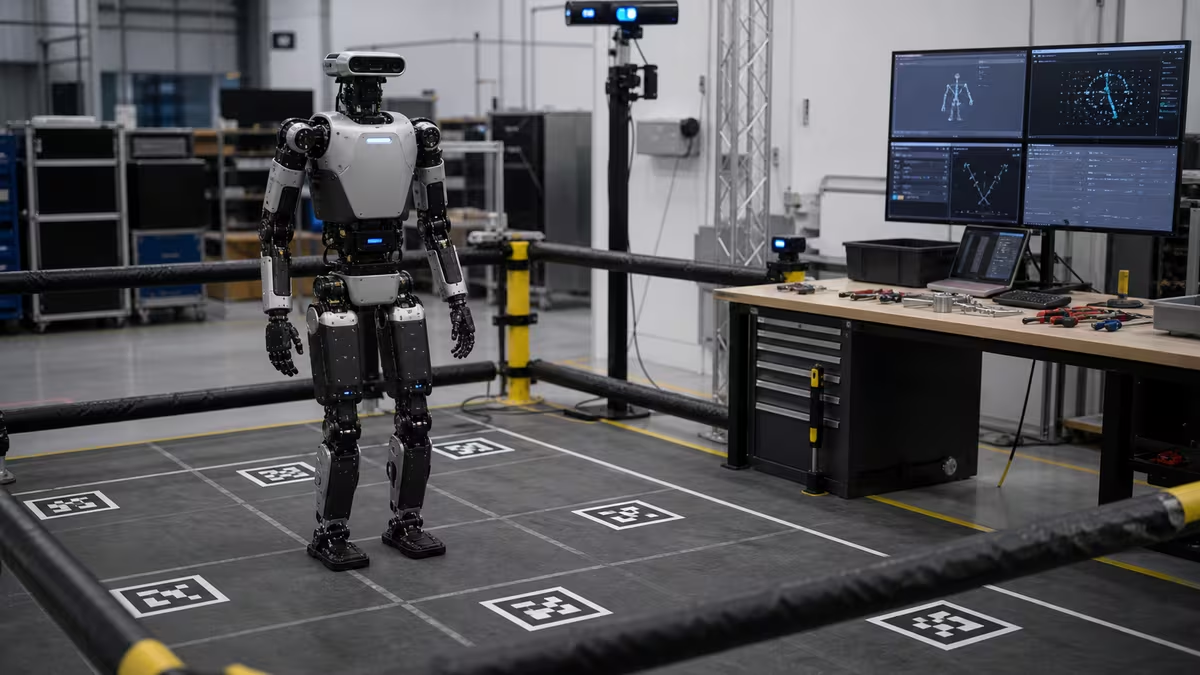
Humanoid robots are compelling because the world was built for bodies roughly like ours.
Doors, stairs, shelves, tools, handles, carts, kitchens, factories, warehouses, ladders, and vehicles assume human reach, height, vision, hands, and legs. A humanoid promises a single robot that can enter those spaces without rebuilding the world.
That promise is real. It is also expensive.
A humanoid bundles several hard problems into one machine: balance, locomotion, perception, manipulation, battery life, whole-body control, fall recovery, safe contact, task planning, maintenance, and cost. Wheels solve many movement problems more simply. Fixed arms solve many manipulation problems more cheaply. The humanoid question is not “Is the shape cool?” It is “Which job needs this much body?”
Why humanoid form helps
Humanoid form can help when the environment already assumes people.
Human-height work
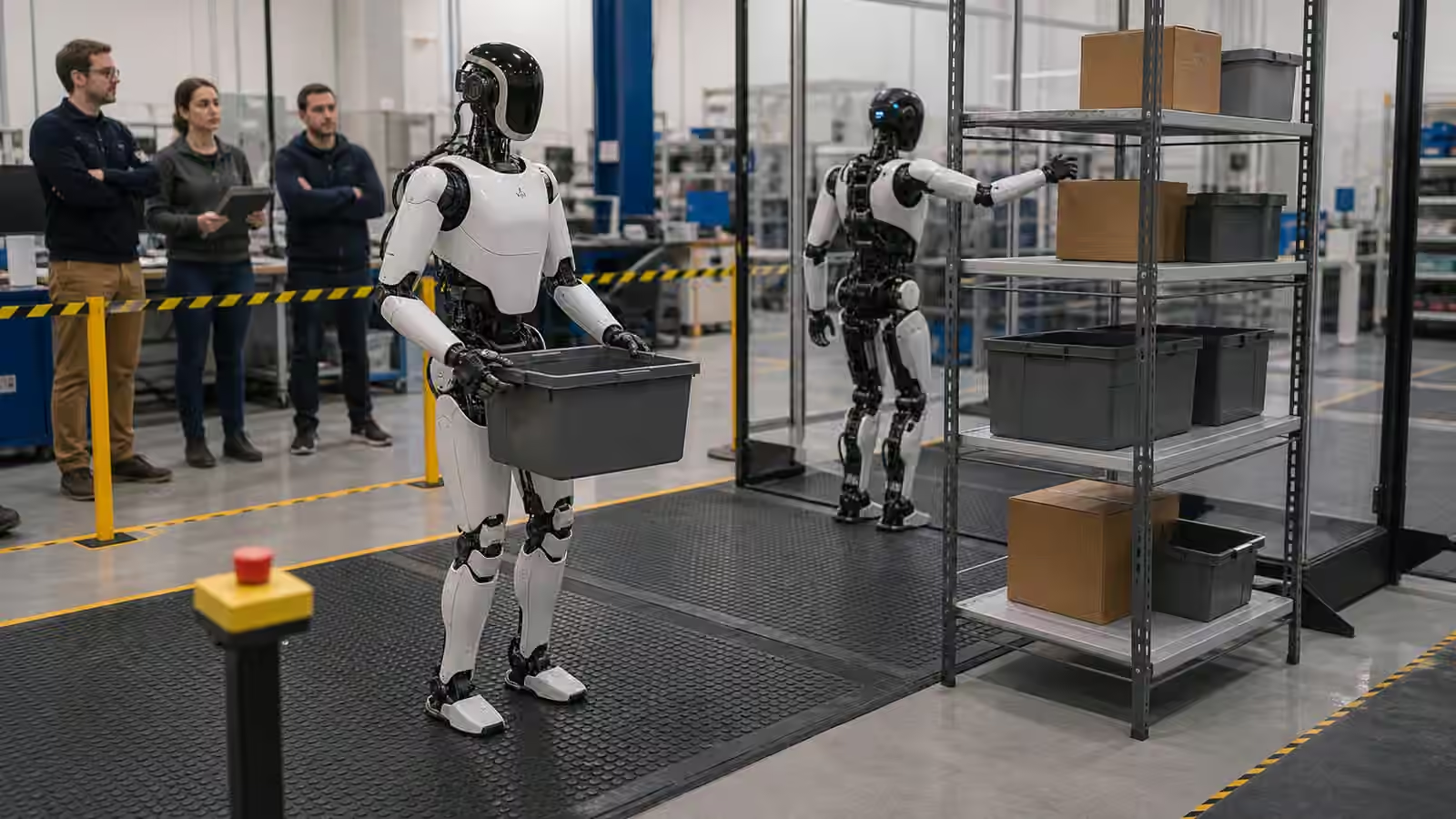
If a task involves shelves, counters, carts, door handles, tools, elevator buttons, or machine interfaces designed for people, a human-scale robot can use existing layouts.
Mixed tasks
A mobile base plus arm might do one workflow well. A humanoid is attractive when the target job changes: walk to a shelf, open a door, pick a tote, press a button, carry an item, scan a label, and return.
Brownfield deployment
Many facilities cannot redesign everything around automation. If a robot can use human aisles, human handles, and human carts, the integration story improves.
Demonstration and human trust
People understand roughly what a humanoid is trying to do. That can make demos legible. It does not automatically make the robot safer or more capable.
Why humanoid form hurts
Humanoid form adds cost and risk.
Legs are hard
Bipedal walking requires balance, foot placement, terrain estimation, impact handling, and fall management. Wheels are usually more efficient and stable on flat floors. A humanoid needs legs when stairs, uneven terrain, or human-shaped constraints matter enough to justify them.
Falls are serious
A heavy robot falling near people, shelves, glass, vehicles, or machinery is not a harmless software crash. Fall prevention, fall detection, safe collapse behavior, and emergency stops are part of the product.
Arms and hands multiply complexity
A humanoid with two arms and hands can potentially do more tasks, but it also has many more joints, sensors, motors, failure modes, and pinch points. Two hands are not twice as hard as one gripper. They are a different class of coordination problem.
Battery and thermal limits matter
A robot that can do an impressive task for a few minutes may still be impractical for a shift. Energy use, heat, charge cycles, and docking strategy decide whether the machine is a product or a lab performance.
Good early humanoid jobs
The best early jobs are not “do anything.” They are bounded jobs that benefit from human-scale movement. Tote handling can fit when shelves and carts are already built for people, but weight, grasp reliability, cycle time, and recovery need proof. Machine tending can make sense around existing equipment, as long as button variation, door handling, safety zones, and uptime are measured. Inspection patrols may fit human routes and instruments, but lighting, navigation, data quality, and alerts decide the value. Retail or facility tasks need strict customer-safety, social-boundary, and privacy rules. Hazardous work may justify the body shape, but only with teleoperation fallback, ruggedness, and liability handled.
Weak early humanoid jobs
Be skeptical of broad household labor, childcare, eldercare, cooking, medical support, unsupervised security, and anything involving fragile people or complex social judgment.
Those tasks combine manipulation, privacy, trust, safety, liability, and emotional expectations. A humanoid body does not solve those constraints. In some cases, it amplifies them.
How to read humanoid demos
Look for whether the demo is teleoperated, scripted, learned, or autonomous. Notice how many takes were needed, whether objects were staged, whether failures were shown, what happens when an object slips, whether uncertainty is detected, whether a remote operator or safety person is nearby, how long the robot works before charging, what payload it can carry at full arm extension, and whether it can recover from a fall or stop before one.
If the demo answers none of those questions, treat it as a capability hint, not deployment evidence.
Humanoid vs mobile manipulator
A mobile manipulator is usually a wheeled base with one or more arms. It can be less dramatic than a humanoid and more useful for many indoor jobs.
Choose a humanoid when the job truly needs stairs, human-like whole-body reach, several human interfaces, or access to a facility that cannot be redesigned. Choose wheels when floors are mostly flat, stability and runtime matter more than resemblance, the job is transport, picking, inspection, or cart handling, and the business case needs lower complexity.
What “general purpose” should mean
General purpose should not mean “no boundaries.” A serious general-purpose humanoid still needs allowed task categories, payload limits, speed limits, restricted zones, maintenance schedules, logs, incident review, user training, and clear handoff to humans.
The honest near-term version is a robot that can learn several bounded jobs in similar environments, not a universal domestic worker.
Pilot checklist
Before a humanoid pilot, define the exact job family, the work cell or route, the allowed objects and weights, the maximum speed and force, the human interaction rules, the emergency stop plan, the teleoperation or support model, and the metrics: throughput, uptime, intervention rate, damage, and incidents.
Useful references
- International Federation of Robotics, World Robotics 2025 press release
- OSHA Technical Manual, Industrial Robots and Robot System Safety
Next steps
Read Robot Hands and Dexterous Manipulation next. Humanoid robots become useful only when their hands, arms, perception, and safety case can keep up with the promise of the body.