How Home Practice Works
How to make home speech practice short, specific, supportive, and tied to a professional target when needed.
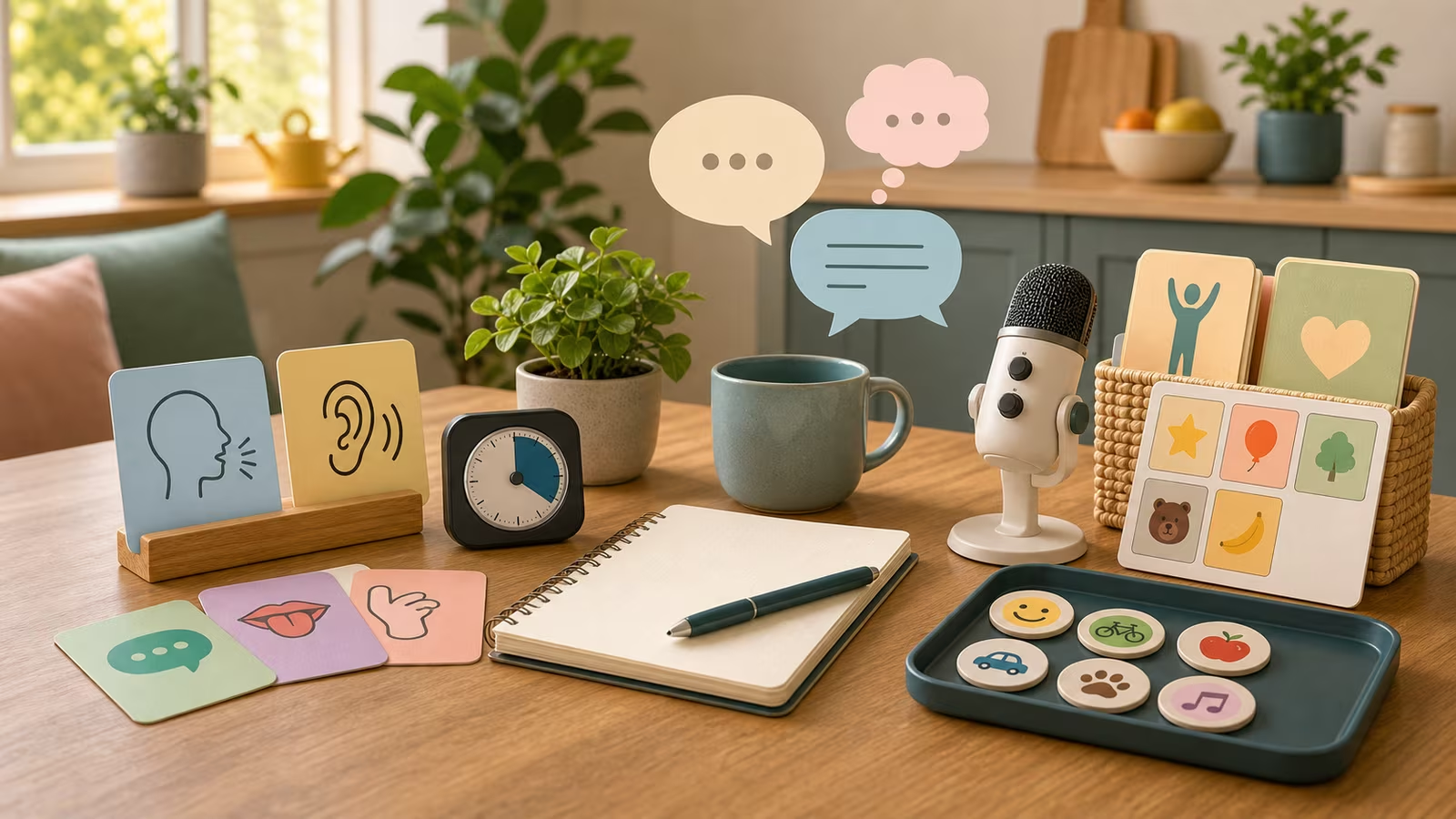
Home practice works best when it is a small bridge from a clear target to real communication. It should not become a full-time correction habit.
The useful pattern
- Pick one target or strategy.
- Choose a level that is achievable today: sound, syllable, word, phrase, sentence, conversation, communication repair, or AAC use.
- Practice for a short time.
- End while the learner still has energy.
- Write one practical note.
What to avoid
- Correcting every conversation.
- Practicing during fatigue, conflict, embarrassment, or public pressure.
- Using speech recognition as proof of clinical accuracy.
- Storing names, dates of birth, diagnoses, school names, or recordings in casual tools.
Better questions
Ask the SLP what target, cue, practice level, session length, and stop rule to use. Ask how to know whether a word is ready to move into phrases or conversation.
Back to the Speech Therapy hub or open Speech Genie Practice Studio .