
Most homework battles are not really about homework. They are about the start. Long before the first problem is attempted, a vague instruction lands on a tired child, a parent watches the evening evaporate, and the kitchen table turns into a place where two people bargain, stall, and dig in. By the time anyone touches the actual worksheet, the fight has already happened, and it was never about fractions or spelling. It was about the ambiguous, loaded, emotionally heavy moment of beginning. If you can make that one moment clearer and calmer, a surprising amount of the conflict simply has nowhere to grow.
That is why it helps to treat starting as its own separate skill, apart from the homework itself. A child may be perfectly capable of the assignment and still find the doorway into it impossible, the way an adult can know exactly how to file their taxes and still avoid opening the envelope for weeks. The routine that follows is designed to lower the drama at the doorway. It is short, visible, and respectful, and it works far better when the adult treats it as scaffolding rather than as a test of the child’s willingness.
Preview before you push
The routine opens with a preview, not a demand. Sit beside the child and look at the assignment together without solving anything yet. The purpose is only to see the shape of it: how many pieces, which one the teacher wants first, where the hard parts are. This matters because a child who has not looked at the work is staring into fog, and fog is frightening. A child who has glanced at it, even for thirty seconds, is facing something with edges. You are not starting the work in the preview; you are shrinking the unknown, which is often the thing that was fueling the resistance.
Keep your own tone level during the preview, because children read the adult’s face more than the worksheet. If you approach the page as a shared object to be understood, the child tends to lean in with you. If you approach it as evidence in a case about their character, they brace, and the negotiation begins.
Set the table and choose the first move
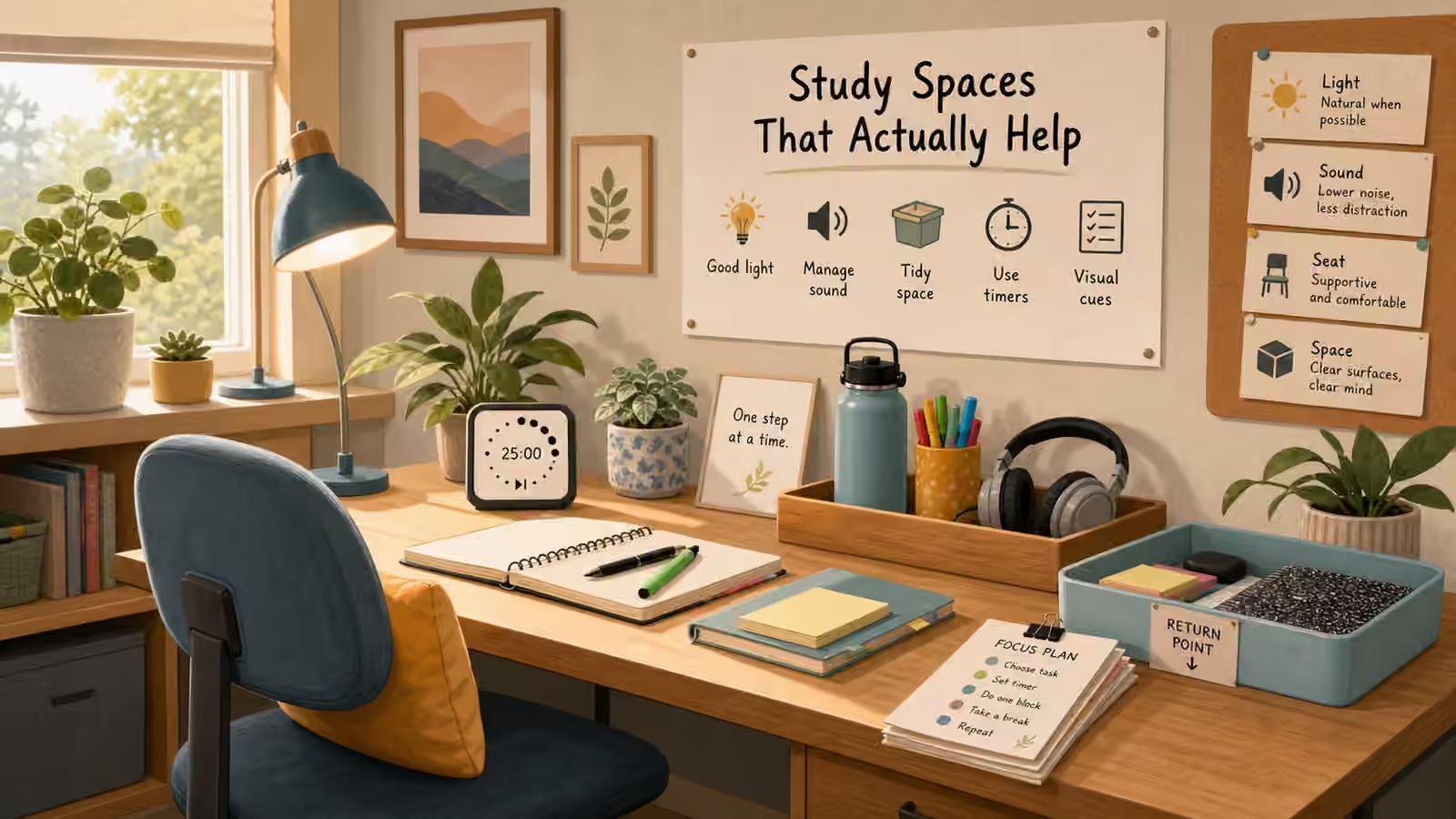
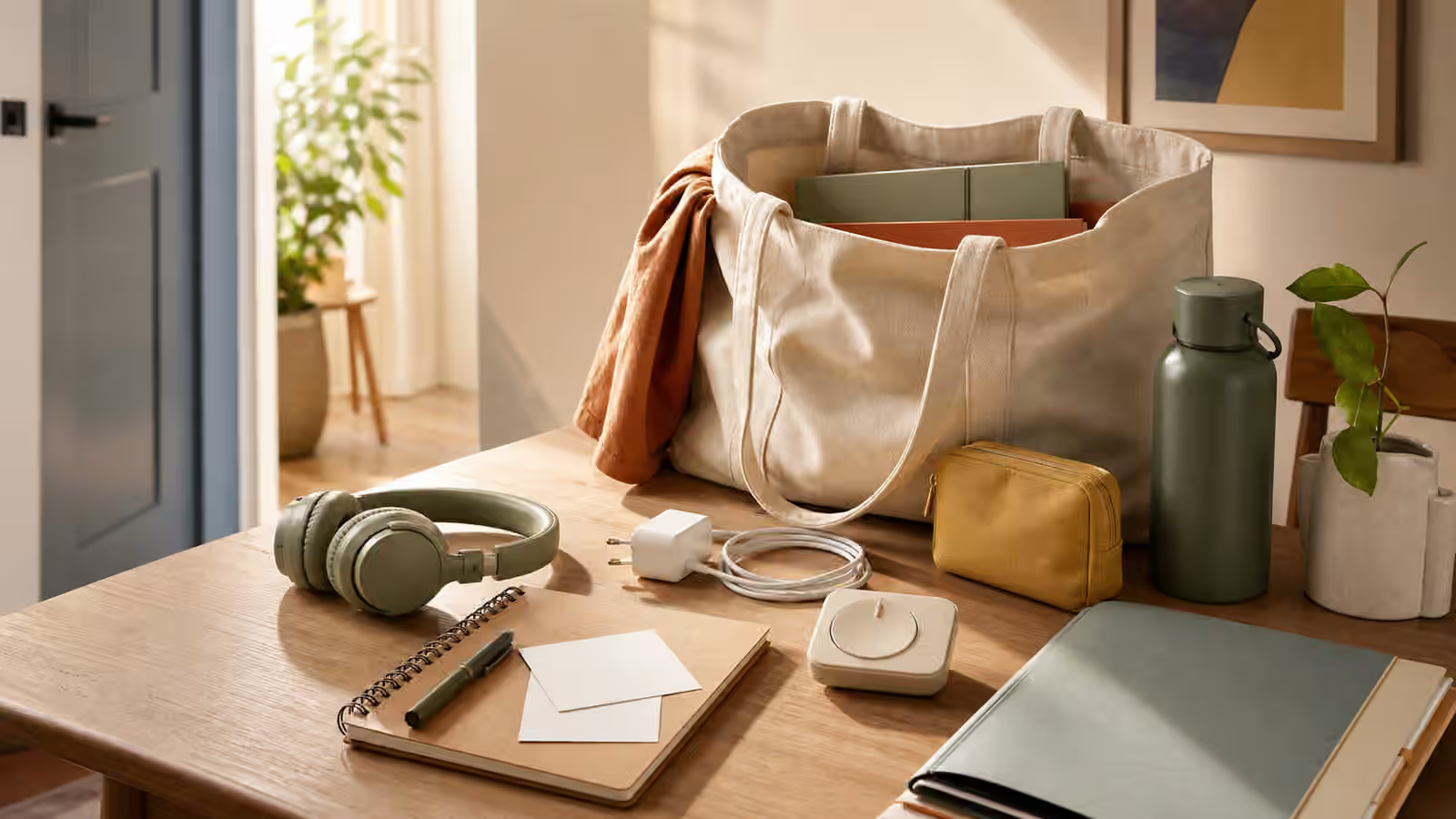
Once you have previewed, set the table literally. Put only the materials this assignment needs within reach and clear away the obvious distractions, including the rest of the backpack. A common mistake is to spread everything out at once, which forces the child to make a dozen small decisions before touching a pencil, and every decision is a place to stall. One assignment, its few tools, and nothing else keeps the field of choices small.
Then choose the first move together, and make it genuinely small. The teacher may specify a required first step; if not, pick the smallest clear thing, whether that is writing the name at the top or circling the first problem. Offering two acceptable choices is a quiet way to hand the child some control without opening the door to endless bargaining: “Which comes first, writing your name or circling the first problem?” is a very different question from “Are you ready to start?” The first has a small answer. The second invites a war.
Plan the return before the break
Breaks are essential, but an open-ended break is just an escape hatch, and children learn quickly that vanishing is easier than returning. The fix is to plan the return before the break begins. A short movement break after a first round of work is reasonable and even helpful, but it should come with an end cue the child can see, like a timer, and a physical marker of where to resume. Leaving the pencil resting on the exact problem where they will pick up again turns re-entry from a decision back into a simple, obvious act. The child does not have to find their place or their nerve; the place is already marked and the next move is already chosen.
The same logic applies to the whole session. When the work stops for the night, half-finished, leave a small note or a placed pencil that tells tomorrow’s version of the child where to begin. A start that is already staged is a start that does not have to be re-argued.
The adult’s script
The words the adult uses carry a lot of weight, and short calm words carry the most. A few reliable lines do the job. To frame the start without demanding the whole: “We are not doing all the homework right now. We are just setting up the start. Which comes first?” To structure a break: “After ten minutes you can take a three-minute movement break. Leave your pencil on the problem where you’ll come back.” To offer help without taking over the fight: “I can help read the instructions. I won’t argue with the worksheet.” That last distinction protects the relationship, because it puts you on the child’s side of the table against a shared problem rather than across the table as the enforcer.
It also helps to praise the routine rather than only the finished product. When a child uses the start phrase, chooses a first move, and comes back after a break, that is the behavior you want to grow, and naming it teaches them that beginning is a skill they are getting better at, not a verdict on whether they are good. The point of the whole system is not to win an argument. It is to remove the ambiguity and the emotional load from the doorway so that the child can walk through it without a fight.
Make it survive an ordinary evening
A routine that only works on a calm afternoon with a rested child and a patient adult is not much use, because homework rarely arrives under those conditions. Test yours on a messy weekday: after a long day, in a noisy room, with a child who is already annoyed before the backpack is open. If it still helps you get to a first move under that strain, you have something durable. If it only works when everyone is fresh, shrink it further, down to one previewed assignment and one tiny first step. Afterward, it is worth noticing one thing that made the start easier tonight and one thing that still snagged, and letting that quietly shape tomorrow’s setup.
A careful next step
If homework difficulty is persistent, extreme, or clearly tied to reading, language, attention, anxiety, mood, sleep, or access needs, the right move is to bring in the school team and qualified professionals rather than to turn home into a nightly battleground. A struggling start that never eases despite a calm, consistent routine is information worth sharing with people trained to act on it. For everyday practice, pick one assignment and make only the first move more visible, then leave a marked return point for next time. For related support, see Study Spaces That Actually Help for setting up the table, and Body Doubling for Beginners for calm co-working company.