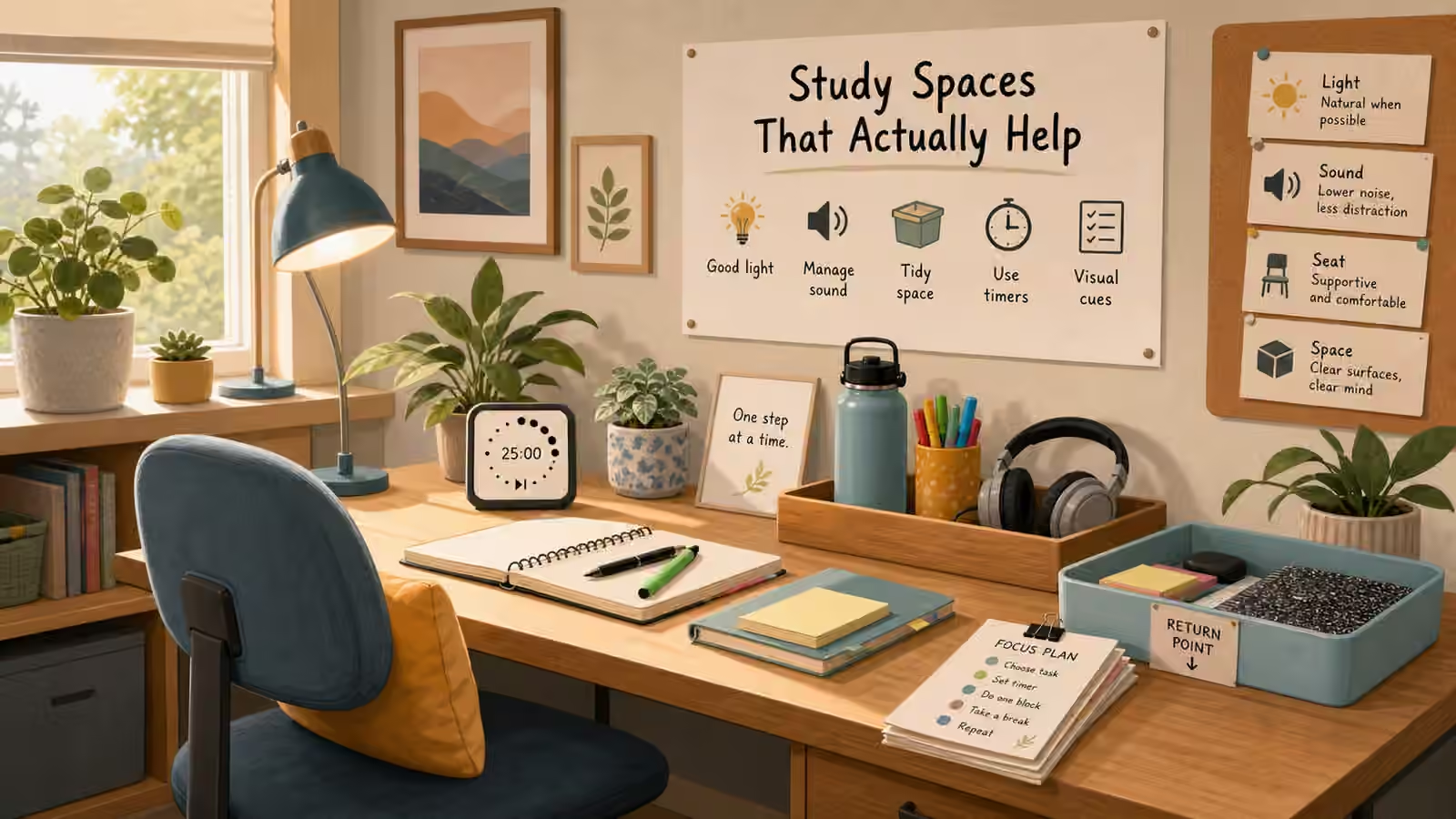
A study space that actually helps is not the styled desk from a photograph. It is a place where the first move is easy, the supplies you need are already within reach, the distractions have a little friction between you and them, and coming back after a break does not mean rebuilding the whole scene from scratch. The prettiest desk in the world is useless if sitting down at it requires clearing a pile, hunting for a charger, and negotiating with your phone before a single word gets read. Function beats photography every time.
It also helps to let go of the idea that there is one correct place to study. Some people do their best work at a proper desk; others focus at the kitchen table, in a library booth, on a floor cushion, at a standing counter, or beside a friend in a quiet body-double session. The right study space is simply the one that makes your next action more visible and your avoidable decisions fewer. If a beautiful desk sits unused while all the real work happens at the dining table, the dining table is your study space, and it deserves the attention.
Where study time actually leaks
Before arranging anything, it is worth naming how study sessions usually fall apart, because the space should be built against those specific failures. Studying quietly turns into supply hunting when the pen, the charger, or the right notebook is somewhere else in the house. It turns into tab hopping when the device meant for research is one click from everything else. It becomes a posture battle when the chair grows uncomfortable after ten minutes, and a noise battle when the room is louder or quieter than your brain wants. And most cruelly, it becomes endless desk arranging, the productive-feeling procrastination of tidying and organizing until the actual studying never begins. A good space quietly closes each of those escape hatches. It should reduce the setup load, not become one more project competing with the assignment.
Tuning the physical inputs
Light comes first because it sets the whole tone of a session. You want enough of it to read comfortably without the room feeling either harsh and clinical or dim and sleepy; a warm task lamp aimed at the page often does more than a bright overhead that leaves you squinting. Sound is more personal than most advice admits. Some people focus in silence, some need steady background sound to drown out sudden noises, and some do best with headphones or the ambient hum of a library. The test is not what is quietest but what reduces switching, what keeps your attention from leaping to every passing sound.
Then there is the surface itself. You want it large enough to hold the materials the task actually needs and small enough to discourage piles from accumulating, because a surface that can hold everything will eventually hold everything. Finally, gather the small stuff into one place. A single reachable tray or container holding pencils, a charger, a timer, sticky notes, a calculator, and index cards means the session starts with everything already at hand instead of a scavenger hunt that gives your attention a dozen chances to wander off.
Building the space without rebuilding the room
The mistake most people make is treating “set up a study space” as a whole-room renovation, which is itself a task too big to start. Do the opposite. Clear only the active work zone, the patch of surface the current task will occupy, and leave the rest of the room alone for now. Put the first assignment or reading right in the center, where it becomes the obvious thing to touch. Move the most distracting device one full step farther away, far enough that reaching it is a deliberate choice rather than a reflex. Then set a timer for a first short round and begin. The goal of this pass is not a perfect study environment; it is a startable one, arranged in a couple of minutes and good enough to hold a single session.
Just as important is how you leave it. Before any break, drop a bookmark, leave a sticky note on the open page, or set the materials so the next move is obvious. A study space that preserves your place is a study space you return to; one that resets to zero every time you stand up is one you will avoid. The return point is part of the setup, not an afterthought.
Real arrangements that work
Concrete pictures help more than principles. A student who freezes at the bedroom desk, because that desk carries too much history of avoidance, might move to the kitchen table with a single supply tray and a twenty-minute timer, and suddenly start. An adult grinding through certification material might keep it deliberately minimal: one notebook, one pen, a glass of water, and headphones on a cleared corner of the dining table, nothing more to manage. A teenager might read at a quiet library table but keep flashcards tucked in a backpack pocket for review on the bus, letting the environment change with the task. None of these is the “right” setup. Each one names what the session needs, what counts as enough for one round, and where the work waits when it stops, which is exactly what makes them repeatable.
Common mistakes worth avoiding
A few patterns sabotage even a well-meant space. Cleaning for an hour before studying for ten minutes feels virtuous but is usually avoidance wearing a productive mask; the studying is the point, not the tidying. Keeping every subject’s supplies heaped on the same surface guarantees that starting one subject means wading through four others. Assuming silence helps everyone ignores how many people actually focus better with steady sound, so test it rather than enforcing a rule that may be working against you. And keeping the phone within arm’s reach while asking willpower to win that contest is a fight you will lose more often than not; give the phone a parking place in another room or across the desk and let distance do the work that willpower cannot.
When the space is not the real barrier
A study space, however well built, cannot fix everything. It cannot repair unclear instructions, unlock material that is genuinely inaccessible, correct an untreated vision or hearing need, or make an unreasonable workload reasonable. When you have arranged a decent space and studying still will not happen, treat the space as evidence rather than as further proof of personal failure: you removed the setup friction, so the remaining barrier is something bigger, and the right move is to ask for support, a teacher, a tutor, an accommodations office, a clinician for the health questions. For ordinary days, keep it small: set up one startable zone, make the next action visible, do one round, and leave a marker for your return. When digital distraction is the piece pulling you off task, the Digital Distraction Map goes deeper on phones, tabs, and notifications; the Mechanical Keyboard Guide has ideas for typing comfort if long sessions leave your hands tired; and Sleep Setup Lab is worth a look if your study cues and your rest cues have blurred together in the same room.