
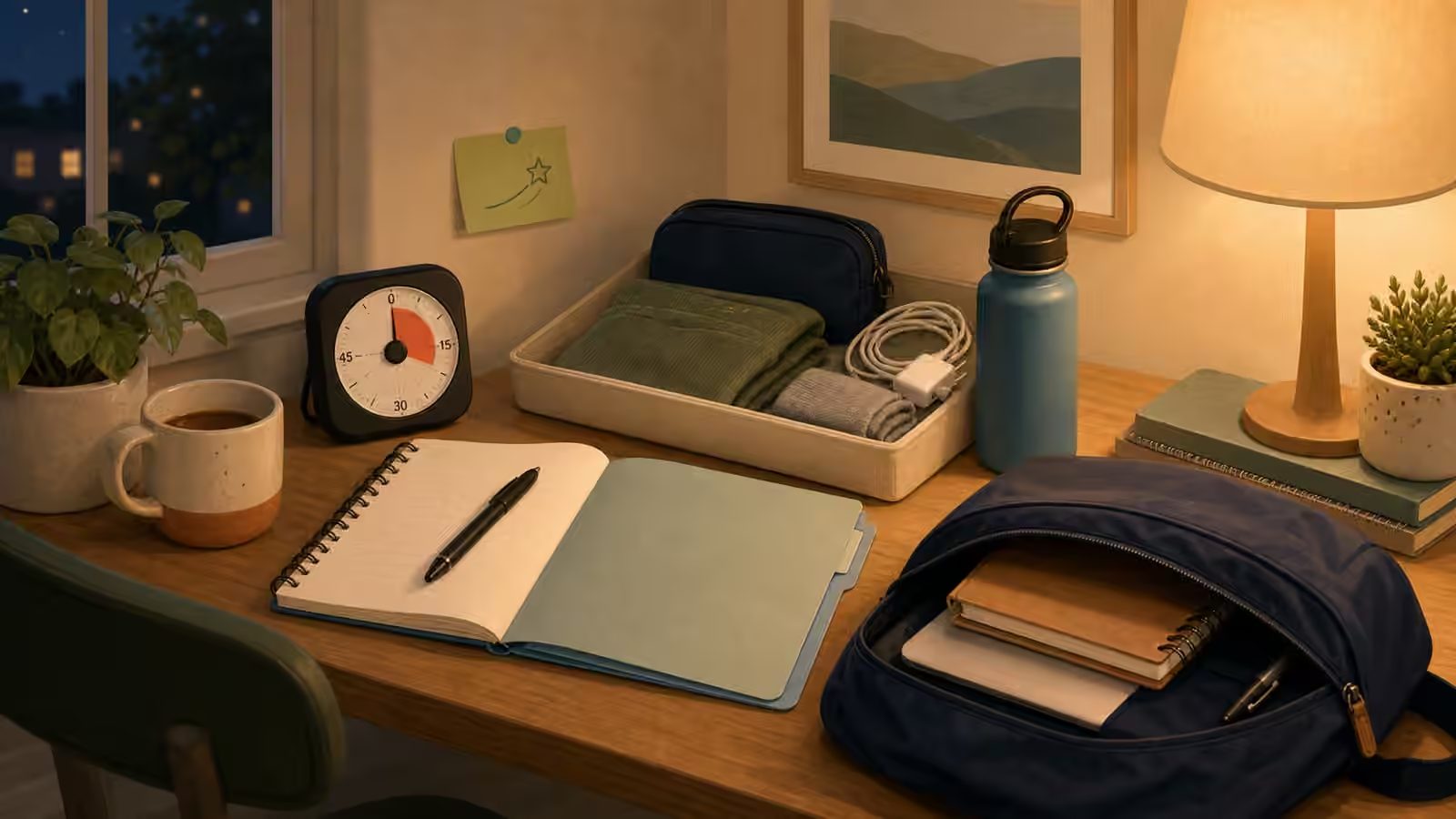
The two-minute setup is a small favor you do for the version of yourself who wakes up tomorrow with less patience and less clarity than you have right now. At the end of the day, when the hard part of a task is safely behind you, you are in an unusually good position to answer one modest question: what would make the very first move tomorrow almost too obvious to skip? The answer is rarely a full plan. More often it is a single staged object, a page left open, a bag packed by the door, or one honest line of text that tells you exactly where to begin again. You are not trying to finish tomorrow’s work tonight. You are trying to remove the moment of friction that usually stops it from starting.
The two-minute limit is not an arbitrary bit of productivity theater; it is the entire mechanism. Two minutes is short enough to survive on a night when you are tired, distracted, and mildly annoyed at the idea of doing anything at all. If preparing for tomorrow required a calm mind and a clean house, it would reliably fail on the exact evenings you most need it, which are the tired ones. Keeping the setup tiny is what lets it happen at all, and a setup that happens beats an elaborate one that does not.
Why the first decision is the expensive one
Most stalled mornings, study sessions, and workdays do not stall in the middle. They stall at the front, in the gap before anything has begun, when the first decision arrives before your mind has warmed up enough to make it. Deciding which task comes first, where the file is, what to wear, which tab to open, whether you have the right supplies, all of these are small on their own and paralyzing in a cold, unprepared stack. Every one of them is a chance to hesitate, and hesitation at the start compounds into avoidance.
The two-minute setup works because it moves those decisions to a moment when they are cheap. In the evening, choosing tomorrow’s first task and its first object costs almost nothing, because the pressure is off and the context is still fresh in your head. You are deciding once, while calm, on behalf of a self who would otherwise have to decide many times, while foggy. That is the trade the whole practice rests on: pay a two-minute tax tonight so that tomorrow opens with a decision already made and an object already waiting.
Staging the first object, and only the first
The core move is to put the first material exactly where tomorrow’s action will begin. If the morning task is studying, that means the textbook on the table, opened to the right page, with the pencil and calculator beside it, so that sitting down and starting are the same motion. If it is writing, it means the draft left open on the screen with a one-line note about the next sentence, so that the blank page is not the first thing you face. If it is laundry, it means the detergent and basket set by the machine before bed. The material should be visible from the place you will actually stand, not tucked into a drawer or a folder where remembering it becomes its own separate task.
Just as important is choosing only the first action rather than mapping the whole job. The instinct at night is to plan the entire week, but a midnight master plan is fragile and usually collapses on contact with the actual morning. Name the single next move, stage the single object it requires, strip away one avoidable decision, the outfit, the file, the tab, the route, the lunch, and leave a short, unambiguous instruction that a tired person could follow without interpretation. A note that reads “start report” is nearly useless; a note that reads “open the draft and write the intro paragraph” is a start line. The difference is whether the instruction still has thinking hidden inside it.
Stopping on time and keeping it small
There is a quiet trap in all of this, which is that setup can become a very comfortable way to avoid the thing setup is meant to serve. Organizing materials feels productive, and it is easy to let a two-minute stage-and-mark drift into twenty minutes of tidying that is really just procrastinating from sleep. So the discipline is to stop when the first object is placed and the first line is written, even if you can feel the pull to keep arranging. If you find the setup steadily expanding, define what “good enough” looks like and stop there deliberately. The setup is supposed to lower tomorrow’s demand, and a setup that keeps growing has quietly become tomorrow’s demand instead.
It also helps to design the setup for a genuinely messy morning rather than a serene one. A good staging survives a chaotic weekday, a half-slept night, and a house that does not cooperate. That means it should not depend on a special planner you have to buy, a perfectly clean desk, or a burst of motivation you cannot guarantee. Stage it where you will trip over it, keep the instruction short, and let it look a little unimpressive. Afterward, when you do use it, notice one thing that made the start easier and one thing that still snagged, and let that quiet observation shape the next evening’s two minutes rather than any sense of having done it wrong.
None of this is meant to carry more weight than it can. Preparing tomorrow tonight is a practical way to lower the cost of beginning; it is not a fix for exhaustion, overload, or a schedule that is genuinely too full, and if mornings feel impossible in a way that setup cannot touch, that is worth taking seriously with someone qualified to help. For the ordinary friction of getting started, though, the two-minute setup earns its keep. When you want to sharpen the very first move it stages, The Start Line goes deeper on designing that exact first action, and Homework Without a Fight applies the same idea to family evenings where the setup has to reduce conflict as well as friction.