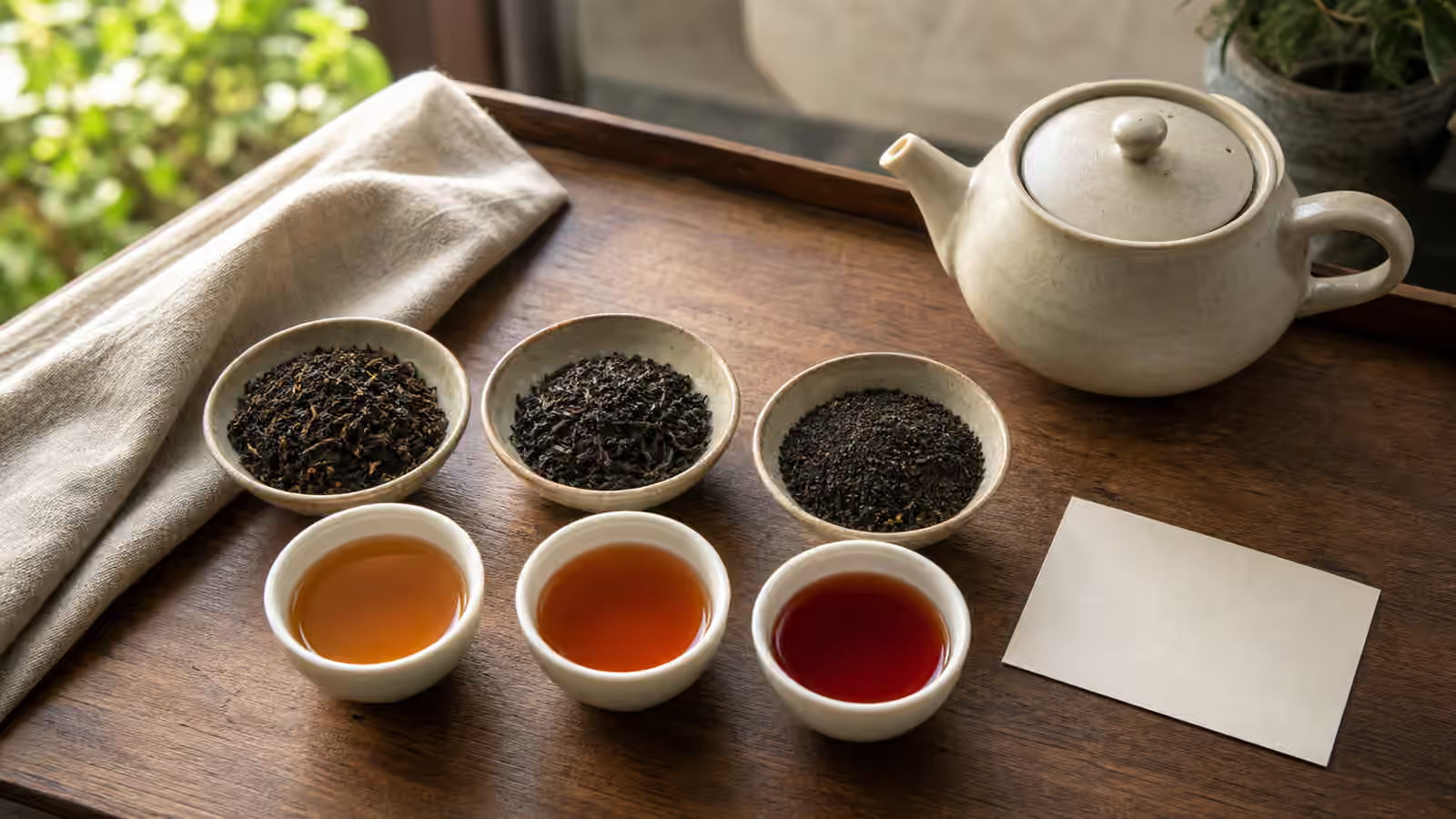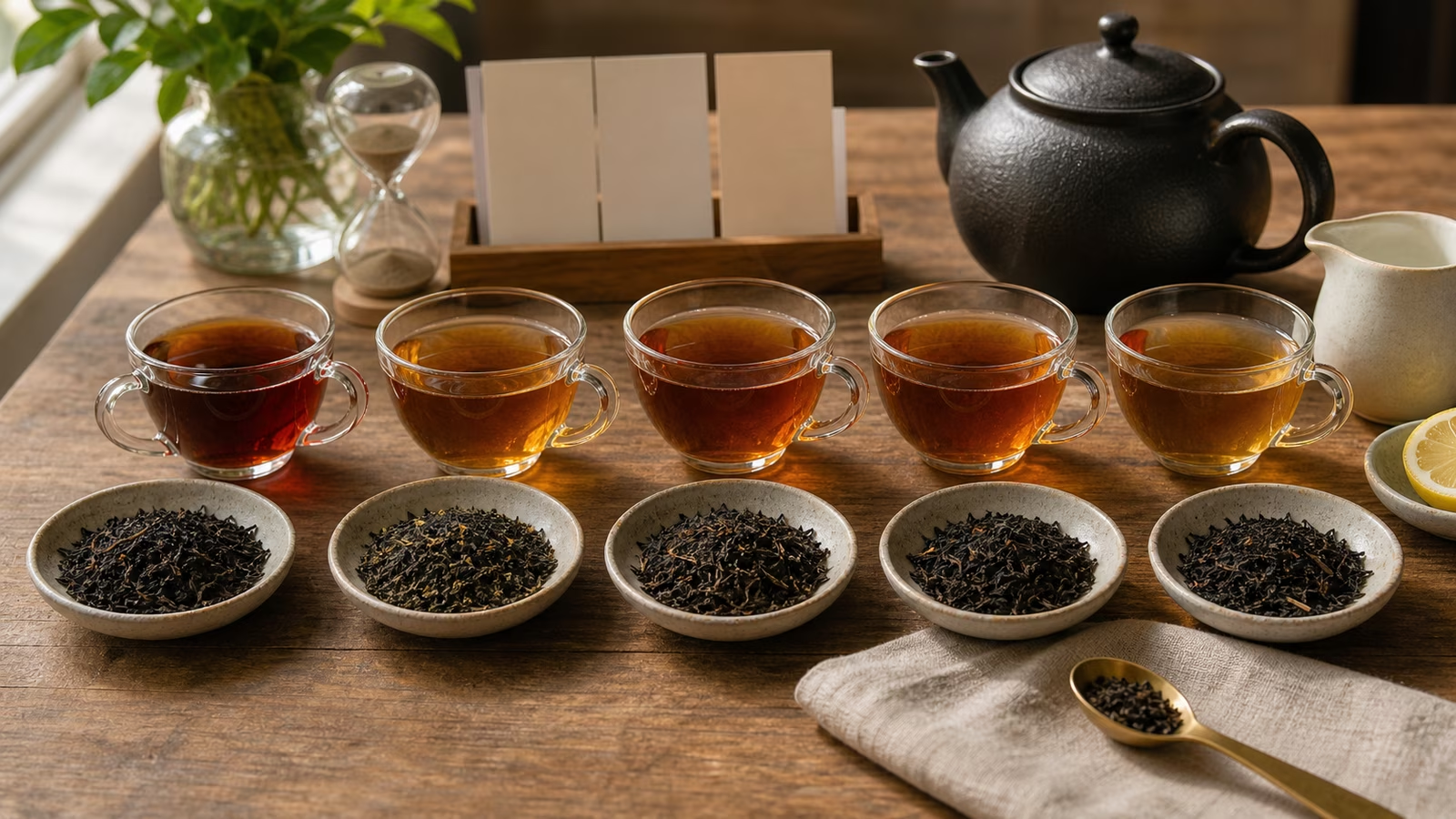
Black tea is the family most Western drinkers meet first, usually in a bag, usually with milk, and usually without ever being told that “black tea” describes a process rather than a flavor. All of it comes from the same plant as green and white tea; what makes it black is that the leaves are allowed to oxidize fully, turning dark and developing the malty, brisk, sometimes fruity character we recognize. Because oxidation is pushed all the way, black tea is also the most forgiving to brew hot and the most likely to stand up to milk. Within that one word, though, sits an enormous range, and learning to hear the difference between an Assam and a Darjeeling is where the family stops being a single beige idea and becomes genuinely interesting.
Four origins that teach the range
Assam is the muscular one. Grown in a hot, low-lying river valley in northeast India, it brews dark, malty, and strong, with a brisk edge that cuts straight through milk. This is the backbone of most English and Irish breakfast blends, and it is what people mean when they say a tea “tastes like tea.” If you want a cup that wakes you up and refuses to be watered into nothing, Assam is the reference point.
Darjeeling sits at the opposite pole even though it grows only a few hundred miles away, high in the Himalayan foothills. The altitude and cooler air give it a lighter body and a famous muscatel note, a grape-like, almost wine-adjacent aroma that first-flush harvests carry most vividly. Darjeeling confuses people who expect all black tea to be bold, because a good one is delicate, floral, and best enjoyed without milk, which would flatten exactly the qualities you paid for. It is the tea that proves the family is wider than the breakfast cup.
Ceylon, from Sri Lanka, is the versatile middle. It ranges from bright and citrusy in high-grown gardens to deeper and rounder lower down, and it takes well to both milk and ice. Much of the world’s iced tea leans on Ceylon for its clean, refreshing snap. Keemun, from China’s Anhui province, brings something else again: a smooth, gently smoky, cocoa-and-orchid profile that is elegant enough to drink plain and mellow enough that it rarely turns harsh. Between these four, you have covered brawny, delicate, bright, and refined, which is most of what black tea can be.
Blends versus single origins
Breakfast blends and Earl Grey are where most people actually live, and there is nothing lesser about them. A blend exists to be consistent and dependable, brewing the same reliable cup in July and January regardless of how any single garden’s harvest turned out. Blenders combine leaf from many estates precisely so the result never surprises you, which is a real virtue when you want a cup that simply works. Single-origin black teas trade that reliability for character; they express one place and one season, and they reward the attention that a rushed morning cup will never give them. Neither is better. They are answers to different questions, and a good shelf usually holds both: a blend for the automatic morning cup, a single origin for the cup you brew when you have a minute to notice it. If bergamot-scented tea is your entry point, Earl Grey and Bergamot Tea goes deeper into that particular corner.
Brewing black tea without turning it bitter
Black tea’s reputation for bitterness is mostly a reputation for over-brewing. The full oxidation that gives it body also means it releases tannins readily, and those tannins are what dry your tongue and turn a cup astringent when you leave the leaves in too long. The fix is not weaker tea, it is better timing. Most black teas want water at or near a full boil, but they rarely want more than three to five minutes of steeping, and the more delicate ones like Darjeeling want the shorter end of that. Pull the leaves or pour off the cup when the time is up rather than letting them sit and stew, and much of the bitterness people blame on the tea simply disappears.
Leaf quantity matters as much as time. A rounded teaspoon of loose leaf per cup is a sensible starting point, and if the result is too strong you add water rather than shortening an already brief steep past the point where flavor develops. Because black tea is sturdy, it is also the family most willing to give a second infusion from good whole-leaf grades, though the second cup will be lighter and you may want to add a little time. If your cups keep landing harsh no matter what you try, Tea Troubleshooting: Bitter, Flat, and Weak walks through the usual causes one at a time.
Milk, lemon, and why not both
Whether to add milk is partly cultural habit and partly a real question of chemistry. Milk softens tannins and rounds out a brisk, astringent tea, which is why it pairs so naturally with a strong Assam or a robust breakfast blend. It is also why it does a disservice to a delicate Darjeeling or a nuanced Keemun, muffling the very aromatics that make those teas worth seeking out. A useful rule of thumb: the bolder and more astringent the tea, the more milk helps; the more floral and subtle, the more milk hides. Lemon works the other way, brightening and lifting a cup, but it curdles milk, so the two are mutually exclusive in the same cup. If milky, spiced preparations are what you are after, Chai at Home and Tea Lattes Without Muddy Flavor build on exactly this compatibility.
Reading origin names without overtrusting them
Origin names on a package are clues, not guarantees. “Darjeeling” tells you a region and a general style, but harvest timing, garden, and grade shape the actual cup enormously, and the word alone cannot promise quality. First-flush and second-flush Darjeelings taste noticeably different; a cheap Assam blended for volume shares little with a fine single-estate one beyond the name. Treat the origin as a starting hypothesis about what you are likely to taste, then let the cup confirm or correct it, and write down what you actually found. Over time those notes teach you which names, from which sellers, reliably deliver the character you enjoy.
That habit of comparing the promise on the label to the evidence in the cup is the whole skill of drinking black tea well. Brew one origin at a conservative strength, taste it plain before you reach for milk, note whether it is malty or muscatel or bright or smoky, and only then decide what it wants. When you are ready to place this family in the wider landscape, Tea Types Explained shows how black tea relates to its greener and less oxidized cousins. And as with any tea, if caffeine, pregnancy, medications, or a medical condition are part of your decision, that belongs with a qualified clinician rather than a brewing guide.