Chai made at home almost never tastes like the syrupy version served under that name at coffee counters, and that is a good thing. Real masala chai is not a flavor poured from a bottle; it is a small kitchen process, tea and spices and milk simmered together until they become one thing rather than several. The word itself simply means “tea,” and “chai tea” is a redundancy that would puzzle anyone who grew up drinking it; what most Westerners mean is masala chai, spiced tea. Once you understand that it is built by simmering rather than steeping, and that the four elements, tea, spice, milk, and sweetness, each have a job, you can make it to your own taste and stop depending on premixed powders that were always a compromise.
Why chai is simmered, not steeped
Ordinary tea is steeped: hot water poured over leaves, left for a few minutes, then separated. Chai breaks that rule on purpose. The tea and spices go into a pot with water and milk and are brought to a simmer, because the goal is not the delicate extraction you want from a fine Darjeeling but a bold, unified, almost concentrated brew that can carry milk and sugar without vanishing beneath them. Simmering pulls hard tannins and deep color from the tea and coaxes the volatile oils out of the spices, and the milk’s fat rounds the whole thing into something creamy rather than sharp. This is exactly the technique that would ruin a subtle single-origin tea, which is why chai calls for a sturdy, inexpensive black tea rather than your best leaf.
That choice of tea is the first decision that matters. A strong, brisk Assam or a robust broken-leaf black stands up to the milk and spice; a light green or a floral oolong would be trampled. You want a tea whose whole purpose is to be bold, because everything else in the pot is competing for attention. The relationship between bold black teas and milk is the same one that makes breakfast blends work, and Black Tea: Assam, Darjeeling, Ceylon, Keemun, and Breakfast Blends explains which leaves have that backbone.
Building the spice without turning it to dust
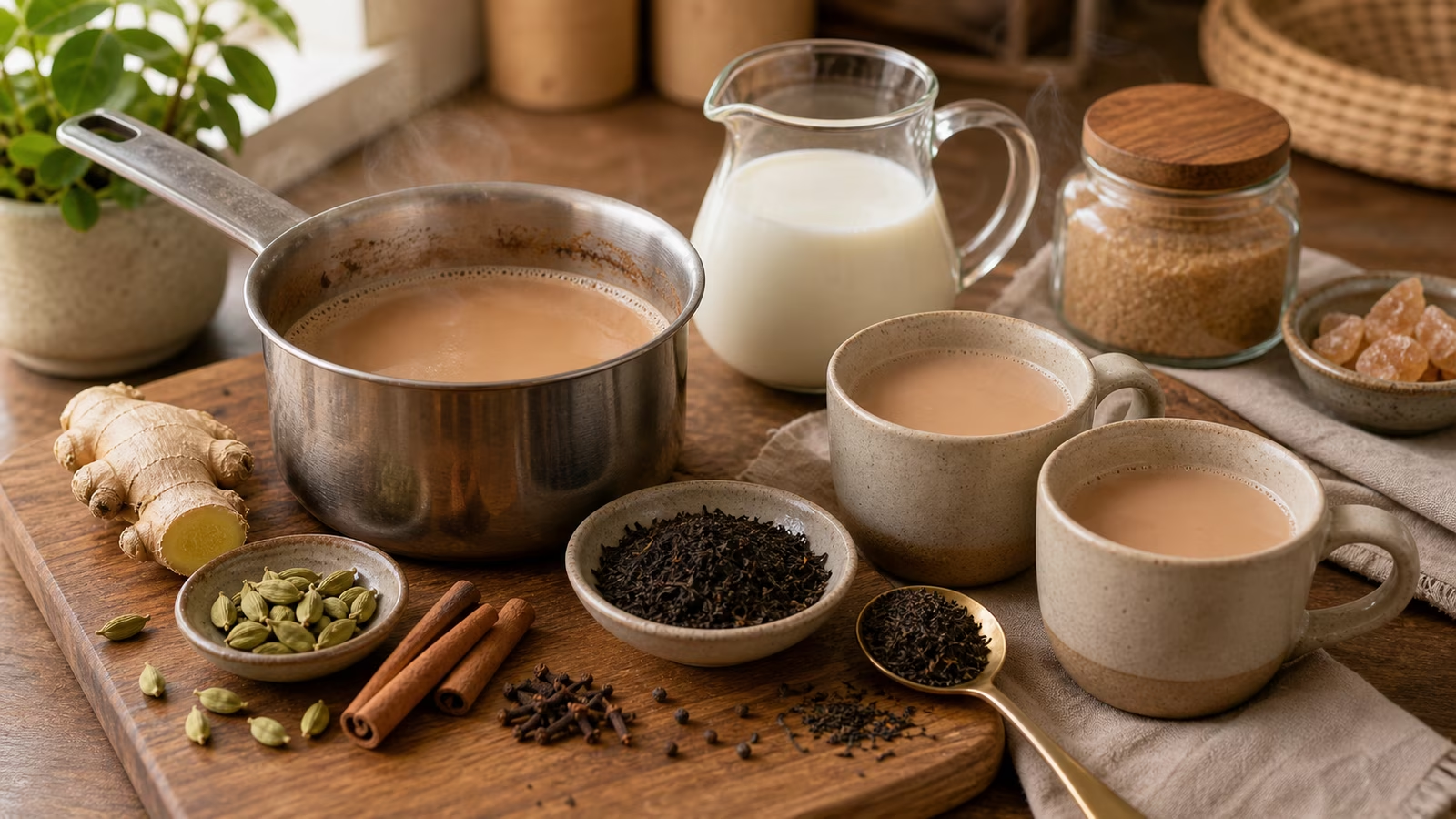
The spices are where chai becomes personal, and where beginners most often overreach. There is no single correct masala; families across South Asia each keep their own proportions, and yours can too. A sensible core is cardamom, which gives chai much of its characteristic fragrance, with ginger for warmth and bite, cinnamon for sweetness and body, and cloves and black pepper in small amounts for depth and a gentle heat. Fennel, star anise, or nutmeg can join if you like them, but every addition is a vote against clarity. The most common home-chai mistake is reaching for every jar in the cabinet until the cup tastes muddy and dusty, a brown blur where no single spice is legible.
Two habits keep the spice bright. First, use whole spices when you can and crush them lightly just before cooking, because pre-ground powders go stale fast and turn gritty in the pot. Cracking a few cardamom pods and smashing a coin of fresh ginger releases far more aroma than a spoon of old ground mix. Second, add the spices early so they have time to simmer and open, then taste as you go rather than trusting a recipe blindly. Lead with one or two spices you actually love, let cardamom or ginger be the clear voice, and treat the rest as quiet support. A chai that tastes distinctly of one thing is more satisfying than one that tastes vaguely of everything.
Milk and the ratio that decides the texture
Milk is not a garnish in chai; it is a structural ingredient, and how much you use changes the drink entirely. A common approach is roughly equal parts water and milk, with the tea and spices simmered first in the water so they can develop, and the milk added partway through to finish. More milk gives a rounder, softer, more dessert-like cup; more water keeps it leaner and lets the tea and spice read more sharply. Whole dairy milk gives the creamiest result, but the method adapts to oat, soy, or other plant milks, though each behaves a little differently under heat and some will separate if boiled too hard, so a gentle simmer serves them better than a rolling boil.
The failure to avoid here is drowning weak tea in milk. If the tea is underbuilt, no amount of milk rescues it; you just get warm sweetened milk with a hint of tea somewhere underneath. The tea has to be strong enough, through enough leaf and enough simmering, to assert itself against the dairy. When you get the balance right, milk and tea and spice stop being separable and become a single creamy, aromatic thing, which is the whole point. If you want to carry this milk-and-tea craft further, Tea Lattes Without Muddy Flavor applies the same logic to other teas.
Sweetness comes last, and by taste
Sweetness is real chai’s fourth element, and the order in which you add it matters. Sweeten last, after the tea, spice, and milk have found their balance, because sugar added too early hides the structure you are trying to build and tempts you to over-spice to compensate. Traditional chai is often quite sweet, and sugar does more than add sweetness; it rounds the tannins and marries the flavors, which is why a properly sweetened cup can taste more balanced than an unsweetened one even to people who do not have a sweet tooth. Jaggery or brown sugar adds a molasses depth, honey brings its own floral note, and plain white sugar simply sweetens without changing the character. Start with less than you think you want and add to taste, because you can always add more and cannot take it out.
None of this needs to be rigid. Once you understand the sequence, build the tea, develop the spice, add the milk, then sweeten, you can vary every step to your mood: heavier on ginger when you feel a cold coming, lighter on milk in summer, more cardamom when you want it fragrant. Write down the proportions of a batch you loved so you can find your way back to it, because a good chai is worth being able to repeat. When you want to serve it alongside food, Tea Pairing With Breakfast, Dessert, Cheese, and Snacks suggests companions. And because chai is built on strong black tea, its caffeine is real; anyone weighing caffeine sensitivity, pregnancy, medications, or a medical condition should take that question to a qualified clinician rather than a recipe.