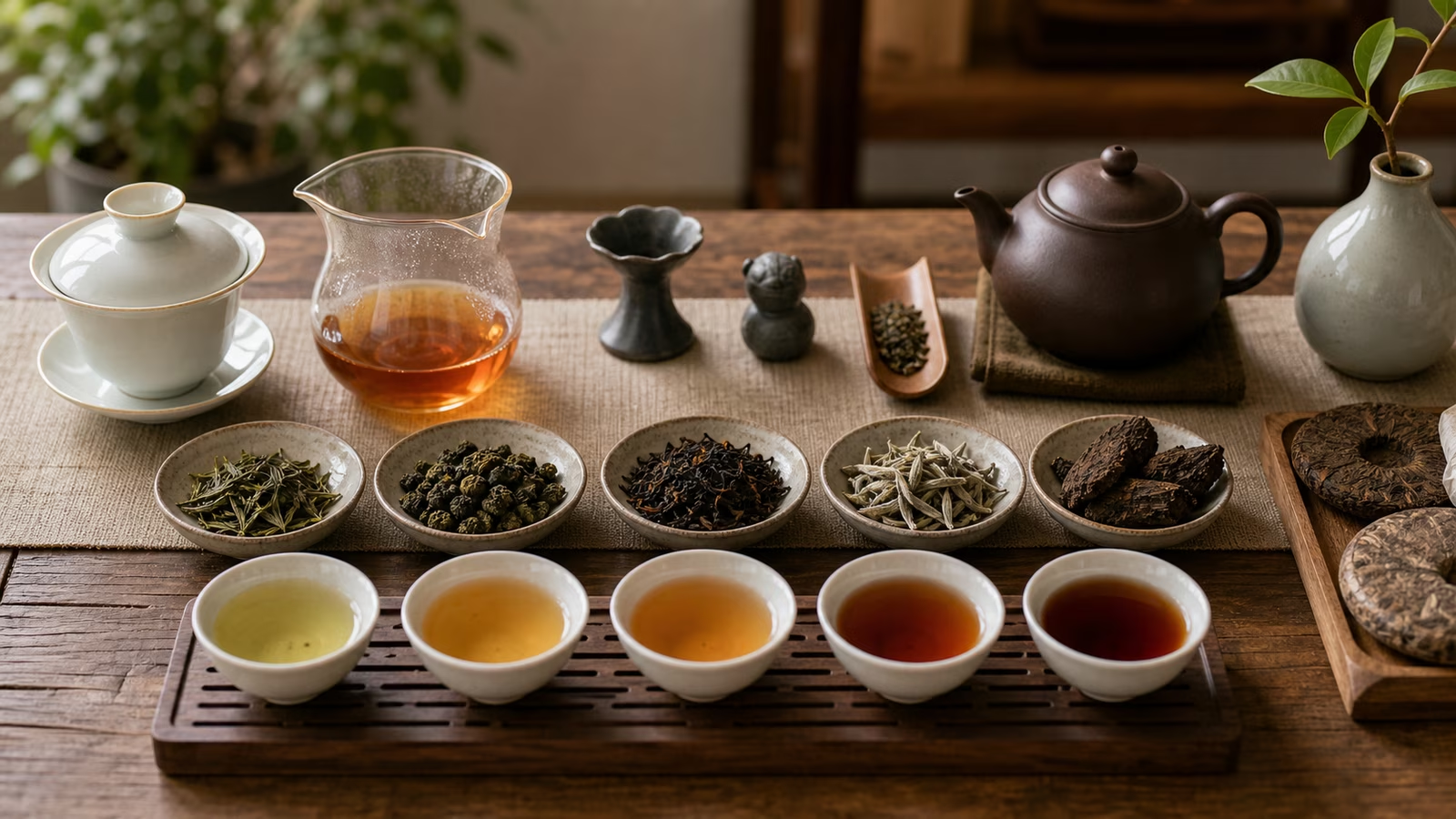
China is where tea was first cultivated and processed, and it still makes tea in more styles than any single page could honestly survey. What this guide offers is not a map of every mountain and county, which would take a lifetime to walk, but a beginner’s path through the major families as China itself organizes them, so that when you meet a Longjing or a Tie Guan Yin or a sheng pu-erh you have some idea of what you are holding. The useful thing about approaching tea through the Chinese lens is that the categories are built around how the leaf is processed, especially how much it is allowed to oxidize, and once that logic clicks, the bewildering variety of names starts to fall into a sensible order.
Green tea, the unoxidized heart
Chinese green tea is defined by what does not happen to it: after picking, the leaves are quickly heated to halt oxidation, preserving their fresh, vegetal character. The classic Chinese method is pan-firing rather than the steaming favored in Japan, and that difference shows in the cup. Where Japanese greens tend toward marine, grassy, and umami-rich, Chinese greens like Longjing (Dragonwell) lean toasty, nutty, and mellow, with a chestnut sweetness that comes straight from the hot wok. Gunpowder green, rolled into tight pellets that unfurl in the water, is bolder and a little smoky. The through-line is delicacy, which is also the warning: these teas want water well below boiling, often around 75 to 85 degrees Celsius, and short steeps, because scalding them turns their sweetness into bitterness. Green Tea: Sencha, Dragonwell, Gunpowder, and Everyday Brewing is the place to go deeper.
White tea, the least handled
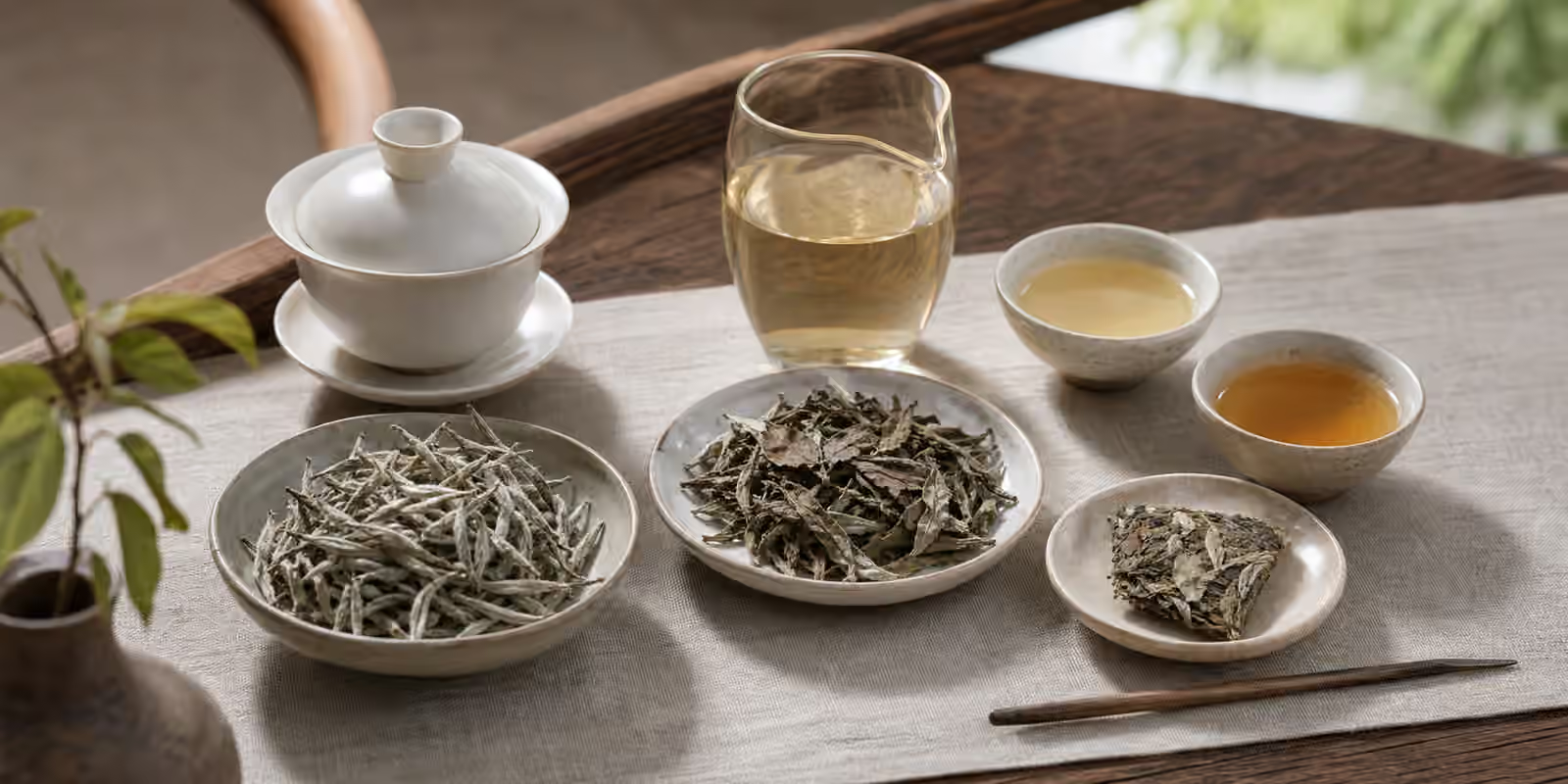
White tea is often described as the least processed of all, and in a sense it is: the leaves and buds are simply withered and dried, with no pan-firing and no rolling, allowing a small, uncontrolled amount of oxidation to occur naturally. The result is subtle and soft, hay-like and gently sweet, with the downy silver buds of a Bai Hao Yin Zhen (Silver Needle) giving a light, almost delicate cup, and the leafier Bai Mu Dan (White Peony) offering a touch more body and fruit. Because the flavor is quiet, white tea rewards patience and cooler water, and it is easy to underestimate on a first, tentative brew. It is also one of the few teas that many drinkers deliberately age, as its character deepens over years, a bridge toward the aged-tea sensibility that pu-erh takes furthest.
Oolong, the vast middle ground
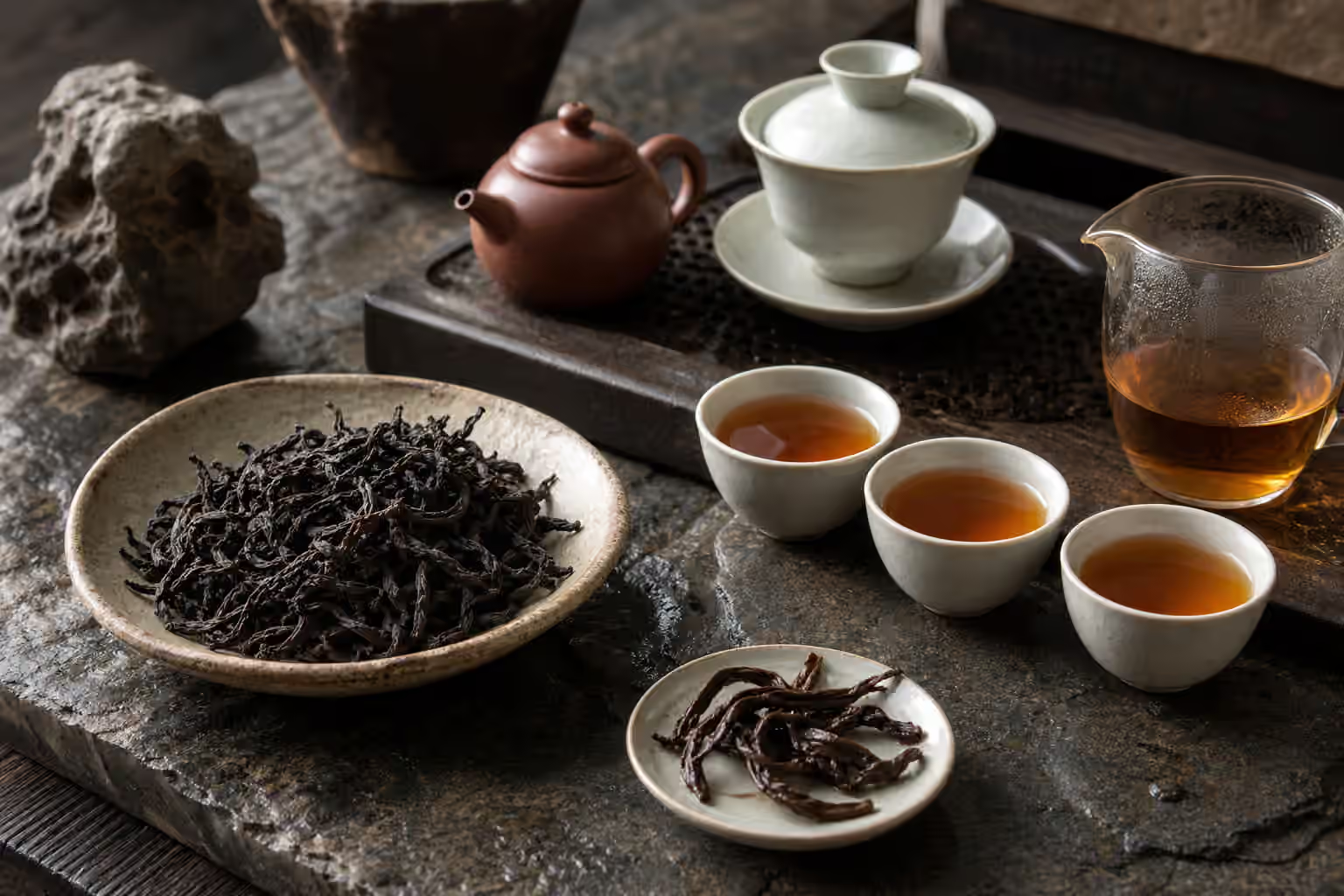
Oolong is where China’s tea-making artistry is most visible, because oolong is not one thing but a whole spectrum of partial oxidation sitting between green and black. A light, green-style oolong like a modern Tie Guan Yin from Anxi is floral, creamy, and fragrant, oxidized only slightly and often rolled into tight balls that open dramatically over several infusions. At the other end, the roasted rock oolongs of the Wuyi mountains, the yancha, are dark, mineral, and toasty, oxidized further and fired over charcoal until they taste of stone and warm bread. Between those poles lies an enormous range, and oolong more than any other family rewards brewing in small vessels with repeated short steeps, because a good one changes character from the first infusion to the fifth. If a single family could hook you on Chinese tea, this is the one; Oolong Tea: Light, Roasted, Rolled, and Complex and Wuyi Rock Oolong both open it up.
Black tea, called red in China
What the West calls black tea, China calls hong cha, red tea, named for the color of the liquor rather than the leaf, and the naming difference hints at a different sensibility. Chinese red teas such as Keemun and the smoky Lapsang Souchong tend to be smoother and less brisk than the Assams and Ceylons bred for strength and milk. Keemun is refined and gently cocoa-like, elegant enough to drink plain; the Yunnan blacks known as Dian Hong are malty and peppery with golden tips. These are fully oxidized teas, so they take hotter water and longer steeps than the greens without turning harsh, and they make an easy entry point for anyone arriving from a background of Western black tea who wants something familiar but more nuanced.
Pu-erh and the dark teas
Pu-erh sits in its own category, the fermented or aged dark teas from Yunnan, and it is the family that most confuses newcomers because it breaks the usual rules. It comes in two main forms. Sheng, or raw pu-erh, is made and then allowed to age slowly over years, starting bright and astringent and mellowing with time; shou, or ripe pu-erh, is deliberately fermented in a matter of weeks to imitate that aged character, giving a dark, earthy, smooth cup with none of the young sharpness. Both are usually pressed into cakes or bricks, and both are typically given a quick rinse before drinking and then brewed in many short infusions. Pu-erh is the tea most tied to notions of vintage and storage, and it is worth approaching slowly rather than as a first purchase. Pu-erh and Dark Teas for Beginners is the gentler on-ramp, and Compressed Tea Cakes and Bricks explains the physical format.
Walking the path without rushing
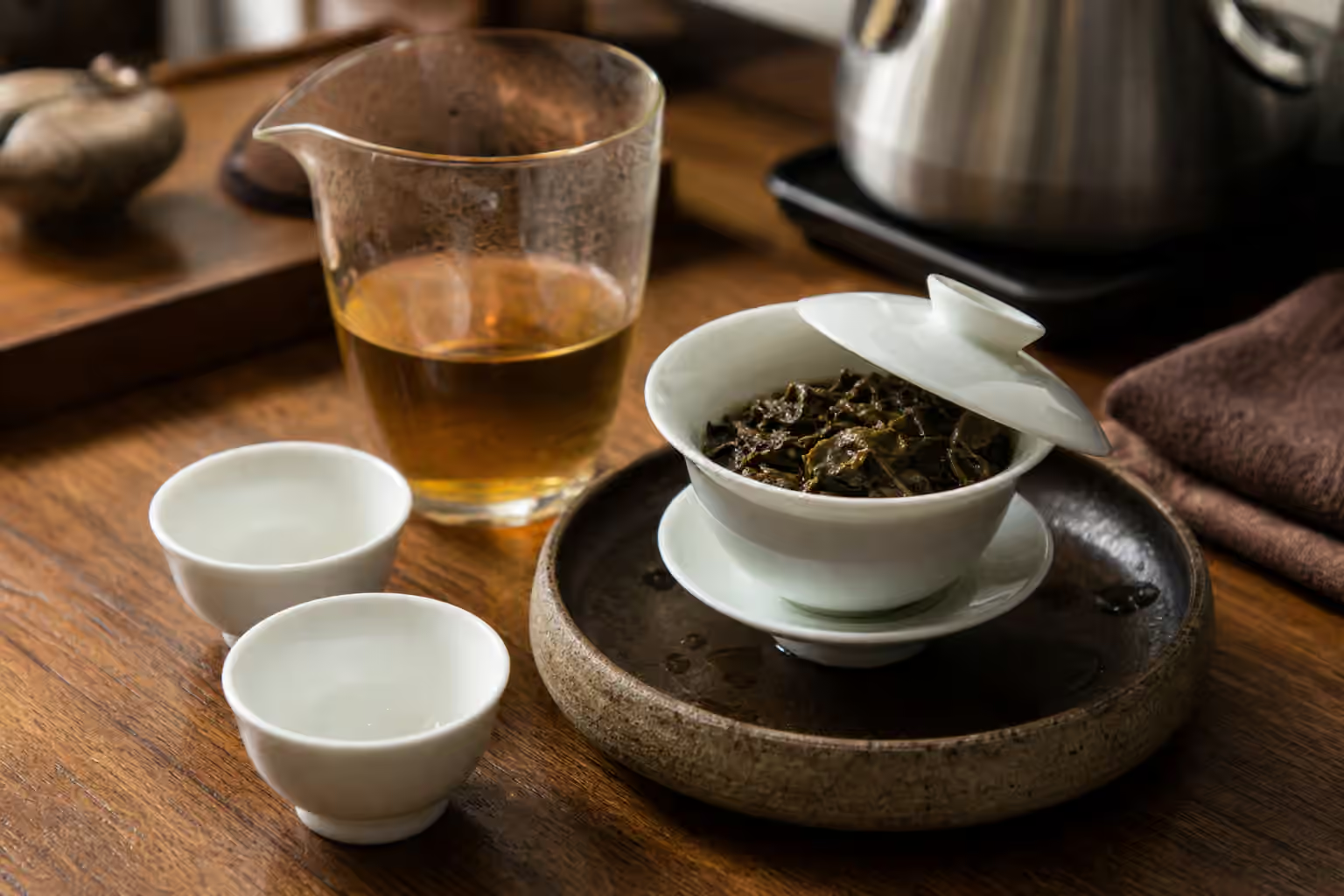
The reason to know these six families as a set is that they teach a single idea from six angles: that oxidation and processing, more than origin alone, shape what lands in your cup. A beginner does not need to buy all of them at once, and probably should not. Pick one family that appeals, brew it a few times with attention to water temperature and steep length, and only then move to the next, using the contrast to sharpen your palate. A green followed by an oolong followed by a red will teach you more about oxidation than any chart, because you will have tasted the difference rather than read it. Small vessels and repeated short steeps, the gongfu approach, suit most of these teas and stretch a little leaf across many cups; Gongfu Tea for Beginners shows how. As always, this is a guide to flavor and tradition rather than health, and any question about caffeine, pregnancy, medications, or a medical condition belongs with a qualified clinician who knows you.