Cleaning teaware sounds like the least interesting part of drinking tea, and yet neglecting it is one of the quiet reasons cups start tasting off for no obvious reason. Tea leaves oils, tannins, and residues that build up invisibly, and a strainer that smells faintly rancid or a travel mug carrying yesterday’s ghost flavor will spoil a perfectly good leaf. At the same time, teaware can be over-cleaned: there are pieces you emphatically should not scrub with soap, and a stain that looks like grime is sometimes exactly what you want to keep. Caring for your equipment well means knowing which pieces want a thorough wash, which want only water, and which are quietly aging into something better every time you use them.
The everyday pieces that just need water and drying
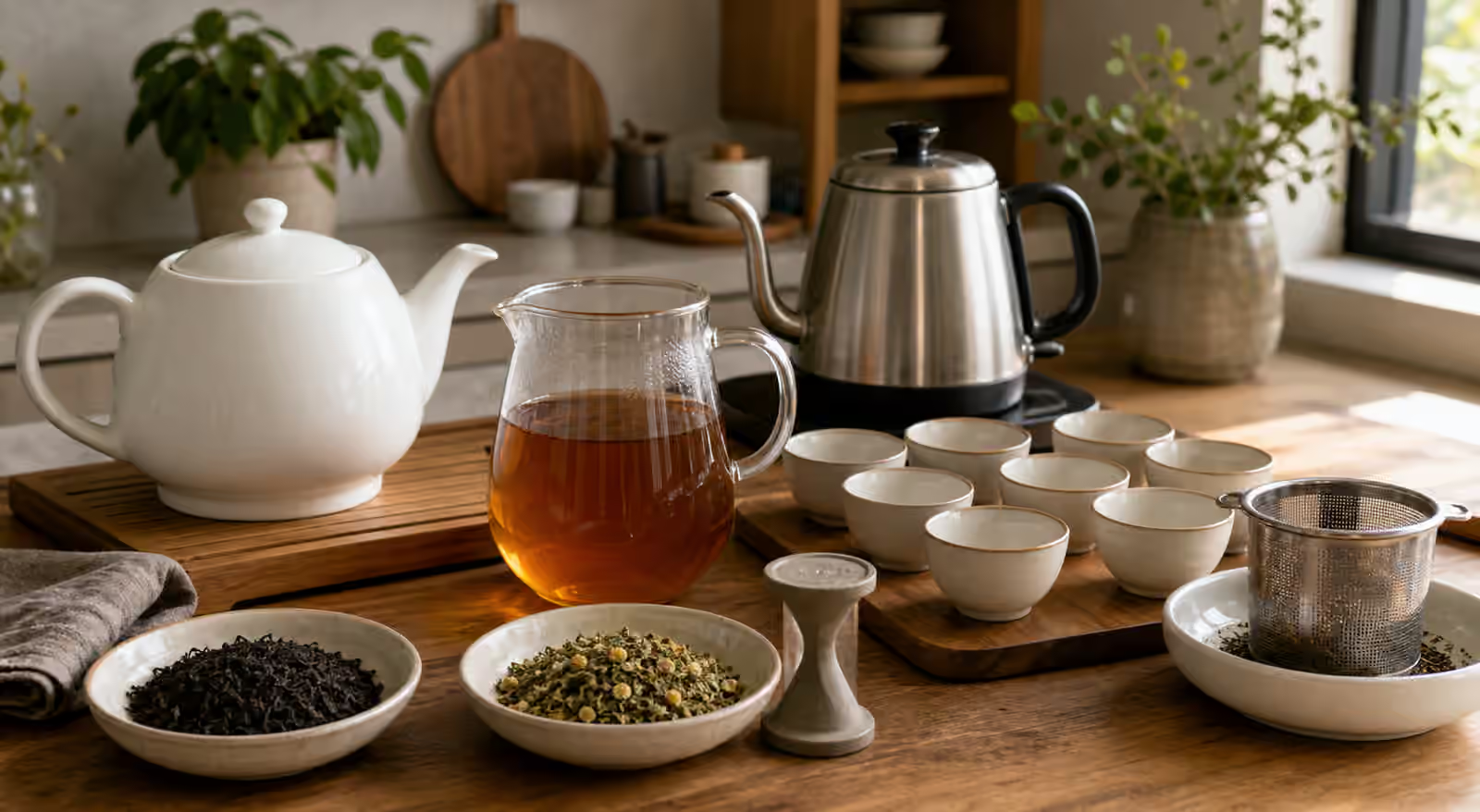
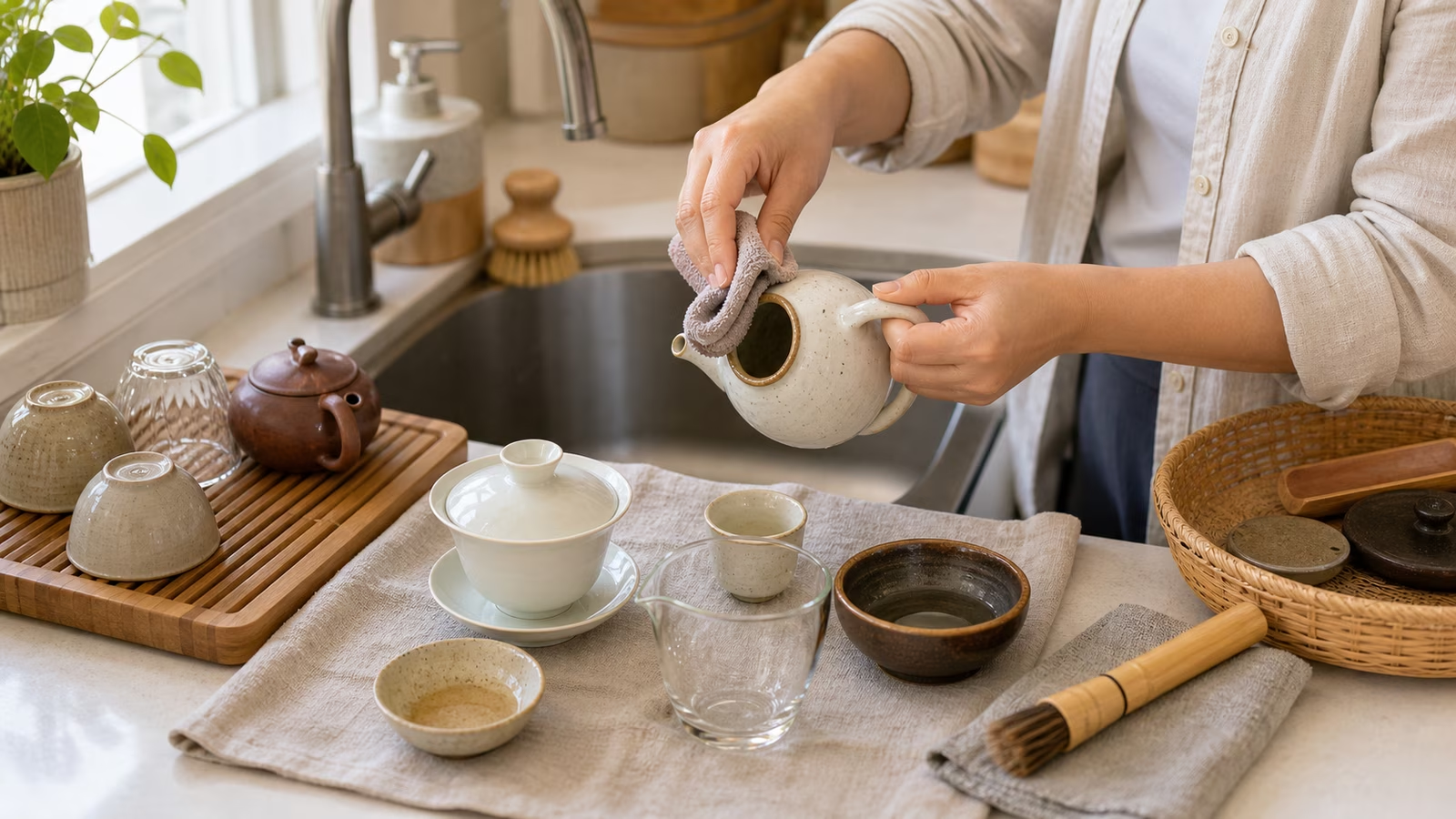
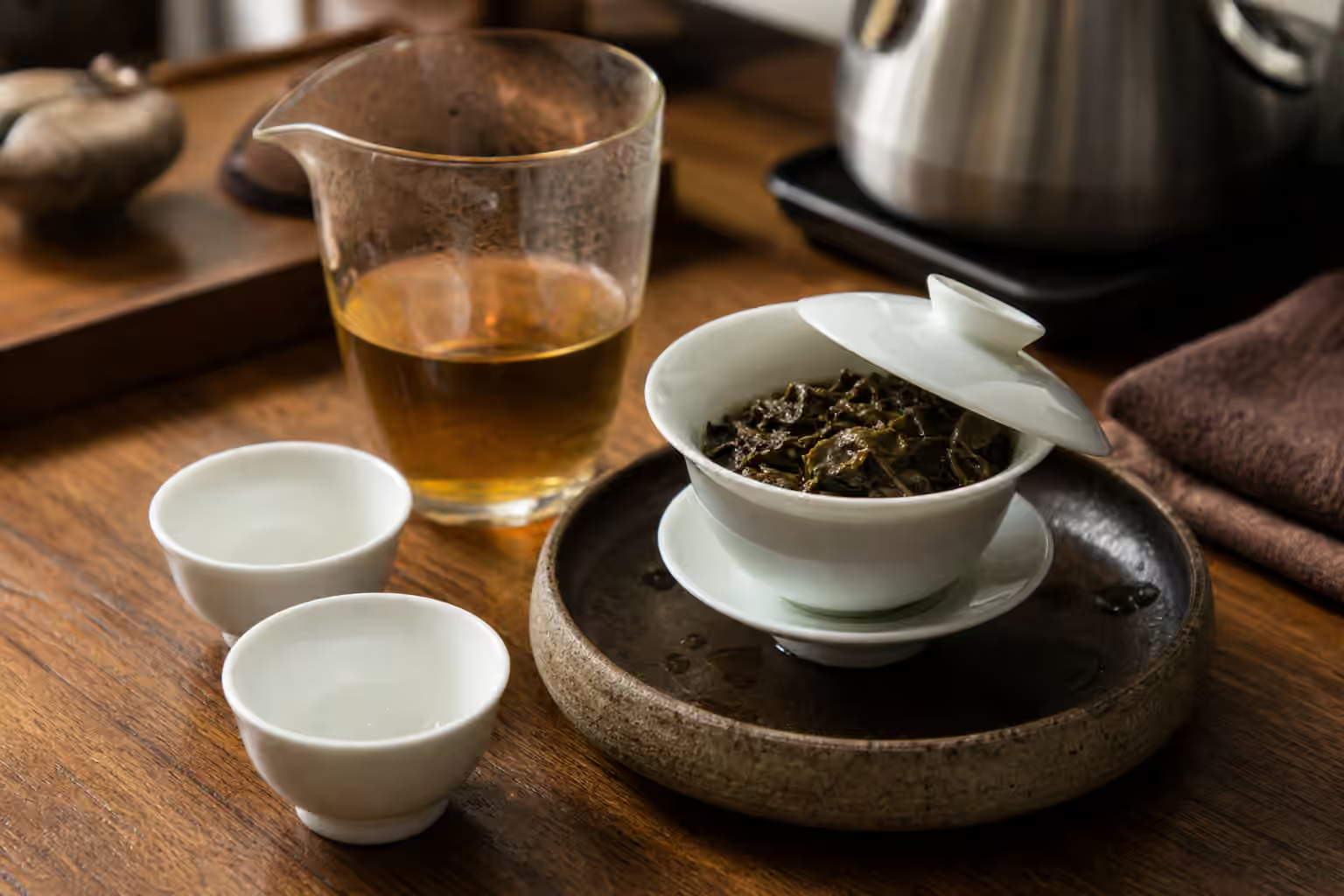
Most of your teaware, glazed cups, porcelain gaiwans, glass pots, stainless infusers, wants nothing more than a rinse with hot water after each use and, crucially, a proper drying before it goes back on the shelf. The single most common failure is not dirt but damp: an infuser basket or a lidded pot put away with moisture still inside grows a musty, sour note within a day or two, and that mustiness transfers straight into the next brew. Empty the leaves promptly, rinse while the piece is still warm so residues have not set, and leave everything open to air until it is fully dry. A pot stored with its lid off, or set slightly ajar, will stay fresh far longer than one sealed up wet.
Tea stains are a separate question from cleanliness, and worth thinking about calmly. The brown film that develops inside a well-used teapot or a strainer is largely cosmetic, and inside an unglazed clay pot it is actively desirable. If a stain bothers you on a glazed or glass surface, a gentle scrub with baking soda paste lifts it without harsh chemicals, and a soak in a mild solution handles the rest; there is no need for aggressive scouring that can scratch the glaze. What you generally want to avoid is leaving strong-smelling dish soap residue behind on anything, because tea readily picks up detergent odors, so rinse thoroughly whenever soap is involved.
Descaling the kettle without tainting the water
An electric or stovetop kettle collects limescale, the chalky mineral deposit that hard water leaves behind, and over time this both dulls the kettle’s performance and can lend a faint off-taste to the water. Descaling is simple: a solution of water and a mild acid such as white vinegar or citric acid, brought up warm and left to sit, dissolves the scale, after which the essential step is to rinse and boil with fresh water several times until no trace of the acid smell or taste remains. That rinsing matters more than the descaling itself, because vinegar-flavored water will ruin a delicate green far more thoroughly than a little harmless limescale ever would. How often you need to do this depends entirely on your water; hard-water regions may need it monthly, soft-water areas rarely. Because water quality shapes both scale and flavor, Water for Tea and Electric Kettles and Temperature Control are natural companions here.
The matcha whisk, which needs a gentle hand
A bamboo matcha whisk, the chasen, is the piece people most often mistreat, usually by treating it like ordinary kitchenware. Its dozens of fine bamboo tines are fragile, and soap, scrubbing, or a dishwasher will split and destroy them fast. The correct care is almost embarrassingly simple: rinse it in warm water immediately after use, swishing gently to free the clinging matcha from between the tines, then let it air-dry standing upright on a whisk stand or resting so the tines point up, so water drains away rather than pooling at the base where it invites mold. Never soak it, never use detergent, and accept that the bamboo will gradually stain and soften with use; that is the whisk aging normally, not a sign it is dirty. Treated this way a chasen lasts a long time; treated like a dish it lasts weeks. Matcha Tools: Whisks, Bowls, Sifters, and Scoops covers the wider kit.
Unglazed clay, where cleaning becomes seasoning
The one category that overturns all the usual cleaning instincts is unglazed clay, the Yixing pots and similar porous vessels prized in gongfu brewing. These pots are deliberately never washed with soap, because their porous walls absorb a little of the tea with every use, gradually building a seasoning that enriches future brews. Soap would be absorbed just as readily and would taint everything that followed. Care for a clay pot means rinsing it inside and out with plain hot water, wiping the exterior, and letting it dry completely between uses, nothing more. Because the clay takes on the character of what it holds, the common practice is to dedicate a pot to a single type of tea, brewing only oolong or only pu-erh in a given vessel so its absorbed seasoning always complements rather than muddles the cup. What looks like an unwashed pot is in fact a carefully maintained one. Unglazed Clay Teapots explains the seasoning process in full.
A light routine that protects flavor
Put together, good teaware care is less about elaborate cleaning and more about matching the method to the material and, above all, drying everything properly. The glazed and glass pieces want hot water and thorough air-drying; the kettle wants occasional descaling followed by careful rinsing; the bamboo whisk wants a gentle rinse and an upright dry; the clay pot wants only water and patience. None of it takes long once it becomes habit, and the payoff is that your equipment stops quietly sabotaging your tea. A cup that suddenly tastes flat, sour, or vaguely wrong is often not the leaf’s fault at all but a residue or a lingering damp somewhere in the vessel, and a clean, dry setup removes that whole category of mystery.
The larger idea is that teaware, like the tea itself, rewards a small amount of regular attention far more than an occasional deep clean. Rinse promptly, dry completely, be gentle with the fragile and the porous pieces, and let the clay and the whisk age as they are meant to. Do that, and every brew starts from a neutral, honest baseline where the only flavor in the cup is the one you put there. When you are choosing the vessels themselves, Teapots, Gaiwans, Kyusu, and Infusers helps you pick pieces worth caring for. And as with everything in the Tea House, this is guidance about flavor and upkeep, not health; any personal medical question about caffeine, pregnancy, or medications belongs with a qualified clinician.