Good tea away from home is not about carrying more gear. It is about carrying the right few things and accepting the two constraints you will always face: unpredictable hot water and nowhere convenient to dump wet leaves. Once you plan around those two facts, a desk drawer or a hotel nightstand can produce a cup that is honestly close to what you brew at your own counter.
The two real problems
Every frustration with tea at work or on the road traces back to water temperature or leaf disposal. The office kettle or the hotel-room coffee maker tends to deliver water that is either scalding or already cooling on the walk back to your desk, and neither gives you a number. Meanwhile the leaves you brewed have to go somewhere, and shaking a soggy infuser over a bathroom trash can is the moment most people quietly give up on loose leaf and slide back to a dusty sachet.
Solve those two, and the rest is comfort. For temperature, you do not need a thermometer in your bag; you need a strategy. Boiling water poured into a cool ceramic mug drops several degrees on contact, and if you pour it first into a second vessel and then over the leaves, it drops further. For a green tea that hates boiling water, that double transfer is often enough to keep it from turning bitter. Black tea, most roasted oolong, and herbal infusions are forgiving enough that whatever the machine gives you will be fine.
A kit that fits in a drawer
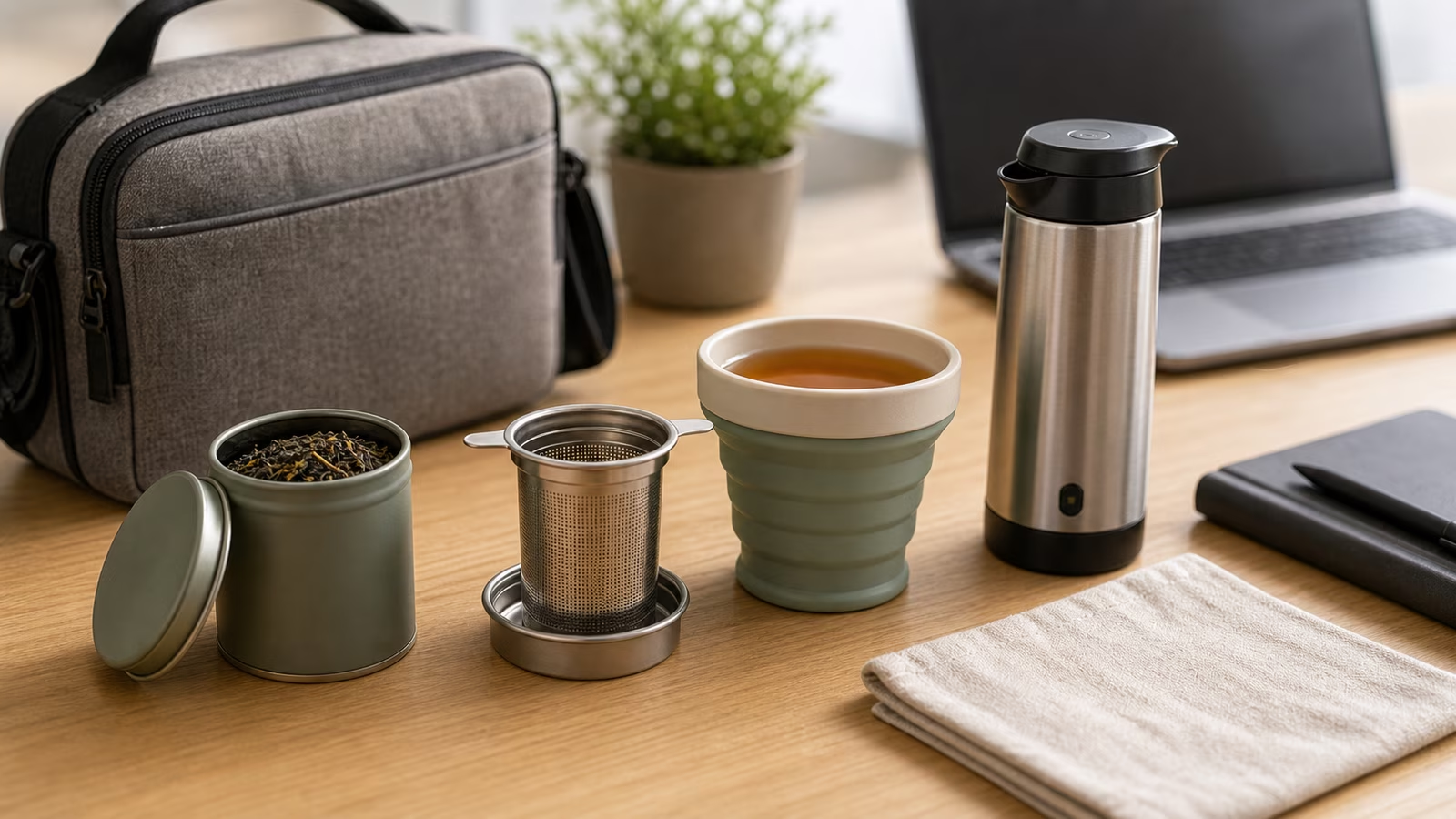
The most reliable office setup is smaller than people expect. A single sturdy mug with a wide mouth, a basket infuser that sits inside that mug and gives the leaves room to unfurl, a small airtight tin holding a week or two of one tea, and a folded cloth or a couple of paper towels for the wet infuser. That is a complete kit. The temptation is to bring a whole cabinet, but a shelf of half-used tins at your desk goes stale faster than it does at home because office air is dry and the tins get opened for a distracted minute several times a day.
For travel, swap the ceramic mug for something that closes. A double-walled tumbler or a good thermos does two jobs at once: it holds heat so a lukewarm machine pour has time to actually extract the leaves, and it seals so nothing spills in a bag. If you brew straight into a thermos, lean toward less leaf and a longer, gentler steep, because you cannot easily separate leaf from water once the lid is on. This is the same logic behind grandpa-style brewing , where leaves simply live in the cup and you drink around them; a hardy black tea or a roasted oolong handles that treatment far better than a delicate green.
Choosing teas that survive the conditions
The teas that travel best are the ones that forgive rough water and long contact. Robust black teas, roasted and rolled oolongs, ripe pu-erh, and most herbal blends will still taste like themselves after a hotel kettle and a fifteen-minute meeting. Fussy teas — a shaded Japanese green, a first-flush Darjeeling, a fresh green oolong — reward precise temperature and quick pours, exactly the control you do not have on the road, so they are better saved for the counter at home where you can give them the attention described in brewing temperature and time .
There is also the practical question of caffeine timing. An office day often means one strong cup in the morning and a wish for something warm in the afternoon that will not keep you up. Keeping a caffeine-free herbal or a naturally low-caffeine option in the drawer alongside your morning black tea covers both moods without a second trip anywhere. Note that decisions about caffeine, pregnancy, medications, and medical conditions are personal, and this is tea education rather than medical or nutrition advice; a qualified clinician is the right source for anything specific to your health.
Realistic cleanup
Cleanup is where a travel habit lives or dies, so build the disposal step into the ritual instead of dreading it at the end. A basket infuser that you can knock out into a trash can and rinse under a tap takes ten seconds; a fine mesh ball that traps leaves in a hundred tiny gaps takes a minute of picking and never fully comes clean. Choose the easy tool. When you are somewhere with no sink at all, brewing straight into a thermos and simply not fishing the leaves out until you get home is a legitimate answer — many teas hold up to hours of gentle steeping without turning harsh, especially if you started with a modest amount of leaf.
Between uses, dry everything before it goes back in the bag. A wet infuser sealed into a pouch grows a musty smell within a day, and that smell transfers to the next cup you brew. A quick wipe with the cloth you already packed prevents it. The same freshness logic that governs storage at home, covered in the tea storage guide , applies double on the road, where heat and dampness in a bag work against you.
Making the next trip easier
Treat the kit as something you refine rather than assemble once. After a week of office cups, you will notice which tea you actually reached for and which tin just sat there; carry less of the ignored one and more of the favorite. After a trip, note whether the thermos brew came out too strong or too weak and adjust the leaf amount for next time. Small corrections like these, written down or simply remembered, turn a compromise setup into one you trust. Over a few weeks the away-from-home cup stops feeling like a lesser version and starts feeling like a portable version of the ritual you already enjoy.
If you want to tighten the water side of the equation for the days you are home, the electric kettles guide covers temperature control, and the loose leaf versus tea bags comparison helps you decide when a good sachet is honestly the smarter travel choice. There is no shame in a well-made bag when the conditions are against you.