Almost every bad cup of tea comes down to one of two numbers being wrong: the water was too hot, or the leaves sat too long. Get those two under control and you have solved most of what stands between you and a cup you actually enjoy. The good news is that you do not need to memorize a chart for forty teas. You need to understand what temperature and time are each doing, so you can read the cup in front of you and fix it.
What temperature is really doing
Hot water pulls compounds out of tea leaves, but not all at once and not evenly. The aromatic, delicate, sweeter compounds come out readily at moderate heat. The bitter and astringent ones — the same tannins that dry your mouth and the caffeine that bites — come out faster and more aggressively as the water gets hotter. This is why the same leaves can taste either lovely or harsh depending on nothing but the temperature you poured over them.
That gives you a simple mental model. Hotter water extracts more of everything, including the parts you might not want. Delicate teas, which have little to hide behind, get overwhelmed by boiling water: a fine green tea poured over with a rolling boil turns bitter and loses its sweetness in seconds. Robust teas, which are built to give up flavor slowly, need that heat to open up at all: black tea brewed with cool water tastes thin and sour. So the rule beneath all the specific numbers is this — the more delicate the leaf, the cooler the water, and the sturdier the leaf, the hotter.
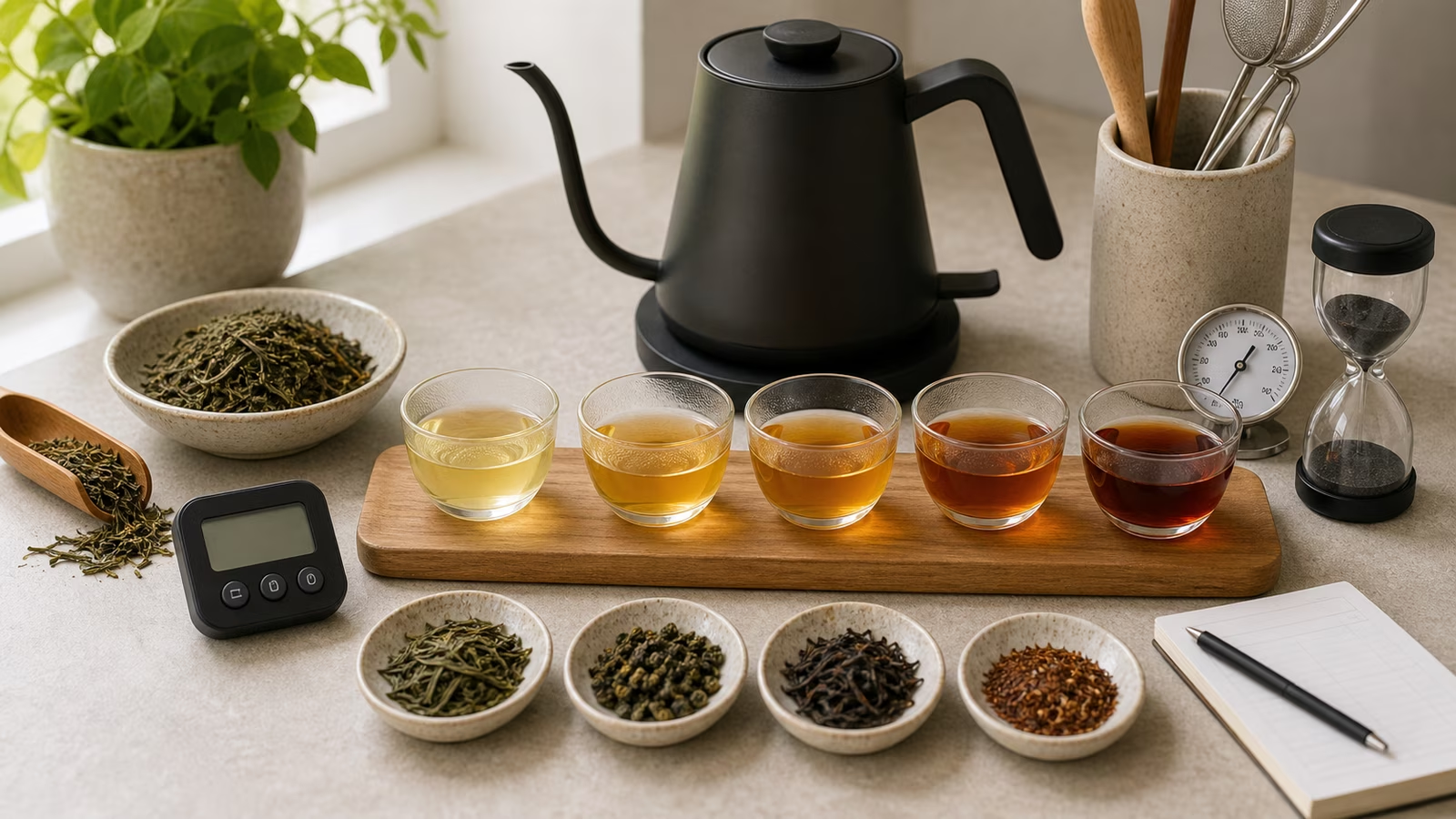
In rough terms, green and white teas prefer water pulled back from the boil, off-boil down to somewhere merely hot, while black tea, most roasted oolong, and dark teas like a full or near-full boil. Lightly oxidized oolongs sit in the middle. You do not need a thermometer to work in these bands. Water that has boiled and then rested for a couple of minutes off the heat has dropped meaningfully, and pouring boiling water into a room-temperature cup and then over the leaves knocks off a few more degrees. If you want to remove the guesswork entirely, a variable-temperature kettle does it for you, as covered in the electric kettles guide .
What time is really doing
Steep time controls how much of that extraction actually happens. A short steep pulls mostly the quick, bright, sweet compounds; a long steep keeps going until the slower bitter and astringent ones have joined the party and, eventually, until the leaf is exhausted. This is why an under-steeped cup tastes watery and an over-steeped one tastes harsh even when the temperature was right.
The important thing to understand is that time and temperature trade off against each other. Cooler water needs a little longer to extract enough flavor; hotter water needs a shorter steep before it goes too far. That relationship is what lets you brew almost anything two different ways. A delicate tea can be brewed cool and slow, or, if you like the small-pot approach, hot and very fast, refilling many times — the method behind gongfu brewing and its counterpart in the western versus gongfu comparison . Neither is more correct; they are two routes to a balanced cup.
The third number nobody mentions
Leaf amount is the quiet variable that sabotages people who think they have a temperature or time problem. If you use too little leaf, you will keep steeping longer to chase strength, and a long steep drags out bitterness, so you end up with a cup that is both weak and harsh at once. Using a bit more leaf and a shorter steep almost always tastes cleaner than using little leaf and a long steep, because you get strength from quantity rather than from over-extraction. Dialing in the ratio of leaf to water is worth its own attention, and the leaf-to-water ratio guide goes deeper; for now, just know that when a cup seems stuck, the leaf amount is often the thing to change.
Reading and fixing the cup
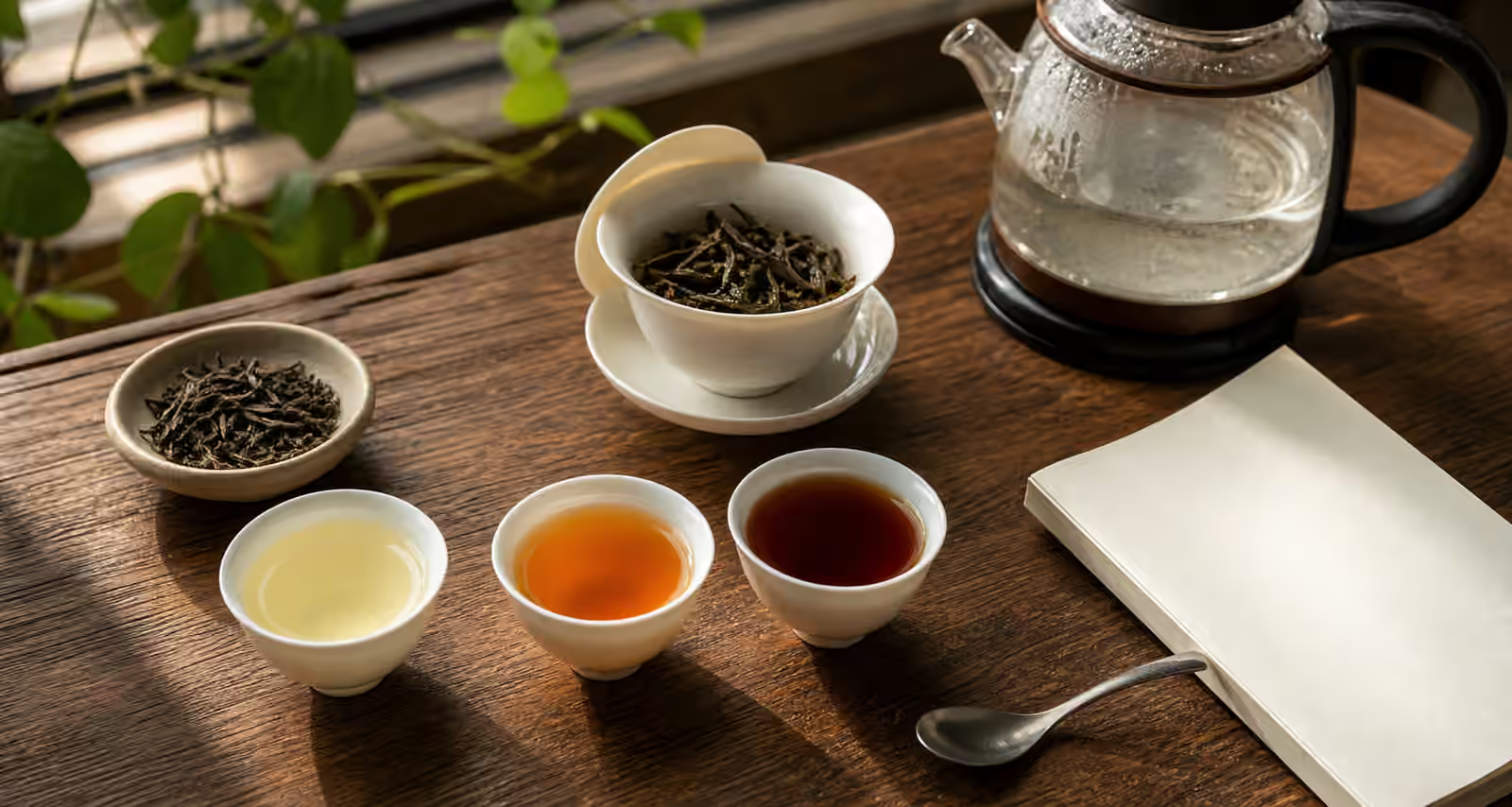
Here is the whole method in practice. When a cup comes out harsh, bitter, or drying, the water was too hot or the steep too long, so lower the heat or shorten the time and change only one of them so you can tell which mattered. When a cup comes out thin, flat, or watery, the water was too cool, the steep too short, or there was not enough leaf, so nudge one of those up. When a cup is simply confusing, brew it again and write down what you did — leaf amount, roughly how hot, how long — because a single written baseline turns a vague memory into something you can adjust on purpose.
That habit of changing one thing at a time is the entire skill. It feels slow, but it is far faster than the alternative of altering three variables at once and never knowing which fixed the cup. Two or three deliberate brews of the same tea teach you more than a dozen distracted ones. If your results still swing wildly from cup to cup, the culprit may not be your technique at all but your water, since minerals and chlorine change extraction just as temperature does, a factor explored in the tea water guide . When something goes wrong and you are not sure why, the troubleshooting guide works through the common failures one at a time.
None of this is about hitting a perfect number. It is about understanding two dials well enough to turn the right one when a cup disappoints you. Caffeine, incidentally, extracts along with everything else, coming out faster in hotter, longer brews; if caffeine matters to you for reasons of pregnancy, medication, or a medical condition, treat this as tea education rather than medical advice and ask a qualified clinician about your own situation. For everyone else, the path forward is pleasant and short: brew a tea you like, note what you did, change one number next time, and let the cup tell you whether you guessed right.