A specialty tea listing can read like a foreign language: origin names, harvest seasons, grade abbreviations, cultivar codes, and a paragraph of tasting poetry, all attached to a price that ranges over an order of magnitude for teas that look nearly identical. It is easy to feel that you need to decode all of it before you can buy well. You do not. A few habits protect you from the two ways beginners lose money — buying too much of something they end up not liking, and paying for words on a label that do not predict the cup — and everything else is detail you can pick up as you go.
Buy for a job, not for the romance
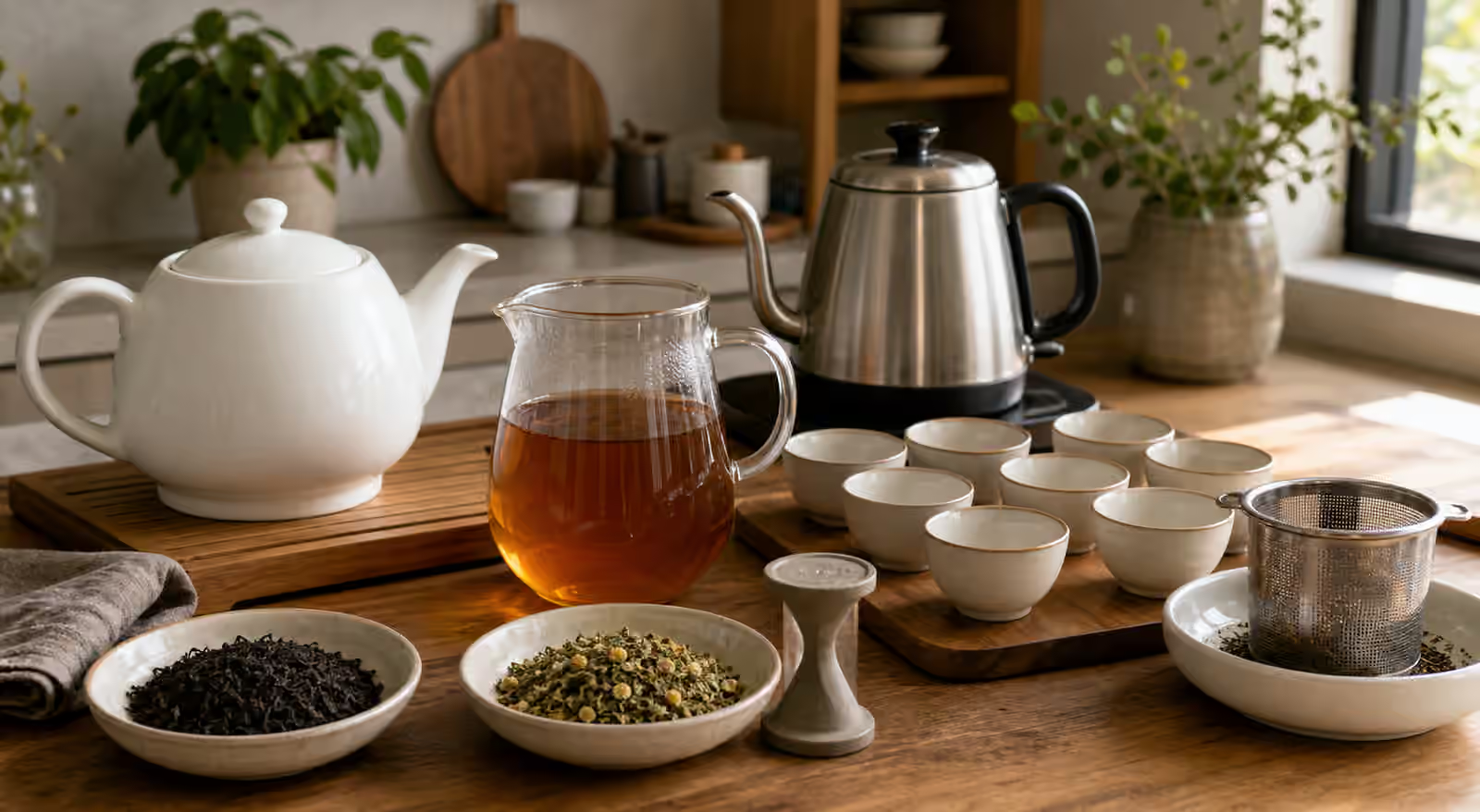
The most useful question to ask before any purchase is what this tea is actually for. A tea that sounds rare and exciting is worthless sitting in your cupboard if you never reach a moment where you want to drink it. Before you order, name the occasion: a bracing breakfast cup, an easy iced brew for summer, a gentle evening infusion with no caffeine, an oolong to sip slowly on a weekend, a matcha for a morning ritual. When you shop for a job rather than for a feeling of acquiring something special, you buy teas you will drink, and the pleasure of drinking them beats the brief thrill of owning a shelf of intentions. This is also how you avoid the slow tragedy of the well-meaning collection where a dozen half-full tins quietly go stale together.
Small first, always
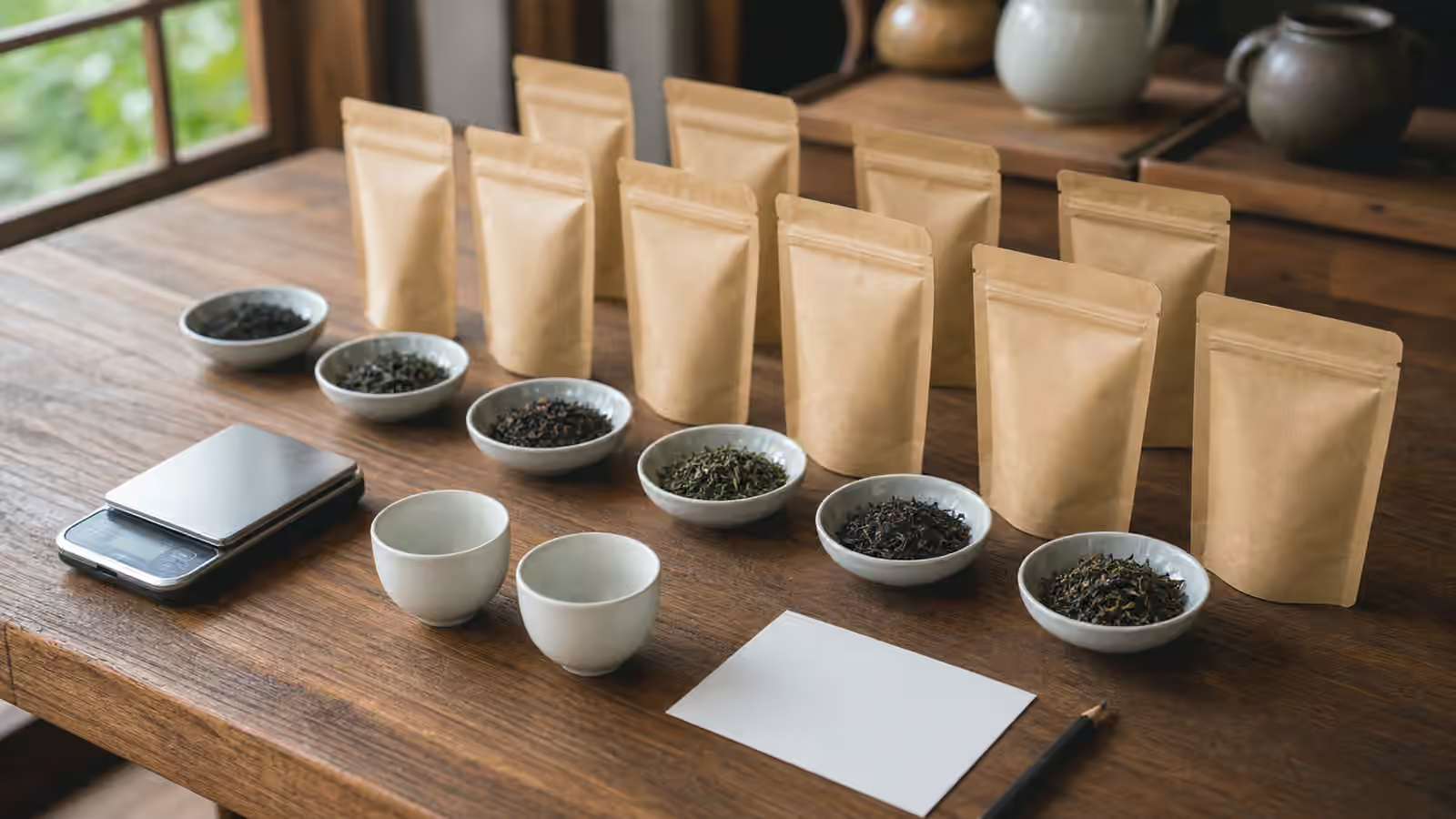
Whatever the tea, buy the smallest amount that lets you find out whether you like it. Tea is at its best fresh, and freshness is working against you the moment a package is opened, so a large tin of something you turn out to love only middling is a double loss — money spent and flavor fading. Most good vendors sell samples or small pouches precisely so you can taste before you commit, an approach worth building into a habit, as the tea samples and small orders guide describes. A sample that disappoints costs you very little; a sample you adore tells you exactly what to reorder in quantity. There is no downside to starting small, and it is the single most reliable way to keep from getting lost.
Reading the label without being fooled
Origin names, harvest terms, and grades are genuinely informative, but only as clues, never as guarantees. An origin name tells you where a tea comes from and often hints at a style — a place known for brisk malty black tea, or for delicate spring greens — but the name alone does not certify quality, because a famous region produces both wonderful and ordinary tea. The deeper reading of these place names is its own small skill, covered in the reading tea origin labels guide .
Harvest and season terms matter because tea, like produce, has a calendar. A spring flush and a later-season pick from the very same bushes can taste quite different, and freshness-sensitive teas like green teas are best bought within a reasonable window of their harvest. The tea harvest seasons and flushes guide explains why a date on the package is worth more than most of the adjectives around it.
Grades are the most misunderstood part of a label. Grading systems mostly describe the size and appearance of the leaf — whether it is whole, broken, or fine — not how good the tea tastes. A high grade abbreviation signals intact, well-made leaf, which often correlates with care, but a broken-leaf tea can make a perfectly delicious strong cup, and a beautiful whole-leaf grade can still taste flat. Read grades as a description of leaf style, not a quality score, and let the tea grades and leaf styles guide fill in the shorthand. As for the vendor’s tasting notes, treat them as an honest attempt to set expectations rather than a promise; if a description mentions stone fruit and honey, that tells you the general direction, not that you will taste exactly those things.
Price, freshness, and trusting a vendor
Price in tea is real but noisy. Genuinely labor-intensive teas, tiny hand-picked harvests, and aged rarities cost more for reasons that hold up, but a high price does not by itself mean a tea will suit you, and plenty of modestly priced teas are a joy every day. Rather than chasing either the cheapest or the most expensive option, look for signals that the vendor cares about freshness and is specific about what they sell — harvest dates, clear origins, honest descriptions, and a willingness to sell small. A seller who tells you when a tea was picked and offers samples is easier to trust than one selling large tins of undated leaf with only flowery prose. Avoid anchoring to reviews and rankings as if they were fixed truths; palates differ, batches change year to year, and today’s celebrated tea may be an ordinary one next season.
Turning purchases into knowledge
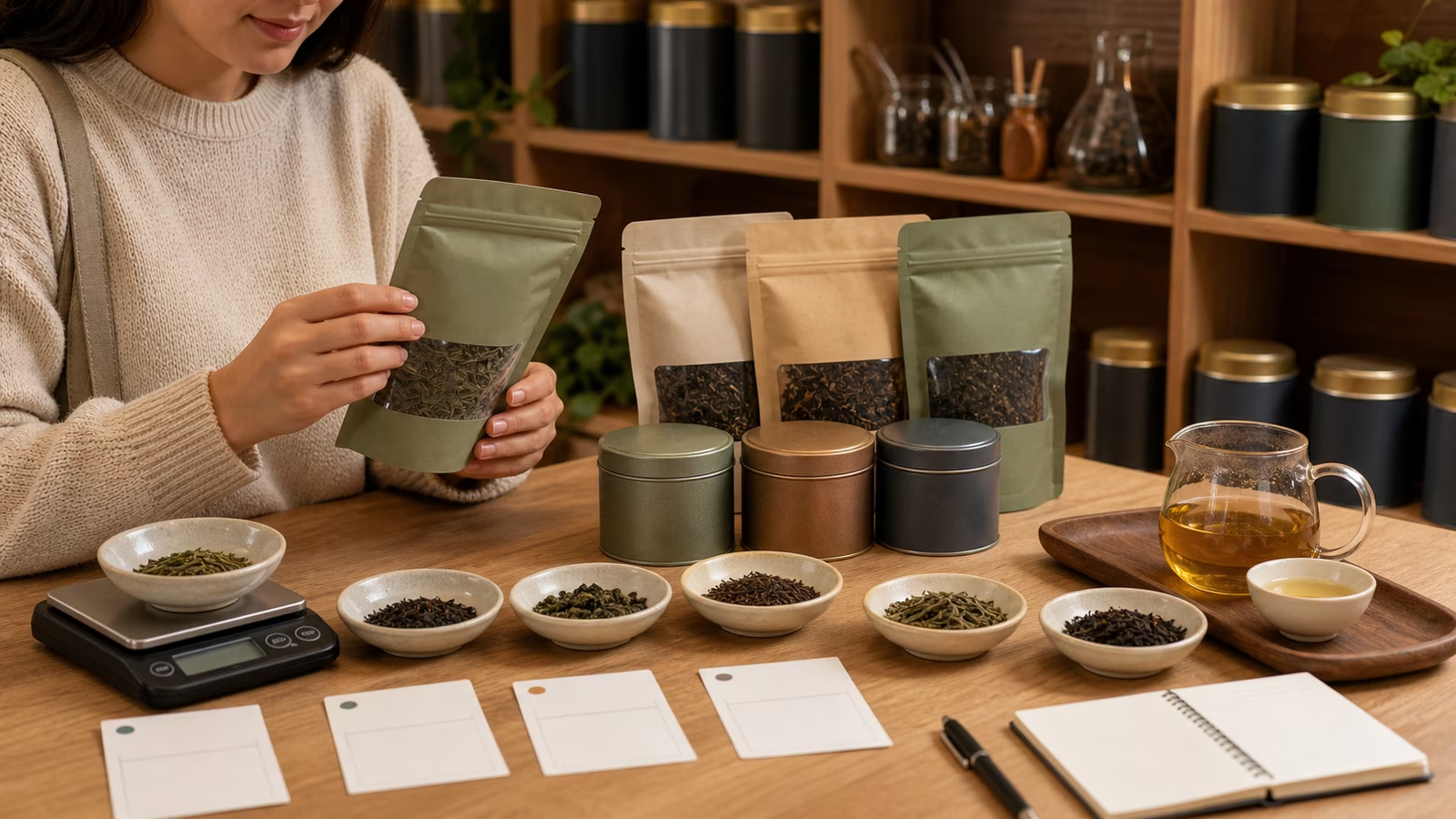
The habit that pulls all of this together is keeping a light record of what you buy and what you thought of it. A single honest line per tea — what it was, roughly what it cost, and whether you would order it again — quietly turns scattered purchases into a map of your own taste. Over a few months you will notice patterns, that you keep loving roasted styles and cooling on grassy ones, or that you reorder the everyday black tea far more than the exotic one, and those patterns make every future purchase easier. Store what you buy well so the freshness you paid for survives to the cup, as the tea storage guide covers, and let each order teach you something for the next.
One last boundary worth stating plainly: buying decisions sometimes intersect with caffeine, pregnancy, medications, or a medical condition, and this is tea education rather than medical or nutrition advice. For anything specific to your health, a qualified clinician is the right person to ask. Beyond that, buying tea well is not about mastering the jargon. It is about knowing what you want the cup to do, spending small until you are sure, reading the label as a set of clues, and letting your own notes guide the next order more than any vendor’s poetry.