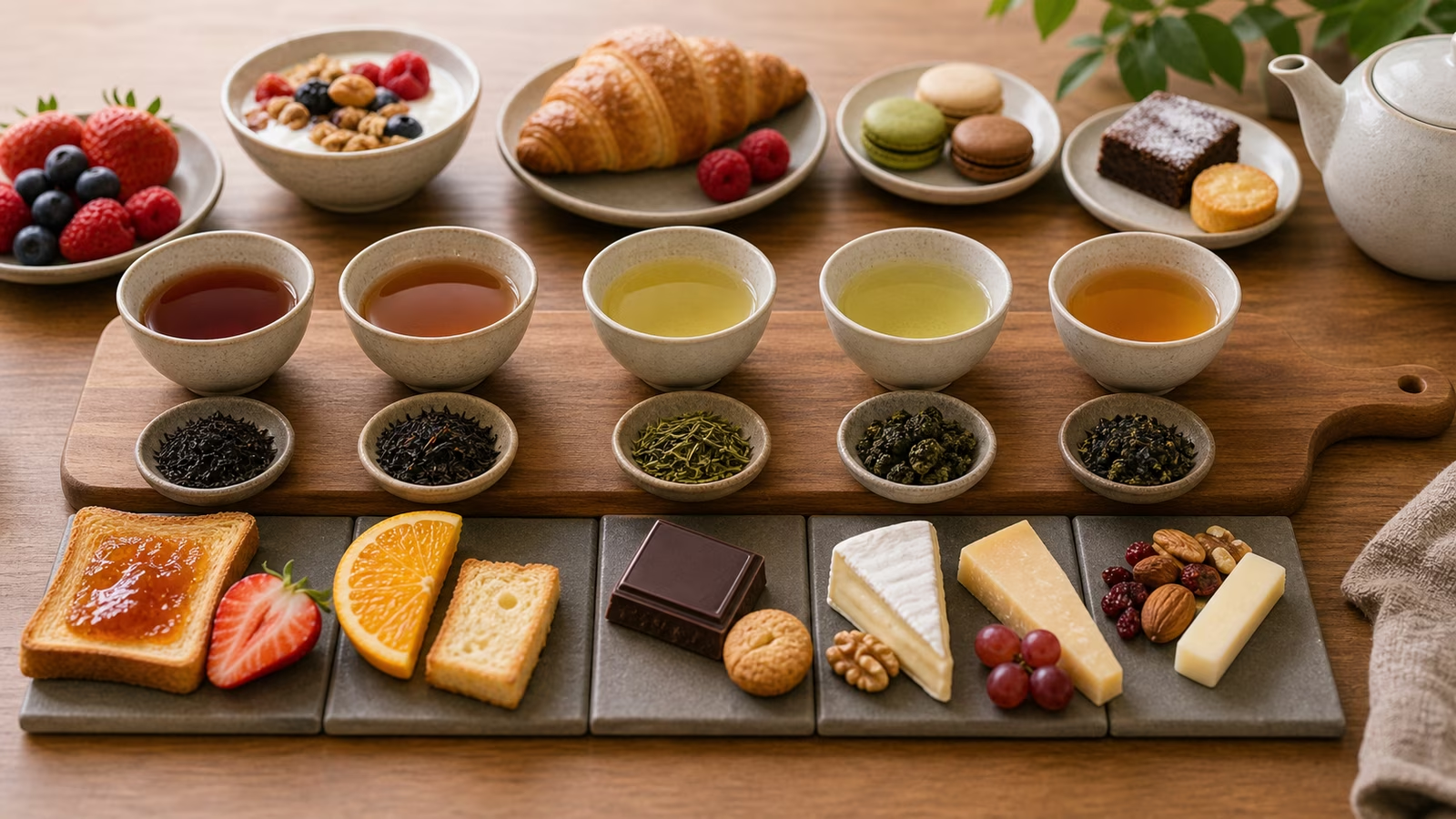
Pairing tea with food sounds like the kind of thing that requires a sommelier and a straight face, but the underlying logic is friendly and mostly common sense once someone says it out loud. Tea brings a few forces to the table that interact with food in predictable ways: it has body, it has astringency, it can be sweet or roasted or floral, and it is served hot, which matters more than people expect. Food brings its own forces, mainly fat, sugar, salt, and richness. Good pairings are just conversations where those forces either balance each other or echo each other pleasantly, and bad pairings are conversations where one side shouts the other down. You do not need to memorize a chart. You need to understand two or three moves and then trust your own tongue.
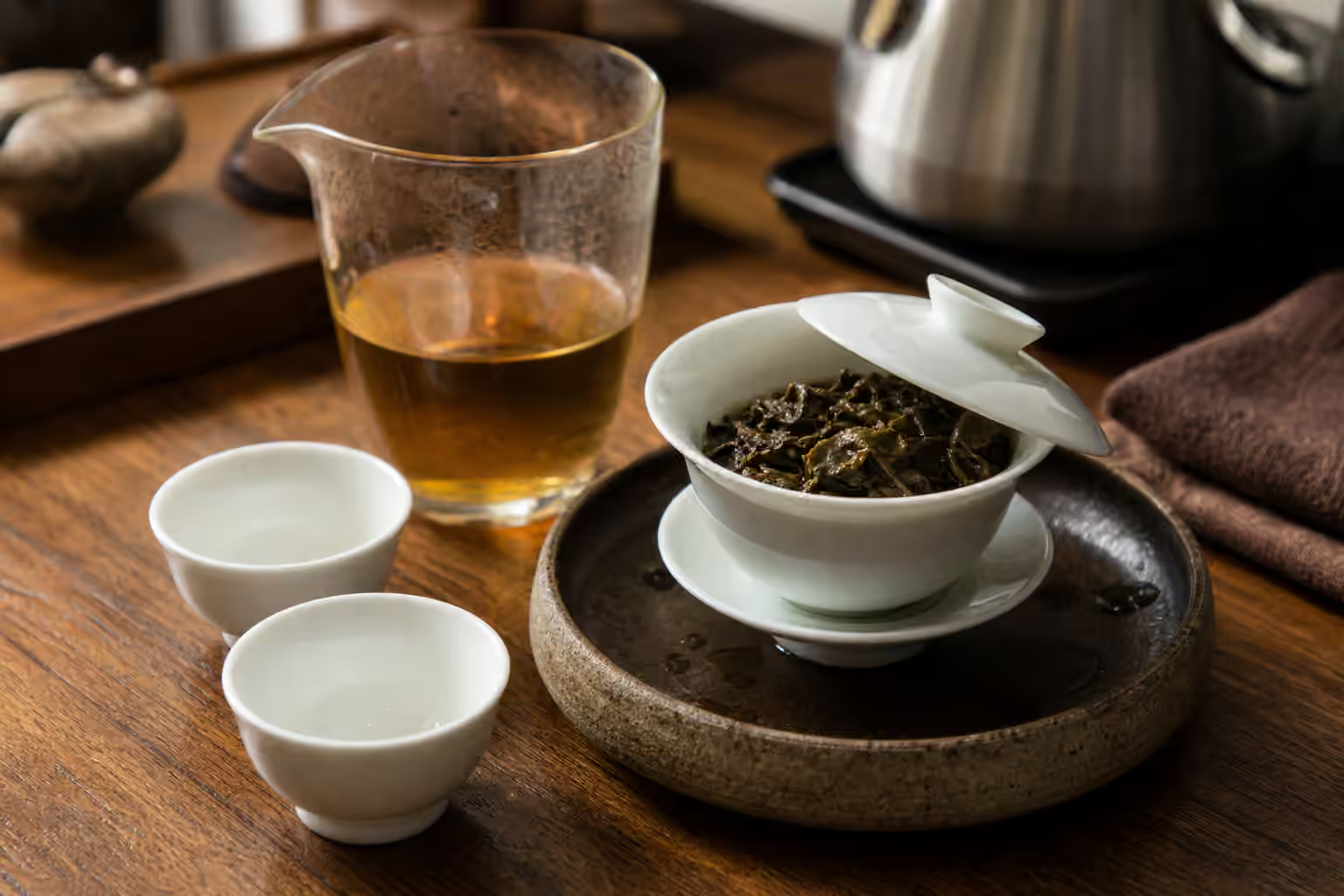
The two moves that do most of the work
Nearly every worthwhile pairing is doing one of two things. It is either cutting or matching. Cutting means using tea to slice through something the food has too much of, usually fat or richness. A brisk, tannic black tea works against a buttery pastry or a fatty breakfast the same way a squeeze of lemon does: its astringency scrubs the fat off your palate and resets your mouth for the next bite. Matching means letting the tea and the food share a quality so they reinforce each other, like a toasty roasted oolong beside toasted nuts or a caramelized dessert. Once you can name which move you are attempting, you can predict whether a pairing will work before you ever try it, and you can fix a clumsy pairing by switching moves.
Breakfast is where tannin earns its keep
Breakfast is the easiest place to feel the cutting move, because breakfast is so often rich, fatty, and a little heavy. A strong, tannic black tea is the traditional morning partner for exactly this reason, not just tradition. Malty assertive blends stand up to eggs, buttered toast, bacon, and pastry without being flattened, and their astringency keeps each bite feeling fresh rather than cloying. This is where the black tea families show their range: a robust breakfast blend bulldozes through a fry-up, while a lighter, more aromatic black would be pleasant but overwhelmed. If your breakfast is on the savory, hearty end, the same instincts that make salt and richness balance each other on the plate apply to the cup, which the salt tasting guide explores from the food side.
Dessert is a contest of sweetness
Dessert introduces the rule that trips people up most: whichever partner is sweeter tends to win, and a tea served next to something sweeter than itself will taste thin, sour, or bitter by comparison. That is why a delicate tea collapses beside a very sugary cake. You have two ways out. You can match the intensity by choosing a tea rich and full enough to hold its own, such as a roasted oolong or a dark, honeyed black beside chocolate or caramel. Or you can lean into contrast on purpose, using a bright, slightly astringent tea to cut a dense, fatty dessert the way it cuts a fatty breakfast, so the sweetness lands cleaner. What rarely works is a fragile floral tea against a heavy sweet, because the tea simply disappears. When in doubt with dessert, go bigger and rounder rather than lighter.
Cheese rewards experiments more than rules
Cheese and tea is the pairing that surprises people, and it is genuinely one of the most rewarding to play with because the range of cheese is so wide. Fresh, tangy cheeses want a tea that refreshes rather than competes, often something green and clean. Hard aged cheeses, which are salty and concentrated and a little sweet, do beautifully with roasted oolongs and aged dark teas whose depth meets the cheese instead of shrinking from it. Blue and very pungent cheeses want a tea with real presence and often a touch of sweetness to soften the sharpness. The reason cheese pairing works so well is that both cheese and tea share savory, umami, and mineral notes, so there is a lot of common ground to build a match on. Treat it as a tasting rather than a formula, and let the oolong tea guide point you toward the roasted styles that tend to shine here.
Snacks, salt, and everyday grazing
Not every pairing is an occasion, and the casual case is worth its own attention because it is the one you will actually live in. Salted nuts, crackers, plain biscuits, and simple snacks are forgiving partners, and they teach the salt lesson clearly: a little salt in the food makes many teas taste rounder and sweeter, which is why a lightly salted snack can make an ordinary cup suddenly seem generous. Roasted and toasty teas love toasty snacks; grassy greens love fresh, light bites; spiced blends love anything warm and a little sweet. This everyday grazing is also the low-stakes place to build your instincts before you attempt anything ambitious, and the habits carry over to a savory table the way the breakfast pairings in the Boy Kibble guide treat the same salt-and-richness balance from another angle.
Serve it hot, and serve it plain to learn
Two practical notes make every pairing above work better. First, temperature is part of the pairing. A hot cup does something a cold drink cannot: the heat and the tannin together cut through fat far more effectively, which is a real reason hot tea suits rich food so well. Let a pairing go lukewarm and it loses much of its cutting power. Second, when you are learning, keep the tea plain. Milk and sugar change the tea’s body and sweetness and therefore change every pairing calculation you just made, so taste the unadorned cup against the food first and only add things once you know what the base pairing is doing. And if you want to turn this into an evening rather than a lesson, a small spread of teas and bites is the whole idea behind hosting a tea tasting at home .
One boundary belongs here as clearly as anywhere. This is a guide to flavor, not to health or nutrition. If caffeine, pregnancy, medication interactions, or any medical condition affects how much tea is right for you or how it sits alongside a meal, that is a conversation for a qualified clinician who knows your situation, not for a pairing note. Kept in that frame, tea pairing is one of the more playful corners of the whole subject: low stakes, quick to test, and endlessly variable. Pour two teas, put a few things on a plate, and notice which cup makes the food better and which bite makes the tea better. That noticing, repeated a few times, becomes an instinct you will trust long after you have forgotten any particular rule.