The Art of Small Space Design
Here’s a secret that most people don’t realize until they’re knee-deep in a tiny home build: designing a tiny home isn’t about shrinking a regular house. Not even close. It’s about designing a system—a beautifully orchestrated set of daily routines like cooking, sleeping, working, cleaning, storing, and hosting that must all fit inside a compact envelope without friction. Think of it less like architecture and more like choreography.
In a standard home, you can throw square footage at almost any problem. Need more storage? Add a closet. Want a home office? Convert the spare bedroom. But in a tiny home, every single choice creates ripple effects. A window isn’t just a source of light—it’s wall space you can no longer store things on. That gorgeous sofa you fell in love with at the furniture store? It’s not just seating. It’s circulation clearance you’re giving up, cleaning time you’re adding, and a future clutter magnet you’re inviting in. Every decision matters, and that’s honestly what makes tiny home design so fascinating.
That’s why truly great tiny design feels calm. It’s not minimalist as some trendy aesthetic choice—it’s minimalist as a deliberate strategy for living well. And here’s the beautiful thing: the principles we’re about to explore hold up across every style, whether you’re dreaming of a rustic mountain cabin or a sleek modern pod. These ideas will help you plan a tiny home that stays lovable long after the novelty wears off and real life settles in.
You’ll notice a theme running through everything that follows: we prioritize decisions that reduce daily effort. Because the real luxury in a small space isn’t a fancy finish or a designer faucet—it’s a layout that quietly, invisibly helps you get through your day with ease.
Core Design Philosophy
1. Vertical Space Utilization
Think up, not out. This is probably the single most important mental shift you’ll make when designing a tiny home. When the footprint is limited—and it always is—the best “extra space” is hiding right above your shoulders. And vertical space isn’t only about lofts, though we’ll definitely talk about those. It’s about sight lines, storage, daylight, and that psychological breathing room that makes the difference between a home that feels like a cozy retreat and one that feels like a cramped box.
The most reliable vertical strategies are the ones that stay easy to use at 7 a.m. on a groggy Monday morning—because let’s be honest, if your storage solution requires acrobatics or a step stool and perfect coordination, you’re going to stop using it within a week.
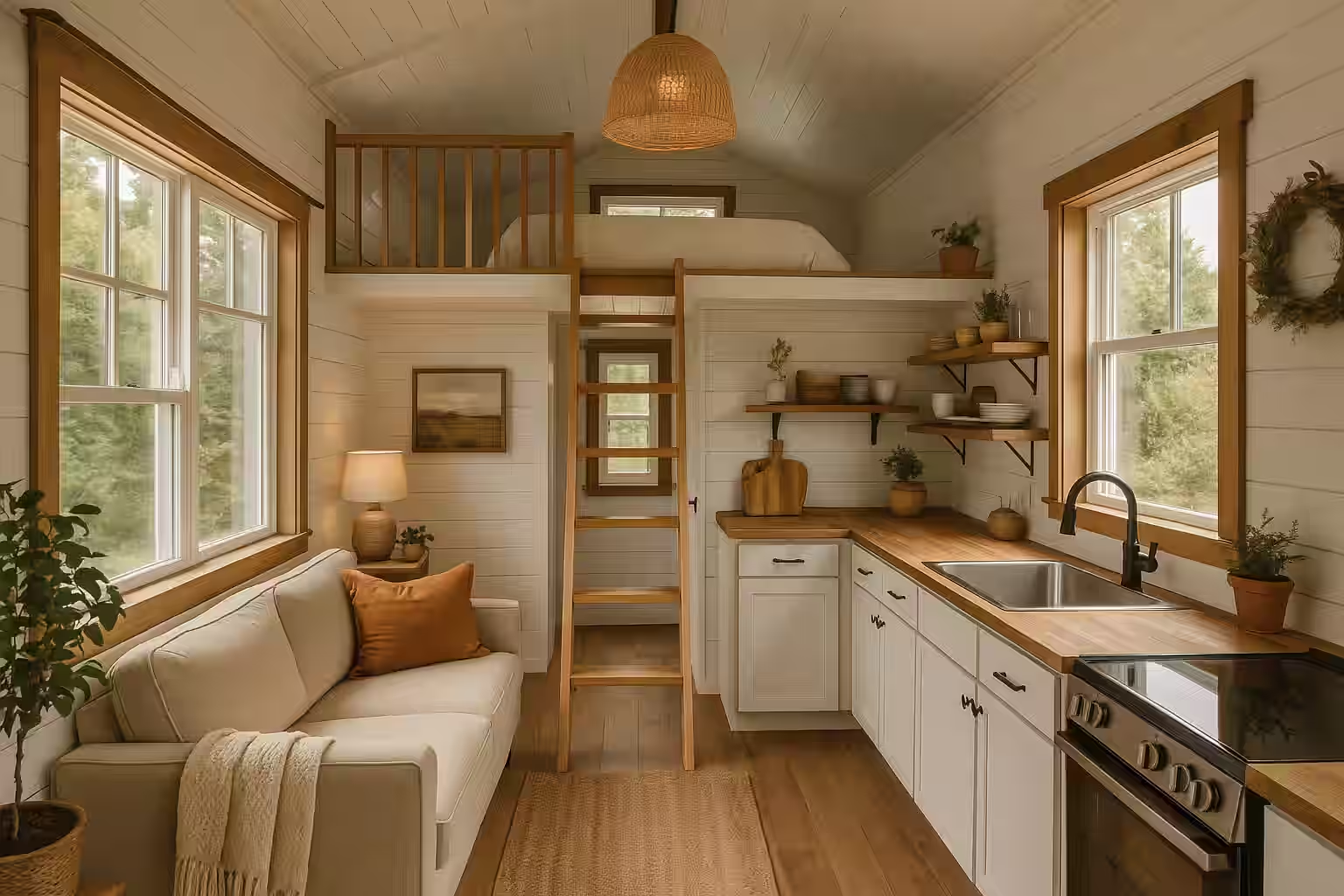
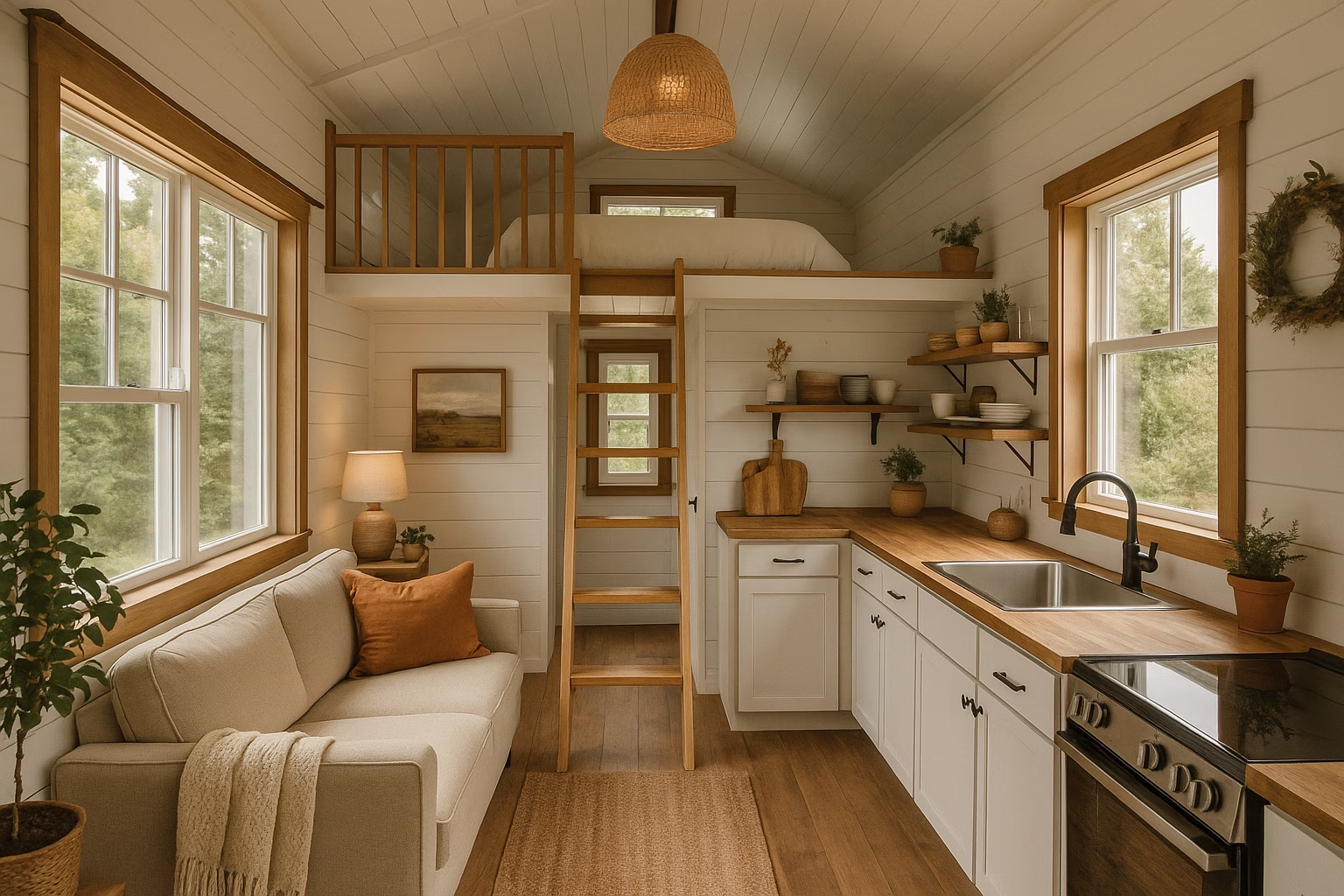
Loft sleeping is the classic move, and there’s a reason it endures: it trades ceiling height (which you don’t need while horizontal and dreaming) for floor area on the main level. We’re talking about freeing up 60 to 100 square feet downstairs, which is absolutely enormous in tiny home terms. That reclaimed space can become your living room, your office, your yoga studio—whatever matters most to you.
Floor-to-ceiling cabinetry is another game-changer. Fewer horizontal surfaces means fewer clutter magnets, and tall cabinets draw the eye upward, making the space feel taller than it really is. Hanging storage—think rails, hooks, and pegboards—keeps your daily tools and items visible and accessible without looking messy. There’s something deeply satisfying about a well-organized pegboard wall. And high-set windows are an underrated hero: they flood your space with daylight while preserving those precious lower wall sections for storage and furniture.
But here’s the catch that trips up a lot of first-time tiny home designers: vertical design only works if you respect comfort limits. A tiny home can be perfectly “legal” from a building code standpoint and still feel absolutely cramped if you allocate your height poorly.
Here are some useful rules of thumb to keep in your back pocket. Road-legal height for homes on trailers is often capped around 13.5 feet in many jurisdictions, so think of your total height as a design budget you need to spend wisely. Loft headroom of around 3.5 feet can be workable for sleeping, but trust me—you’ll feel the real-world difference between “workable” and “actually pleasant.” And for your main-floor ceiling, around 6.5 to 7 feet is typically where most people stop consciously noticing height constraints and the space just starts feeling… normal.
When you’re choosing among these configurations, resist the urge to just pick the one that looks most impressive in a 3D render. Instead, ask yourself the unsexy but essential questions: where will the dust settle? Where will you store the awkward, unglamorous items—the vacuum, the winter boots, the luggage you use twice a year? And honestly, how many up-and-down trips to a loft will you tolerate on a daily basis? Your future self will thank you for thinking this through now.
2. Multi-Functional Design
In a tiny home, every “nice-to-have” item is in a cage match with your essentials for survival. There’s only so much room, and multi-functional design is how you stop feeling like you’re constantly choosing between comfort and practicality. It’s the art of making one thing do the job of three, and when done right, it feels less like compromise and more like magic.
There are three categories of multi-function that consistently pay off over the long haul, and they’re worth understanding separately.
Multi-functional furniture is where most people start, and for good reason. The best tiny home furniture isn’t the cleverest or the most Instagram-worthy—it’s the boringly reliable stuff that becomes part of your daily routine rather than a clever trick you demo for guests and then never actually use. A drop-leaf table that seamlessly transitions between workspace, dining table, and prep surface extension is worth its weight in gold. An ottoman that serves as seating, hides storage inside, and doubles as a soft coffee table earns its spot every single day. A wall-mounted folding desk that disappears completely when you want your living space back is the kind of quiet genius that makes tiny living actually work.
Now, Murphy beds and sofa beds can be absolutely fantastic, but here’s the honest truth—they only work if the transformation step is genuinely frictionless. If the mechanism is heavy, fussy, or blocks access to stored items when deployed, you’re going to resent it within a month. Test the action. Count the steps. If it takes more than about ten seconds, keep looking.
Multi-functional built-ins are where tiny homes really start to shine compared to conventional houses. Built-ins excel because they can occupy those weird, awkward volumes that furniture simply can’t touch—the space under stairs, toe-kicks beneath cabinets, and the gaps between wall studs. Stairs with built-in drawers are the classic example of “free” storage that feels like you’re cheating the system. Window seats that hide storage compartments underneath give you both a cozy spot to land with your morning coffee and a place to stash blankets and books. And a raised bed platform can conceal surprisingly bulky items underneath—not just clothes, but suitcases, camping gear, and seasonal equipment.
Multi-functional zones tie it all together. Tiny homes truly sing when a single area can gracefully host multiple activities without requiring constant reconfiguration. A kitchen that doubles as a workspace is a perfect example—provided you’ve thoughtfully planned for cable routing, sufficient counter clearance, and appropriate task lighting for both cooking and computing.
Here’s the practical twist that separates good multi-functional design from frustrating multi-functional design: the three functions should happen at different times. If the staircase is both access and storage, wonderful—you access it sometimes and retrieve stored items other times. If it’s access and a seat, also great. But if it’s supposed to be a “seat” and “storage” at the same moment you need it as “stairs,” you’re going to hate it within a week. Time-separation is the secret ingredient that keeps multi-function comfortable instead of chaotic.
3. Strategic Storage Solutions
Let’s talk about storage, because this is where tiny homes are truly won or lost. Storage is not a closet problem. It’s a lifestyle contract. If you don’t plan storage intentionally—and I mean really, seriously, obsessively intentionally—then every “spare surface” in your home becomes de facto storage. And then your tiny home transforms into a constant, never-ending tidying project that saps your energy and makes you question every life choice that led you here.
A helpful target to keep in mind: plan for roughly 30 to 40 percent of your built volume to support storage. But—and this is crucial—distribute it so that daily items are easy to grab and long-term items don’t invade your everyday life. Think of it in zones, because different areas of your home have completely different storage needs.
Kitchen storage should support how you actually cook, not how a magazine thinks you should cook. Pull-out pantries and well-designed drawer dividers matter infinitely more than open shelving. I know, I know—open shelves look charming in photos. They also collect grease film, demand perfect styling at all times, and silently judge you every time you buy a cereal box that doesn’t match your aesthetic. Closed storage is your friend here.
Sleeping storage should keep clothing accessible without turning your loft into a pile of “I’ll fold that later.” Cubbies work beautifully in this context because they’re simple, visible, and naturally encourage you to keep quantities in check. When the cubby is full, you know it’s time to reassess.
Living area storage should hide the messy reality of actual life: phone chargers, remote controls, game pieces, the first aid kit, spare batteries, and all those little items that somehow multiply when you’re not looking. A few well-placed closed compartments can make the difference between a living space that feels serene and one that feels like a junk drawer exploded.
Bathroom storage is less about volume and more about keeping humidity from destroying your stuff. Closed cabinets absolutely beat open baskets in wet environments. Your toiletries will thank you, and you’ll avoid that sad moment of discovering your backup toothbrush has gone moldy.
And then there’s utility storage—the category where tiny homes truly succeed or spectacularly fail. If you don’t deliberately plan space for the vacuum, the mop, the laundry basket, a basic tool kit, outdoor shoes, and a designated spot for “we’ll deal with it later” items, you will literally be dealing with it every single day. This isn’t glamorous planning, but it’s the planning that matters most.
4. Light and Visual Space
Light is the fastest, most transformative way to make a small space feel generous. Walk into a tiny home flooded with natural light and you’ll swear it’s bigger than the numbers say. Walk into the same space with inadequate lighting and it’ll feel like a cave. But great lighting isn’t just about cramming in the biggest windows you can find—it’s about where the light lands and what it reveals.
For natural light, you want to aim for a thoughtful mix. A few primary windows provide your views and your main source of daylight—these are the ones you’ll gaze out of while sipping your morning coffee. High-set or transom windows add brightness to the upper portions of your space while preserving those critical lower wall sections for storage and furniture. And loft or bathroom skylights are perfect for areas where you want light but also need privacy—nobody wants their neighbor watching them shower, no matter how tiny-home-friendly the neighborhood is.
Many tiny home designers target roughly 15 to 20 percent window-to-wall area as a starting point, but honestly, the better metric is functional rather than mathematical. Ask yourself: do you have good daylight where you read? Where you cook? Where you work? If the answer is yes, you’re probably in great shape regardless of the exact percentage.
Artificial lighting should be layered like a good outfit. You need ambient light for overall comfort—think of this as the background glow that makes the whole space feel warm and inviting. Then you need task lighting where your hands meet objects: under-cabinet lights in the kitchen, a focused lamp at your desk, good illumination at the bathroom mirror. Finally, accent lighting helps reduce harsh shadows and makes the space feel intentional rather than randomly lit. Together, these three layers create a space that feels rich and dimensional instead of flat.
Material and color choices matter enormously because they control visual noise. Consistent flooring throughout, a restrained color palette, and a few deliberately repeating textures aren’t about being boring or playing it safe. They’re about making the space feel like one calm, continuous volume instead of five competing mini-rooms crammed together. In a tiny home, visual continuity is spatial generosity.
- Too many dark colors (makes space feel cramped)
- Heavy window treatments (blocks precious light)
- Clutter on surfaces (destroys visual calm)
- Too many different materials (creates visual chaos)
5. Flow and Circulation
In tiny spaces, bad circulation feels like constant apologizing. “Sorry, let me move.” “Sorry, you can’t open that drawer right now.” “Sorry, the trash can blocks the fridge.” If that sounds exhausting, that’s because it is. Flow—the way you move through and within your home—is genuinely the difference between a space that feels cozy and one that feels cramped. Same square footage, wildly different experience.
A useful baseline is keeping your main circulation paths around 2.5 to 3 feet wide where possible, but honestly, the raw measurement matters less than eliminating pinch points. The best way to test your floor plan isn’t to stare at it on a screen—it’s to mentally (or physically, if you can mock it up) walk through real daily movements. Imagine carrying a laundry basket from your sleeping area to the bathroom. Picture two people trying to move through the kitchen while cooking dinner together. Visualize coming home wet and muddy and ask yourself: where do the shoes land? Where does the coat go? Where does the bag end up? If you don’t have good answers, you have a circulation problem.
Zoning is how you make the home feel psychologically larger without building interior walls that would eat up precious space. Curtains or sliding panels can provide real privacy when you need it, but even without physical dividers, you can create distinct zones through changes in lighting, subtle ceiling height variations, or simply a deliberate spatial sequence—front door flows to kitchen flows to living area. When each zone has its own character, the home feels like a journey through multiple spaces rather than one undifferentiated box.
6. Outdoor Connection
Here’s something that transformed my understanding of tiny living: outdoor space is your pressure valve. A tiny home with even a modest porch, a simple awning, or an outdoor prep surface can feel genuinely twice as livable, because it gives you “overflow” space for all those activities that are messy, social, or seasonal. It’s like having an invisible extra room that only appears when the weather cooperates.
Think of the outdoors as an intentional room rather than an afterthought. A fold-down deck can add meaningful living area without changing the legal footprint of your home—it’s free square footage that appears when you want it and tucks away when you don’t. An awning creates a shaded transition zone between inside and outside that makes the entire home feel more anchored and connected to its surroundings. And an outdoor cooking station? That’s a game-changer. It removes heat and cooking smells from your compact interior, which is a bigger deal than you might think when your kitchen is three feet from your bed.
The best indoor-outdoor transitions are disarmingly simple: a well-designed threshold that doesn’t collect dirt, a small surface to set items down as you come and go, and a door that you actually want to open because it leads somewhere pleasant. Don’t overcomplicate this. Just make the outside accessible and inviting, and your tiny home will feel exponentially more spacious.
Design Styles for Tiny Homes
Modern Minimalist
The modern minimalist approach is all about clean lines and a neutral, restrained palette that lets the architecture do the talking. Storage is hidden behind sleek, handle-free surfaces, and high-tech compact appliances keep the kitchen feeling more like a design studio than a galley. This style tends to work beautifully in tighter footprints—think 60 to 80 square feet per person—because the visual simplicity makes the space feel open and uncluttered even when the dimensions are modest.
Rustic Cabin
If warmth and character are what call to you, the rustic cabin style wraps you in natural wood, warm earthy tones, exposed beams, and shiplap walls that tell a story. Vintage fixtures and cozy textiles—think wool throws and handmade cushions—make the space feel like a hug. This style generally asks for a bit more breathing room, around 80 to 100 square feet per person, because the visual richness of all those textures and materials needs space to shine without feeling overwhelming.
Scandinavian
Scandinavian design is the quiet overachiever of the tiny home world. Light-colored woods, white walls, and an almost religious devotion to natural light create spaces that feel airy and peaceful. Furniture is functional first and beautiful second (though it usually manages to be both), and decor is kept simple and intentional. This style sits comfortably in the 70 to 90 square feet per person range and brings a sense of calm order that’s particularly well-suited to compact living.
Industrial
The industrial style leans into the bones of the structure—metal accents, exposed framing, Edison bulbs casting warm amber light, and materials like concrete and steel that celebrate rather than hide the building process. Open shelving and pipe fixtures add character, and the inherent honesty of the style means you spend less time (and money) on cosmetic finishes. Plan for roughly 75 to 95 square feet per person, and embrace the raw beauty of a home that looks like it was built by someone who actually uses their hands.
Space Planning Formula
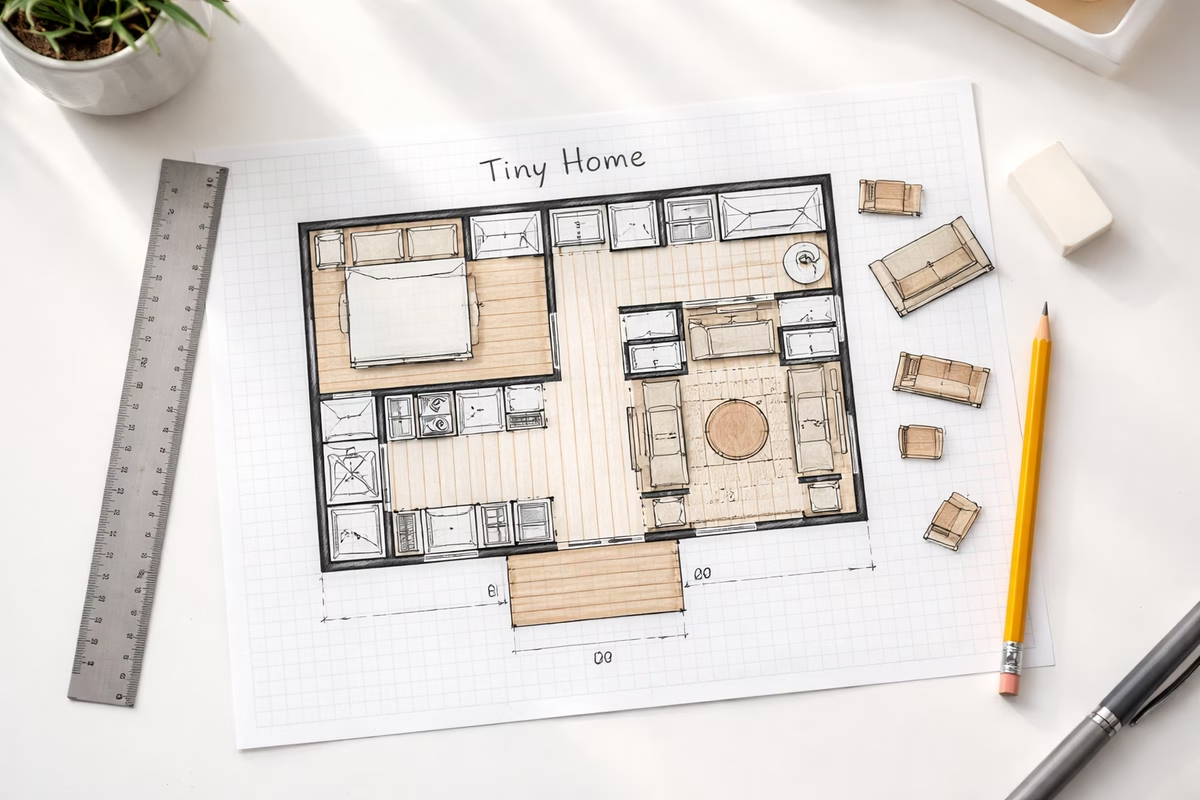
Space planning is where tiny homes make the leap from Pinterest inspiration to livable reality. The goal isn’t to hit some perfect square-foot number prescribed by a formula—it’s to allocate enough room for the activities you do most frequently and design away the friction that makes small spaces feel hard to live in.
As a starting point, many successful tiny layouts roughly allocate their space along these lines. Sleeping typically gets 50 to 80 square feet in a loft configuration, or 60 to 100 square feet if you keep the bed on the main floor. The kitchen usually claims 25 to 40 square feet, though you’ll want more if you’re someone who cooks daily rather than microwaves. Bathrooms range from 15 to 30 square feet, expanding toward the larger end if you want separation between functions or need to fit laundry equipment. Living space runs 40 to 80 square feet depending on how much hosting you do and what hobbies you pursue. Dedicated storage accounts for 20 to 40 square feet (or significantly more if you have outdoor gear or specialized equipment). And circulation—the pathways that let you actually move through all these zones—should claim roughly 15 to 20 percent of the total volume in some form.
But here’s the thing that really matters: it’s not about the exact ratio. It’s about whether you’ve honestly acknowledged your own priorities. If you work from home, your desk deserves proper daylight, reliable power, and acoustic separation—not a fold-down afterthought wedged into a corner. If you love cooking, you need counter run length and smart storage more than you need a spacious couch. Be ruthlessly honest about how you actually spend your days, and let that truth drive your space allocation.
Common Design Mistakes to Avoid
Design mistakes in tiny homes usually aren’t about aesthetics—they’re operational. They create a daily tax, a small but persistent friction that makes the home feel harder to live in than it needs to be. And because you experience these frictions multiple times a day in a tiny space, even minor design missteps can become major quality-of-life issues over time.
Over-designing is one of the most seductive traps. When every single inch is “special”—a clever mechanism here, a built-in feature there, a design detail everywhere—nothing is restful. Your eye has nowhere to land and relax. The fix is counterintuitive: leave some surfaces plain, some zones flexible, and some walls blissfully empty. Your brain needs visual rest stops.
Under-planning storage is the mistake that will haunt you the fastest. If you don’t proactively decide where every category of item lives, those items will live everywhere. On the counter, on the floor, on the stairs, on that chair you were supposed to sit in. Be obsessive about storage during the design phase so you can be relaxed about it during the living phase.
Ignoring weight is a trap specific to homes on wheels, but it’s a serious one. Materials, water tanks, built-ins, and all those “just one more thing” additions compound quickly. Design with a weight budget from day one, or you’ll discover the problem the hard way on a highway on-ramp.
Forgetting headspace is surprisingly common and universally regretted. A beautiful loft with stunning woodwork is absolutely not worth daily forehead bruises. Measure twice, bonk your head zero times.
Neglecting ventilation in a small volume amplifies every air quality issue—humidity builds up faster, cooking odors linger longer, and mildew risk skyrockets. Plan for cross-ventilation, an exhaust fan, and a dehumidification strategy before you finalize your layout.
Cramming in too much furniture is the instinct of someone still thinking in conventional-home terms. Favor built-ins that are tailored to your specific space rather than trying to squeeze standard-sized furniture into a decidedly non-standard envelope. Your pathways and your sanity will both benefit.
Inadequate lighting turns a small space into a cave, and nobody wants to live in a cave (unless you’re a bat, in which case, different design guide). Good, layered light makes the same space feel like a bright, airy studio. And finally, choosing fragile or precious finishes in a high-touch environment is a recipe for constant anxiety. Tiny homes get touched, bumped, and brushed against all day long. Choose materials that are durable and easy to clean, and save the delicate stuff for wall art.
If you only remember one thing from this entire guide, let it be this: design for the habits you already have, not the habits you hope you’ll develop. Your tiny home should work for the real you, not the aspirational you.
Next Steps
- Explore Building Codes and Legal Requirements
- Learn about Sustainable Systems
- Check out Interior Design Ideas
- Try our Space Planning Game
Remember: Great tiny home design is about thoughtful choices, not compromises. Every decision should enhance your quality of life while respecting your space limitations.