Tiny Home Glossary
Your comprehensive reference for tiny home terminology. From trailer specs to zoning codes, understand the language of tiny living.
A
Accessory Dwelling Unit (ADU): Secondary dwelling on same lot as primary residence. Also called backyard cottage, granny flat, in-law unit. Must meet local codes and zoning.
Advanced Framing: Building technique using less lumber (24" OC studs vs. 16") while maintaining strength. Reduces thermal bridging, allows more insulation.
AFCI (Arc-Fault Circuit Interrupter): Electrical breaker that prevents fires from arcing. Required by code in bedrooms and living areas.
Affineur: (Borrowed from cheese-making) Someone who perfects their tiny home systems over time, constantly refining and improving.
Amperage: Electrical current capacity. Tiny homes typically use 30-amp (mobile RV-style) or 50-amp service, vs. 100-200 amp for standard homes.
ANSI A119.5: Standard for park model RVs. Covers construction, plumbing, heating, and electrical systems for recreational vehicles under 400 sq ft.
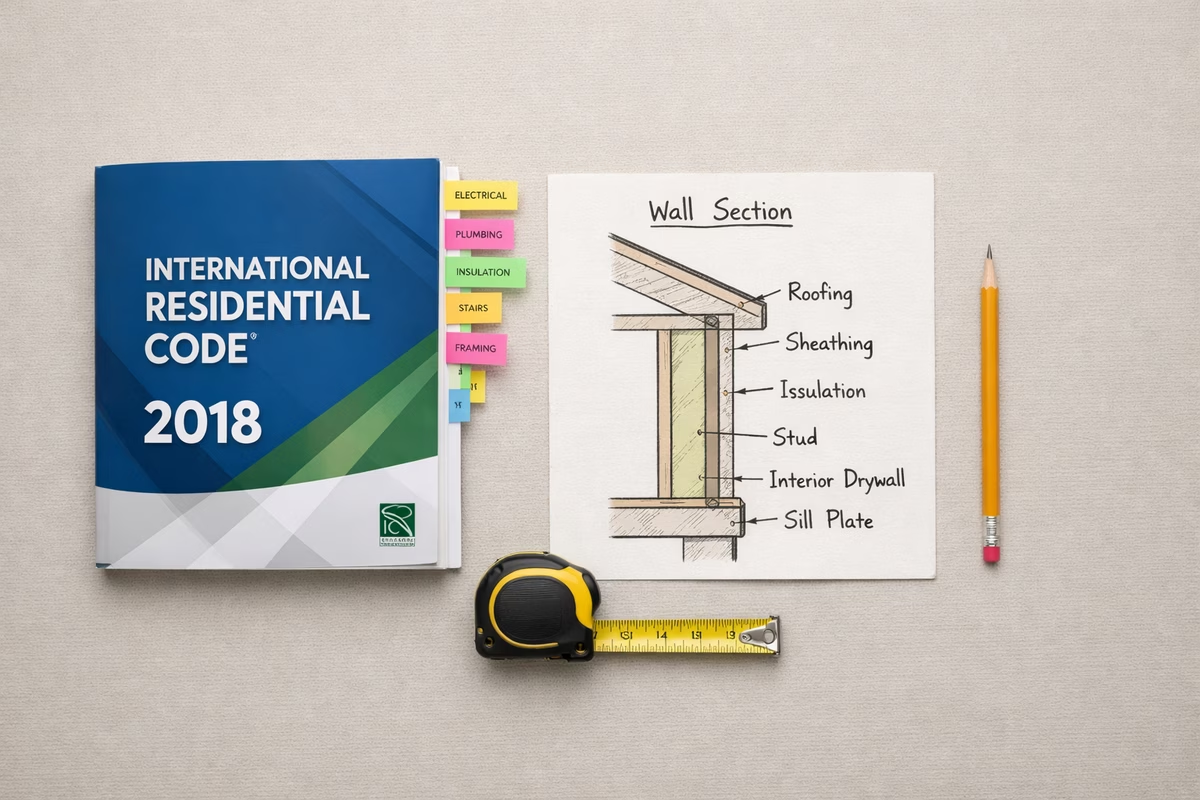
Appendix Q: Section of 2018 International Residential Code specifically addressing tiny houses. Allows reduced ceiling heights, ladder access to lofts, smaller rooms.
B
Balloon Framing: Obsolete framing method where studs run from foundation to roof. Platform framing (floor-by-floor) is standard now.
Belly Board: Skirting around bottom of tiny house on trailer, hiding wheels and creating enclosed storage/mechanical space.
Black Water: Waste from toilet. Requires special handling (septic, sewer, or composting).
Bloomy Rind: (Not applicable—wrong glossary!)
BTU (British Thermal Unit): Heat measurement. Tiny homes need 10,000-20,000 BTU heaters vs. 60,000+ for standard homes.
Building Envelope: Barrier between conditioned (heated/cooled) interior and exterior. Includes walls, roof, windows, doors. Critical for energy efficiency.
Built-In: Permanent furniture or storage integrated into structure. Maximizes space, customizes fit, doesn’t shift during travel.
C
Caulk: Sealant for gaps and seams. Critical in tiny homes to prevent air and water infiltration. Use exterior-grade polyurethane or silicone.
Ceiling Height: Vertical clearance from floor to ceiling. IRC requires 6'8" minimum (main floor). Appendix Q allows exceptions for tiny homes.
Chattel Loan: Financing for movable property (vs. real estate). Used for tiny homes on wheels. Similar to RV or auto loan.
Circulation Space: Area for moving through home. Minimum 2.5-3 ft wide for comfortable passage. Often 15-20% of total square footage.
Cladding: Exterior covering/siding. Options: wood, fiber cement, metal, vinyl. Must be lightweight for mobile tiny homes.
Composting Toilet: Waterless toilet that decomposes waste through aerobic process. Separates liquids from solids. Results in compost for non-food plants.
Conditioned Space: Area that is heated and/or cooled. All conditioned space must be insulated and sealed from unconditioned areas.
Conditional Use Permit (CUP): Special permit allowing use not typically permitted in zoning district. May have conditions attached (time limits, owner occupancy, etc.).
Cord (Electrical): Permanent wiring vs. extension cord. Tiny homes on wheels often use RV-style shore power cord (30 or 50 amp).
D
Dead Space: Unusable area. Examples: behind stairs, under low ceiling, awkward corners. Good design minimizes or utilizes dead space for storage.
Depth of Discharge (DoD): How much battery capacity can be used. Lead-acid: 50% DoD. Lithium: 80-100% DoD safe.
Downsize/Downsizing: Reducing possessions and space to live in smaller home. Essential step before tiny living. Often reduces belongings by 60-80%.
Drip Edge: Metal flashing along roof edge that directs water into gutters, prevents water intrusion under roofing.
Drop-Leaf Table: Table with hinged sides that fold down when not in use. Classic space-saving furniture.
E
Egress Window: Emergency escape window required in sleeping areas by building code. Minimum opening: 5.7 sq ft, 24" tall, 20" wide.
Electrical Panel: Breaker box distributing power to circuits. Tiny homes typically have 8-12 circuit panels vs. 20-40 for standard homes.
Electrical Rough-In: Installing wiring before insulation and walls. Inspected before covering.
Energy Recovery Ventilator (ERV): Ventilation system that exchanges stale indoor air with fresh outdoor air while recovering heat/cooling. Essential for tight tiny home envelopes.
F
Fiberglass Insulation: Common insulation type. R-3.5 per inch. Affordable but settles over time. Batts fit between studs.
Flashing: Thin material (usually metal) preventing water intrusion at joints, windows, doors, roof edges. Critical for weatherproofing.
Foam Board: Rigid insulation panels (XPS, EPS, polyiso). R-5 to R-6 per inch. Used for floors, exterior walls, roofs.
Footprint: Building’s ground-level area. Typical tiny home: 100-400 sq ft footprint (may have additional loft space).
Foundation: Base supporting structure. Tiny homes: trailer (mobile), concrete piers (semi-permanent), slab/crawlspace (permanent).
Framing: Structural skeleton of walls, floors, roof. Typically 2x4 or 2x6 lumber in tiny homes.
French Door: Double doors opening outward or inward. Brings in light, creates indoor-outdoor flow. Popular for tiny homes.
G
Galley Kitchen: Linear kitchen layout with counters/appliances along one or both walls. Most space-efficient for tiny homes.
GFCI (Ground Fault Circuit Interrupter): Outlet that shuts off power if ground fault detected. Required by code in bathrooms, kitchens, outdoors.
Gooseneck: Trailer hitch type extending over truck bed. Allows longer tiny home on same truck. Alternative to bumper-pull.
Gray Water: Wastewater from sinks, showers, laundry (not toilet). Can be filtered and reused for irrigation in many jurisdictions.
GVWR (Gross Vehicle Weight Rating): Maximum loaded weight trailer can safely carry, including trailer itself. Tiny home trailers typically 10,000-14,000 lbs GVWR.
H
Heat Pump: Efficient heating/cooling system. Moves heat rather than generating it. Mini-split heat pumps popular for tiny homes (300% efficiency).
Home Run: Electrical wiring running directly from panel to outlet/fixture without intermediary junction boxes. Allows flexible circuit layout.
HUD Code: Building standard for manufactured homes. Different from IRC. HUD-code homes have red certification label.
Hurricane Tie: Metal bracket securing framing members during high wind. Essential for tiny homes on trailers (secure to trailer frame).
I
ICC (International Code Council): Organization publishing building codes including IRC. Updates codes every 3 years.
Insulation: Material reducing heat transfer. R-value measures effectiveness. Tiny homes need high R-values: walls R-13 to R-21, roof R-30 to R-40.
Inverter: Converts DC battery power to AC household power in solar/off-grid systems. Pure sine wave type required for electronics.
IRC (International Residential Code): Building code for one- and two-family dwellings. Appendix Q addresses tiny houses specifically.
J
Joist: Horizontal framing member supporting floors or ceilings. Tiny home floor joists typically 2x6 or 2x8 on 16" centers.
Joist Hanger: Metal bracket supporting joist ends. Creates strong connection to rim joist or beam.
K
Kilowatt-Hour (kWh): Energy measurement. 1,000 watts used for 1 hour. Average tiny home: 5-15 kWh per day vs. 30 kWh for standard home.
King Stud: Full-height stud beside door/window opening, supports header.
L
Ladder Access: Vertical or near-vertical climbing access to loft. Appendix Q allows ladders for sleeping lofts (vs. requiring stairs).
Leveling Jacks: Adjustable supports raising and leveling tiny home when parked. Also called outriggers or stabilizers.
LiFePO4 (Lithium Iron Phosphate): Battery chemistry ideal for off-grid solar. Longer life, safer, lighter than lead-acid. Expensive upfront.
Load-Bearing Wall: Wall supporting weight from above (roof, upper floor). Requires proper header over openings.
Loft: Elevated platform creating second floor level, typically for sleeping. Appendix Q allows 3'6" minimum ceiling height.
LPG (Liquified Petroleum Gas): Propane. Common for tiny home cooking, heating, water heaters. Stored in tanks (20 lb portable or 100+ lb permanent).
LVP (Luxury Vinyl Plank): Waterproof flooring resembling wood. Durable, lightweight, DIY-friendly. Popular for tiny homes.
M
Micro Home: Extremely small dwelling, typically 80-150 sq ft. Smaller than standard tiny home (150-400 sq ft).
Mini-Split: Ductless heat pump with indoor unit(s) and outdoor compressor. Efficient heating/cooling for tiny homes. 9,000-12,000 BTU common.
Moisture Barrier: Material preventing water/vapor transmission. Under trailer flooring, under siding, in insulation systems.
MPPT (Maximum Power Point Tracking): Efficient solar charge controller type extracting maximum power from panels. 96-99% efficient vs. 75-80% for PWM.
Multi-Function: Furniture or space serving multiple purposes. Essential in tiny homes. Example: ottoman = seating + storage + coffee table.
Murphy Bed: Bed folding into wall when not in use. Also called wall bed. Saves 30-40 sq ft of floor space during day.
N
NFPA 1192: National Fire Protection Association standard for recreational vehicles. Alternative to ANSI A119.5 for THOW certification.
Net-Zero: Building producing as much energy as it consumes annually. Achievable for tiny homes with sufficient solar panels.
Non-Potable Water: Water not safe for drinking. Gray water, rainwater (before treatment). Can be used for irrigation, toilet flushing.
O
Off-Grid: Independent from utility connections (electric, water, sewer). Requires solar/generator, water catchment/well, composting toilet/septic.
On-Center (OC): Spacing measurement from center of one framing member to center of next. 16" OC or 24" OC common for studs and joists.
Outrigger: See Leveling Jacks.
Overhang: Roof extension beyond walls. Provides shade, rain protection for walls/windows, passive solar control.
P
Park Model RV: RV classification for units 400 sq ft or less, built to ANSI A119.5 standard. Transportable but designed for seasonal placement.
Passive Solar: Designing building to collect, store, and distribute solar heat naturally. South-facing windows (Northern hemisphere), thermal mass, overhangs.
PDO (Protected Designation of Origin): (Wrong glossary—that’s for cheese!)
PEX (Cross-Linked Polyethylene): Flexible plastic plumbing pipe. Easier to install than copper, freeze-resistant, affordable. Color-coded: red (hot), blue (cold).
Pier Foundation: Permanent foundation using concrete piers/blocks supporting tiny home frame. Allows airflow underneath, adjustable leveling.
Platform Framing: Standard framing method building floor-by-floor. Floor platform, then walls, then next floor/roof.
Plumbing Rough-In: Installing supply and drain pipes before walls/floors finished. Inspected before covering.
Potable Water: Water safe for drinking. Requires filtration/treatment if from well or rainwater.
Propane: See LPG.
PWM (Pulse Width Modulation): Basic solar charge controller type. Less efficient (75-80%) than MPPT but cheaper. OK for small systems.
Q
Quarter-Sawn: Wood cut method showing vertical grain. More stable, less prone to warping. Premium appearance.
R
R-Value: Insulation effectiveness measurement. Higher = better. Walls: R-13 to R-21. Roof: R-30 to R-40. Floor: R-10 to R-20.
Radiant Barrier: Reflective material reducing radiant heat transfer. Often foil-faced insulation in roof. Helps in hot climates.
Rainwater Catchment: Collecting roof runoff for use. Storage tanks, filtration, pump. 1" rainfall on 200 sq ft roof = 125 gallons collected.
Reclaimed Materials: Salvaged building materials from demolition. Reduces cost and environmental impact. Popular: barn wood, windows, doors.
Rim Joist: Perimeter joist at floor edge. Provides nailing surface for wall bottom plate.
Road Legal: Dimensions allowing highway travel without special permits. 8.5 ft wide, 13.5 ft tall, varies by state for length (typically 65 ft max).
Romex: Brand name for non-metallic electrical cable (NM-B). Contains insulated wires in plastic sheath. Standard for residential wiring.
RVIA (Recreational Vehicle Industry Association): Organization certifying RVs including some tiny homes on wheels. Certification allows parking in RV parks.
S
Safety Glazing: Tempered or laminated glass required near doors, in bathrooms, for shower doors. Breaks into small pieces vs. sharp shards.
Setback: Minimum distance from property line to building. Zoning requirement. Typical: 5-25 ft depending on zone and property line (front, side, rear).
Sheathing: Structural panels (plywood or OSB) covering framing. Provides rigidity, nailing surface for siding, weather barrier.
Ship’s Ladder: Steep staircase (50-70 degrees) with alternating treads. Space-saving loft access. Appendix Q allows for tiny homes.
Shore Power: Electrical power from external source (vs. batteries). RV-style connection for tiny homes on wheels.
Sill Plate: Bottom horizontal framing member, bolted to foundation or trailer. Also called bottom plate.
Sleeping Loft: See Loft.
Solar Charge Controller: Regulates power from solar panels to batteries. Prevents overcharging. Types: PWM, MPPT.
Solar Panel: Photovoltaic panel converting sunlight to electricity. Monocrystalline (most efficient), polycrystalline, thin-film.
Spray Foam Insulation: Expanding foam insulation sprayed into cavities. High R-value (R-6 to R-7 per inch), air sealing, moisture barrier. Expensive but effective.
Square Footage: Floor area measurement. Tiny homes: 100-400 sq ft total. Some jurisdictions have minimums (often 120-600 sq ft).
Standing Seam Metal Roof: Metal roofing with raised seams. Lightweight, durable (50+ years), no penetrations. Premium option for tiny homes.
Stud: Vertical framing member in walls. Typically 2x4 or 2x6, spaced 16" or 24" on center.
Subfloor: Structural floor surface (plywood or OSB) over joists, under finish flooring.
T
Tankless Water Heater: On-demand water heater with no storage tank. Heats water instantly as it flows through. Electric or propane. Saves space and energy.
Tempered Glass: Heat-treated glass that breaks into small granules vs. sharp shards. Required for safety glazing.
Thermal Bridge: Path for heat transfer through insulation. Studs, nails create thermal bridges. Reduce with advanced framing, foam sheathing.
Thermal Mass: Material storing heat energy. Concrete, tile, water. Used in passive solar design to moderate temperature swings.
THOW (Tiny House on Wheels): Tiny home built on trailer chassis. Mobile but often parked semi-permanently. Classified as RV if RVIA certified.
Tiny Home: Small dwelling typically 100-400 sq ft. May be on wheels (mobile) or foundation (permanent).
Tiny Home Community: Development or park designed for tiny homes. May be RV park, subdivision, or co-housing model.
Toe-Kick: Recessed space at cabinet base for toes. In tiny homes, often contains shallow drawers for storage.
Tongue Weight: Downward force trailer tongue exerts on hitch. Should be 10-15% of total trailer weight for safe towing.
Towing Capacity: Maximum weight vehicle can safely tow. Tiny homes often require 3/4-ton or 1-ton truck (12,000+ lb capacity).
Trailer: Foundation for mobile tiny home. Not RV or utility trailer—specifically designed for tiny houses with proper frame.
Triple-Pane Windows: Windows with three layers of glass, two insulating air spaces. Superior insulation (U-0.20) vs. double-pane (U-0.30).
U
U-Value: Measurement of heat transfer through material (inverse of R-value). Lower = better. Windows rated by U-value.
UL Listed: Underwriters Laboratories certification for safety. Look for on appliances, electrical components.
Unconditioned Space: Area not heated/cooled. Under-trailer space, mechanical closets. Should be separated from conditioned space.
Urea-Formaldehyde: Toxic chemical in some building products (OSB, plywood, insulation). Choose formaldehyde-free or low-VOC products.
V
Vapor Barrier: Material preventing water vapor transmission. Required in insulation systems, always on warm side. 6-mil polyethylene common.
Variance: Exception to zoning regulation granted by jurisdiction. Requires application, hearing, fee ($500-2,000). Not guaranteed.
Ventilation: Air exchange system. Critical in tight tiny home envelopes to prevent moisture, indoor air quality issues. Passive (windows) or active (ERV, fans).
Vertical Space: Wall and ceiling area available for storage, design. “Think vertical” is tiny home mantra.
W
Watt: Power measurement. Volts x Amps = Watts. Tiny home electrical loads typically 500-2,000 watts at any moment.
Watt-Hour (Wh): Energy measurement. 1 watt used for 1 hour. Tiny homes use 5,000-15,000 Wh daily.
Weatherization: Sealing building envelope against air and water infiltration. Caulk, weatherstripping, flashing, proper installation.
Well: Drilled water source. Requires pump, pressure tank, filtration. Cost: $5,000-15,000 depending on depth.
Window Flashing: Water-resistant material around window perimeter preventing water intrusion. Layered properly (bottom first, sides, top last).
X
XPS (Extruded Polystyrene): Rigid foam insulation. Pink or blue boards. R-5 per inch. Moisture-resistant. Good for floors.
Y
Yurt: Circular tent-like structure, not technically a tiny home but similar alternative dwelling. Portable, affordable, unique aesthetic.
Z
Zero-Entry Shower: Shower with no curb or threshold. Accessible design. Requires proper drainage slope.
Zone: Defined area within home serving specific function (sleeping zone, kitchen zone, etc.). Also: zoning district for land use regulations.
Zoning: Land use regulations specifying what can be built where. Residential, commercial, agricultural, etc. Dictates if/where tiny homes allowed.
Zoning Variance: See Variance.
Quick Reference: Common Abbreviations
- ADU: Accessory Dwelling Unit
- AFCI: Arc-Fault Circuit Interrupter
- BTU: British Thermal Unit
- CUP: Conditional Use Permit
- DoD: Depth of Discharge
- ERV: Energy Recovery Ventilator
- GFCI: Ground Fault Circuit Interrupter
- GVWR: Gross Vehicle Weight Rating
- HUD: Department of Housing and Urban Development
- HVAC: Heating, Ventilation, Air Conditioning
- IRC: International Residential Code
- kWh: Kilowatt-Hour
- LPG: Liquified Petroleum Gas (propane)
- LVP: Luxury Vinyl Plank
- MPPT: Maximum Power Point Tracking
- NFPA: National Fire Protection Association
- OC: On-Center
- PDO: Wait, wrong glossary again!
- PEX: Cross-Linked Polyethylene
- PWM: Pulse Width Modulation
- RVIA: Recreational Vehicle Industry Association
- THOW: Tiny House on Wheels
- VOC: Volatile Organic Compound
- XPS: Extruded Polystyrene
Measurement Conversions
Square Footage:
- 1 square = 100 sq ft
- 400 sq ft = 20 ft x 20 ft (typical large tiny home)
- 200 sq ft = 10 ft x 20 ft (typical small tiny home)
R-Value Targets:
- Warm climates: Walls R-13, Roof R-30, Floor R-10
- Cold climates: Walls R-20, Roof R-40, Floor R-20
Solar System Sizing:
- Daily use (Wh) ÷ sun hours = panel watts needed
- Daily use (Wh) x 2-3 days = battery capacity (Wh)
Water Usage:
- 1 inch rain on 1 sq ft = 0.623 gallons
- 1 person uses 20-50 gallons/day (tiny home average: 25)
Master this vocabulary and you’ll confidently discuss tiny homes with builders, navigate zoning boards, understand building codes, and impress at tiny home gatherings!