Designing Your Dream Interior
Tiny home interior design is not “regular interior design, but smaller.” It’s closer to designing a boat cabin: every inch has a job, movement paths matter, storage has to be planned like a system, and the space needs to feel calm even when life gets messy.
The good news is that small spaces are incredibly teachable. When you design a tiny home well, you feel it immediately: you can move through the space without bumping hips, you can put things away without playing Tetris, and the home looks good because it’s organized by default.
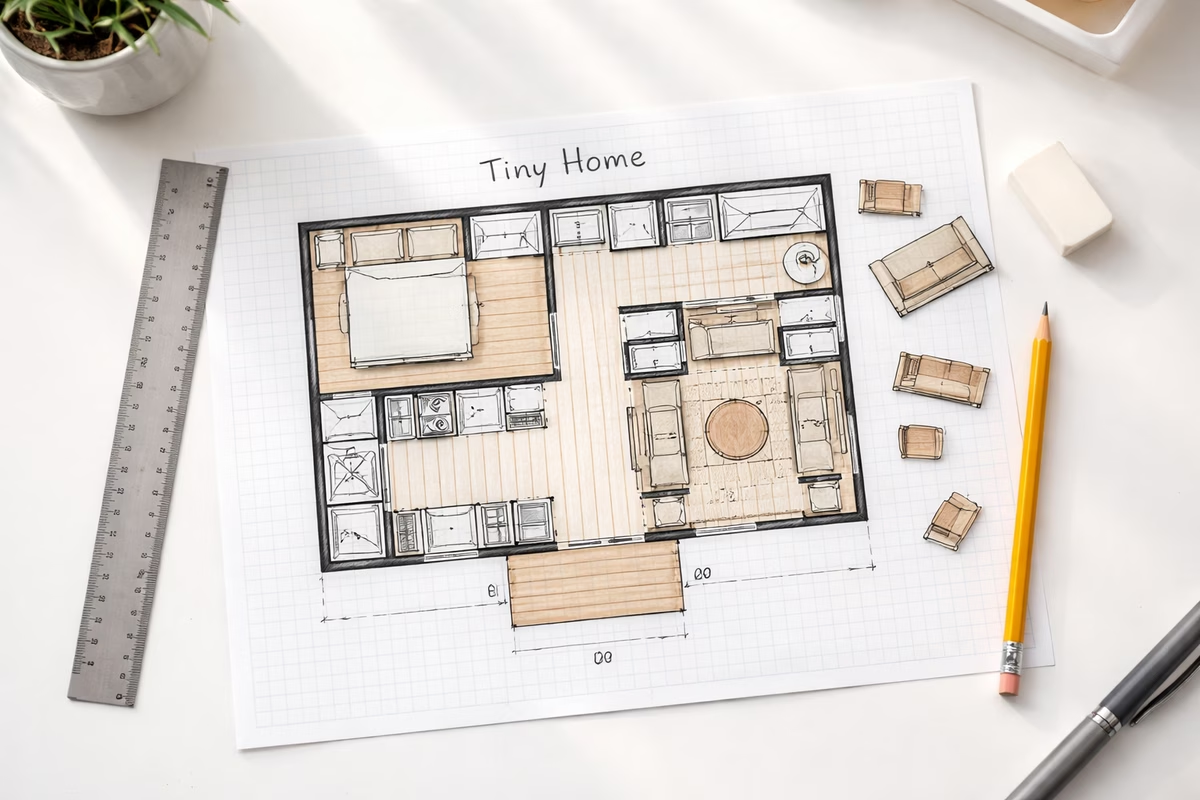
This guide gives you a practical approach: start with layout and zones, choose furniture that supports real habits, build storage that prevents clutter, then use color, light, and finishes to make the space feel larger and more personal.
Layout Principles
Open Concept Maximizes Space
Open concept works in tiny homes for the same reason it works in small apartments: the eye can travel, daylight can travel, and you avoid the “hallway tax” of walls that steal square footage.
But “open” shouldn’t mean “undefined.” Tiny homes feel best when you can identify zones at a glance—sleep, cook, work, relax—without building walls. Use softer boundaries instead: a change in lighting, a rug, a shift in ceiling height, a bench that subtly divides the living area from the kitchen, or a shelf that creates a visual edge while staying airy.
The Living Zones
Think in zones, not rooms. In a tiny home, the same square footage often has to do double duty depending on time of day.
Sleeping zone (often 50–80 sq ft of “dedicated” area)
The biggest decision is loft vs. main floor. A loft can be an excellent use of vertical volume because sleeping doesn’t require standing height, and it preserves valuable main-floor space for living and kitchen function. The trade-off is access (ladder or stairs) and sometimes heat management.
A main-floor bed is a better “aging in place” solution and often feels calmer for people who dislike climbing. If you go main-floor, consider Murphy-bed-style solutions or a platform that integrates serious storage so you don’t sacrifice functionality.
Living zone (often 40–80 sq ft)
Your living zone should support how you actually spend evenings. If you host, prioritize comfortable seating and an expandable surface. If you work from home, prioritize a genuinely usable desk/work surface over decorative shelves.
In tiny homes, multifunction is your friend, but it must be frictionless. A lift-top table is great if you’ll actually lift it. A convertible sofa is great if you’ll actually convert it. Designs that require ten steps and re-staging the entire room rarely survive daily life.
Kitchen zone (often 25–40 sq ft)
Tiny kitchens can feel surprisingly spacious if the workflow is right. Aim for an efficient work triangle, enough counter run to prep without constantly moving appliances, and storage that supports your real cooking style (spices, coffee gear, pots/pans).
Bathroom zone (often 15–30 sq ft)
In bathrooms, comfort comes from layout clarity. Keep the shower and toilet from fighting each other, use hooks more than bars, and prefer recessed or wall-mounted storage wherever possible.
Storage “zone” (distributed rather than concentrated)
In a tiny home, storage isn’t one closet; it’s a network: under-bed, under-bench, above-door, toe-kick drawers, staircase storage, and high shelves for seasonal items. The goal is to make “putting things away” a one-step action.
Furniture Selection
Size Matters
Tiny spaces punish guessing. Measure your room and map the furniture footprint on the floor with painter’s tape or cardboard. You’re not just checking whether it “fits”; you’re checking whether you can walk past it, open cabinet doors, and sit down without hitting your knees.
As a general rule, scale down both length and depth. A loveseat often outperforms a full sofa. Slim-profile furniture (shallower depth) keeps walkways usable. And in small spaces, the best table is the one that disappears or collapses when you don’t need it.
Furniture Dimensions Guide:
| Item | Standard | Tiny Home | Space Saved |
|---|---|---|---|
| Sofa | 84" x 36" | 60" x 30" | 22.5 sq ft |
| Dining table | 72" x 36" | 48" x 24" | 10 sq ft |
| Bed (Queen) | 60" x 80" | 54" x 75" | 6.5 sq ft |
| Refrigerator | 36" x 30" | 24" x 24" | 2 sq ft |
Multi-Functional Furniture
Multifunction furniture is most useful when it removes an entire category of object from your home. A lift-top table can eliminate a dedicated desk. A storage ottoman can replace a side cabinet. Nesting tables can replace a full-size coffee table.
Murphy beds are particularly powerful for main-floor sleeping because they give you the square footage back during the day. But the best multifunction choice depends on your life: if you host, prioritize a flexible table; if you work, prioritize a reliable work surface; if you have hobbies, prioritize storage that makes setup and teardown easy.
Built-In vs. Freestanding
Built-ins are a secret weapon in tiny homes because they can be tuned to your exact dimensions and can hide storage in places freestanding furniture can’t. They also don’t shift during travel if your tiny is on wheels.
But freestanding pieces keep you flexible. If you’re early in your tiny journey, it’s often wise to keep living room pieces freestanding while you learn what you actually use.
A sensible hybrid approach is common: build-in the infrastructure (kitchen, bathroom, stairs, bed platform) and keep the lifestyle layer flexible (chairs, table, decor).
Storage Solutions
The Golden Rule: 40% Storage
Storage is what makes a tiny home feel either serene or chaotic. A useful rule of thumb is to plan for “more storage than you think,” because the penalty for having nowhere to put an object is clutter on every surface.
Aim for a balance: a little visible storage is great for daily-use items and personality, but most storage should be hidden so the home can visually reset.
Clever Storage Ideas
The best tiny-home storage is designed around motion. Ask: “Where do my hands go when I’m doing the task?” Put storage there.
Vertical storage is the biggest lever: shelves close to the ceiling for seasonal items, wall-mounted rails for tools, and tall cabinets where they make sense. Then harvest “dead space”: toe-kick drawers, stair compartments, above-door shelves, corners.
In kitchens and bathrooms, the goal is to keep countertops clear. A narrow pull-out pantry, drawer organizers, and wall-mounted storage can do more than extra counter space.
Color and Light
Color Psychology for Small Spaces
Color is one of the fastest ways to change perceived space. Lighter colors reflect more light, which often makes the room feel larger and calmer. Dark colors can be beautiful in tiny homes too—they create a cozy “cocoon”—but they tend to work best as accents or in spaces where you want intimacy (a sleeping nook, a reading corner).
If you want the simplest, most flexible approach, use a neutral base (white/cream/light gray) and bring personality through textiles, art, plants, and one accent color. You can evolve your style without repainting the entire home.
Lighting Strategy
Lighting is the difference between “cute tiny home” and “tired cramped box.” Use layered lighting so the home works for different modes.
Start with ambient light that can fill the whole space, preferably dimmable. Add task lighting where you work—kitchen prep and reading are the two big ones. Then add a little accent light (a strip under stairs, a wall sconce) to create depth at night.
Natural light is the best “decor.” If you’re designing from scratch, prioritize windows where you spend time, and keep window treatments light so you don’t block daylight.
Materials and Finishes
Flooring
In tiny homes, materials have two extra constraints: weight (especially on wheels) and moisture (small spaces concentrate humidity). Flooring should be durable, easy to clean, and forgiving.
Luxury vinyl plank (LVP) is popular because it’s waterproof, lightweight, and DIY-friendly while still giving a wood look. Laminate can work if your home is dry and you’re careful, but it’s less forgiving with spills. Cork is comfortable and warm underfoot, but it needs proper sealing.
If you’re on wheels, heavy materials add up quickly. Tile looks great but is heavy and brittle in mobile contexts. Hardwood can be beautiful but expensive and sensitive to moisture.
For perceived space, continuity helps: one floor throughout makes the home feel larger by removing visual breaks.
Wall Treatments
Walls do a lot of emotional work in a tiny home. Smooth painted drywall is simple and flexible. Shiplap and tongue-and-groove add texture and a “cabin” warmth. Plywood paneling can deliver a Scandinavian feel at a reasonable cost, especially with a clear coat.
If you’re unsure, choose the most neutral wall solution you can live with and add personality through lighting and textiles. Paint is a cheap change; built-in paneling is a commitment.
Countertops
Countertops in tiny homes are mostly about durability and maintenance. Butcher block looks warm and can be refinished, but it needs sealing. Laminate is affordable and practical, though the look varies. Quartz is durable and easy to maintain but heavy and expensive. Concrete can look great but requires sealing and thoughtful installation.
Decorating Tips
Less is More
The best decoration strategy in a tiny home is to protect “visual calm.” Clear surfaces are not sterile—they’re restful. The easiest way to maintain calm is to decide that every item must either be useful or genuinely loved.
The one-in-one-out rule is blunt but effective: if something new enters, something old leaves. It prevents slow clutter creep.
Add Personality
Personality doesn’t require clutter. In small spaces, a few deliberate choices read louder than dozens of small ones.
If you want a simple formula: one strong rug or runner, a few plants placed where they get light, and a small gallery of art that matters to you. If you like seasonal change, swap textiles (throws, pillow covers) instead of buying more objects.
Create Focal Points
Focal points help a tiny space feel designed rather than improvised. You don’t need many—one per zone is plenty. A statement light fixture, a great piece of art, or a beautiful window view can do more than a dozen small decorations.
Texture Over Pattern
Patterns can overwhelm quickly in small spaces. Texture is safer. Mixing a few textures—wood, linen, a nubby rug, matte metals—adds richness without visual noise.
Common Mistakes to Avoid
Most tiny-home interiors fail for predictable reasons.
They cram in too much furniture, leaving no breathing room. They choose pieces that are the wrong scale. They ignore vertical space. They block light. They don’t build a true “home” for objects, so clutter lands on every surface. Or they copy a showroom aesthetic that doesn’t match real habits.
If you want one practical benchmark: keep clear walk paths and protect at least a little visible floor so the room can visually rest.
Style Inspiration
Modern Minimalist
Characteristics:
- White/gray palette
- Clean lines, no ornamentation
- Hidden storage
- Sleek appliances
- Minimal decor
Furniture:
- Low-profile sofa
- Simple shelving
- Integrated appliances
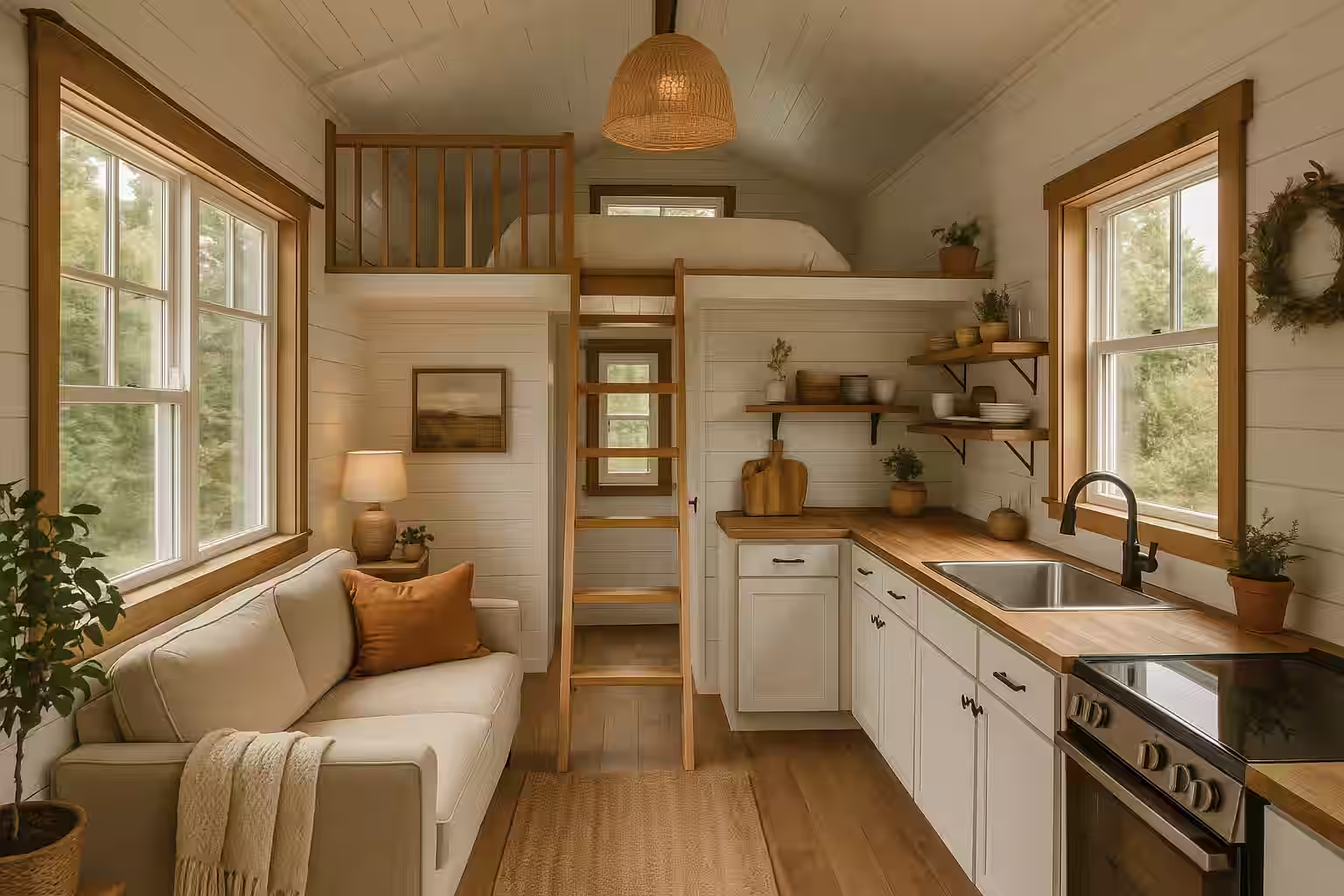
Rustic/Farmhouse
Characteristics:
- Natural wood (stained or painted white)
- Shiplap walls
- Vintage accents
- Warm, cozy
- Open shelving
Furniture:
- Reclaimed wood table
- Vintage finds
- Farmhouse sink
Scandinavian
Characteristics:
- Light wood (birch, ash)
- White walls
- Pops of color (muted)
- Functional, simple
- Lots of natural light
Furniture:
- Clean-lined wood pieces
- Minimal decor
- Woven baskets
Industrial
Characteristics:
- Exposed structure
- Metal accents
- Concrete or wood floors
- Edison bulbs
- Pipe shelving
Furniture:
- Metal-framed bed
- Industrial shelving
- Vintage metal lockers
Bohemian
Characteristics:
- Layered textiles
- Plants everywhere
- Global accents
- Warm colors
- Eclectic mix
Furniture:
- Low seating
- Moroccan rug
- Macrame, textiles
Next Steps
- Explore Design Principles for space planning
- Check Building Guide for built-in construction
- Browse Tiny Home Database for real interior inspiration
Your tiny home interior should be a reflection of you—functional, beautiful, and thoughtfully designed. Start with layout and storage, then layer in your personal style to create a space you truly love.