Welcome to Tiny Living!
You can spend weeks watching tiny house tours and still feel unsure where to begin. This quickstart is meant to do the opposite: give you a clear mental model in one sitting.
Time to Complete: 30 minutes
By the end you’ll be able to answer the questions that actually determine whether tiny living is a fit: What kind of tiny home are you considering, where will it go, what constraints will shape the design, and what your next realistic steps are.
Part 1: Understanding Tiny Homes (5 minutes)
What Defines a Tiny Home?
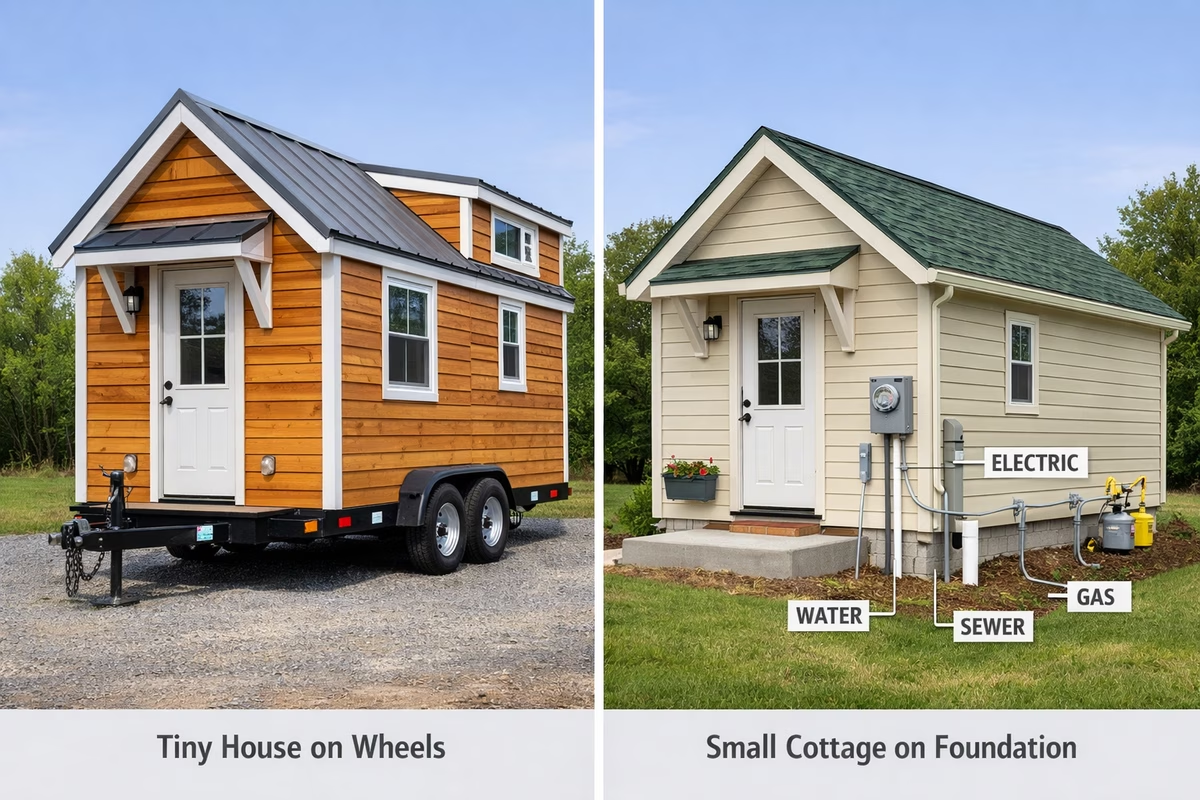
A tiny home is usually defined less by aesthetics and more by constraints. Most fall somewhere around 100–400 square feet of living space. The category splits into two big legal/engineering buckets: on wheels (built on a trailer) and on a foundation (permanent, like a very small house). And underneath the construction, there’s a lifestyle philosophy: fewer things, fewer fixed costs, and more deliberate use of space.
The Two Main Categories
Tiny House on Wheels (THOW)
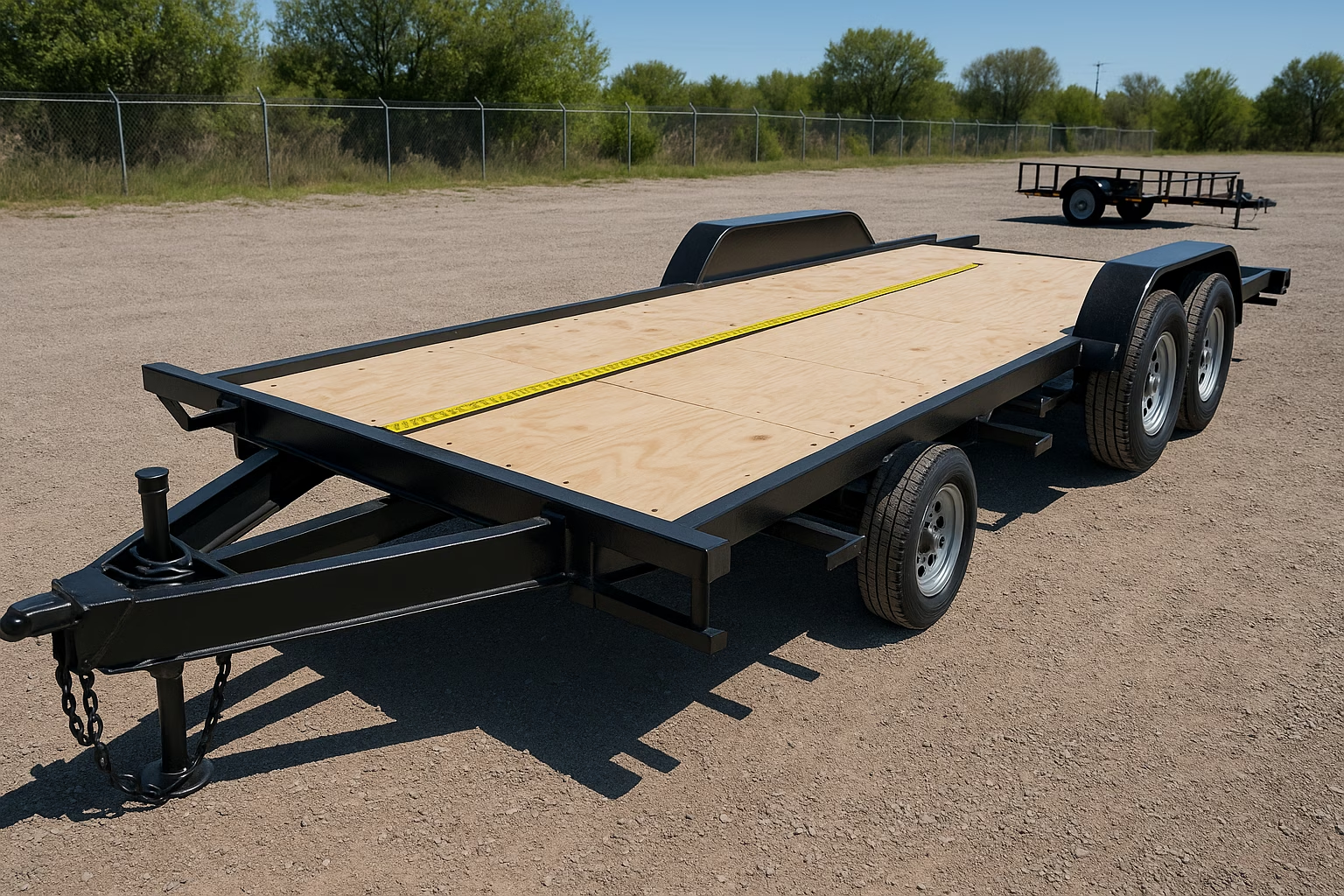
A THOW is built on a trailer chassis and designed to fit within road limits. In many places that means roughly 8.5 feet wide and about 13.5 feet tall, with lengths often in the 16–28 foot range. Here’s the important part: “mobile” doesn’t necessarily mean you’re towing it every weekend. Many THOW owners park semi-permanently, but the wheels can help navigate zoning, land access, and lifestyle flexibility.
Depending on where you plan to park, you may hear about RV classification and RVIA certification. Think of this as a paperwork and compliance layer that can make some parking situations easier.
Tiny House on Foundation
A foundation-built tiny is essentially a small house. That usually means clearer permitting paths and standard utility hookups, but it also means you’re more directly inside local building and zoning codes. The upside is design freedom (width, layout, roofline) and long-term stability; the downside is less flexibility and sometimes minimum square footage rules.
Why Go Tiny?
People go tiny for two reasons that tend to reinforce each other: money and meaning.
Financially, a tiny home can reduce fixed costs: build/purchase price, utilities, and ongoing maintenance. Lifestyle-wise, the smaller footprint forces decisions: you keep what you use, you design storage around real habits, and you can spend more time outside the house because the “inside” is efficient rather than sprawling.
But the challenges are real. Space is the obvious one. The less obvious ones are legal complexity, financing, and the fact that resale and insurance can vary depending on whether your tiny is treated like a house, an RV, or something in between.
Part 2: Is Tiny Living Right for You? (5 minutes)
Self-Assessment
Before you sketch floor plans, do a fast reality check. Tiny living works best when your lifestyle already leans simple—or when you’re honestly excited to become simpler.
Ask yourself:
Can you downsize by 70–80%? Not overnight, but over time. Tiny homes punish “just in case” ownership, especially in clothing and kitchen gear.
Who will live there? Solo living can work in 100–200 sq ft if the layout is efficient. Couples often feel best around 200–300 sq ft. Add a child and most people want 300–400 sq ft minimum, plus an honest plan for privacy. Multiple kids usually pushes you into “small house” territory.
Where will it go? This is the question that decides everything. If you can’t legally place the home, the rest is daydreaming. Your placement options will also decide whether you need RV-style compliance, an ADU permit path, or a foundation build.
What’s your budget and timeline? DIY can be lower cost but higher time and stress (often 6–18 months). Hiring can be faster (often 3–6 months) but materially more expensive. Many successful builds are hybrid: pay professionals for the things that can become dangerous or expensive mistakes (electrical, plumbing, structural work) and DIY the finish work.
If your green flags are “I’m excited to downsize,” “I’m flexible on location,” and “I can tolerate complexity,” you’re a good candidate. If your non-negotiables are lots of stuff, lots of space, and living in a restrictive urban core with no flexibility, consider a small apartment or small house instead—there’s no shame in that.
Part 3: Key Decisions (10 minutes)
Decision 1: Mobile or Permanent?
This is the fork in the road. Choose wheels if flexibility and placement options matter most, if you may move, or if you expect zoning to be challenging and RV-style pathways might help. Choose a foundation build if you’re committed to a location, want a clearer permitting path, and want the home to behave like a traditional house (including utilities and financing options).
Decision 2: DIY or Professional Build?
DIY vs. hired is less about pride and more about risk management. DIY can save tens of thousands in labor and gives you total customization, but most first builds take longer than expected and mistakes can be expensive. Hiring a builder is faster and often comes with a warranty, but it demands trust and budget.
The “smart middle” for many beginners is hybrid: hire out structural work and the systems you don’t want to learn by trial (electrical/plumbing), and do the interior finish work yourself.
Decision 3: New Build or Buy Used?
Buying used can be one of the best beginner moves. You may save 30–50% versus a new build, and you get a layout that has been lived in (which often reveals what actually works). The downside is that you inherit someone else’s choices, and you must evaluate condition carefully.
If you build new, you can optimize around your habits—but you pay with time, attention, and usually money.
Decision 4: Off-Grid or Grid-Connected?
Off-grid capability is exciting, but it’s a systems project. Solar + batteries can be a $10k–$25k choice depending on usage. Water and waste solutions range from simple to complex depending on location and local rules. Grid-connected setups are usually cheaper and easier to live with day-to-day.
Many happy tiny owners choose a hybrid: grid power with some solar backup, city water with light rain capture, and efficient fixtures rather than full reinvention.
Part 4: Legal Essentials (5 minutes)
Quick Legal Overview
Zoning is the Biggest Challenge
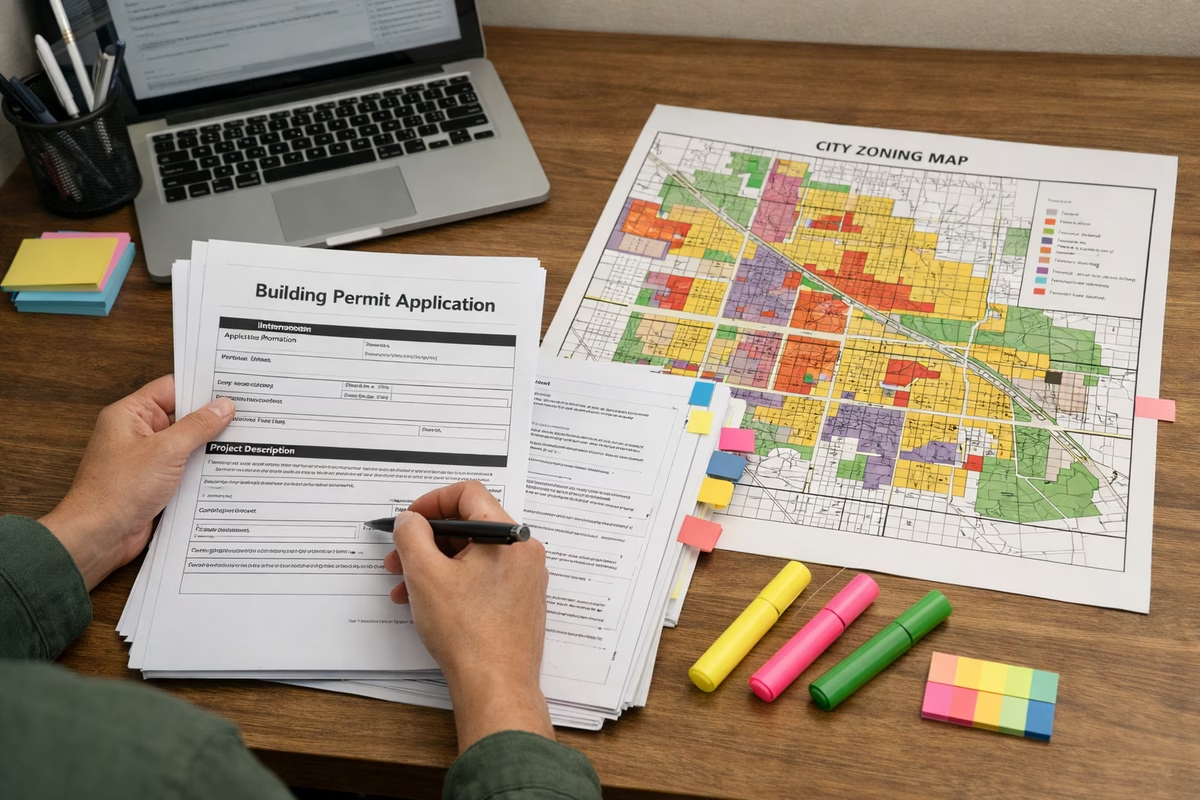
Most zoning codes weren’t written for tiny homes. The three common blockers are minimum square footage rules, “primary dwelling” restrictions (where a tiny can only be an ADU), and RV parking rules.
Beginner-friendly placement paths often look like:
Rural/agricultural land, where rules can be looser (but access to utilities and services may be harder).
ADU placement on an existing property, where a city may already have a clear process (but setbacks and hookups matter).
Tiny home communities, which solve legal placement through an RV park or a planned tiny subdivision (often with fees but with fewer surprises).
RV-classification pathways (including RVIA certification in some contexts), which can open up RV parks and certain permits.
Building Codes:
Appendix Q (an IRC appendix written for tiny houses) is increasingly adopted and can make compliance more straightforward. A THOW may fall into RV-style certification frameworks depending on where you plan to place it. A foundation-built tiny will typically fall under standard IRC and local interpretations.
Action item: call the local building department before you buy land or start a build. Ask four questions: minimum square footage, ADU rules, whether tiny homes on wheels are allowed, and whether Appendix Q is adopted.
Part 5: Cost Breakdown (3 minutes)
Realistic Budgets
Tiny home budgets often fail because people price the box and forget the context. The structure matters, but land, hookups, and permitting are frequently the swing factors.
As a starting point, a DIY build on wheels often ends up in the $23.5k–$40k range once you include trailer, materials, systems, and at least some tool spend. A professionally built THOW commonly lands around $50k–$90k depending on build quality and interior finish.
Foundation-built tinies vary dramatically by region and code requirements, but $36k–$73k is a plausible band for a small foundation, basic build costs, and systems—before you add land or major site work.
The “don’t forget” costs are where first-timers get surprised: land (if needed), permits, utility connections, furnishings that actually fit, and towing/delivery for mobile units.
Part 6: Your Next Steps (2 minutes)
Immediate Actions (This Week)
This week, don’t try to solve everything—solve one thing: clarity.
First, skim Design Principles so you understand why some tiny layouts feel calm and others feel cramped. Then, watch a few tours to build intuition. If possible, visit or rent a tiny home for a weekend; there’s no substitute for living inside the constraints.
In parallel, run three small “reality checks”: get a rough budget, start decluttering, and make one call to your building department or zoning office so you know whether placement is feasible.
Short-Term Actions (This Month)
Over the next month, you’re moving from inspiration to plan. If you’re DIY-curious, read Building Guide to understand the real sequence of work. If placement is uncertain, start with Legal Requirements so you don’t design a home you can’t legally place. If you’re considering off-grid systems, scan Sustainable Systems and decide whether you want full independence or a lighter hybrid.
At the same time, start location scouting and sketching. “Must-haves vs. nice-to-haves” is the core tiny home discipline—small spaces punish wishful thinking, and they reward honest priorities.
Long-Term Actions (3-6 Months)
Planning Phase:
- Finalize floor plans
- Get permits (if required)
- Order/purchase trailer
- Line up help (if DIY)
- Purchase/secure land
Building Phase:
- Order materials
- Begin construction (DIY or hire)
- Schedule inspections
- Progress systematically
Completion Phase:
- Final inspections
- Arrange utilities/hookups
- Move in possessions
- Celebrate!
Common Beginner Mistakes to Avoid
Most beginner mistakes come from trying to solve the fun parts first.
The biggest error is building before you’ve solved land and legality. Don’t assume you can “figure it out later.” After that, the common failures are budget optimism (add a 20% buffer), timeline optimism (first builds often take twice as long), and designing for an imaginary future self rather than your actual habits.
If you’re building on wheels, weight is a real engineering constraint. Every “nice material” choice has a weight cost, and trailer limits are not suggestions.
Inspiration & Resources
Websites:
- Tiny House Alliance USA
- The Tiny Life
- Tiny House Build
- Tiny House Listings (for sale)
YouTube Channels:
- Living Big in a Tiny House
- Tiny House Expedition
- Exploring Alternatives
Books:
- “The Big Tiny” by Dee Williams
- “Tiny House Designing, Building & Living” by Ryan Mitchell
- “Tiny House Floor Plans” by Michael Janzen
Reddit:
- r/TinyHouses
- r/TinyHouseOnWheels
- r/OffGrid
Final Thoughts
Tiny home living isn’t for everyone—and it shouldn’t be. It’s a deliberate trade: less space in exchange for different freedom. If you’re excited by downsizing, willing to learn the legal landscape, and ready to design around your real life, tiny living can be deeply satisfying.
If you’re still unsure, do the simplest test: rent a tiny home for a weekend and pay attention to what feels easy and what feels hard. That experience will teach you more than a hundred floor plans.
Your Next Step: Read the Design Principles guide to understand how to maximize small space function and beauty.
Try Before You Buy: Rent a tiny home on Airbnb for a weekend. Experience the space before committing.
Welcome to the tiny home community. Whether you’re dreaming, planning, building, or already living small, you’re part of a movement choosing intentionality over excess, experiences over things, and freedom over convention.
Start exploring. Your tiny home journey begins now.