Watch Brand Guide
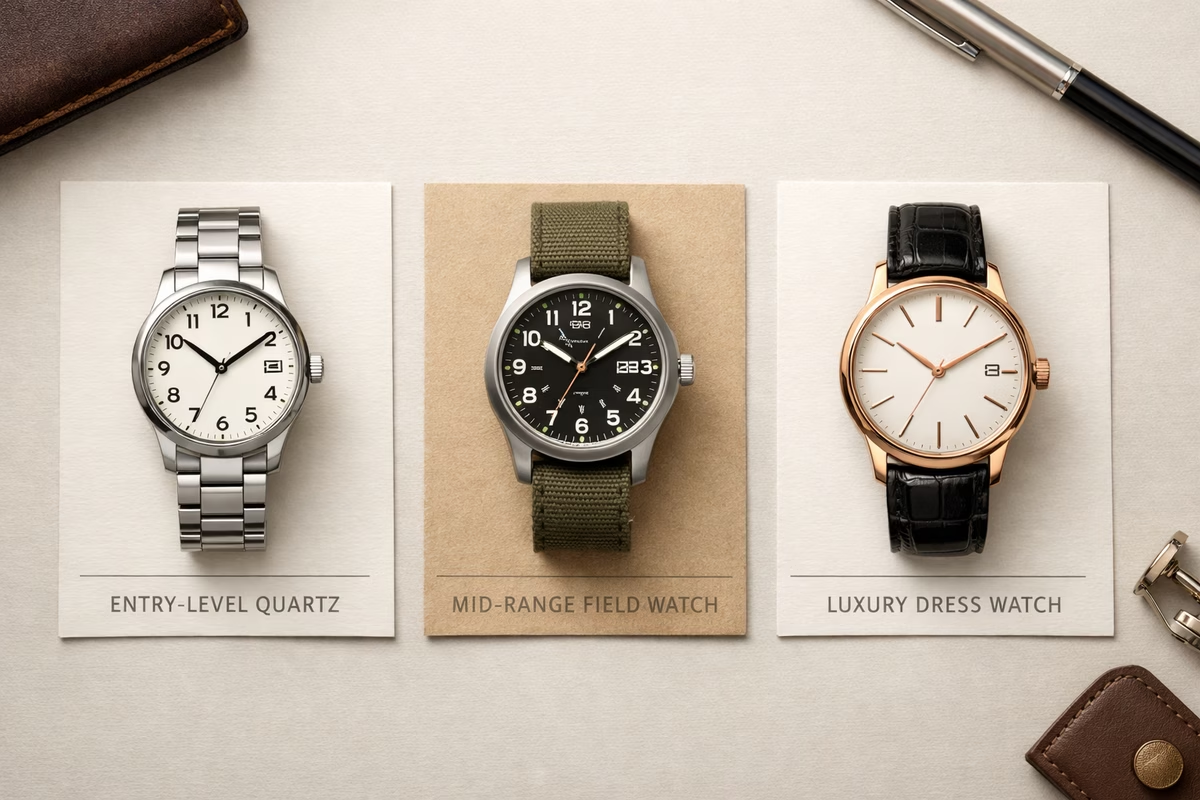
The watch world is crowded and confusing on purpose: marketing language makes everything sound rare, “in-house,” and essential. The simplest way to make sense of it is to stop thinking in terms of single “best brands” and start thinking in tiers—not as a measure of moral worth, but as a shorthand for what you’re actually paying for: manufacturing depth, finishing, design legacy, service ecosystem, and (sometimes) resale demand.
This guide breaks down common brands by tier and explains what each tier is good for. Use it to shop smarter, avoid overpaying for hype, and choose a brand whose strengths match your goals.
Understanding Brand Tiers
Brand tiers aren’t only about price. Two watches can cost the same and deliver different value depending on where the money goes.
In practice, tiers are shaped by:
- Manufacturing depth: Does the brand design and build movements, or rely on proven third-party calibers?
- Finishing and materials: Case/bracelet quality, dial work, movement finishing, and consistency.
- Design legacy: Some brands own iconic designs; others chase trends.
- Service ecosystem: Can any competent watchmaker service it, or do you need brand-specific parts and channels?
- Market demand and resale: Some brands hold value unusually well; many do not.
- Exclusivity: Sometimes real, sometimes engineered via allocation and limited production.
If you’re a beginner, don’t over-index on “in-house.” A well-regulated, widely serviceable movement in a great case can be a better long-term choice than a fancier movement that’s expensive to service.
Tier 1: Entry Level ($100-$500)
This tier is where you learn what you actually like. You can get genuinely enjoyable watches here—especially in quartz and entry mechanical—but the goal is usually value and durability, not prestige. Finishing is simpler and bracelets can be hit-or-miss, but the best brands in this tier have massive real-world track records.
Seiko (Japan) 🌟 Best Value Tier 1
Seiko is the benchmark for “serious watch at normal-person money.” They offer strong designs, a huge catalog, and a deep enthusiast community. Seiko also has a reputation for making competent in-house movements at prices where many competitors use off-the-shelf calibers.
If you want one safe starting point in entry mechanical, Seiko is it. Popular starting models include the Seiko 5 Sport (affordable daily beater), the Alpinist line (field-watch icon), and the SKX family (legendary diver, typically bought used now).
Orient (Japan)
Orient is a classic “punch above the price” brand, especially if you want a dress watch aesthetic or a capable affordable diver. The Bambino is one of the best entry dress watches, while the Kamasu/Mako lines are popular for dive styling without luxury pricing.
Citizen (Japan)
Citizen’s Eco-Drive lineup is one of the smartest buys in watches: accurate quartz powered by light, with minimal fuss. If you want a dependable daily watch you don’t need to baby, Citizen is hard to beat.
Timex (USA)
Timex is the accessible “everyday” choice: friendly pricing, lots of fun designs, and broad availability. You’re not buying intricate finishing; you’re buying wearable practicality and nostalgia.
Casio (Japan)
Casio is pure function/value. G-Shock is the durability legend; the F-91W is an icon; and the “Duro” is one of the most famous “how is this so cheap?” watches ever made.
Tier 2: Enthusiast ($500-$2,000)
This tier is where watches start to feel like long-term possessions. You’ll see noticeably better finishing, stronger bracelets, and more cohesive design language. Movements are usually proven workhorses (often ETA/Sellita families or brand-modified variants), and service becomes more straightforward.
Hamilton (Switzerland/USA Heritage) 🌟 Best Value Tier 2
Hamilton is a top “first serious Swiss” recommendation. The Khaki Field models are a default everyday choice, and many pieces use the H-10 movement family with long power reserve, which is genuinely convenient.
Tissot (Switzerland)
Tissot is a classic entry to Swiss watchmaking, with a huge catalog and strong value. The PRX brought integrated-bracelet styling to attainable prices, and the Powermatic 80 family gives you long reserve without moving into luxury pricing.
Longines (Switzerland)
Longines is where “classic Swiss luxury styling” becomes available without stepping into the $5k+ tier. If you like elegant cases and heritage design cues, Longines is often the answer.
Oris (Switzerland)
Oris is a beloved independent with a clear design identity. They’re especially strong in divers and versatile “daily sport” watches. For many enthusiasts, Oris is the sweet spot of independent charm with mainstream serviceability.
Seiko Presage / Prospex (Japan)
Seiko’s Presage/Prospex lines are worth calling out because they often deliver dial work and character you don’t see from many Swiss competitors at similar prices.
Tier 3: Luxury ($2,000-$10,000)
This tier is where you start paying for a full luxury package: stronger brand identity, consistently high finishing, and in many cases in-house movements with modern anti-magnetism or long reserves. You’re also paying for distribution, marketing, and often the “story” of iconic models.
The best way to use this tier is to decide whether you’re paying for a specific design icon (Speedmaster, Santos, Reverso), a general-purpose luxury sport watch, or a piece of finishing you’ll appreciate every day.
Tudor (Switzerland) 🌟 Best Value Tier 3
Tudor is the easiest “luxury without the luxury tax” recommendation. You get excellent cases and bracelets, serious daily-wear robustness, and movements designed for modern life (including long reserves). The Black Bay 58 is a frequent “one watch collection” pick for a reason.
Omega (Switzerland)
Omega is a modern manufacturing powerhouse. Many pieces are highly anti-magnetic, tightly tested, and built for everyday wear. The Speedmaster Professional is the chronograph icon; the Seamaster 300M is the robust diver; and the Aqua Terra is the “do almost everything” option.
Grand Seiko (Japan)
Grand Seiko is the brand you recommend to someone who values finishing and dial work as much as logos. Zaratsu polishing and textured dials can be spectacular in person. Spring Drive is also a genuinely unique ownership experience.
IWC (Switzerland)
IWC is a strong choice if you like legibility and “instrument” design, especially in pilot and Portugieser families.
Jaeger-LeCoultre (Switzerland)
Jaeger-LeCoultre is the “watchmaker’s watchmaker” reputation for a reason. The Reverso is a design legend, and their dressier lines offer real manufacture credibility.
Cartier (France)
Cartier is the reminder that watches are also design objects. If you want something timeless and instantly recognizable in a tasteful way, Tank and Santos families are a strong place to start.
Breitling (Switzerland)
Breitling is a great choice if you want sporty chronograph identity and aviation heritage. Their B01 chronograph family is widely respected.
Tier 4: High Luxury ($10,000-$50,000)
This tier adds two new ingredients: exclusivity (sometimes enforced) and brand power. Some pieces earn their reputation through finishing and design; others are valuable because demand is constrained.
Rolex (Switzerland)
Rolex is the gravitational center of modern luxury watches: iconic designs, excellent reliability, and unusually strong resale demand. The downside is access. Many models are hard to buy at retail, and the grey market frequently charges a large premium for immediacy.
If you want the “Rolex experience,” the Explorer and Datejust families are often the most realistic entry points. If what you really want is quality and daily wearability, Omega, Tudor, and Grand Seiko can deliver extraordinary satisfaction without the allocation games.
Audemars Piguet (Switzerland)
Audemars Piguet is best understood as “design icon + haute finishing + scarcity.” The Royal Oak is a foundational modern luxury sports watch, and it commands prices accordingly.
Blancpain (Switzerland)
Blancpain is a serious manufacture brand with deep history. The Fifty Fathoms is a true dive-watch legend, and the Villeret line leans classic.
Tier 5: Haute Horlogerie ($50,000+)
This tier is where watchmaking becomes art: extreme finishing, complex complications, and design language that rewards close inspection. Value here is often less about “specs” and more about handwork, history, and rarity.
Patek Philippe (Switzerland)
Patek Philippe is the prestige reference point. Pieces like the Calatrava represent classic dress watchmaking, while Nautilus and Aquanaut have become scarcity-driven cultural icons.
A. Lange & Söhne (Germany)
A. Lange & Söhne is a connoisseur favorite. Their movement architecture and finishing are among the best in the world, and many enthusiasts find the German aesthetic uniquely compelling.
Vacheron Constantin (Switzerland)
Vacheron Constantin pairs deep heritage with exquisite finishing. Overseas is their modern luxury sports line; Patrimony is classic dress.
Brands to Avoid
Most beginners lose money the same way: they buy branding, not watches.
Be cautious with fashion-first brands that primarily sell marketing and discounts. You can still enjoy a fashion watch, but don’t confuse it with long-term value or serviceability.
Also be wary of deceptive “MSRP” tactics and impulse microbrand buys without a clear service plan. Some microbrands are excellent, but you should research parts availability, warranty realities, and whether the company is likely to exist in five years.
Best Value by Budget
If you want a fast “short list,” here’s a reasonable value map:
- $100–500: Seiko 5, Orient Bambino, Citizen Eco-Drive
- $500–1,000: Hamilton Khaki Field, Tissot PRX, Seiko Presage
- $1,000–2,000: Longines Master, Oris Aquis, Hamilton Intra-Matic
- $2,000–5,000: Tudor Black Bay 58, Grand Seiko (mechanical or 9F quartz), Omega (pre-owned)
- $5,000–10,000: Omega Seamaster/Speedmaster, Grand Seiko Spring Drive, Rolex Explorer (if available)
- $10,000+: Rolex Submariner, JLC Master Ultra Thin, Audemars Piguet (pre-owned)
Brand Relationship Map
Ownership groups matter because they influence movement sourcing, shared parts ecosystems, and sometimes design DNA.
- Swatch Group: Omega, Longines, Tissot, Hamilton, Breguet, Blancpain, Jaquet Droz
- Rolex Group: Rolex, Tudor
- Richemont: Cartier, IWC, Jaeger-LeCoultre, Vacheron Constantin, Panerai, A. Lange & Söhne
- LVMH: TAG Heuer, Hublot, Zenith
- Independents (varies by definition): Patek Philippe, Audemars Piguet, Rolex, Seiko, Grand Seiko, Oris
Takeaway
If you remember one thing: the best brand is the one you’ll happily wear.
The entry and enthusiast tiers are where value is most concentrated. The $3k–$6k luxury zone is often the “sweet spot” where finishing and long-term satisfaction jump. Above that, you’re paying increasingly for brand power, rarity, and handwork.
When you’re choosing a brand, focus on: what you love to wear, build quality and movement type, serviceability, and value for money—not just logos.
Next Steps
- Understanding Movements - What powers these brands
- Collection Strategy - Building a balanced collection
- Watch Database - Browse specific models