Introduction
Buying a watch is deceptively hard: the product looks simple, but the trade-offs are not. Case size can make a watch feel perfect or unwearable. Movement choice changes maintenance and accuracy. Brand, model history, and resale dynamics can turn a “great deal” into an expensive lesson.
This guide is designed to make the process calm and repeatable. You’ll build a decision framework first (budget, size, movement, style, and where to buy), then use that framework to shop across budget tiers—from “first decent watch” money all the way to high horology.
Before You Buy: The Essential Questions
1. What’s Your Budget?
Start by deciding what you want your budget to protect you from. The bigger the spend, the more you should be paying for long-term satisfaction: comfort, durability, serviceability, and a design you’ll still like in five years.
A simple breakdown that matches how the market behaves:
- First watch / first “nice watch”: $200–$1,000
- Enthusiast territory: $1,000–$5,000
- Luxury: $5,000–$15,000
- High horology: $15,000+
One practical rule: it’s usually better to buy one great watch you genuinely wear than several cheap watches you keep trying to “upgrade away from.”
2. What’s Your Wrist Size?
Wrist size determines whether a watch disappears, sits perfectly, or looks like a bracelet clamp. Measure at the wrist bone using a tailor’s tape (or string + ruler). Most wrists fall somewhere around 6–7.5 inches.
Use diameter as a starting point, not a decision:
- 6–6.5" wrists often wear 36–40mm best
- 6.5–7" often wear 38–42mm best
- 7–7.5" often wear 40–44mm best
But the number that actually decides “fit” is lug-to-lug (the length from one lug tip to the other). If lug-to-lug is larger than your wrist’s flat top, the watch will overhang and feel awkward even if the diameter sounds reasonable.
3. Movement Preference?
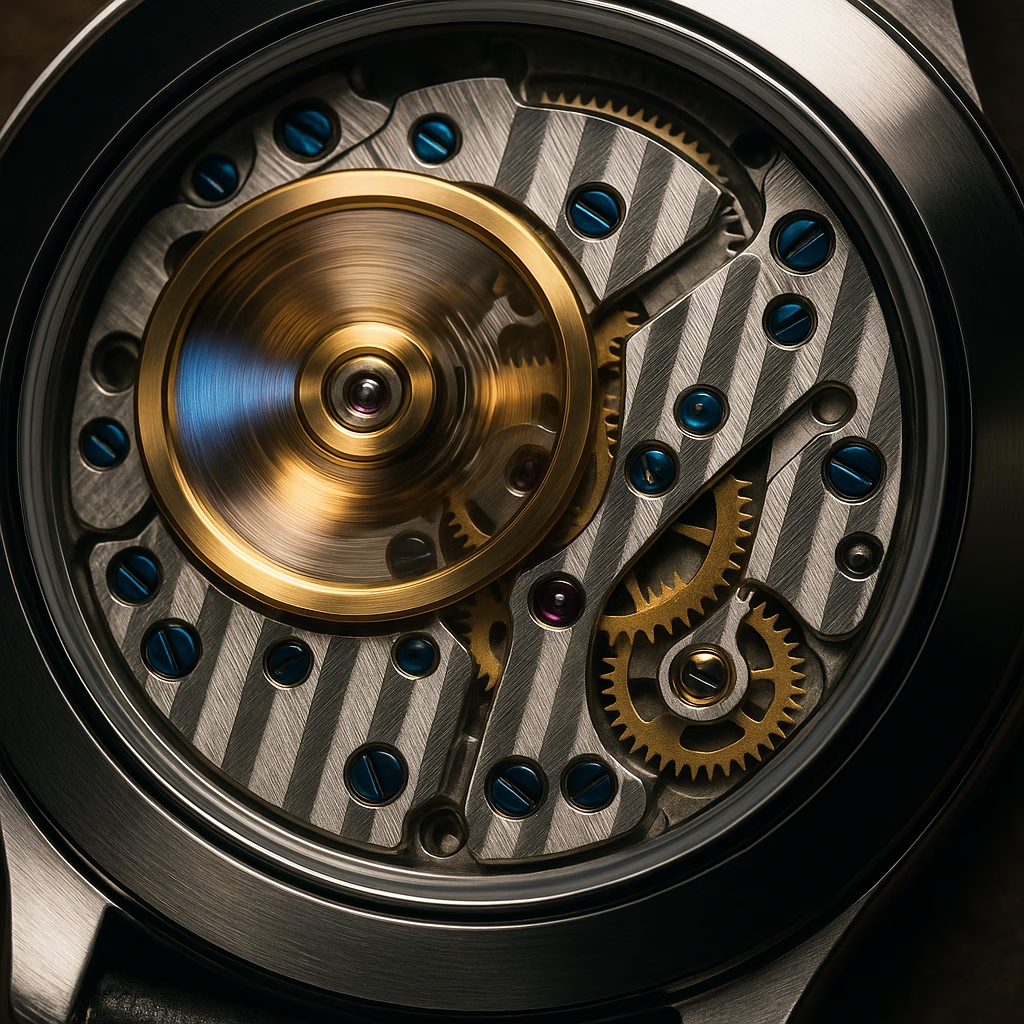
Movement choice is mostly “ownership style.” Mechanical and automatic watches are about craft and longevity, but you’ll accept periodic servicing and accuracy measured in seconds per day. Quartz is about convenience: extremely accurate, low maintenance, and often more durable for travel and daily wear. Spring Drive (Grand Seiko/Seiko) is a niche hybrid that delivers mechanical energy with near-quartz accuracy and a smooth seconds hand—usually at a higher price.
If you want a deeper explanation, read Watch Movements.
4. What Style Do You Need?
Most people buy their first watch for a role: daily wear, work, travel, formal events, or sports/outdoors. Try to name the job before you fall in love with a photo.
As a shortcut:
- A dress watch tends to be thinner and simpler (often best on leather).
- A sports/dive watch is the “one watch” workhorse: robust, water-resistant, and usually best on a bracelet.
- A chronograph is a sporty tool vibe with pushers and subdials (and a thicker case).
- A pilot watch prioritizes legibility and sometimes adds a GMT.
Budget Tiers: What to Buy at Each Price
Entry Level: $100-$500
This is the “get something good without overthinking” zone. The main goal here is not prestige—it’s learning your preferences without getting burned. If you buy from a reputable brand, choose a sensible size, and avoid ultra-fashion watches, you can get years of happy wear.
In this tier, you’re mostly deciding between two smart paths:
First path: high-quality quartz for daily reliability. Casio is the king of durable value (G-Shock for indestructible; the MDV106 “Duro” for absurdly good value if you like a diver look). Citizen Eco-Drive is the “I never want to think about batteries” answer and is excellent if you want a grab-and-go daily watch.
Second path: entry mechanical if you want the mechanical experience. Seiko 5 and Orient are classic starters: Seiko 5 for breadth and community support; Orient for strong finishing at the price (Bambino is a reliable dress watch pick; Kamasu/Mako lines are great entry divers).
If you can push toward the top of the range, this is where Swiss entry brands start to appear. Hamilton (Khaki line) is a great tool/daily aesthetic, and Tissot’s Powermatic 80 models offer long reserves at approachable prices.
Enthusiast Level: $500-$2,000
This range is where watches stop feeling like “a purchase” and start feeling like “a keeper.” Finishing improves, bracelets get better, movements get more refined, and you can choose styles that signal taste rather than price.
From $500–$1,000, you’re buying durability and identity. Seiko Prospex is a modern classic for sport and dive designs; Hamilton is the all-around tool-watch pick; Certina is quietly excellent value; and Sinn is the “serious tool watch” option if you like German design and robustness.
From $1,000–$2,000, you’re buying long-term satisfaction. Longines blends heritage and modern wearability; Oris is a beloved independent with strong diver and everyday options; and Christopher Ward is one of the best value propositions in modern watchmaking (especially if you like clean, modern tool-watch design).
Premium Level: $2,000-$5,000
This is the range where “luxury” starts to feel real: cases get sharper, bracelets get more complex, tolerances tighten, and you’re buying brands with serious watchmaking identity.
If you want one watch that can realistically do almost everything well, Tudor is the headline recommendation. The Black Bay 58 is iconic for a reason: excellent proportions, strong build, and a movement that’s made for daily wear.
If you love dials and finishing (and you’re open to a very different aesthetic), Grand Seiko is a world-class option—especially their quartz pieces with the 9F family, which are among the best quartz watches made.
This is also where buying pre-owned becomes a strategic advantage. Omega, Breitling, and Zenith can be fantastic values used, and in many cases you get “real” brand identity without paying the full retail depreciation.
If your taste leans modern and minimalist, Nomos is a standout in this bracket, especially for dressier or office-friendly watches.
Luxury Level: $5,000-$15,000
This is where watches start to feel “settled.” Finishing gets sharper, bracelets feel more engineered, and you’re buying into brands whose core identity is watchmaking rather than “we also make watches.”
If you want a modern luxury watch that can do almost everything well, Omega is the cleanest recommendation: strong build quality, excellent movements, and models that are widely supported for service. The Seamaster Professional 300M is a classic daily sports watch, the Speedmaster Professional (“Moonwatch”) is the iconic chronograph, and the Aqua Terra is the understated all-rounder.
If you care about dial craft and finishing (and you enjoy a slightly different, more design-forward take on luxury), Grand Seiko mechanical and Spring Drive pieces are special. The SBGA211 “Snowflake” is a famous entry point, while Hi-Beat and GMT variants add personality if you know what you want.
For dressier or heritage-first buyers, Jaeger-LeCoultre is a remarkable brand to explore: the Reverso is one of the great designs in watch history, and lines like the Master Control and Master Ultra Thin excel at “quiet luxury.” IWC is a strong tool-and-elegance blend, especially if you like pilot or Portugieser aesthetics.
If your taste leans bold, Panerai is distinctive—just be honest about sizing, because many models wear large. If you want design icons with real legitimacy (and often strong versatility), Cartier is an outstanding pick: Tank and Santos are classics for a reason.
Finally, this tier is where pre-owned Rolex can make sense if you want the brand experience without the sports-model scarcity. Look toward Datejust and Oyster Perpetual variants (and be extra careful about condition, provenance, and service history when shopping vintage).
High Horology: $15,000+
Above $15,000 you’re paying less for “better timekeeping” and more for design significance, finishing, rare engineering, and in some cases scarcity. That scarcity is real: some models are hard to buy at retail, and the grey market can add an enormous premium.
If you’re drawn to Rolex sports models, understand the split: retail pricing is (relatively) reasonable, but access is limited. If you go grey market you may pay dramatically more than retail; you’re paying for immediacy. At this level, be honest about why you’re buying: to wear, to collect, or to park value.
There are also “high end” offerings from brands like Omega—often with upgraded materials, movements, or engineering showcases. But the true haute horlogerie conversation tends to center on houses like Audemars Piguet, Patek Philippe, A. Lange & Söhne, and Vacheron Constantin. Here, finishing is a major part of the value: you’re buying handwork you can see, not just specifications.
If you’re shopping this tier, prioritize dealer reputation, documentation, and service planning. The margin for an expensive mistake rises quickly.
Special Considerations
Buying Pre-Owned vs. New
Pre-owned is often the best way to buy watches—especially once you’re above entry level. You can save a meaningful amount versus retail, you can access models that are no longer in production, and you avoid the early depreciation that hits many brands.
The trade-off is risk. Pre-owned buying demands better seller judgment: authentication, condition grading, return policy, and service history all matter. When in doubt, buy from sellers that offer clear guarantees and stand behind what they sell.
Common reputable starting points include Chrono24 (with careful seller vetting), WatchBox, Bob’s Watches (Rolex-focused), Crown & Caliber, and enthusiast marketplaces like r/Watchexchange (where reputation and transaction discipline matter).
Grey Market vs. Authorized Dealer
An authorized dealer (AD) is the safest, most straightforward way to buy new: authenticity is guaranteed, you get the full manufacturer warranty, and for certain brands (especially Rolex and Patek) you’re also building a purchase history that can matter for access.
Grey market sellers can offer big discounts—often 20–40% off retail for brands that are widely available—but the warranty situation may differ, and sourcing can be opaque. If you go grey, treat seller reputation and return policy as non-negotiable.
As a general rule: buy from an AD when warranty or relationship matters; consider grey market when savings are large and the model is common enough that authenticity checks and service support are straightforward.
Vintage Watches
Vintage can be incredibly rewarding because you’re buying something you can’t get new: old proportions, discontinued references, and real character. It can also be a minefield. Condition varies wildly, parts availability can be a problem, and the difference between “original,” “restored,” and “assembled from parts” can be thousands of dollars.
If you buy vintage, assume you’ll do some homework and likely budget for service soon after purchase. Always ask for service history, and strongly prefer reputable dealers (or sellers with a proven track record in enthusiast circles). Be cautious with freshly polished cases if you care about collector value.
Brands that are common starting points for vintage shopping include Rolex (Datejust, Submariner, GMT families), Omega (Speedmaster, Seamaster, Constellation), and Seiko (vintage divers and the classic 6139 chronographs).
- Universal Genève (Polerouter)
- Zodiac (Sea Wolf)
The Ultimate Watch Buying Checklist
Before Purchase:
✅ Set realistic budget (including tax, shipping, possible service) ✅ Measure your wrist (determine appropriate case size) ✅ Research the model (read reviews, watch YouTube videos) ✅ Check market value (Chrono24, WatchCharts) ✅ Verify seller reputation (reviews, BBB, forums) ✅ Understand return policy (7-14 days minimum) ✅ Ask about warranty (manufacturer or seller)
During Purchase:
✅ Inspect thoroughly (scratches, dents, functionality) ✅ Check serial/reference numbers (match papers, verify authenticity) ✅ Test all functions (crown, pushers, bezel, clasp) ✅ Check timekeeping (wind, observe for 24 hours if possible) ✅ Verify box and papers (complete set worth more) ✅ Request service history (recent service reduces immediate cost)
After Purchase:
✅ Photograph condition (document everything) ✅ Get insurance (homeowners or specialty watch insurance) ✅ Set up service plan (automatic every 5-7 years, quartz battery every 2-3 years) ✅ Store properly (watch box or safe, away from magnets) ✅ Enjoy!
Common Buying Mistakes to Avoid
❌ Buying too big: 42mm+ overwhelms most wrists. Try on first. ❌ Falling for hype: Rolex waitlists make people overpay on grey market. Consider alternatives. ❌ Ignoring lug-to-lug: 50mm lug-to-lug won’t fit a 6.5" wrist even if diameter seems OK. ❌ Buying for investment: Most watches depreciate. Buy what you love to wear. ❌ Overpaying for “limited edition”: Most LEs don’t appreciate. Marketing tactic. ❌ Skipping try-on: Always try before buying if possible. Photos lie. ❌ Impulse buying: Sleep on it. Big purchases deserve consideration. ❌ Buying grey market for Rolex: No warranty, no relationship building for future purchases. ❌ Neglecting service costs: Budget for $300-1,000 service every 5-7 years.
Brand Recommendations by Style
Best Dive Watches:
- Budget: Seiko SKX/5 Sport ($100-250)
- Mid: Oris Aquis ($1,900), Tudor Pelagos ($4,300)
- Luxury: Omega Seamaster 300M ($5,400), Rolex Submariner ($9,100)
Best Dress Watches:
- Budget: Orient Bambino ($150), Seiko Presage ($400)
- Mid: Nomos Tangente ($2,500), Longines Master ($1,800)
- Luxury: JLC Master Ultra Thin ($7,500), Patek Calatrava ($20,000+)
Best Pilot Watches:
- Budget: Hamilton Khaki Field ($550)
- Mid: Sinn 556 ($1,200), IWC Mark XVIII (used, $3,500)
- Luxury: IWC Big Pilot ($12,000), Zenith Pilot Type 20 ($6,000)
Best Chronographs:
- Budget: Seiko Solar Chronograph ($200), Citizen Eco-Drive Chrono ($250)
- Mid: Hamilton Intra-Matic Chrono ($2,000), Tudor Black Bay Chrono ($4,800)
- Luxury: Omega Speedmaster Professional ($6,800), Zenith El Primero ($7,500)
Best GMT/Travel Watches:
- Budget: Seiko 5 Sports GMT ($250)
- Mid: Tudor Black Bay GMT ($4,100), Oris Big Crown ProPilot GMT ($2,400)
- Luxury: Omega Seamaster Aqua Terra GMT ($7,000), Rolex GMT-Master II ($10,800)
My Personal Recommendations
Best First Watch: Seiko 5 Sport ($100-150)
Why: Automatic, reliable, stylish, affordable. Perfect learning watch.
Best Value Overall: Tudor Black Bay 58 ($3,900)
Why: In-house movement, perfect size, vintage style, strong resale.
Best Investment: Rolex Submariner ($9,100 retail)
Why: Holds/appreciates value, iconic, forever wearable.
Best Daily Wearer: Omega Seamaster 300M ($5,400)
Why: Versatile, robust, accurate (METAS), under-radar luxury.
Best Dress Watch: Nomos Tangente ($2,500)
Why: Bauhaus elegance, in-house movement, thin, unique design.
Best Beater: Casio MDV106 Duro ($50)
Why: Reliable, tough, 200m WR, looks great, who cares if it breaks.
Next Steps
Ready to make your purchase?
- Read Watch Styles Guide to identify your preferences
- Study Watch Movements to understand what you’re buying
- Check Brand Rankings to understand brand hierarchy
- Play our Budget Calculator to plan your purchase