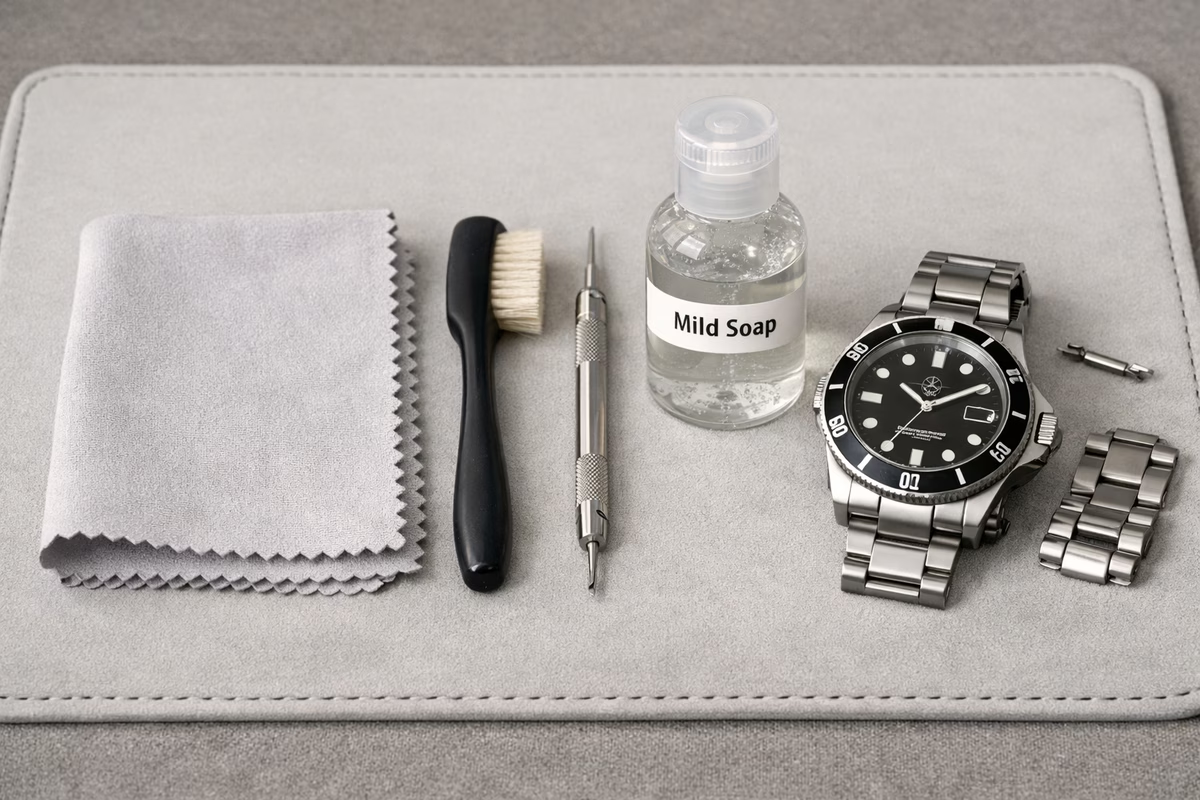
Watch Care & Maintenance
Proper care extends your watch’s life from years to decades (and sometimes longer than a lifetime). The goal isn’t to baby a watch or turn it into a shrine—it’s to prevent the avoidable failures that cost the most: water damage, magnetization, impacts, and neglected service.
This guide focuses on habits you can actually keep: how to wear and set a watch without unnecessary wear, how to clean it safely, when service matters, and what problems you can diagnose before they become expensive.
Daily Care & Best Practices
Wearing Your Watch
Wear your watch like a small machine, not a piece of armor. Put it on after you’re dressed (cuffs, zippers, and doorframes are watch enemies), and make sure the bracelet or strap is snug enough to stay put but loose enough to move slightly. If you’re doing high-impact work—lifting, hammering, contact sports—take it off unless the watch is built for abuse.
The biggest “quiet damage” habits are water and friction. Avoid showering with a normal watch, avoid setting the crown while the watch is on your wrist (it encourages awkward angles and wear), don’t crank a bracelet tight, and don’t sleep in a watch unless you have a reason. Also be cautious with extreme temperature swings, which can stress seals and gaskets over time.
Handling the Crown
The crown is the main interaction point, and it’s where a lot of damage happens—usually from forcing things. If your crown is screw-down, always unscrew it gently first, then wind clockwise with smooth turns until you feel resistance. Stop there; forcing a fully wound watch is a classic mistake. When you’re done, push the crown in and screw it down (snug, not torqued).
For setting the time, pull the crown to the time-setting position and turn smoothly. For setting the date, treat one window as off-limits: don’t use the quick-set date between roughly 9pm and 3am, when many movements are already engaged in the date-change process. If you’re not sure what “time” the watch thinks it is, advance the hands to around 6am first, then set the date, then set the correct time.
Water Resistance Reality Check
Water resistance is the most misunderstood spec in watches. “30m” does not mean “swim to 30 meters.” It’s a lab rating under controlled conditions, and real life adds movement, hot water, steam, soap, and aging seals.
As a conservative mental model: 30m is for splashes and hand washing; 50m is better splash resistance but still not a swimming watch; 100m is generally fine for swimming; 200m and above is where dive watches live. Hot showers are their own problem—heat can expand gaskets and steam can push moisture where you don’t want it—so unless you have a true diver and you’re careful, it’s a habit worth skipping.
Magnetic Fields (The Silent Killer)
Magnetization is one of the sneakiest causes of “my watch is suddenly wrong.” Phones, laptops, magnetic clasps, and speakers can all do it; MRI machines are the hard no. The usual symptom is dramatic fast running—minutes per day—not the gentle drift you’d expect from a normal mechanical watch.
The good news is the fix is easy. Demagnetizing takes seconds and many shops will do it quickly. Prevention is mostly about storage habits: don’t park your watch on top of a laptop, near speakers, or next to magnetic chargers.
Cleaning Your Watch
Daily Cleaning (Bracelet Watches)
Daily cleaning is mostly about removing skin oils and grit before they become abrasion. A microfiber cloth and a little lukewarm water are enough most of the time. If your watch is genuinely water-resistant (think 100m+ and a properly secured crown), a soft toothbrush with mild soap can help clean between bracelet links—then rinse and dry thoroughly.
Before any water touches the watch, confirm the crown is fully pushed in (and screwed down if applicable). Most “I thought it was waterproof” failures start with an open crown.
Leather Strap Care
Leather straps are consumables. Treat them like shoes: wipe them after wear, let them dry fully between uses, and avoid soaking them. Sweat and summer heat shorten strap life dramatically, so rotating straps isn’t just aesthetic—it materially extends lifespan.
As a rough expectation: daily wear often means 6–18 months, rotated wear is commonly 2–3 years, and careful wear can stretch to 3–5. Replacement can be anywhere from $20 to $200+ depending on quality and hardware.
Rubber/Silicone Strap Care
Easiest to maintain:
- Wash with soap and water
- Scrub with toothbrush
- Rinse, air dry
- Lasts 5-10+ years easily
Watch Storage
Short-Term Storage (Daily)
Watch Box/Tray:
- Keep away from magnetic sources
- Room temperature, low humidity
- Out of direct sunlight (fades dials)
- Not in bathroom (humidity)
Watch Rolls (Travel):
- Padded protection
- Separate compartments (avoid scratches)
- Keep in carry-on (never checked luggage!)
Long-Term Storage
If Not Wearing for Months:
Automatic Watches:
- Let them stop (no harm done)
- Wind and set when you wear again
- OR: Use watch winder (see below)
Mechanical Watches:
- Let them stop
- Lubrication stays distributed better when still
Quartz Watches:
- Will keep running (battery life)
- No special care needed
Watch Winders (Do You Need One?)
Most people don’t need a winder. The main reason to use one is convenience for complicated calendars (perpetual or annual) or for a rotation where you truly hate resetting watches. For a simple time/date watch, it’s usually faster to just set it.
If you do buy a winder, prioritize gentle, consistent motion and settings that match the movement’s needs (turns per day and direction). Cheap winders can be noisy and inconsistent; better units cost more, but they tend to be less aggravating over the long run.
When to Service Your Watch
Service Intervals
Mechanical and automatic watches usually benefit from service every 5–7 years, depending on how hard they’re worn and how they’re performing. Lubrication dries out, microscopic wear adds up, and seals age. Service costs vary widely by brand and complexity, but $200–$1,200+ is a realistic range.
Quartz is simpler day-to-day: battery replacement every 2–5 years is the main routine expense. Full quartz service is less common, but after a decade or more, gaskets and worn components can still matter if you want the watch to last.
Signs Your Watch Needs Service NOW
The “don’t wait” signs are sudden timekeeping changes (especially minutes per day), frequent stopping, a crown that feels gritty, and any second hand behavior that looks abnormal for that watch. The truly urgent sign is moisture under the crystal—treat that like a same-day problem.
What Happens During Service
A full mechanical service is essentially a reset. The movement is disassembled, cleaned, inspected, and re-lubricated; worn parts are replaced; and then the watch is reassembled and regulated so it keeps time properly across positions. A good service also includes case work: new gaskets and a water-resistance test where applicable.
Timelines vary. Two to six weeks is common; luxury brands and complicated watches can take longer.
Service Costs by Brand
Service pricing is one reason collectors talk about “total cost of ownership.” Budget brands can often be serviced in the $150–$300 range; mainstream Swiss frequently lands in the $250–$600 zone; and luxury brands commonly start around $500 and can climb well past $1,000. High-luxury and complicated watches can be several thousand dollars.
The point isn’t to fear service—it’s to plan for it, especially if you own multiple mechanical watches.
DIY Maintenance (What You Can Do)
Safe DIY Tasks:
There are a few DIY tasks that are genuinely safe: swapping straps (a spring bar tool helps), cleaning the exterior, replacing quartz batteries if you’re careful, and demagnetizing a mechanical watch with the right tool. Regulation is possible, but it’s a “do it if you already know what you’re doing” task—easy to make worse without experience.
NEVER DIY:
Avoid DIY work that compromises sealing or precision: opening the caseback, servicing the movement, polishing the case, replacing gaskets without proper testing, or doing “scratch repair” that can permanently change surfaces. These are the jobs where professionals earn their money.
Common Problems & Solutions
Problem: Watch Runs Fast/Slow
If a watch suddenly runs very fast, magnetization is the first thing to suspect—especially if the change is dramatic. If it’s been gradually drifting over time, it may need regulation or service, and if the problem started after a drop or impact, you may be dealing with physical damage. The sensible order is: try demagnetizing first, then consider regulation, then service (especially if it’s been five-plus years), and finally weigh repair cost versus replacement for inexpensive watches.
Problem: Watch Stops Overnight
If an automatic stops overnight, the boring explanation is often the right one: it isn’t fully wound. Try hand-winding (if the watch supports it) and wear it actively for a day. If it still dies early, power reserve may be low due to age or lubrication issues, and magnetization can contribute to erratic behavior—so demagnetizing is still a quick check before you escalate.
Problem: Crown Won’t Screw Down
Don’t force a stubborn screw-down crown. Cross-threading and grime are common, and both get worse with pressure. Unscrew fully, try again with gentle alignment, and clean threads carefully with a soft brush if the watch is suitable for it. If it still won’t catch, stop—damaged threads can require a crown or tube replacement.
Problem: Moisture Under Crystal
Moisture under the crystal is urgent. Stop wearing the watch, and if it’s safe to do so, pull the crown out to stop the movement and reduce further damage. Then get it to a watchmaker as soon as you can. Water causes corrosion fast, and delays can turn a manageable repair into a destroyed movement.
Problem: Crystal Scratches
Acrylic Crystal:
- Can be polished out (Polywatch, $10)
- DIY-friendly
Sapphire Crystal:
- Nearly scratch-proof (only diamond or sapphire scratches it)
- If scratched, needs professional replacement ($100-500)
- Not worth it unless deep scratch
Hesalite (Omega Speedmaster):
- Type of acrylic, polishes easily
- Part of the watch’s charm (authentic to moonwatch)
Travel with Watches
Flying
Carry-On:
- Always carry-on (never check!)
- Wear through security or put in bin
- No special declarations needed (usually)
Timezone Changes:
- GMT watches: Adjust GMT hand only
- Regular watches: Pull crown, adjust hour hand (if quick-set hour)
- Otherwise: Advance time fully (don’t go backwards if date involved)
Traveling to High-Risk Areas
In higher-risk travel situations, the best watch is the one that doesn’t become a problem. Leave expensive pieces at home, wear a durable beater, and check your insurance coverage ahead of time. Safety beats “flex.”
Insurance & Documentation
When to Insure
Insurance makes sense when the watch is expensive enough to hurt, sentimental enough to matter, or worn frequently enough that loss is a real possibility. Many people use ~$2,000 as a practical threshold, but the right number is the one that would actually sting.
Insurance Options:
- Homeowner’s/Renter’s: Often covers up to $1,500
- Jewelry Rider: Added to homeowner’s policy ($50-100/year per $10k value)
- Specialty (Hodinkee Insurance, Lavalier): Designed for watches
Keep Records
Keep basic documentation: receipts, photos (including serial and caseback), service records, and appraisals for higher-value pieces. Store it digitally with a backup; it makes insurance, resale, and recovery much easier.
Extending Watch Lifespan
The small habits add up. Wind gently, avoid hard shocks, respect water resistance, service on time, and store watches away from magnets, humidity, and harsh sunlight. If you own multiple pieces, rotating them spreads wear. And when you do strap changes, use the right tool—knives and improvised screwdrivers are how lugs get scratched and spring bars get bent.
Final Thoughts
Your watch can outlive you with basic care. Many vintage pieces still run beautifully because they were kept dry, serviced before failure, and treated like tools—not like fragile jewelry.
Two simple rules help: wear it (watches are meant to be used), and care for it (a little maintenance prevents expensive surprises). Do that, and a watch can become an heirloom rather than a disposable accessory.
Next Steps
If you want to go deeper, read Understanding Movements to learn what you’re maintaining, Watch Brands for a sense of service ecosystems, and the Sizing Guide to dial in comfort and reduce wear.