Understanding Watch Movements
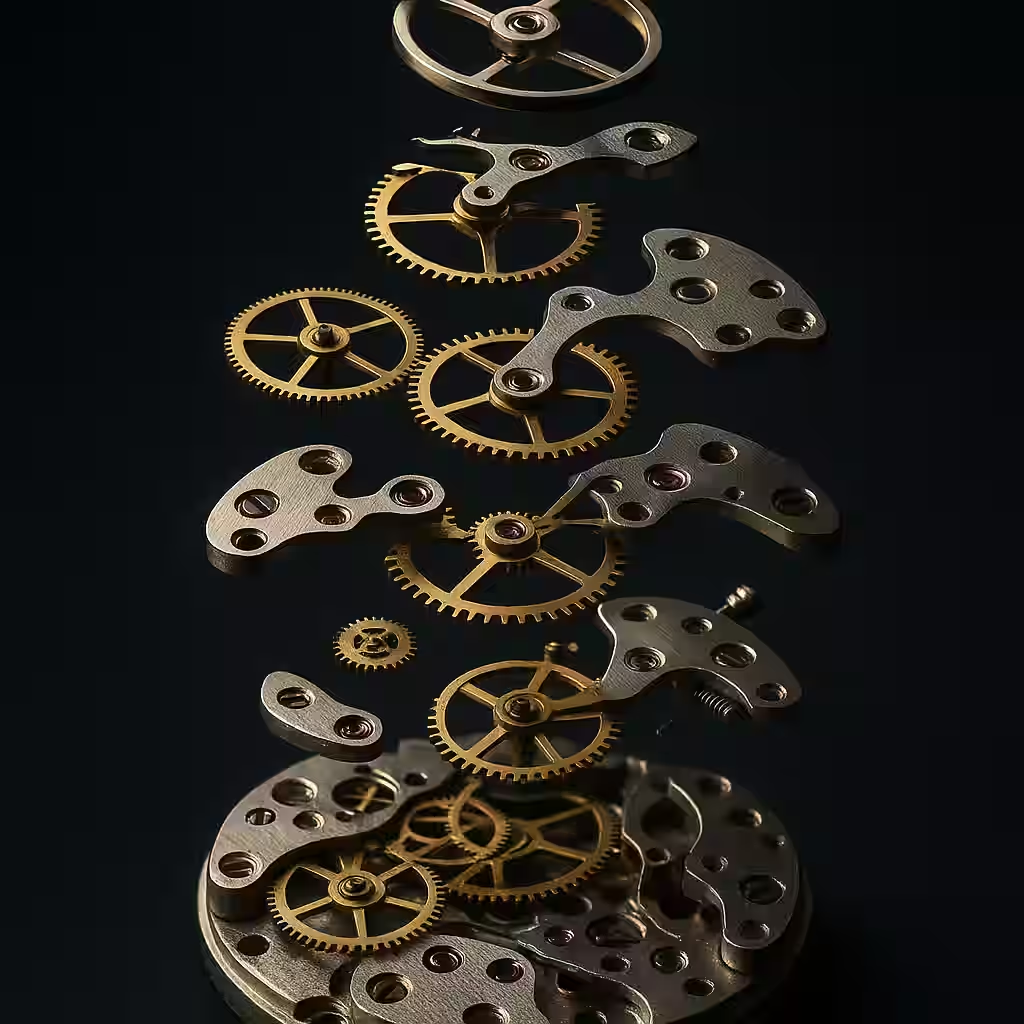
The movement (or “caliber”) is the engine of a watch: the system that stores energy, releases it in controlled steps, and turns that into hands moving around a dial. If you can explain a watch’s movement, you can usually predict the things buyers care about most—how it will feel to own, how accurate it will be day-to-day, how often it needs attention, and why one model costs more than another even when it “just tells time.”
This guide is a practical tour, not an engineering textbook. You’ll learn the four movement families you’ll see in the real world (manual mechanical, automatic, quartz, and a few hybrids), the handful of specs that actually matter, and how to pick a movement that fits your life.
The Three Main Movement Types
Mechanical (Hand-Wound) Movements
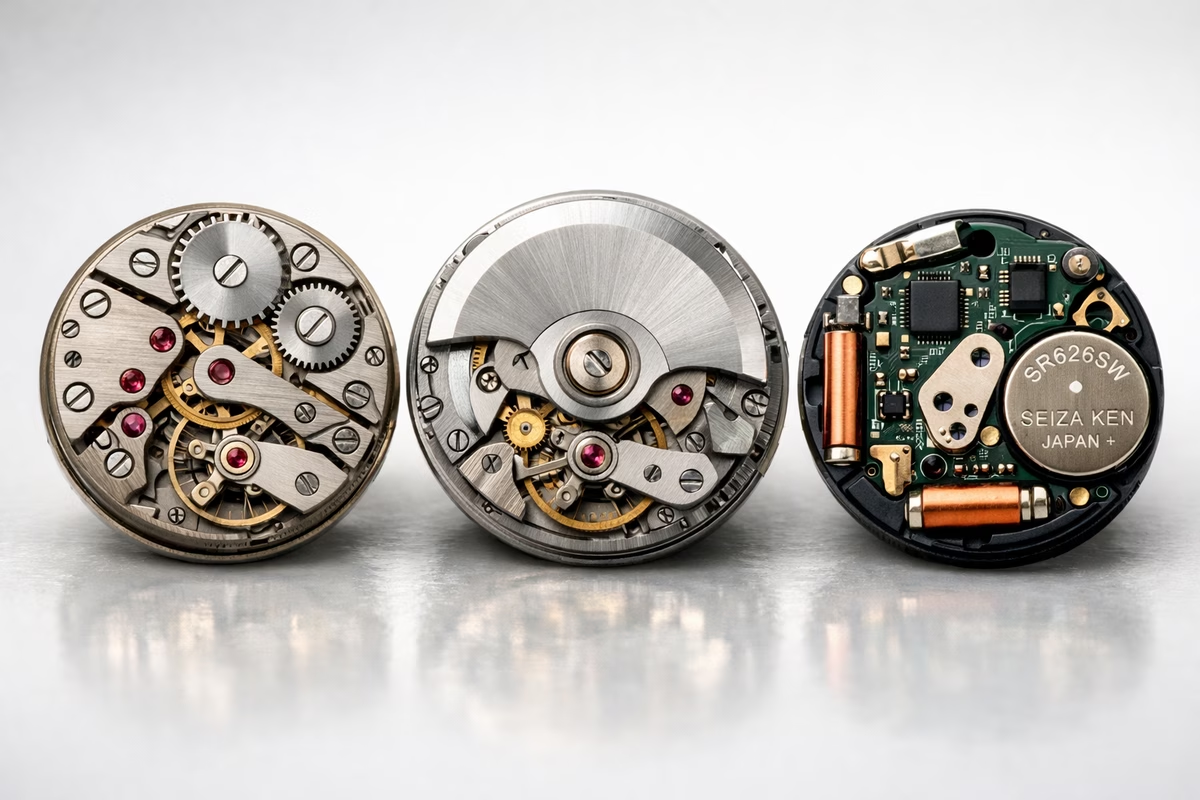
A hand-wound mechanical movement is the purest “machine watch” experience: you wind it, it runs; you don’t, it stops. When you turn the crown, you tighten a mainspring (a coiled strip of metal). As the spring relaxes, it feeds energy through a gear train. The escapement and balance wheel act like a metronome—releasing energy in small, regular packets so the hands advance at a controlled rate.
In practice, a good manual movement is about ownership feel. The watch tends to be slimmer because there’s no winding rotor sitting on top of the movement, and many people genuinely enjoy the daily ritual. The trade-off is convenience: if you rotate watches or forget to wind, you’ll be resetting the time and any complications.
At a glance
- Typical power reserve: 38–80 hours
- Typical accuracy: about ±5–15 seconds/day for non-chronometer examples
- Why people choose it: thinness, tradition, tactile winding
- Maintenance: service about every 5–7 years ($300–800 is a common range)
Notable examples include Patek Philippe Calatrava (reference 5196), A. Lange & Söhne Saxonia Thin, Nomos Tangente (Alpha caliber), JLC Master Ultra Thin, and Vacheron Constantin Patrimony.
Automatic (Self-Winding) Movements
Automatic movements solve the “I forgot to wind it” problem by adding a rotor: a weighted semicircle that swings with your wrist motion and continuously tops up the mainspring. Everything else is fundamentally mechanical—gears, escapement, balance wheel—so the character is still mechanical, just with less daily attention.
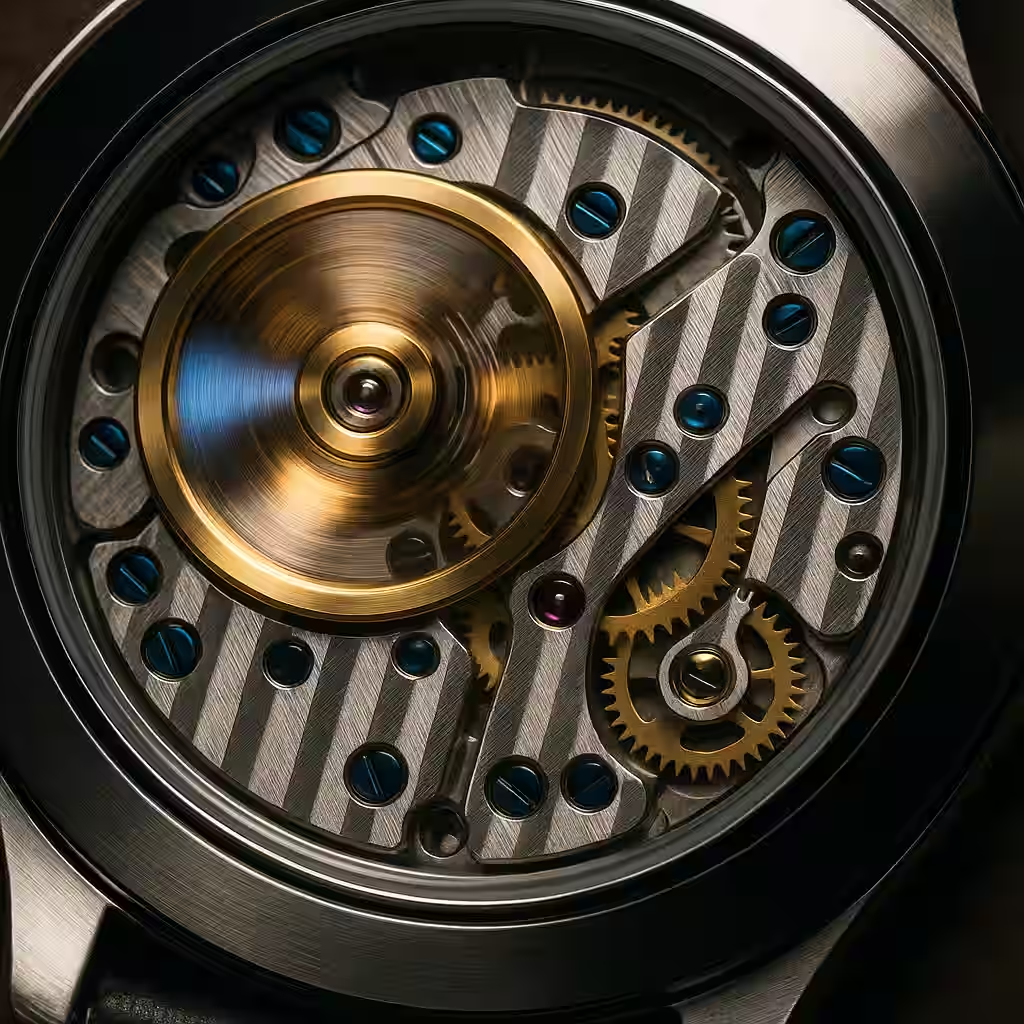
The upside is obvious: if you wear it most days, it stays running. The limitation is also practical: most automatics will stop after sitting for a couple of days, and the rotor adds thickness (often 1–2mm) and can partially cover the view through a display caseback.
At a glance
- Typical power reserve: 38–80 hours (some modern designs push far beyond)
- Typical accuracy: about ±5–15 seconds/day for non-chronometer examples
- Why people choose it: “set-and-wear” mechanical ownership
- Maintenance: service about every 5–7 years ($300–1,000 is common)
Rotors come in a few common layouts. A full rotor is the usual 360° design. A micro-rotor tucks a smaller rotor into the movement plane for a slimmer watch (you’ll see this in dressier, higher-end designs). A bumper is an early/vintage approach where the rotor swings and “bumps” against springs at the ends of its travel.
Notable examples include Rolex Submariner (Cal. 3230), Omega Seamaster (Cal. 8800), Tudor Black Bay (MT5602), Seiko SKX007 (7S26), and Grand Seiko SBGR251 (9S85).
Quartz Movements
Quartz movements start with a battery and a quartz crystal. When electricity runs through the crystal, it vibrates at a very stable frequency (commonly 32,768 times per second). A circuit counts those vibrations and sends regular pulses to a tiny motor that advances the hands. That “counting oscillator” approach is why quartz is so accurate compared to purely mechanical regulation.
If you want maximum reliability with minimum fuss, quartz is hard to beat. You get thin cases, strong shock resistance, and accuracy that makes even excellent mechanical movements look “human.” The emotional trade-off is that quartz doesn’t deliver the same sense of visible mechanism (and many quartz watches tick once per second rather than sweep).
At a glance
- Typical battery life: 2–10 years
- Typical accuracy: about ±10–15 seconds/year
- Why people choose it: accuracy, convenience, cost
- Maintenance: battery every 2–5 years ($20–50 is common)
Quartz can still be luxurious. Grand Seiko’s 9F is a famous example: it’s assembled and adjusted like a high-end mechanical movement, hits roughly ±10 seconds/year, and adds touches like an instant date change at midnight. You’ll also see “thermocompensated” or “SuperQuartz” variants (e.g., in some Breitling models) that further improve stability.
Specialty & Hybrid Movements
Spring Drive (Seiko/Grand Seiko)
Spring Drive is the rare movement that feels like a mechanical watch but keeps time closer to quartz. It’s powered by a mainspring (so there’s no battery), but the regulation system uses a quartz reference and electronics to control a “glide wheel.” The result is the signature perfectly smooth seconds hand—no ticks, no stutter—paired with accuracy that can land around ±1 second/day.
Spring Drive is special because it isn’t trying to be “best” on paper; it’s trying to be a specific experience: mechanical energy, modern regulation, and a visual signature you can spot instantly.
Notable models include Grand Seiko SBGA211 “Snowflake,” Grand Seiko SBGE201 GMT, and Seiko Presage Shippo Enamel (SARW013).
Kinetic (Seiko)
Kinetic movements use an automatic-style rotor, but instead of winding a mainspring it generates electricity and stores it in a capacitor (or rechargeable cell) to run a quartz movement. The appeal is simple: quartz accuracy without frequent battery swaps, powered by your motion. They’re less common today, but you’ll still see them in the wild and on the pre-owned market.
Notable models include Seiko Kinetic SKA371 and Seiko Kinetic Perpetual (many lines are now discontinued).
Eco-Drive (Citizen)
Eco-Drive is Citizen’s solar charging system: a panel under the dial converts light into electricity, keeps a rechargeable cell topped up, and runs a quartz movement. In daily use it’s one of the most “forget it exists” movement types—leave it near a window now and then and it will often run for months even in darkness.
Notable models include Citizen Eco-Drive Promaster and Citizen Eco-Drive Chronograph.
Movement Specifications Explained
Specs are where movement talk often turns into marketing noise. The trick is to focus on the handful of measurements that actually change ownership: accuracy expectations, how often you’ll have to set/reset, how the seconds hand looks, and how often you’ll need service.
Frequency (Beats Per Hour)
Frequency is how fast a mechanical balance wheel swings. It’s usually written as beats per hour (bph) or in hertz (Hz). A higher frequency can improve stability and make the seconds hand appear smoother, but it can also increase wear and energy use.
As a practical rule of thumb: 28,800 bph (4 Hz) is the modern standard; 21,600 bph (3 Hz) is common in affordable workhorses; and 36,000 bph (5 Hz) shows up in “hi-beat” pieces like the Zenith El Primero or certain Grand Seiko models. Vintage watches may be slower still.
Power Reserve
Power reserve is the “run time” on a full wind—how long the movement keeps going if you set it down. It matters most if you don’t wear the same watch every day. If you rotate watches or you mainly wear one Monday–Friday, a 70+ hour reserve often means you can take it off Friday night and it’s still running Monday morning.
Typical reserves range from roughly 38–48 hours for many classic designs, to 70–80 hours for many modern long-reserve movements. Multi-day reserves (7–10 days) exist, but they’re special cases.
Accuracy Standards
Accuracy standards are useful as long as you understand what they do (and don’t) promise. A “chronometer” label generally means extra testing and tighter tolerances, but real-world results still depend on wear habits, temperature, magnetism, shock, and when the watch was last serviced.
COSC (Swiss Official Chronometer Testing Institute) tests the movement for 15 days in multiple positions and temperatures; to pass, it must land within -4/+6 seconds/day. Many brands use COSC as a baseline.
METAS (Swiss Federal Institute of Metrology) is typically more stringent and tests the entire watch, not just the movement. A key practical benefit is strong anti-magnetism testing (often quoted as 15,000 gauss), and targets around 0/+5 seconds/day.
Some brands publish their own standards. Rolex’s Superlative Chronometer aims for roughly -2/+2 seconds/day for modern pieces. Grand Seiko publishes different targets depending on tech: mechanical standards in a similar “few seconds/day” band, Spring Drive around ±1 second/day, and 9F quartz around ±10 seconds/year.
In-House vs. Generic Movements
Generic (Ebauche) Movements
So-called “generic” (ebauche) movements are made by large movement manufacturers and used across many brands. There’s nothing inherently low-quality about this; in fact, it’s one of the reasons watches can be dependable and serviceable. If you value easy servicing, predictable costs, and proven designs, this path is often the smart one.
The downside is that it’s less distinctive. Two watches from different brands can share essentially the same engine, and the story becomes more about case finishing, dial design, and brand positioning.
Common examples include ETA 2824-2 (Swiss automatic workhorse), ETA 7750 (chronograph staple), Miyota 9015 (solid Japanese automatic), Seiko NH35 (budget-friendly, hacking + hand-wind), and Sellita SW200 (a Swiss alternative in the same family).
In-House (Manufacture) Movements
An in-house (manufacture) movement is designed and produced by the brand (sometimes with outside help, depending on how strict you want to be about the definition). What you’re paying for is usually a mix of engineering choices, finishing, and brand identity. You may also get features that are harder to find in off-the-shelf calibers: longer reserves, advanced anti-magnetism, unique layouts, or signature complications.
The honest caveat is that “in-house” is not automatically “better” for accuracy or reliability. It can be, but you’re also accepting higher servicing costs and a narrower service ecosystem.
Examples include Rolex 3235 (Submariner, Datejust), Omega 8800/8900 (Seamaster, Speedmaster), Grand Seiko 9S85 (Hi-Beat automatic), Tudor MT5602 (Black Bay), and Patek Philippe 324 S C (Calatrava).
Complications Beyond Time
“Complication” is watch-speak for any function beyond hours/minutes/seconds. It’s a useful word because complications change how you interact with the watch. A date is convenient. A GMT can be a travel tool. A chronograph can be practical (timing coffee, parking meters) or purely for the joy of pushers and subdials.
It helps to think in tiers. Simple additions include date, day-date, GMT/dual time, and power reserve indicators. Mid-level complications include chronographs, moon phases, and annual calendars. High complications include perpetual calendars, minute repeaters, and tourbillons.
You’ll sometimes hear collectors talk about a “holy trinity” complication stack: perpetual calendar + chronograph + minute repeater. It’s extremely rare and extremely expensive, and it exists mostly as a demonstration of what’s possible.
How to Choose the Right Movement
Choosing a movement is mostly about choosing an ownership style.
If you want the romance of engineering, a sense of tradition, and a watch that can be maintained for decades, mechanical makes sense—manual if you love the ritual and thinness, automatic if you want the “wear it and go” experience. Accept that you’ll set it sometimes and that accuracy will be measured in seconds per day, not seconds per year.
If you want dependable accuracy with minimal hassle, quartz is the obvious choice. For many people, it’s the best “daily driver” solution, especially if you want a travel watch, a beater, or a grab-and-go piece that’s always correct.
If you like mechanical energy but want quartz-like precision and a uniquely smooth seconds hand, Spring Drive is a very specific (and very satisfying) middle ground—usually at a higher price.
Movement Finishing & Decoration
Finishing is where two watches with similar specs can feel wildly different in value. It doesn’t always change performance, but it changes what you see when you flip the watch over—and it often correlates with how much time a brand spent on the movement beyond “make it run.”
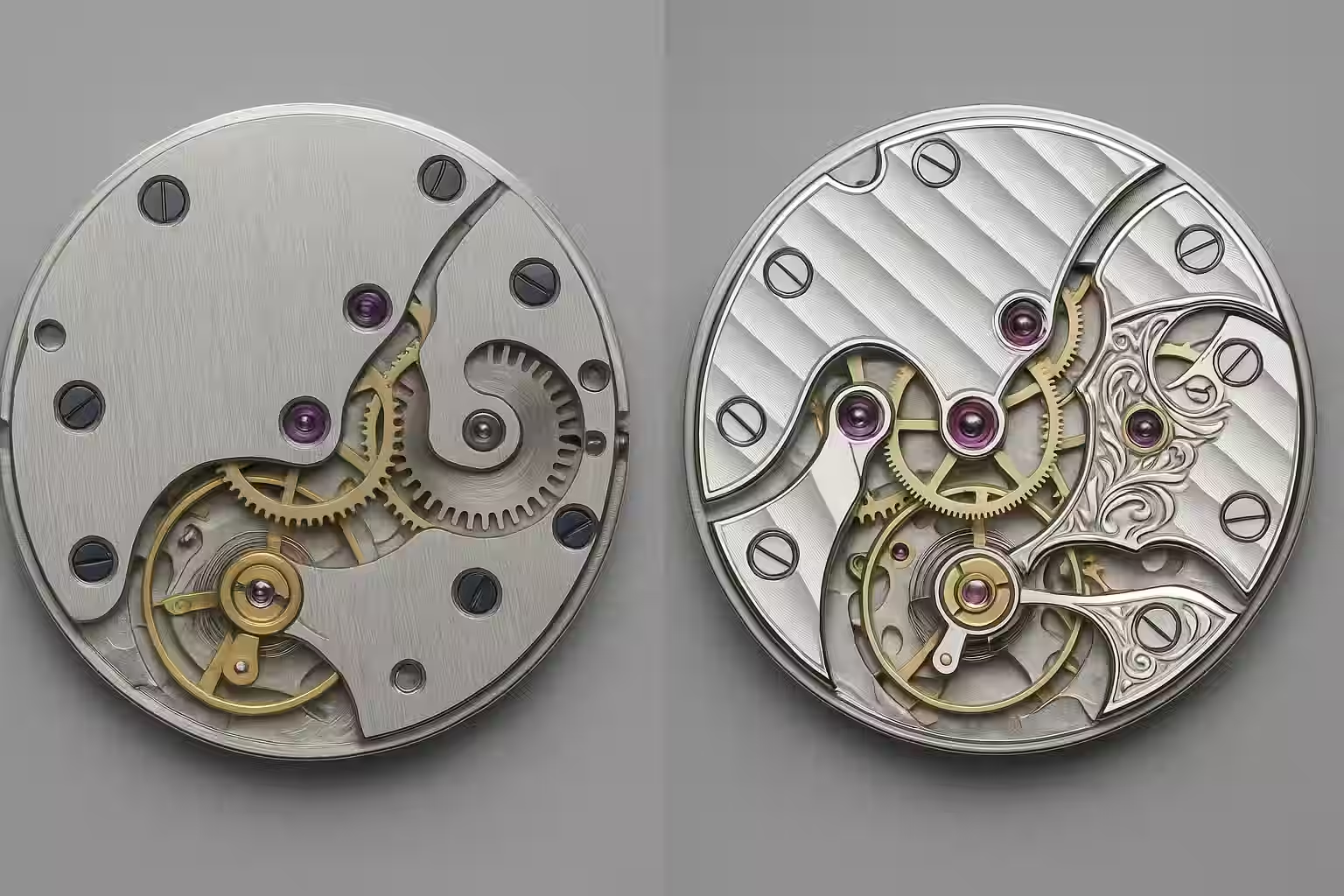
At the entry level you’ll often see simple brushing (or none), utilitarian parts, and sometimes cost-saving materials like plastic rotors. As you move into the mid-range, decoration becomes more deliberate: perlage (circular graining), Côtes de Genève (Geneva stripes), metal rotors, and the occasional heat-blued screw.
High-end finishing adds handwork that’s easy to spot once you know what to look for: polished bevels (anglage), more consistent striping, more complex textures (sunburst, snailing), and custom rotor engraving. True haute horlogerie pushes further into hours of hand finishing—mirror polishing, black polishing, and engraved components that can look like miniature sculpture.
Common Movement Problems & Solutions
Most movement “problems” show up as a symptom you can describe without tools.
If a mechanical watch suddenly starts running fast or slow, magnetization is a common culprit (especially around laptops, phone cases with magnets, speakers, and bags). A quick demagnetize at a watch shop can fix it; if not, regulation or service may be needed.
If an automatic watch stops overnight, it may simply be running low on reserve because you weren’t moving enough to wind it. Hand-wind it for a minute in the morning and see if the behavior changes; if not, it may be due for service.
If a seconds hand stutters or jumps, interpret it based on movement type: on quartz it often signals a low battery; on mechanical it can be a service issue.
If the date changes gradually over a couple of hours around midnight, that can be normal—especially in older designs. If you need a crisp jump, look for movements with “instant” date changes or quick-set functionality.
Takeaway
Understanding movements helps you appreciate what’s happening under the dial, set realistic expectations for accuracy, and spot the difference between genuine engineering and pure marketing.
Most importantly: no movement type is “best.” There’s only what best matches your needs and values—convenience, craft, thinness, accuracy, durability, serviceability, or the simple joy of how it feels on the wrist.
Next Steps
- Watch Brand Guide - Which brands use which movements
- Collecting Strategy - Building a balanced collection
- Watch Care - Maintaining your movements