Buying wine gets dramatically easier when you stop shopping by prestige and start shopping by structure and use case. Not “Which bottle is famous?” but “What do I want this wine to do tonight?”
This guide is designed to work anywhere you can buy wine: a grocery aisle with a dozen familiar labels, a small shop with a wall of regions you’ve never heard of, or a restaurant list that seems to be written in code. You’ll learn a simple shopping loop you can repeat every time:
- Name the job.
- Choose a structure.
- Read the label for the few details that matter.
- Ask for help in a way that’s easy to answer.
- Buy with intention, then taste with attention.
By the end, the shelf will feel less like a test and more like a menu.
Step 1: Decide the job (what problem is this bottle solving?)
Most wine shopping mistakes are really “job” mistakes. You buy a heavy, oaky red for a delicate meal. You buy a delicate, aromatic white for spicy food. You pick a celebratory bottle that’s technically excellent but emotionally wrong for the occasion.
Instead of asking “What’s good?”, start with one sentence that describes the moment. Here are a few jobs that cover almost every purchase.
Weeknight dinner wine
This is the bottle that shouldn’t require effort. It should be food-friendly, not too oaky, and not so high in alcohol that it shouts over the meal. In practice, you’re often looking for higher acidity, moderate body, and either low tannin (for reds) or a dry, crisp profile (for whites).
If you’re cooking and the wine is just there to make dinner feel finished, don’t buy “a statement.” Buy something coherent and easy.
Hosting wine (the crowd-pleaser)
Hosting is about minimizing risk. You want bottles that are broadly liked and forgiving with many foods. Sparkling wine often overperforms here because it’s flexible, festive, and naturally “refreshing.” If you’re buying still wine, aim for balanced structure and avoid extremes: very oaky whites, extremely tannic reds, or very sweet wines unless you know the crowd.
Gift wine
Great gifts do two things: they feel considered, and they reduce the chance of disappointment.
If the recipient is casual, pick a recognizable style that tastes generous. If they’re curious or nerdy, the “gift” is the story: a region you discovered, a grape they might not know, or a classic style in a great vintage range.
You do not need to spend extravagantly to give a good bottle. A thoughtfully chosen $20–$30 bottle often lands better than a random expensive one.
A conversation bottle
This is the bottle you buy because you want to learn. It can be a region, a grape, a producer style, or a winemaking choice (like skin-contact whites, traditional-method sparkling, etc.). The key is to keep the structure aligned with your palate so “learning” doesn’t feel like punishment.
Pairing problem-solvers
Sometimes the job is very specific. The classic examples:
- Spicy food: you usually want high acidity and a touch of sweetness (off-dry) to buffer heat; Riesling is famous here for a reason.
- Rich, fatty food: crisp acidity cuts and resets your palate.
- Very salty foods: sparkling or high-acid whites often shine.
Once you can name the job, you’ve already done the hardest part. The bottle choices get narrower and kinder.
Step 2: Choose structure first (the shortcut that never gets old)
If you’re new to wine, labels and regions can feel endless. Structure is the antidote. Structure is what your mouth experiences: the tension, the grip, the weight, the refreshment. You can buy wine confidently with a handful of structure words.
Here are the four structure levers worth learning first:
Acidity: crisp vs round
Acidity is the “lift” in wine. High-acid wines feel refreshing, mouthwatering, and often pair well with food because they cut richness. Low-acid wines feel rounder and softer, but can feel flat if paired with heavy food.
If you generally love lemony, bright flavors in food, you’ll likely enjoy higher-acid wines.
Tannin (reds): silky vs grippy
Tannin is the drying sensation you get from many reds—like strong tea. It can feel silky and supportive, or aggressively grippy and drying.
Tannin loves protein and fat; it can clash with very spicy food; and it’s often the thing people describe as “too harsh” when a red is served too warm or paired poorly.
Body: light vs full
Body is the wine’s “weight.” Light-bodied wines feel nimble; full-bodied wines feel dense and more filling.
Body is heavily influenced by alcohol and ripeness. It also shapes expectations: if you want a wine to disappear into a meal, choose lighter. If you want the wine to be part of the conversation, choose fuller.
Sweetness: dry vs off-dry vs sweet
Sweetness is not a quality signal. It’s a style choice.
Dry wines can be stunning and complex, but off-dry wines can be perfect with spicy or salty foods. Many people who say they “don’t like sweet wine” actually dislike heavy, syrupy sweetness, not balanced sweetness.
If you can say, “I want something crisp and light” or “I want something full and silky,” you can shop with purpose. For grape-by-grape baselines, use the Wine Database as a quick reference.
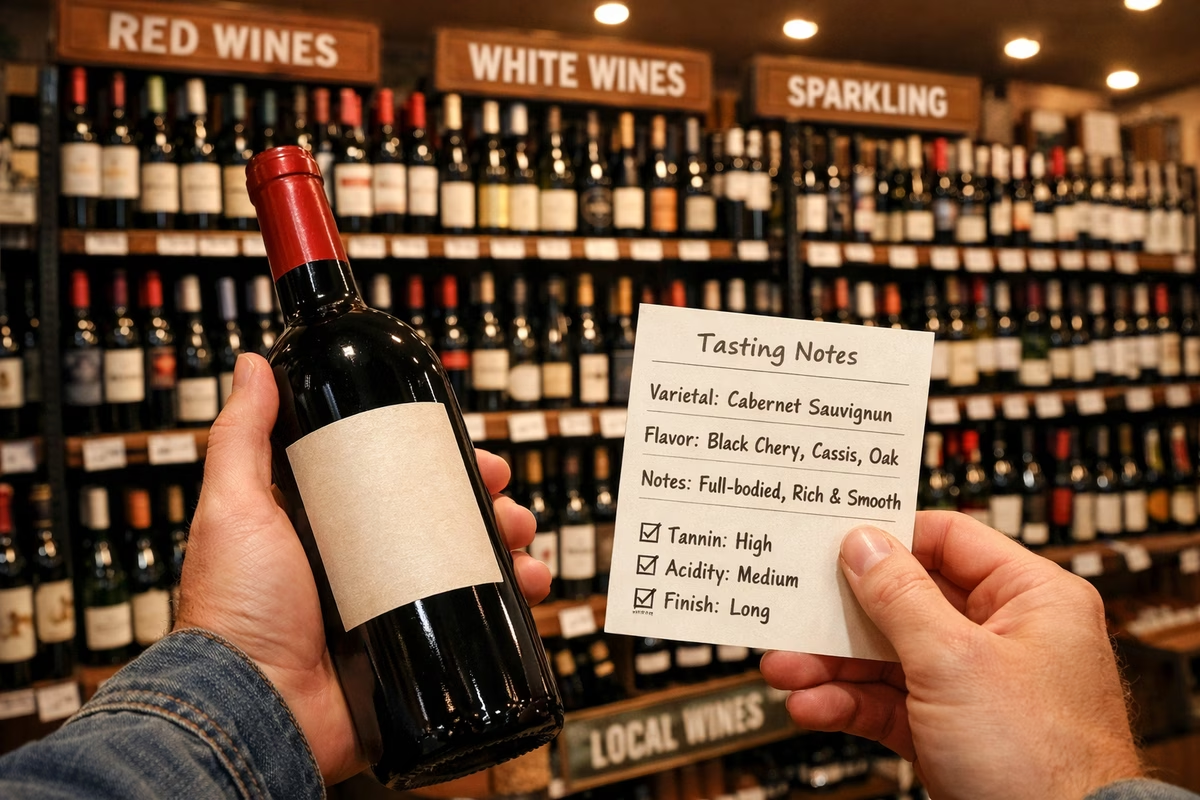
Step 3: Read the label like a map (ignore the poetry, keep the signals)
Wine labels are inconsistent. Some are straightforward, others are decorative. Your goal is not to decode everything. Your goal is to extract a few high-value signals.
The five label signals that matter most
1) Producer (who made it).
Wine is an agricultural product plus craft. Producer matters. Two bottles from the same region and grape can taste dramatically different depending on how they’re made. Over time, you’ll start recognizing producers you like, and shopping will get easier.
2) Region (where it’s from).
Region often predicts structure. Cooler regions tend to produce higher-acid wines; warmer regions often produce riper, fuller wines. Even if you don’t know the details, region helps you place a wine on a mental map.
3) Grape (or implied grape).
Some labels say the grape; others imply it through region rules. Either way, grape is a useful shortcut to likely structure.
4) Vintage (harvest year).
Vintage is a clue about freshness and development. For most affordable wines, newer is usually better because the wine isn’t designed to age for years. For classic age-worthy styles, vintage can matter a lot, but you don’t need to become a vintage scholar to buy well.
5) Alcohol percentage.
Alcohol is not a moral judgment; it’s a proxy. Higher alcohol often correlates with riper fruit and fuller body. Lower alcohol can suggest a lighter, fresher style (though there are exceptions).
What to ignore (most of the time)
Marketing adjectives like “smooth,” “bold,” “reserve,” and “special selection” are often unregulated and inconsistent. They can be true, but they are not reliable. When in doubt, trust producer and region over fancy language.
Step 4: Pick a “safe lane” on the shelf
When you’re staring at 80 bottles, you don’t need to compare all of them. You need to select a lane that fits the job and your palate.
Here are a few safe-lane heuristics you can use immediately.
If you want a crisp white that works with almost anything
Choose a high-acid white. Many people love Sauvignon Blanc for its bright, herbal-citrus profile. Riesling can be crisp and dry or off-dry; it’s also one of the best “pairing problem-solvers” for spicy foods.
In shops, look for cues like “dry,” “crisp,” or simply ask for “high-acid.”
If you want a red that won’t fight dinner
Choose a lower-tannin red with good acidity. Pinot Noir is the classic choice: it can be elegant, food-friendly, and expressive without aggressive tannin.
If you’ve ever had a red feel heavy or harsh, try shifting lighter and a touch cooler in serving temperature; it changes everything.
If you want a structured red for steak, stew, or a bold mood
Choose a wine with tannin and body. Cabernet Sauvignon and Syrah are common anchors here.
The trick is not to buy the biggest version available, but the most balanced one for your meal and your preference. If you like structure but dislike harshness, ask for “firm but not aggressively tannic,” or “structured but not jammy.”
If you want a bottle that makes everything feel like an occasion
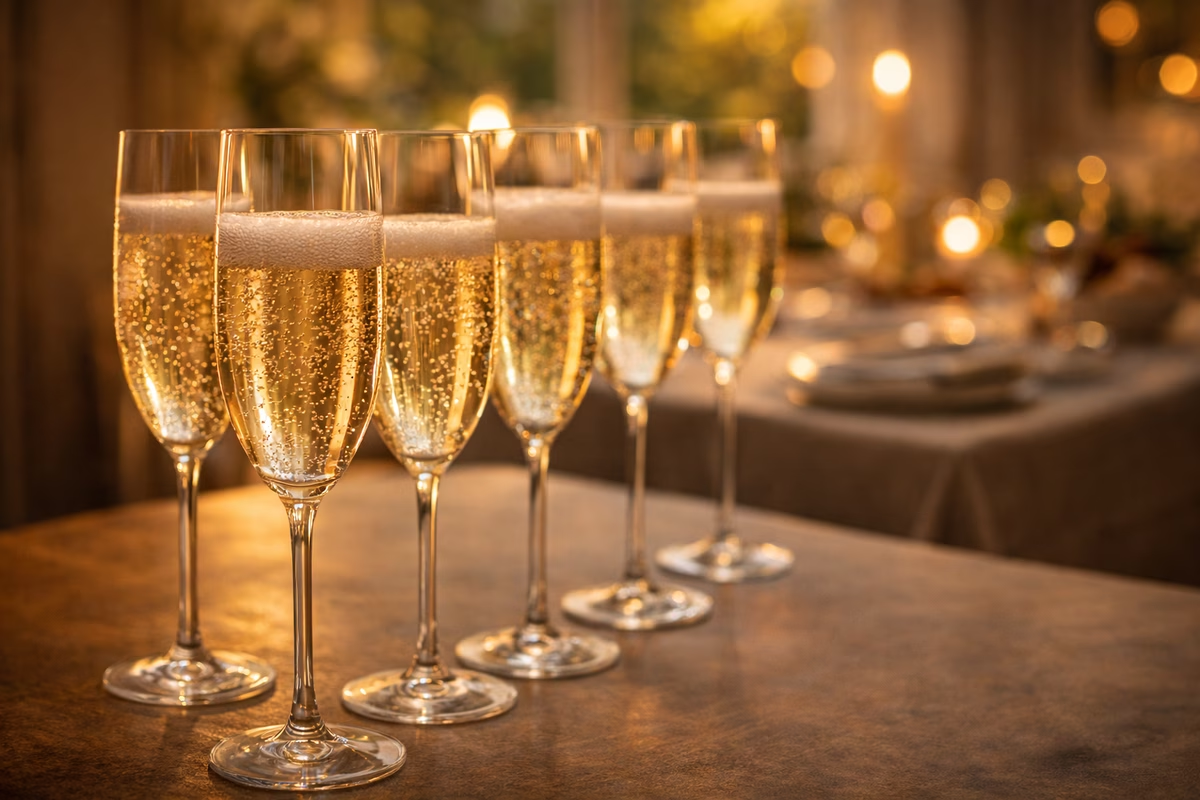
Consider sparkling wine. Sparkling cuts richness, resets your palate, and tends to play well with many foods. It also turns “Tuesday leftovers” into a small celebration.
Step 5: Ask one good question (so staff can actually help you)
Wine shop staff can be incredibly helpful, but only if you give them a solvable problem. “What’s your best wine?” is not solvable. “I’m eating roast chicken, my budget is $20–$30, and I want something not too oaky” is solvable.
Use this template:
“I’m eating ___, my budget is ___, and I usually like wines that are ___ (crisp / low tannin / not too oaky / medium-bodied). What’s drinking well right now?”
If you don’t have preference words yet, borrow these:
- “I want something bright and refreshing.”
- “I want something soft and easy.”
- “I want something structured and serious, but not harsh.”
If you’re in a restaurant, add one more line: “We’re ordering ___ and ___.” Good servers can steer you quickly.
Step 6: Buy for contrast (the fastest way to learn your taste)
If you’re learning, the best move is to stop buying slight variations of the same wine. Contrast teaches your palate.
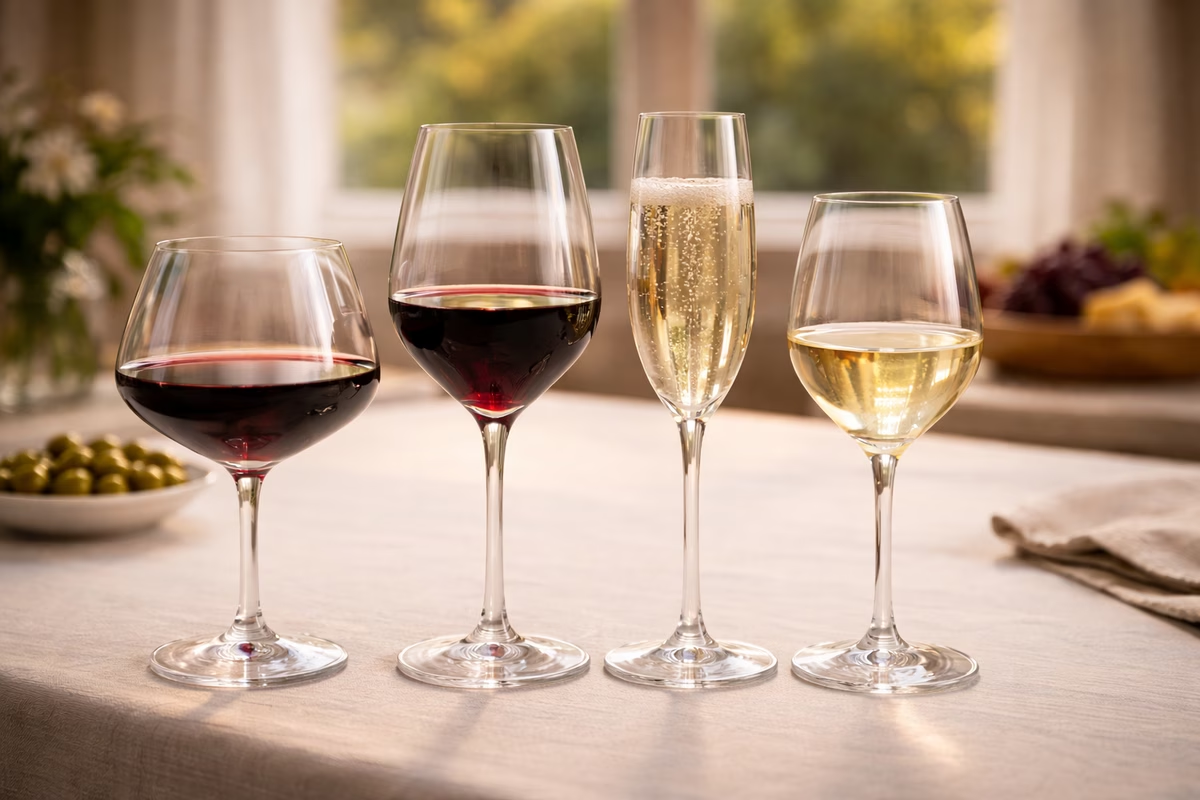
Build a tiny lineup—four bottles is plenty—and taste them across a month:
A high-acid white like Sauvignon Blanc or Riesling.
A silky, food-friendly red like Pinot Noir.
A structured red like Cabernet Sauvignon or Syrah.
A flexible wildcard like sparkling wine.
The point isn’t to “find the best.” The point is to feel the differences in acidity, tannin, body, and sweetness so your preferences stop being vague.
Here’s a simple at-home exercise: pour a small glass of each over two evenings. On the first evening, just drink. On the second, write three words for each wine: one aroma, one texture note, one pairing thought (“loves salty food,” “needs fat,” “tastes better colder,” etc.). That’s enough to build taste memory.
Common traps (and what to do instead)
Trap: shopping by prestige or fear
If you’re scared of being wrong, you’ll gravitate toward famous regions, high scores, or labels that feel authoritative. The problem is that those signals don’t guarantee you’ll like the wine with your meal.
Instead: shop by job and structure. It makes “wrong” much rarer.
Trap: “Reserve” and other magic words
On many affordable labels, words like “reserve” are marketing, not a reliable quality category.
Instead: use region, producer, and (when available) importer/distributor reputation. If there’s staff, ask what they personally drink at that price.
Trap: buying the hottest region at the lowest price
When a region is currently hyped, bargain bottles can be generic or stretched thin.
Instead: look for neighboring areas or similar styles. Value often lives just outside the spotlight.
Trap: assuming you dislike a whole color or category
People often say “I don’t like red wine” when what they mean is “I don’t like very tannic reds served too warm,” or “I don’t like oaky styles.”
Instead: change the structure, not the category. Try a lighter red served slightly cool; try a crisp white at the right temperature; try sparkling.
A quick workflow you can repeat every time
If you want the whole system in one minute, use this sequence:
Name the job: dinner / hosting / gift / learning / pairing problem.
Choose the structure: crisp / silky / structured / bubbly.
Read label for producer, region, vintage, alcohol.
If staff exists, ask the one good question with food + budget + structure.
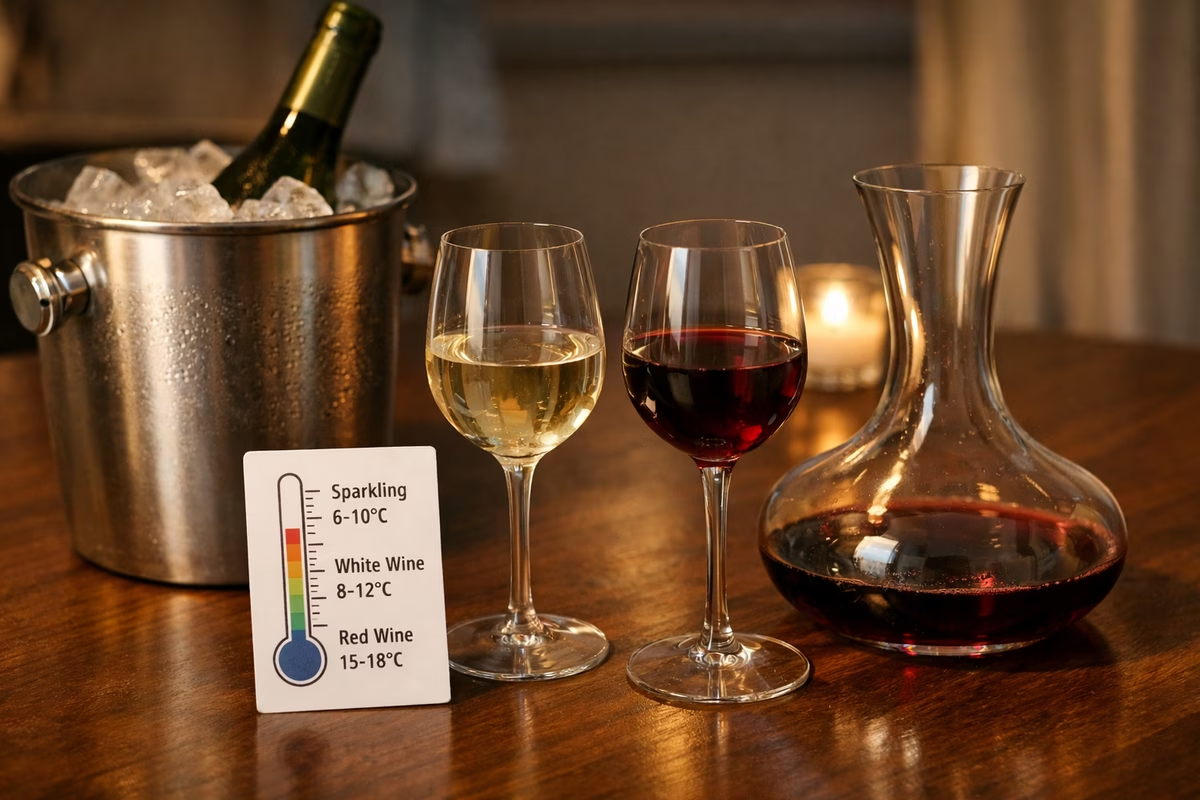
When you get home, serve it well. Temperature is a quality multiplier.
Next steps
If you want your next bottle to taste better immediately, learn the two easiest “quality multipliers”: Serving Temperature and Decanting. When dinner is the real goal, Pairing With Modern Foods will make your shopping choices feel obvious.