Modern food breaks the old pairing scripts.
The classic rules were written for a certain kind of Western meal: a main protein, a sauce, a starch, a modest level of heat, and a relatively narrow set of flavor profiles. But modern cooking is global by default. A single bowl might combine fermented funk, citrus, chili heat, sesame richness, and a sweet-savory glaze. A “salad” might be a spicy, crunchy, umami-forward plate with fried shallots and fish sauce. A burger might arrive with kimchi, gochujang mayo, and pickles.
If you try to pair that with rigid, old-fashioned rules, you’ll end up frustrated.
The good news is that modern pairing can be simpler than traditional pairing once you learn to organize by elements rather than cuisine. Instead of asking “What wine goes with Korean food?” you ask “What wine goes with heat + acid + umami + a touch of sweetness?”
This guide gives you an element-first method you can use for fusion, spice-forward, and globally inspired meals. You’ll learn how to identify the dominant forces in a dish, how to choose wine structures that cooperate, and how to build a small “modern menu” lineup that covers most meals.
The pairing mindset: echo, contrast, or reset
Most great pairings do one of three things.
1) Echo
The wine shares an aroma or flavor family with the dish: citrus with citrus, smoke with smoke, herbs with herbs. Echoing is satisfying because it feels inevitable.
2) Contrast
The wine brings a counterweight: crisp acidity against richness, bubbles against fried textures, a touch of sweetness against heat. Contrast is often the secret weapon for modern foods because contemporary dishes frequently stack multiple intense elements.
3) Reset
The wine acts like a palate cleanser. This is why sparkling wine is so often a modern pairing cheat code: it refreshes and makes the next bite feel like the first.
When you’re stuck, choose reset.
Organize by elements, not cuisine
Modern menus travel. Techniques and ingredients move faster than geography.
So instead of sorting by “Thai” or “Mexican,” sort by what the dish is doing to your palate:
- Weight and richness
- Heat (capsaicin)
- Acid (lime, vinegar)
- Umami (soy, miso, mushrooms)
- Sweetness (glazes, BBQ sauces)
- Texture (fried, crispy, creamy)
This element-first approach lets you pair a Japanese-inspired dish with the same logic you’d use for a Peruvian-inspired dish if the structural elements match.
The three rules that do most of the work
If you only remember three principles, remember these.
Rule 1: match weight
Light dishes want lighter wines. Rich dishes can handle fuller wines.
Weight isn’t only about portion size; it’s about fat, density, and sauce. A small bowl with sesame, fried garlic, and rich broth can be heavier than a large salad.
Rule 2: manage heat by managing alcohol
Chili heat amplifies the feeling of alcohol and can mute fruit. This is why high-alcohol reds can feel aggressive with spicy dishes.
For heat-forward food, look for:
- Lower alcohol
- Bright acidity
- Sometimes a touch of sweetness
Rule 3: treat acidity as a friendship test
If the dish is highly acidic (lime-heavy, vinegar-forward), the wine must have at least as much acidity or it will taste flat and dull.
Acidic dishes don’t “ruin wine.” They simply expose wines that don’t have enough energy.
A practical pairing matrix (as prose, not homework)
Pairing matrices are useful, but the best ones translate into intuition. Here’s the same information in a form you can remember.
Heat / chile spice
Heat is the bully in the room. It turns alcohol up and fruit down.
If the dish has real chili heat, start by avoiding wines that are both high-alcohol and tannic. Then choose a wine that cools rather than inflames.
Great tools include off-dry aromatic whites and high-acid sparklers. Off-dry Riesling is a classic because it offers acidity, aroma, and a little sweetness to buffer heat.
Fat / richness
Richness coats your palate and makes flavors feel quieter. The antidotes are acidity and bubbles.
This is why sparkling wine is so flexible. It cuts, refreshes, and resets. Crisp whites can do a similar job.
If you want red with rich food, choose reds with enough acidity and not too much tannin if the dish is also spicy.
Acid (lime, vinegar, pickles)
High-acid food makes low-acid wine taste soft and dull.
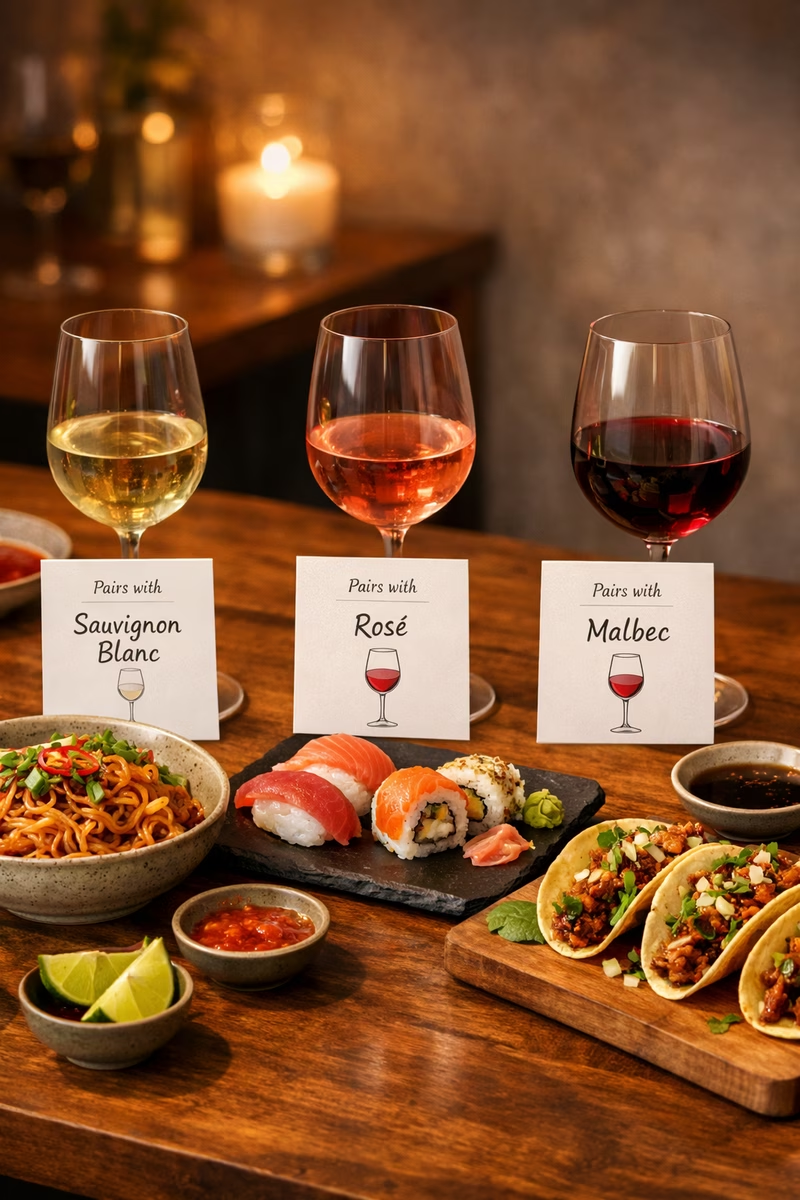
If the dish is bright and acidic, choose a wine that is also bright. A crisp white like Sauvignon Blanc often succeeds because it can match the energy of citrus and herbs.
Umami (soy, miso, mushrooms, aged cheese)
Umami can make tannin feel harsher. It can also make some wines taste metallic if the pairing is very off.
The easiest solution is to choose low-tannin reds or savory whites, and to lean on bubbles for reset. Pinot Noir can be a strong choice because it often carries savory nuance without aggressive tannin.
Sweetness (glazes, BBQ, caramelized sauces)
Sweetness in food makes dry wine taste drier and more austere.
When a dish is sweet-savory, a wine with ripe fruit character or a touch of residual sugar often behaves better. This is why some off-dry whites and fruit-forward, low-tannin reds can feel surprisingly right.
The shortcut that rarely fails: sauce + cooking method
When a dish is “fusion,” the sauce and cooking method often matter more than the protein.
Ask two questions:
Is it fried, grilled, braised, raw, or creamy?
Is the sauce acidic, sweet, spicy, umami-heavy, or fatty?
Then choose structure.
Fried / crispy
Fried food loves bubbles and acidity. Sparkling wine turns fried textures into something lighter and more playful.
If you don’t have sparkling, crisp whites and dry rosé can also work.
Grilled / charred
Char adds bitter-sweet caramelization and smoke-adjacent flavor. Wines with savory depth can echo this beautifully.
If you go red, structured grapes like Syrah often match grilled flavors. If you go white, choose something with texture so it doesn’t get lost.
Creamy / nutty sauces (tahini, sesame, peanut)
These sauces are rich and aromatic. They can be tricky because they combine fat with sweetness and sometimes heat.
Aromatic whites can echo spice notes. Light reds with low tannin can also work when the dish has roasted elements.
Sweet-spicy glazes
This is a modern staple (think gochujang, BBQ, chili crisp with honey, sweet chili sauces).
The key is to avoid high tannin and high alcohol. Off-dry whites and bright sparklers often win. If you go red, choose fruit-forward and low-tannin.
A few modern dishes, decoded
Instead of memorizing pairings, learn to decode dishes.
Spicy gochujang chicken bowl
Elements: heat, sweetness, umami, often some acid.
Strategy: lower alcohol, a touch of sweetness, high acidity.
An off-dry Riesling is a reliable choice. If you want contrast, an unoaked, higher-acid white can work when the bowl isn’t too sweet.
Mole and complex sauced dishes
Elements: deep spice, savory complexity, sometimes sweetness and bitterness.
Strategy: match weight, echo spice, avoid overly simple wines.
A mature, savory red can echo complexity. The goal is a wine with enough depth to be part of the conversation, not a bright, delicate wine that will get buried.
Fermented vegetable plate (kimchi, pickles, miso)
Elements: acid, umami, funk, sometimes heat.
Strategy: reset and match acidity.
Dry sparkling is a standout here because it refreshes and survives the intensity. High-acid whites also do well.
Ceviche and citrus salads
Elements: high acid, freshness, often herbs, sometimes heat.
Strategy: match acidity, keep weight light.
Sauvignon Blanc is a classic lane. Crisp whites with citrus energy tend to work.
Global street-food mashups
Elements: usually fat + salt + acid + sauce.
Strategy: choose a flexible wine.
Dry rosé and low-tannin reds can be extremely useful here because they sit in the middle: enough structure to handle meat, enough freshness to handle acid.
Hosting a modern menu (how to make it easy)
Hosting makes pairing feel higher-stakes. The trick is to reduce risk with structure.
Offer a three-bottle flight
If you’re serving multiple dishes, a three-bottle lineup covers most modern food:
A brut sparkling (reset, salt, fried foods, umami)
An aromatic white (handles heat, ginger, chili, sweet-spicy sauces)
A low-tannin red (handles grilled meats, mushrooms, soy-based sauces)
You can keep the wines simple and let guests explore. You’re not forcing one “perfect” pairing; you’re giving options.
Label with one sentence
If guests aren’t wine people, labels help:
“Sparkling: fried + salty + umami.”
“Aromatic white: spicy + ginger + sweet heat.”
“Light red: grilled + soy + mushrooms.”
People relax when they know the intent.
When pairings go wrong (how to fix them)
Pairing failure is normal. Modern food is intense. Here’s how to troubleshoot.
If the wine tastes hot/boozy
The dish is amplifying alcohol. Switch to lower alcohol, chill the wine slightly, or choose something with a touch of sweetness.
If the wine tastes flat
The dish has more acidity than the wine. Choose a higher-acid wine.
If the red tastes harsh and drying
Umami and spice are making tannin feel sharper. Choose lower-tannin reds or switch to white or sparkling.
If everything tastes too sweet
The sauce is sweet. Choose a wine with either some residual sugar or very ripe fruit character, or move to sparkling for reset.
Next steps
If you want to buy wine with pairing in mind, connect this guide with How to Buy Wine Without Guessing and build your decisions around structure. For grape baselines, explore the Wine Database and use it as your pairing cheat sheet.