Most “bad wine” experiences are actually temperature problems.
When a wine is too warm, alcohol gets loud, sweetness can feel heavier, and tannins (in reds) feel rougher and drier than they need to. When a wine is too cold, aroma disappears, texture can feel thin or waxy, and the wine tastes simpler—like someone turned down the volume on everything that makes it interesting.
The good news is that temperature and air are levers you can control. Fixing them is the highest-return move you can make without buying a better bottle.
This guide is intentionally practical. You don’t need a cellar, a thermometer, or a fancy decanter to get 90% of the benefit. You just need a simple goal, a few temperature targets, and a way to decide when air will help and when it will hurt.
The simple goal
Serve wine at the temperature where aroma shows up and structure feels balanced.
That’s it. Not “as cold as possible” and not “room temperature.” The correct temperature is the one where the wine tastes most like itself.
If you want a way to remember what you’re aiming for, think of temperature like focus on a camera:
- Too cold and the wine is blurry—aroma is muted and you can’t see detail.
- Too warm and the wine is overexposed—alcohol and heaviness wash out nuance.
Why temperature changes wine so much
It helps to know what temperature is doing in your glass.
When wine warms, aromatic compounds volatilize more easily, so smells come out faster. That sounds good—until alcohol also becomes more noticeable and starts to dominate. Warmth can make a wine feel sweeter and heavier, which is why a red served too warm can seem “jammy” or “boozy” even if it’s well-made.
When wine cools, sweetness and alcohol feel restrained, which can be a relief. But cold also suppresses aroma and can tighten texture. Very cold white wine can taste clean but blank, like you’re tasting the outline rather than the picture.
So the sweet spot is where you get aroma without turning alcohol into the main event.
Temperature targets you can trust (and why they work)
You can obsess over exact degrees, but you don’t need to. The ranges below are wide on purpose; they’re designed to be achievable in a real kitchen.
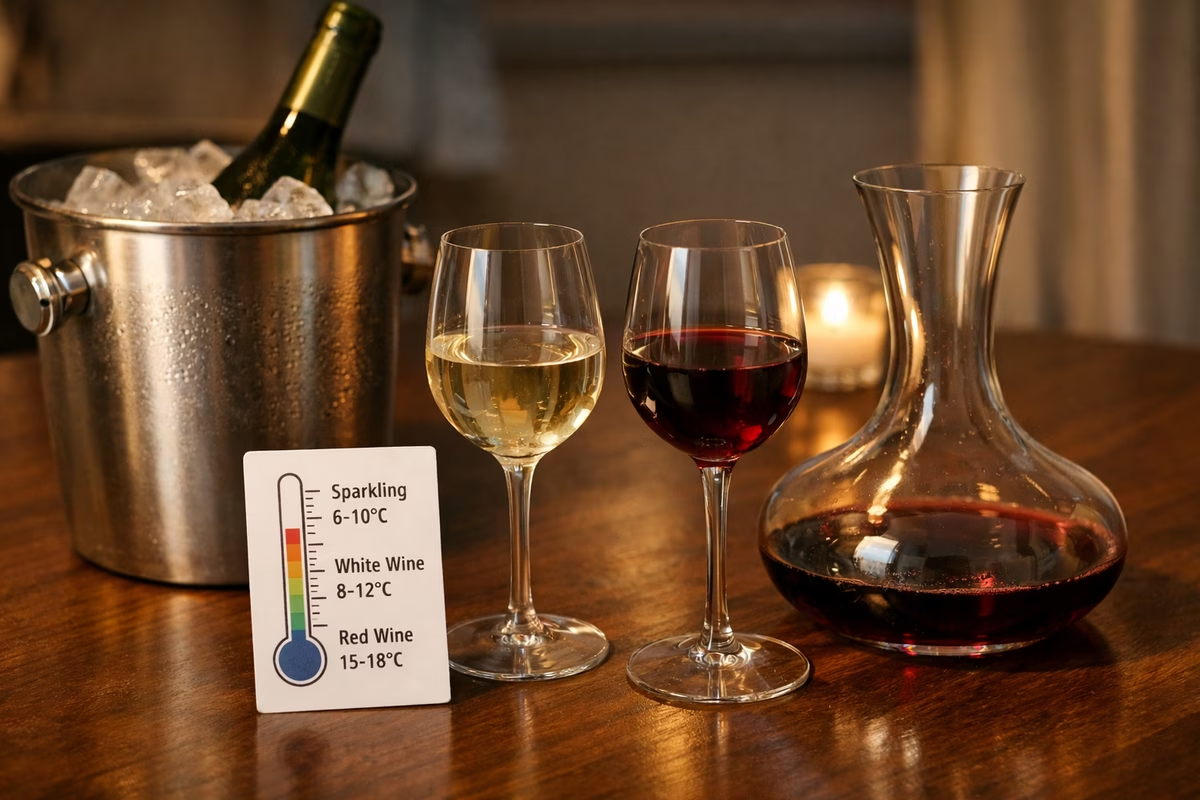
Sparkling wine: 7–9°C (45–48°F)
Sparkling likes being cold because cold preserves crispness and keeps bubbles lively. But if you serve it too cold, you flatten aroma and turn it into pure acidity and texture.
If your sparkling tastes aggressively sharp and not very flavorful, it’s probably too cold. Let the glass warm for a few minutes and try again.
Crisp whites (Sauvignon Blanc, dry Riesling): 8–10°C (46–50°F)
These wines live on freshness. Serve them cool so acidity feels bright and the wine feels energized. But don’t freeze them into silence.
If you’re learning structure, this is a great category to practice on because changes in temperature are easy to notice.
Fuller whites (Chardonnay, richer blends): 10–12°C (50–54°F)
Fuller whites need a little warmth to show texture and aroma. Serve them too cold and they can feel waxy, overly tight, or one-note. Serve them too warm and they can feel heavy.
If you’re unsure, aim slightly cooler and let the glass do the work—fuller whites often open up beautifully over ten minutes.
Light reds (Pinot Noir, Gamay): 14–16°C (57–61°F)
Light reds are often best with a small chill. It makes them more refreshing, emphasizes acidity, and keeps alcohol from feeling sweet. Many people who “don’t like red wine” discover they love red wine when it’s served in this range.
Structured reds (Cabernet Sauvignon, Syrah): 16–18°C (60–65°F)
Structured reds need enough warmth to show aroma and soften tannin perception, but not so much that alcohol dominates.
If you only remember one rule: most reds are better slightly cooler than “room temperature.” Modern indoor room temperature is often warmer than the traditional cellar-ish rooms that gave us the phrase.
How to hit the right temperature without a thermometer
The easiest way to serve wine well is to accept that you’ll adjust it in small moves.
If the wine is too warm
Use the fridge as a gentle tool.
For reds, 10–15 minutes in the fridge often takes the edge off warmth and brings balance back.
For whites, 15–25 minutes in the fridge is a common sweet spot if the bottle started at room temperature.
If you need speed, an ice bath (ice + water) cools faster than just ice. The water increases contact with the bottle.
The mistake to avoid is overcooling. A wine that’s too cold can be hard to “rescue” quickly without just waiting.
If the wine is too cold
Pour it into a glass and wait. The glass warms quickly.
If you’re impatient, hold the bowl of the glass in your hands for a minute or two. Aroma often returns faster than you expect.
Avoid microwaving, hot water, or other aggressive methods. You’re trying to nudge, not shock.
A simple temperature workflow that rarely fails
If you want a repeatable routine:
Open the bottle and pour a small taste.
If aroma feels muted and the wine tastes “tight,” let it warm a bit.
If alcohol feels loud or the wine feels heavy and sweet, chill it slightly.
Re-taste after five minutes.
You’re not chasing a number. You’re chasing balance.
Decanting: what it actually does
Decanting has a reputation for being ceremonial, but it’s just a tool. It does two different jobs, and confusing those jobs is what leads to bad advice.
Job 1: Aeration (mostly for young wines)
When you expose wine to air, you often soften the perception of tannin and bring aromas forward. The wine doesn’t become a different wine; it becomes easier to read.
This can be especially helpful for young, structured reds that smell muted or taste “hard.” Aeration can make the wine feel more coherent—less like separate parts and more like a whole.
Job 2: Sediment separation (mostly for older wines)
Older wines can throw sediment. That’s normal. Decanting can keep the pour clean so you don’t end up with gritty texture in the last glass.
Sediment decanting is less about “air helps” and more about “keep the sediment in the bottle.” In fact, very old, delicate wines can be harmed by too much air.
When to decant (and when to skip it)
Decanting is not mandatory. It’s situational.
Decanting often helps when…
You’re drinking a young wine with noticeable structure and the wine feels closed. Common patterns include young Cabernet, Syrah/Shiraz, structured blends, and many very tannic styles.
If the wine smells shy, tastes angular, or feels like tannin is out in front of fruit, air is worth trying.
Decanting sometimes helps when…
The wine has both structure and nuance, and you want it to “settle.” Many medium-bodied reds fall here, as do some richer whites. You don’t need an hour; you often just need a small head start.
Decanting usually doesn’t help when…
The wine is delicate and aromatic (many crisp whites) or relies on bubbles (sparkling). Sparkling loses its point if you decant it. Fragile older wines can also collapse with too much air.
The guiding principle: decant wines that feel tight and structured; avoid decanting wines whose main magic is delicacy.
How to decant without special equipment
You do not need a decanter to decant. A clean glass pitcher works. A large measuring jug works. Even a second wine bottle works for a “double decant.”
The goal is simply to increase the wine’s contact with air (for aeration) or to separate wine from sediment (for older bottles).
If you’re doing sediment separation and want to be careful, pour slowly and stop when you see sediment approaching the neck. The last bit can be left behind.
Two decant workflows that work at home
These workflows are designed to be quick, low-drama, and effective.
The quick open (10–20 minutes)
This is the weeknight move.
Pour a small taste right after opening. If it tastes great, you’re done.
If it smells muted or tastes hard, pour it into a clean pitcher and let it sit while you finish cooking. Taste again after ten minutes.
Often, that’s all a wine needs: not a ritual, just a little oxygen and time.
The structured red open (30–90 minutes)
Use this when tannin feels aggressive or aroma is clearly closed.
Decant into a vessel with a wider surface area (more air contact). Keep the wine slightly cool rather than warm.
Taste every 15–20 minutes. You’re waiting for the moment the wine feels coherent: the fruit comes forward, tannin feels supportive rather than dominant, and the aroma gets more specific.
Stop when it hits that point. “More air” is not always better; beyond the peak, some wines flatten.
Common mistakes (and how to fix them)
Mistake: serving reds too warm and calling them boozy
If alcohol feels loud, chill the bottle for ten minutes. Then re-taste. You’ll often be surprised at how much “quality” appears when you simply reduce warmth.
Mistake: serving whites too cold and calling them boring
If the wine tastes like cold acidity and not much else, let the glass warm. Aroma returns quickly.
Mistake: decanting everything because “air helps”
Air is a tool, not a rule. Use it when structure is dominating, not when delicacy is the point.
Mistake: leaving a wine open for hours without checking
Some wines improve for a while, then decline. The fix is simple: taste periodically, and stop when it tastes best.
A small practice that makes you better fast
Pick one bottle you already own.
Taste it at the temperature you’d normally serve it. Then adjust into the target range and taste again. If it’s a structured red, try a short decant and taste again.
This isn’t about perfection. It’s about building the link between temperature, aroma, and structure. Once you feel that link, you’ll start serving wine well by instinct.
Next steps
For structure baselines and serving ideas by grape, use the Wine Database. If you want to make shopping decisions that pair with dinner more reliably, connect this guide with Pairing With Modern Foods and you’ll start getting “restaurant-level” results from ordinary bottles.