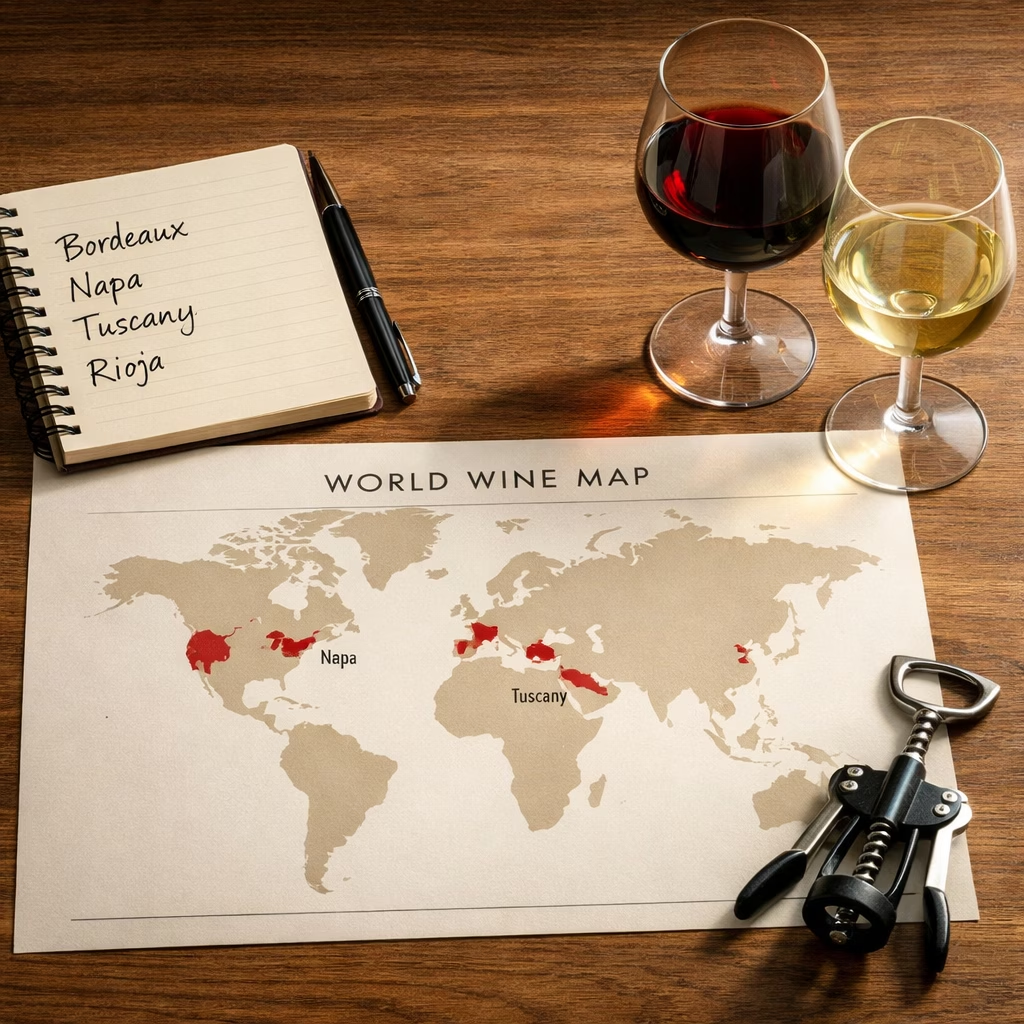
World Wine Regions Guide
Wine is geography you can taste. The same grape—Chardonnay, Pinot Noir, Cabernet—can feel completely different depending on where it grows, how warm the days are, how cool the nights get, how much water the vines struggle for, and what a region has decided “good” should mean over hundreds of harvests.
This guide is a tour of major regions and the flavors they tend to produce. Use it like a map: not to memorize names, but to build instincts. When you see a region on a label, you should be able to predict the wine’s shape—lighter or fuller, sharper or rounder, earthy or fruit-forward—and pick bottles more confidently.
How to Use This Guide
If you’re new, don’t try to “learn all regions.” Pick one region you see often, learn what it tastes like, then branch out to a neighbor. Wine knowledge sticks best when it attaches to a real bottle you’ve opened.
If you’re shopping, look for three clues in order. Start with climate, because cool places usually push wines toward higher acidity and lighter body while warm places pull them toward ripeness and fullness. Then look at the grape, because Cabernet and Pinot Noir are never going to behave alike no matter where they grow. Finally, pay attention to local tradition: some regions prize freshness, others power, some love oak, others avoid it, and some define themselves through blends rather than single varieties.
Understanding Terroir
Terroir (tehr-WAHR) encompasses everything that influences how grapes grow: climate, which controls temperature, rainfall, sunlight, and wind; soil, which affects drainage and what the roots can access; topography, including elevation, slope, and aspect; and human choices, from farming and harvest timing to the local winemaking tradition that shapes what a region is trying to become.
France: The Standard Bearer
Bordeaux
Bordeaux sits in southwest France where rivers widen into the Gironde estuary. The climate is maritime—mild, damp, and changeable—which is one reason Bordeaux has always leaned on blends. When weather makes one grape struggle, another can carry the year.
The core idea: Bordeaux reds are often built like architecture. Cabernet Sauvignon brings structure (tannin, blackcurrant, graphite). Merlot brings plushness (plum, softness). Cabernet Franc adds lift and aromatics. White Bordeaux leans on Sauvignon Blanc and Sémillon, and sweet Bordeaux (Sauternes/Barsac) turns noble rot into honeyed complexity.
The most useful Bordeaux shorthand is bank-based, but what it really captures is a difference in soil and ripening style. The Left Bank, especially places like the Médoc and Graves, is more gravelly and usually feels more Cabernet-shaped: firmer, more structured, and built to age. The Right Bank, including St-Emilion and Pomerol, has more clay and limestone, which tends to suit Merlot and gives wines a rounder, earlier charm. Then there is the sweet-wine lane of Sauternes and Barsac, where botrytized Sémillon and Sauvignon Blanc become long-lived, honeyed wines with apricot and toasted-nut depth.
Price Range: $15–$10,000+ (huge variation)
Best Value: Bordeaux Supérieur and Côtes de Bordeaux often deliver the “Bordeaux shape” for $15–$30.
Burgundy
Burgundy is the great proof that place matters. It’s a cool, continental region where small differences—slope angle, drainage, exposure—can change a wine dramatically. Burgundy is also famously fragmented: the same vineyard name can appear on bottles from many different producers, and producer quality matters as much as the place.
The headline is simple: Burgundy is Pinot Noir and Chardonnay at their most transparent. Pinot tends to be red-fruited, earthy, and structured by acidity rather than power; Chardonnay can range from steely and mineral to creamy and layered depending on site and winemaking.
Burgundy is easiest to learn north to south. Chablis shows Chardonnay in a cooler, chalkier, more mineral register. The Côte d’Or is the prestige core, with the Côte de Nuits leaning heavily into Pinot Noir and the Côte de Beaune splitting its fame between great Chardonnay and excellent Pinot. South of that, the Côte Chalonnaise often offers relief from Côte d’Or prices, while the Mâconnais gives you friendlier, approachable Chardonnay. Beaujolais is technically separate, but it often enters the same conversation because Gamay there can range from cheerful everyday drinking to serious cru wines.
The classification ladder is not a guarantee of quality, but it does help decode labels. Grand Cru names the highest vineyards, Premier Cru identifies standout sites within villages, Village wines are labeled by the village itself, and Regionale bottlings cast a wider net across Burgundy. Producer quality still matters enormously at every level.
Price Range: $20–$20,000+ (extreme range)
Best Value: Bourgogne Rouge/Blanc from good producers ($25–$45) is often the best learning buy.
Champagne
Champagne is sparkling wine built for precision. It’s a cool, marginal climate where grapes keep high acidity, which is exactly what you want for wines that will be fermented twice and aged on lees. The “Champagne taste” is a mix of citrusy tension, toasted brioche notes, and fine bubbles that feel like texture rather than soda.
The three main grapes divide the work cleanly. Chardonnay usually brings lift, citrus, and elegance; Pinot Noir provides structure and depth; and Pinot Meunier contributes fruit and early approachability.
Champagne labels look more intimidating than they are. Brut is the standard dry style, while Extra Brut and Brut Nature move drier and Sec or Demi-Sec move sweeter. Blanc de Blancs means 100 percent Chardonnay and usually reads sharper and more mineral; Blanc de Noirs means the wine is built from the dark grapes and usually feels richer. Vintage Champagne comes from one year, while non-vintage is a multi-year blend designed to express the house style consistently.
Price Range: $40–$500+
Best Value: grower Champagne (vigneron bottles) often delivers distinctive terroir character around $40–$70.
Rhône Valley
The Rhône is two regions stitched together by a river. In the North, steep slopes and a cooler climate make Syrah the star—peppery, savory, sometimes smoky, with real structure. In the South, Mediterranean warmth favors Grenache-led blends that taste riper and more generous.
If you want a simple buying lens: Northern Rhône is often about precision and pepper; Southern Rhône is often about warmth and spice.
In the North, Côte-Rôtie gives you perfumed, elegant Syrah, Hermitage goes larger and more age-worthy, Cornas leans rustic and intense, and Condrieu shows Viognier in its richest aromatic form.
In the South, Chateauneuf-du-Pape is the famous complex-blend benchmark, Gigondas and Vacqueyras are often the value-rich alternatives, Cotes du Rhone supplies the everyday bottles that overdeliver, and Tavel reminds you that serious rose has a long history here too.
Price Range: $12–$300+
Best Value: Côtes du Rhône and Côtes du Rhône Villages ($12–$25).
Loire Valley
The Loire is a long, cool river valley that produces some of the most food-friendly wines in the world. The unifying theme is freshness: bright acidity, aromatic lift, and a sense of “clean edges,” even in the reds.
The Loire is also a lesson in range. Sancerre and Pouilly-Fume make the citrusy, incisive Sauvignon Blancs many people know first. Vouvray shows Chenin Blanc across a huge stylistic spectrum, often balancing honeyed or waxy notes against bright acidity. Chinon and Bourgueil introduce Cabernet Franc in a lighter herbal register, while Muscadet gives you crisp, lightly salty whites that seem built for oysters.
Price Range: $15–$80
Best Value: Loire is value-friendly across the board; it’s a great region for learning because pricing is often sane.
Italy: Ancient Traditions
Tuscany
Tuscany is Sangiovese country: cherry fruit, bright acidity, and an earthy, herbal edge that makes it feel made for food. The climate is warm and Mediterranean, but elevation and inland cooling keep wines from feeling heavy when they’re made traditionally.
The essential Tuscany lanes are straightforward once you see them. Chianti and Chianti Classico are the everyday-to-serious Sangiovese corridor, with sour cherry, herbs, and savory earth when the producer is good. Brunello di Montalcino is the age-worthy, more expensive power version. Vino Nobile di Montepulciano often feels like the better-value cousin. Super Tuscans are the rule-breaking category built around Cabernet, Merlot, and blends that sit partly outside the classic DOC logic.
Price Range: $12–$500+
Best Value: Chianti Classico Riserva often delivers serious structure for $20–$40.
Piedmont
Piedmont sits in northwest Italy at the foot of the Alps, with foggy autumns that stretch ripening and preserve acidity. The famous grape here is Nebbiolo, which can be a shock the first time you taste it: pale in color but high in tannin, with aromas that read like rose petals, tar, dried cherries, and truffle.
The classic distinction is Barolo versus Barbaresco. Both are Nebbiolo, but Barolo usually feels bigger, firmer, and more demanding of time, while Barbaresco often arrives a little earlier and with a touch more aromatic grace. For everyday Piedmont drinking, Barbera d’Alba or d’Asti is one of Italy’s great values, Dolcetto offers easy young-drinking reds, and Moscato d’Asti is a genuinely charming low-alcohol dessert companion rather than a throwaway sweet wine.
Price Range: $15–$400+
Best Value: Barbera d’Alba in the $15–$30 range is a great “Piedmont without the pain” buy.
Veneto
Veneto is a region of contrasts, stretching from Alpine influence down toward warmer plains. It’s famous for both casual, refreshing bottles and rich, meditative wines.
Most of Veneto can be understood through four styles. Prosecco is the fruit-forward sparkling ambassador, with Conegliano Valdobbiadene usually offering the more serious expressions. Valpolicella covers the light-to-medium cherry-and-herb reds that make excellent weeknight food wine. Amarone is the dense dried-grape statement wine, while Soave quietly remains one of Italy’s smartest white-wine values.
Price Range: $10–$300+
Best Value: Prosecco ($12–$20) and Valpolicella Classico ($15–$25).
Spain: Old Vines, New Energy
Rioja
Rioja is one of the easiest regions to buy confidently because it gives you a built-in clue: aging terms. The climate is continental with Mediterranean influence, and Tempranillo is the backbone—often tasting like cherry and plum framed by vanilla, tobacco, leather, and spice from oak.
Rioja’s aging categories are not perfect predictors of quality, but they are very useful style clues. Joven stays younger and fruitier, Crianza usually adds polish and some oak presence, Reserva pushes further into integration and savory development, and Gran Reserva is the longest-aged, often most traditional expression, usually reserved for stronger vintages.
Price Range: $10–$150
Best Value: Rioja Crianza and Reserva ($15–$35) are some of the best “serious wine for normal money” bottles on most shelves.
Ribera del Duero
Ribera del Duero sits at higher elevation with hot days and cool nights—a recipe for ripe fruit with retained acidity. The grape is still Tempranillo (often called Tinto Fino), but the expression tends to be darker, more concentrated, and more muscular than Rioja, often with less of Rioja’s overt “traditional oak” signature.
Price Range: $20–$1,000+
Best Value: the $25–$50 range often delivers serious structure and depth.
Priorat
Priorat is small, steep, and dramatic. It’s hot and dry, but the defining feature is the llicorella soil—crumbly, decomposed slate that forces roots deep and gives wines a distinctive mineral, graphite-like edge.
Garnacha and Cariñena (Carignan) are the core grapes, and the best wines taste powerful and concentrated without feeling sweet: dark fruit, licorice, herbs, and a stony finish.
Price Range: $30–$300+
United States: New World Excellence
Napa Valley, California
Napa Valley is the modern reference point for ripe, polished Cabernet Sauvignon. It’s warm, sunny, and reliably able to ripen grapes, which is why Napa Cab often tastes generous—dark fruit, plush texture, smooth tannins—and frequently shows noticeable oak.
Napa also teaches an important “new world” lesson: within one valley, site still matters. Warmer valley-floor sites can emphasize richness; cooler pockets and higher elevations can add structure and lift.
The AVA names help if you want to get more specific. Oakville and Rutherford are the classic Napa Cabernet centers, Stags Leap District often shows a little more perfume and elegance, Howell Mountain usually adds grip and intensity, and Carneros is the cooler zone where Pinot Noir and Chardonnay make more sense than big valley-floor Cabernet.
Price Range: $20–$500+
Best Value: look to lesser-known producers and sub-regions; $30–$60 can be very satisfying without chasing cult pricing.
Sonoma County, California
Sonoma is Napa’s broader, more varied neighbor. It stretches from cool coastal fog to warmer inland valleys, so it’s less “one signature style” and more a collection of microclimates that happen to share a county line.
If you like Pinot Noir and Chardonnay, Sonoma is a playground—especially in cooler areas where acidity stays bright and fruit feels less heavy than many warm-climate styles.
Within Sonoma, Russian River Valley is the classic cool-climate lane for Pinot Noir and Chardonnay, Sonoma Coast usually feels cooler and tenser still, Dry Creek Valley is a Zinfandel stronghold, and Alexander Valley leans warmer and more Cabernet-friendly.
Price Range: $18–$200+
Best Value: often better value than Napa at the same quality tier, especially for Pinot Noir and Chardonnay.
Willamette Valley, Oregon
Willamette Valley is where many American Pinot Noir lovers go when they want elegance over power. The climate is cool and maritime, with a “Burgundy-like” rhythm: bright acidity, savory earth notes, and red fruit that feels precise rather than jammy.
Pinot Noir is the headline, but Pinot Gris and Chardonnay can be quietly excellent too—often crisp and food-friendly.
Price Range: $20–$150
Best Value: $30–$50 often hits the sweet spot for serious, balanced Pinot.
Finger Lakes, New York
The Finger Lakes are one of the most important “cool-climate” regions in the U.S. The deep glacial lakes moderate temperature, helping grapes ripen without losing acidity. The result is a sweet spot for Riesling, from bone-dry to off-dry to dessert wines, often with a crisp, mineral spine.
Cabernet Franc also does well here in a fresher, lighter register—more herbs and red fruit than heavy oak.
Price Range: $15–$60
Best Value: outstanding Riesling at almost every price point.
Southern Hemisphere Standouts
Mendoza, Argentina
Mendoza sits high in the Andes foothills, and altitude is the magic trick. Sunny days drive ripeness; cool nights lock in acidity and aromatics. That combination helps Malbec taste plush without feeling flabby.
Classic Mendoza Malbec reads as dark fruit with smooth tannins and a violet-floral note. Torrontés is the aromatic white wildcard worth exploring.
Price Range: $10–$100
Best Value: exceptional quality at $15–$30.
Marlborough, New Zealand
Marlborough is the region that defined a modern Sauvignon Blanc style: intensely aromatic, bright, and unmistakable. Cool maritime influence plus lots of sunlight creates wines that taste like passion fruit, citrus, gooseberry, and “fresh-cut grass.”
Pinot Noir exists here too, but Sauvignon Blanc is the main reason to visit.
Price Range: $12–$40
Best Value: consistently excellent at $15–$25.
Barossa Valley, Australia
Barossa is warm and dry, and it leans into richness. The signature is Shiraz that tastes like blackberry, chocolate, and spice, often with a generous body and a confident finish. Old vines are part of the region’s identity and can add depth without needing to chase high alcohol for impact.
Grenache can be a great alternative if you want Barossa warmth with a slightly lighter touch.
Price Range: $15–$200+
Best Value: outstanding quality at $20–$40.
Stellenbosch, South Africa
Stellenbosch sits near Cape Town with Mediterranean sun but meaningful ocean influence, which helps wines keep balance. It’s a strong region for Cabernet-led blends and a great place to explore Chenin Blanc, which can range from crisp and bright to textured and complex.
The region often hits a compelling middle lane: ripe enough to be generous, restrained enough to feel food-friendly.
Price Range: $10–$80
Best Value: excellent quality across the board for the price.
Emerging Regions to Watch
If you like exploring, these regions can feel like new chapters without demanding obscure knowledge. Greece offers volcanic-island whites and ancient varieties like Assyrtiko and Xinomavro, Portugal goes far beyond Port into characterful table wines, Austria is a dependable source of peppery Gruner Veltliner and elegant Riesling, Germany remains one of the great Riesling countries, Chile keeps delivering crisp coastal whites and Pinot Noir, and Uruguay is worth knowing for serious Tannat.
Choosing Wines by Region
If you’re choosing a region to start with, match it to your current palate rather than your aspirational one. Fruit-forward drinkers usually find an easy home in parts of California, Australia, Chile, and Argentina. If you want food wines with structure, France, Italy, and Spain are the better opening move. If aromatics and bright acidity are what excite you, the Loire, Germany, Austria, and the Finger Lakes are smart places to spend time. And if you enjoy deep dives, collecting, and endless nuance, Bordeaux and Burgundy are better treated as long-term projects than one-off purchases.
Every wine region tells a story of place, tradition, and the people who tend the vines. Understanding regional character unlocks wine appreciation and helps you discover new favorites. Start with regions that produce grapes you already enjoy, then let curiosity guide you to new territories.