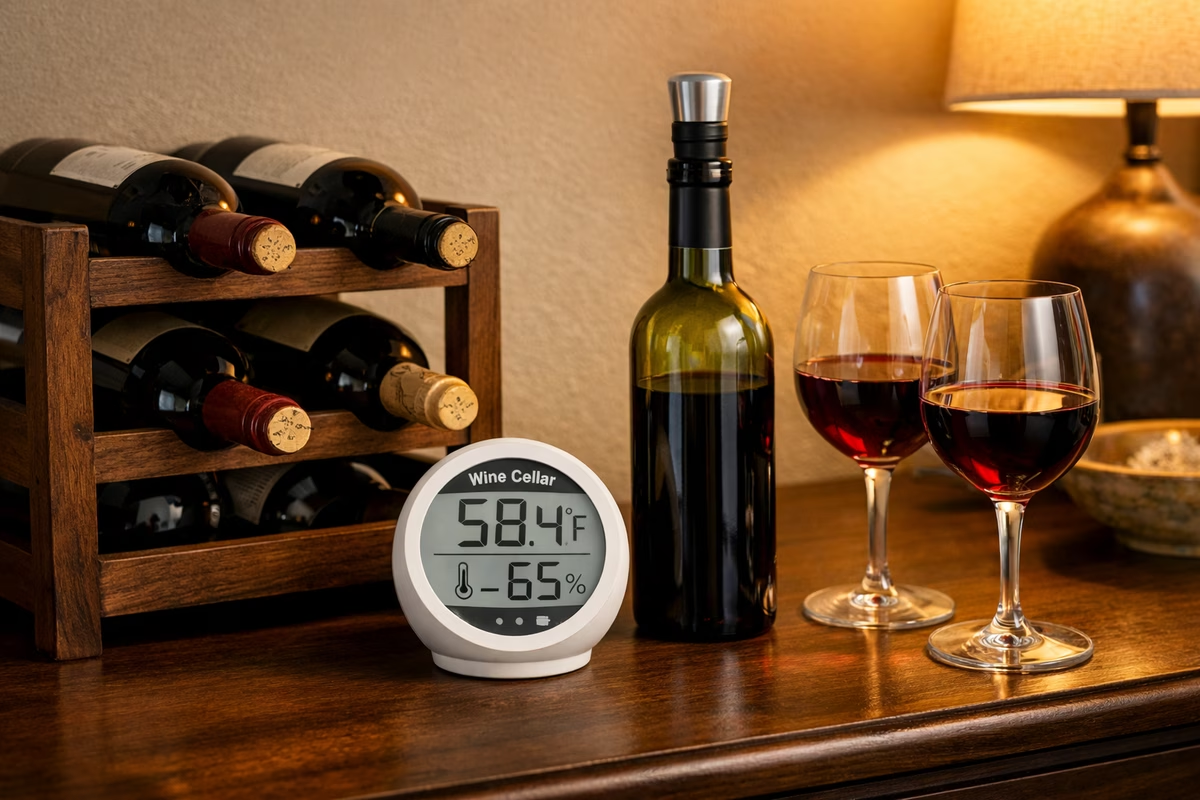
Wine Storage and Serving: Keep Bottles Fresh (and Make Them Taste Better)
Here’s the thing about ruining wine: almost nobody does it in one spectacular, dramatic moment. There’s no thunderclap, no shattering of glass, no moment where you think, “Well, I’ve really done it now.” Instead, wine dies a slow, quiet death from a thousand tiny insults. That bottle sitting on your kitchen counter, basking in afternoon sunlight like a cat? It’s losing a little character every day. The half-finished Pinot Noir you left uncorked on the dining table overnight? It woke up a little sadder than when you left it. The reds you’ve been serving straight from a toasty living room shelf? They’ve been tasting warmer and flatter than they should.
The beautiful thing is, wine is actually tougher than most people give it credit for. It doesn’t need a climate-controlled vault carved into a mountainside. It doesn’t need white-glove treatment or a sommelier standing guard. What it needs—and this is almost disappointingly simple—is a stable environment. Give your wine a few basic courtesies, and it will reward you handsomely.
This guide is written for real homes with real kitchens, real closets, and real budgets. By the time you’re done reading, you’ll know the handful of storage principles that genuinely matter, the best spots to stash bottles when you don’t have a cellar, how to keep an open bottle tasting great for days instead of hours, and the serving temperature tricks that can make even a Tuesday-night wine taste like something special. Oh, and you’ll also learn which so-called “wine rules” are actually worth following—and which ones you can cheerfully ignore.
The 60-second rule: what wine needs
If you only have sixty seconds to learn about wine storage, here’s your crash course. Wine has four enemies, and they’re listed here in order of how much damage they do. First and foremost is heat—it’s the big one, the villain of this story, the thing that will age your wine faster than anything else. Next comes light, especially direct sunlight, which can trigger chemical reactions that leave your wine tasting stale and off. Third is oxygen, which is mostly a concern once you’ve popped the cork, but it’s a real one. And finally, temperature swings—those dramatic ups and downs that stress the cork and speed up all the bad reactions you’re trying to avoid.
So what does wine actually want? Honestly, it wants to be bored. Cool, dark, and stable. That’s it. That’s the whole secret. You don’t need to chase some magical perfect number on a thermometer. You just need consistency. A spot that’s reliably cool and doesn’t swing wildly between hot and cold will treat your wine far better than some “ideal” temperature environment that fluctuates like a roller coaster.
A “good enough” target (for most homes)
If you like concrete numbers—and who doesn’t—aim for a storage spot that sits roughly between 50–65°F (10–18°C). That range is perfectly fine for short-to-medium-term storage, which covers the vast majority of wine that people actually buy and drink. Small temperature variations throughout the day are totally normal and nothing to stress about; it’s the big daily swings that are the real troublemakers.
You’ll also want to keep things dark. No direct sunlight, and ideally minimal bright artificial light, too. Think “cozy closet” rather than “sun-drenched windowsill.”
Now, if you’re getting serious about aging wine for multiple years, people typically aim for something closer to ~55°F (13°C) with rock-solid stability. That’s the sweet spot where a dedicated wine fridge or a genuinely cellar-like space starts to make a lot of sense. But for most of us drinking most of our wine within a few months? Cool, dark, and stable will get you there.
How long are you storing it?
This is the question that should drive every storage decision you make. The right setup for a bottle you’re opening this Friday is wildly different from the right setup for a bottle you’re saving for your anniversary three years from now.
If you’ll drink it within 1–8 weeks
Relax. You genuinely don’t need any special equipment for this timeframe. Just tuck your bottles into a cool, dark closet—a hallway closet, a bedroom closet, even under the stairs if that’s what you’ve got. The main thing is to keep them away from the kitchen heat zone. Kitchens are where ovens blast, stovetops radiate, and dishwashers pump out steam. It’s basically a sauna for your wine, and not in a good way. If you prefer your whites and sparkling wines cold and ready to pour, go ahead and pop them in the regular fridge. They’ll be perfectly happy there for a few weeks.
If you’ll store for 2–12 months
At this point, you still might not need a wine fridge, but you do need to be a little more intentional about where you’re putting things. Scout your home for the most temperature-stable cool space you can find. Pay attention to seasonal patterns—that hallway closet that’s beautifully cool in winter might turn into an oven in July if it shares a wall with the attic or sits near a heating vent. Avoid spots near heaters, radiators, and exterior walls that catch a lot of sun.
If you want multi-year aging
Now we’re in the territory where stability becomes truly critical. A dedicated wine fridge or a cellar-like area (a cool basement corner, for instance) is the most reliable path forward. Without consistent, cool temperatures, you’re essentially gambling with every bottle you’re trying to age.
What “multi-year aging” actually means
Before you start buying wines to lay down for a decade, here’s a reality check that might save you some money: most everyday wines are made to taste great now. The winemakers designed them to be delicious within months of release, not years. They’re not going to magically improve sitting in your closet for five years—if anything, they’ll start to fade.
If you are buying with aging in mind, look for wines with structure. That means higher acidity, higher tannin (especially for reds), and well-balanced alcohol. These are the building blocks that let a wine evolve and develop complexity over time rather than just falling apart.
Temperature: the most important variable
Let’s talk about heat for a moment, because it really is the number-one factor in wine storage. Heat accelerates chemical reactions inside the bottle. And while some of those reactions are the ones that help wine age gracefully, too much heat speeds everything up past the point of no return. In practical terms, warm storage makes wine taste tired, flat, and—here’s the classic tasting note—“cooked.” It’s not subtle. A wine that’s been heat-damaged tastes like it’s given up on life.
Rapid temperature swings add insult to injury. When the liquid inside the bottle expands and contracts with temperature changes, it can stress the cork, creating tiny pathways for oxygen to sneak in. And once oxygen gets a foothold, oxidation isn’t far behind.
What temperatures are “good enough”?
Here’s something that might surprise you: a cool, stable environment is generally better than an “ideal” temperature that swings around a lot. So if your options are a closet that stays at a steady 68°F versus a garage that bounces between 50°F and 85°F depending on the season, choose the closet every single time. Stability trumps perfection. Remember that, and you’ll be ahead of most people.
Light: why sunlight matters
Sunlight is a sneaky one. It won’t destroy your wine overnight the way extreme heat can, but give it enough time and it will absolutely do damage. UV rays trigger chemical reactions in wine—particularly in lighter-colored wines—that can produce off-flavors and aromas. It’s actually one of the reasons wine bottles are traditionally made from dark green or brown glass: it’s built-in UV protection.
The fix is blissfully simple: keep your wine away from window sills, glass cabinets that catch direct sun, and definitely don’t store bottles on an outdoor patio (yes, some people do this). If you store wine in a room that gets natural light, just tuck the bottles inside their original boxes, a closed cabinet, or a closet. Problem solved.
Humidity: important, but not your first problem
You’ll see a lot of wine storage guides obsessing over humidity levels, and there is a kernel of truth to the concern. In very dry conditions, over long periods, natural corks can dry out, shrink, and let air seep into the bottle. That’s bad.
But here’s the thing: in most normal homes, if you’re storing wine for weeks or even months, humidity is not your main risk. Your kitchen isn’t the Sahara. The air in your closet has enough moisture to keep a cork happy for a reasonable amount of time.
Humidity really only becomes a serious factor when you’re aging wine for years. At that point, if you’re in a very dry climate, it’s worth thinking about. But for most people reading this guide, temperature and stability matter far more than chasing perfect humidity numbers. Focus on those first, and you’ll be in great shape.
Bottle position: should you store wine on its side?
Ah, the classic debate. You’ve probably heard the traditional wisdom: store cork-closed bottles on their side so the wine keeps the cork moist and prevents it from drying out. And that advice isn’t wrong, exactly—it’s just more nuanced than people make it sound.
For short-term storage (a few weeks to a couple of months), storing bottles upright is usually just fine. The cork isn’t going to turn into a dried-out sponge in that timeframe. For longer storage, laying bottles on their side is a solid habit to build—it’s one of those “costs nothing, might help” situations. And for bottles with screwcaps? Store them however you want. Upright is perfectly fine, since there’s no cork to worry about.
Where to store wine in a normal home
Alright, let’s get practical. You don’t have a limestone cave beneath your house (probably). You need real solutions for a real home. Here are the best spots, ranked by how reliably they work for most people.
1) Interior closet
This is the unsung hero of home wine storage. An interior closet—meaning one that doesn’t share walls with the outside of your house—tends to be naturally dark and more temperature-stable than rooms with exterior walls or lots of windows. It’s already doing half the work for you. Just clear a shelf, slide in some bottles, and you’ve got yourself a perfectly decent wine storage spot.
2) Under-bed storage
This one surprises people, but think about it: the space under your bed is dark, relatively stable in temperature, and you’re not using it for anything important anyway (dust bunnies don’t count). It can be a genuinely great spot for wine. The only thing to watch out for is heating vents—if your bedroom has a floor vent near the bed, scoot the bottles away from it.
3) Basement (if you have one)
Basements can be fantastic for wine because they’re naturally cooler and more temperature-stable than the rest of your house. All that earth insulation works in your favor. The caveat? Make sure you’re not storing wine right next to the furnace or hot water heater. That warm corner of the basement is basically a sauna, and your wine wants no part of it.
4) Wine fridge (best for consistency)
If you drink enough wine to justify the investment, a wine fridge is the simplest “set it and forget it” solution out there. You pick a temperature, plug it in, and stop thinking about it. It’s especially great if you live somewhere warm or if your home runs toasty year-round thanks to generous heating.
Avoid
There are a few spots you should steer clear of. The kitchen is the worst offender—it’s warm, it vibrates (thanks, fridge and dishwasher), and it probably gets more temperature swings than any other room in your house. The garage is another trap, since it tends to swing wildly with the seasons. The attic? Way too hot in summer. And anywhere with direct sunlight is a no-go for reasons we’ve already covered.
Wine fridge basics (when it’s worth it)
If your home runs warm, or you want to keep a rotating selection of wines at ready-to-drink temperatures, a wine fridge is the easiest path to reliable stability. But before you get dazzled by marketing specs and stainless steel finishes, here’s what actually matters.
Compressor vs. thermoelectric is the first big decision. Compressor models are generally better at handling warmer ambient rooms—they’ve got more cooling muscle. Thermoelectric units are quieter and vibration-free, which sounds lovely, but they can struggle to maintain their target temperature if the room they’re in gets above 75°F or so. If your house runs warm, go compressor.
Single zone vs. dual zone is the next question people agonize over. A dual-zone fridge lets you keep whites at one temperature and reds at another, which is genuinely convenient. But honestly? Many people do just fine with a single stable zone, and they simply pull bottles out a bit early or pop them in the regular fridge for a quick chill before serving. Don’t let the dual-zone marketing make you feel like single-zone is somehow inadequate.
And finally, real capacity. Wine fridge manufacturers love to slap big numbers on the box—“Holds 28 bottles!"—but once you factor in shelf configuration, bottle shapes (Burgundy bottles are wider than Bordeaux bottles), and the general awkwardness of fitting real bottles onto real shelves, you’ll typically fit fewer bottles than advertised. Buy a size up from what you think you need, and you’ll thank yourself later.
Open bottles: how to keep wine good after opening
So you’ve opened a bottle, enjoyed a couple of glasses, and now you’re staring at the remaining wine wondering how long you’ve got before it turns. Once that cork comes out, oxygen becomes the main character in this story, and not in a good way. Oxygen is what makes wine evolve in the glass—those first few minutes of “opening up” can be magical—but give it too much time, and evolution turns into deterioration.
The simplest open-bottle plan
Ready for the most anticlimactic wine advice you’ll ever hear? Here it is: put the cork back in and stick the bottle in the fridge. That’s it. That’s the plan.
And yes, this applies to red wine too. I know, I know—“But you’re not supposed to refrigerate red wine!” Actually, you absolutely should refrigerate open red wine. Cold temperatures slow down oxidation dramatically. When you want to drink it again, just pull it out of the fridge and let it warm up for fifteen or twenty minutes. It’ll be fine. Better than fine, actually—it’ll be noticeably fresher than if you’d left it on the counter.
How long does an open bottle last?
This varies quite a bit depending on the style of wine, but here are some general expectations. Sparkling wine is the most time-sensitive—it really tastes best the same day you open it, though a proper sparkling stopper (more on that in a moment) can buy you an extra day or two. White wines typically hold up well for two to four days in the fridge. Red wines are similar, usually staying enjoyable for two to four days once corked and refrigerated. Sweet wines are the marathon runners of the group—their higher sugar content acts as a natural preservative, and they can often last a week or more.
The best signal, though, is always your own palate. If it smells flat, vinegar-ish, or cardboardy, it’s past its best. Trust your nose—it’s smarter than any rule of thumb.
Make open bottles last longer (simple upgrades)
If you want to squeeze a little more life out of your open bottles, a few simple tools can help. For sparkling wine, invest in a proper sparkling stopper—those hinged metal clamps that lock onto the bottle lip. Regular corks and generic stoppers simply can’t hold the pressure, and your bubbles will vanish overnight. For still wines, one of the most effective tricks is surprisingly low-tech: pour your leftovers into a smaller container. A half-empty bottle has a lot of air sitting on top of the wine; transfer it to a half-bottle or even a mason jar, and you’ve dramatically reduced the oxygen exposure. And if you drink wine regularly and want to geek out a little, inert gas sprays (like argon-based products) can blanket the wine’s surface and slow oxidation. They work well, but they’re a “nice to have,” not a necessity.
Decanting doesn’t preserve wine
This is worth calling out because people sometimes conflate decanting with preservation, and they’re actually opposites. Decanting is fantastic for helping certain wines taste better right now—it opens up tight aromas and softens aggressive tannins. But it also maximizes oxygen exposure, which is the exact opposite of preservation.
If you want to preserve leftover wine, reach for a smaller container (less airspace means less oxidation), a vacuum pump (these aren’t magic, but they do help extend the wine’s life by a day or so), or an inert gas spray if you’re into gadgets. Save the decanter for wines you plan to finish in one sitting.
Serving temperature: the fast way to make wine taste better
Here’s a secret that will instantly improve almost every glass of wine you pour: get the temperature right. It’s the single easiest, most impactful thing you can do, and it requires zero extra spending. Most wine being drunk in homes right now—at this very moment—is being served at a suboptimal temperature. Reds are typically too warm, and whites are typically too cold. Fix that, and you’ll be amazed at the difference.
The underlying principle is beautifully simple. If a wine tastes dull, boozy, and kind of sloppy, it’s probably too warm—the heat is amplifying the alcohol and muting the subtler flavors. If a wine tastes muted, tight, and like it’s hiding from you, it’s probably too cold—the chill is suppressing the aromatics and flavors.
Serving temperature cheat sheet (practical ranges)
These ranges are intentionally flexible, because the “right” temperature is ultimately the one that makes the wine taste best to you. Use this as a starting point, not a commandment.
| Style | Typical sweet spot |
|---|---|
| Sparkling | 40–48°F (4–9°C) |
| Crisp whites (Sauvignon Blanc, Pinot Grigio) | 45–50°F (7–10°C) |
| Fuller whites (Chardonnay, Viognier) | 50–55°F (10–13°C) |
| Rosé | 45–52°F (7–11°C) |
| Light reds (Pinot Noir, Gamay) | 55–60°F (13–16°C) |
| Medium/full reds (Cabernet, Syrah) | 60–65°F (16–18°C) |
| Dessert wines | 45–55°F (7–13°C) |
Whites and rosé
Here’s a common scenario: you pull a bottle of white wine straight from the fridge, pour a glass, take a sip, and think, “This doesn’t taste like much.” That’s because it’s too cold. When wine is ice-cold, the aromatics get locked down and the flavors go into hiding. Let it sit for ten minutes, come back, and take another sip. It’s like the wine woke up from a nap—suddenly there’s fruit, and texture, and personality. Most whites and rosés taste their best a little warmer than straight-out-of-the-fridge temperature.
Reds
On the flip side, red wines in most modern homes are being served too warm. You’ve probably heard the phrase “serve reds at room temperature,” but that advice originated in drafty European estates where “room temperature” was a chilly 60-ish degrees. In a modern home with the thermostat set to 72°F, your red wine is warmer than it should be, and it’s going to taste hot, jammy, and overly alcoholic as a result. If your red tastes like it’s shouting at you, pop it in the fridge for fifteen to twenty minutes. The difference can be startling.
Sparkling
Sparkling wine generally tastes best well-chilled, which helps preserve the mousse (that’s the fancy word for the bubbles) and keeps the acidity feeling bright and refreshing. But don’t go overboard—if your sparkling wine tastes like cold fizzy nothing, it’s too cold. Let it warm just a touch and the flavors will start to bloom.
Quick serving fixes (no special tools)
You don’t need a wine thermometer or any fancy gadgets to get your serving temperature in the right ballpark. Here are some quick, practical fixes you can use tonight.
Quick chill times (good enough estimates)
If you’ve got a room-temperature bottle and you need it cold, the regular fridge will get you there in about 30–60 minutes—enough for a noticeable chill, though not ice-cold. If you’re in more of a hurry, an ice bucket filled with ice and water will do the job in about 15–25 minutes. And here’s the pro tip that makes a real difference: the water matters. An ice bucket with water chills dramatically more efficiently than ice alone, because the water makes full contact with the bottle surface instead of just touching it at a few points. It’s basic physics, and it works like a charm.
Fix: white wine too cold
If your white wine is tasting muted and closed-off, just pour a small amount into your glass and let it sit for about ten minutes. The wine will warm up quickly in the glass, and you’ll be surprised how much flavor emerges. You can also cup the bowl of the glass in your hands—your body heat will warm the wine gently and give you something to do while you wait.
Fix: red wine too warm
If your red is tasting hot and boozy, give it a fifteen-to-twenty-five-minute stint in the fridge. You can also use an ice bucket with a little water for a faster cool-down. Don’t worry about the “you should never chill red wine” crowd—they’re wrong, and your taste buds will confirm it.
Fix: wine tastes flat
When a wine just isn’t showing you much, it could be a temperature issue or it might just need some air. Give it a good swirl in the glass and wait ten minutes. If it perks up, it just needed a little time to open. If it still tastes flat and lifeless after swirling and sitting, you might simply have a tired bottle—not every wine is a winner, and that’s okay.
Should you decant?
Decanting is one of those wine rituals that can feel either intimidating or pretentious depending on your vantage point. But strip away the ceremony, and decanting serves exactly two practical purposes: separating sediment from older wines (nobody wants gritty bits in their glass) and giving air to young, tight reds that haven’t had a chance to open up yet.
That said, you definitely don’t need to decant everything. Most everyday wines are perfectly happy being poured straight from the bottle. A practical approach is to decant big, bold reds if they smell closed or muted when you first open them—think young Cabernet Sauvignon, Barolo, or Northern Rhône Syrah. On the other hand, don’t decant delicate wines for hours on end, because too much air exposure can strip away the very subtlety you’re trying to enjoy.
If you’re unsure whether a wine needs decanting, here’s the easiest test in the world: pour a small glass, take a sip, and then wait ten minutes. Take another sip. If it tastes noticeably better, air is helping, and decanting the rest of the bottle is probably a good call. If it tastes the same or worse, skip the decanter and just enjoy it straight from the bottle.
Common storage mistakes (and what to do instead)
Mistake: storing bottles on top of the fridge
This is one of the most common wine storage spots in the world, and it’s one of the worst. The top of your fridge is warm (heat rises from the compressor) and it vibrates constantly. Your wine is basically sitting on a warm, buzzy shelf. Move those bottles to a closet or a lower shelf somewhere cool and dark.
Mistake: storing in the kitchen near the oven
The kitchen is the heart of the home, and unfortunately, it’s also the worst room in the house for wine storage. Between the oven, the stovetop, the dishwasher, and general cooking heat, temperature swings in the kitchen are brutal. Find an interior closet instead—even if it means walking an extra ten seconds to grab a bottle.
Mistake: leaving open bottles on the counter
It’s so easy to do. You pour the last glass of the evening, set the bottle down, and forget about it. But every minute that open bottle sits on the counter at room temperature, oxidation is doing its thing. Get in the habit of recapping and refrigerating as soon as you’ve poured your last glass. Future-you will appreciate the fresher wine.
Mistake: treating wine like it’s fragile glass art
Look, wine is a living, breathing thing, and it deserves a little respect. But it’s also a drink that’s been surviving ocean voyages, bumpy cart rides, and questionable storage conditions for literally thousands of years. Learn the few rules that matter, follow them with reasonable diligence, and then relax. Wine is meant to be enjoyed, not stressed over.
A simple “ready to drink” home setup
Want your wine life to be effortless? Here’s a setup that takes five minutes to arrange and covers the vast majority of wine-drinking situations. Store your bottles in an interior closet or a wine fridge if you have one. Keep a champagne stopper handy if you ever drink sparkling wine—they cost a few dollars and they’re worth their weight in gold for preserving bubbles. Make sure you’ve got one shelf in the fridge free so you can always toss a bottle in for a quick chill when the mood strikes. And build the simple habit of always recapping and refrigerating any open bottle as soon as you’re done pouring. That’s it. That’s the whole system.
A simple “wine storage kit” for regular drinkers
If you drink wine regularly, you really don’t need much to treat your bottles well. Start with a few bottles of your favorites—whatever makes you happy. Find a cool, dark storage spot in your home (closet, under-bed, basement corner). Pick up a champagne stopper if sparkling wine is part of your rotation. And commit to the golden habit of refrigerating every open bottle, red or white, every single time.
If you want to level up from there, a small wine fridge is the single best upgrade you can make—it takes all the guesswork out of temperature and stability. A vacuum pump or inert gas spray is a nice secondary upgrade for extending the life of open bottles, but it’s firmly in the “optional” category.
The takeaway
You don’t need a cellar. You don’t need a degree in enology. You don’t need to spend hundreds of dollars on equipment. You just need four simple habits.
First, keep your wine cool and stable—find a spot that doesn’t get hot or swing wildly, and you’re already ahead of the game. Second, keep it dark—sunlight is a slow but real enemy. Third, refrigerate open bottles, even reds—cold slows oxidation, and that means fresher wine tomorrow. And fourth, pay attention to serving temperature—a quick chill or a few minutes of warming can transform an ordinary glass into something genuinely delicious.
Do those four things, and your wine will stay fresher, taste better, and waste less. No cave required. No sommelier on retainer. Just a little knowledge, a cool closet, and a willingness to enjoy what’s in your glass. Cheers to that.