Introduction
Wine tasting is both an art and a skill, and it’s far more learnable than most people expect.
The goal is not to “guess the grape” or impress someone with obscure descriptors. The goal is to build a reliable connection between what you sense and what it means: Why does this wine feel refreshing? Why does that red feel drying? Why does this one taste better with food?
This guide walks you through the classic five S’s of wine tasting—See, Swirl, Sniff, Sip, and Savor—but with a modern twist: you’ll also learn how to avoid the most common beginner mistakes and how to practice in a way that makes your palate improve fast.
Set up a simple tasting (so you’re tasting the wine, not the room)
Wine is sensitive to context. Strong smells, the wrong glass, and even pouring too much can blur what you’re trying to learn.
Here’s a setup that works at home:
- Use a neutral glass (a basic white-wine glass works fine). A stem helps because warm hands can change temperature.
- Use a white background (paper towel/napkin) for the “See” step.
- Keep water nearby and a small neutral snack (bread/crackers) so you can reset.
- Pour small: 2–3 oz / 60–90 ml is enough. Small pours keep the wine fresh and keep your attention sharp.
If you’re tasting multiple wines, taste the lightest first (typically sparkling and whites before reds). It’s not a strict rule, but it helps your palate stay sensitive.
The five S’s (and what you’re actually trying to learn)
The five S’s are not a ceremony. They’re a way to make your attention consistent so you don’t miss the important signals.
1) See: visual examination
Before you smell or sip, take ten seconds to look.
You’re not trying to “judge quality” from color. You’re collecting clues.
Pay attention to:
- Color intensity: pale to deep.
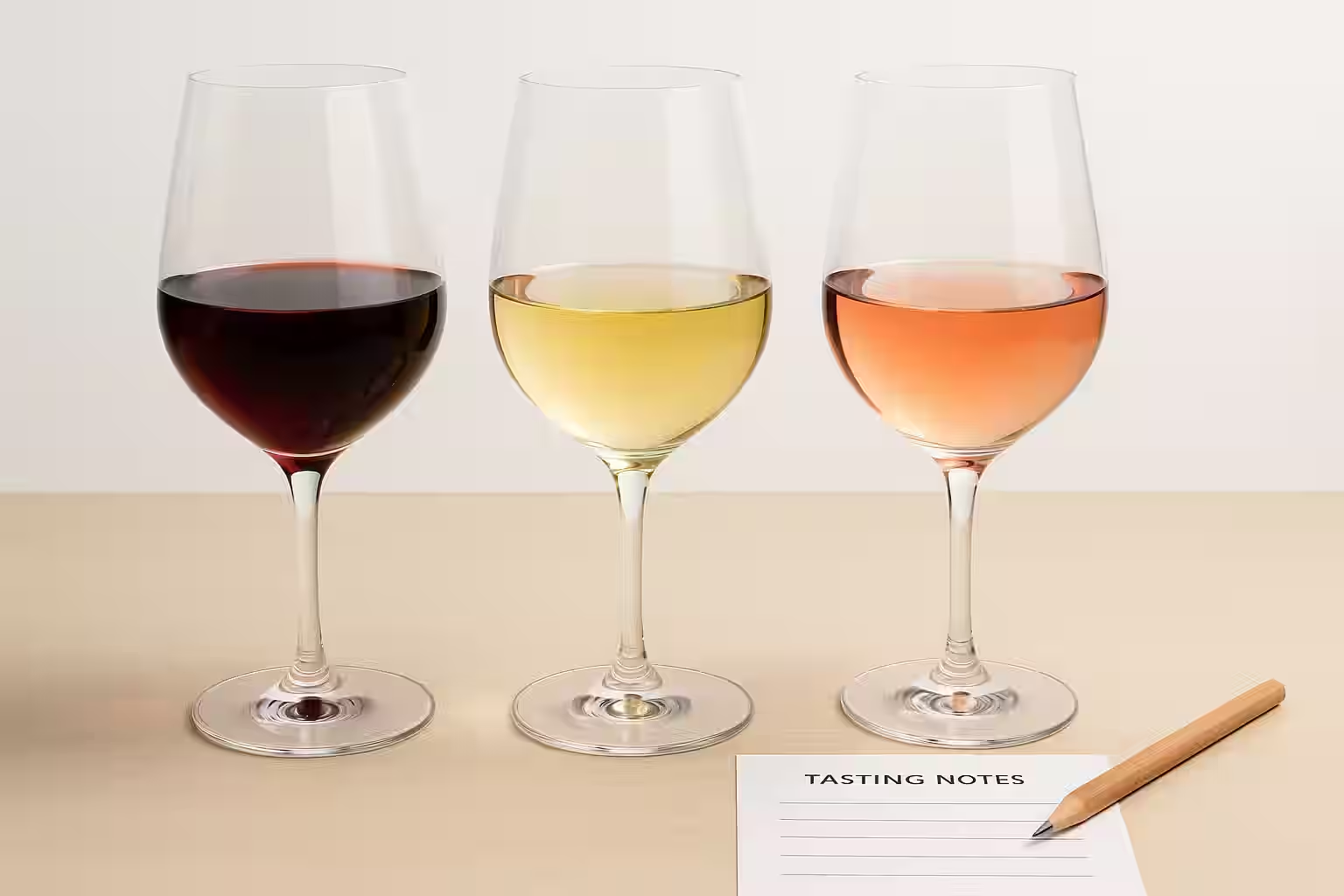
- Hue: purple → ruby → brick (reds), or green-gold → straw → amber (whites).
- Clarity: clear vs cloudy.
Clarity is usually clear for most filtered wines, but a bit of haze can appear in some minimally processed styles. The point is to notice, not to panic.
What the “See” step really teaches you is calm attention. The more consistent your process, the more you’ll trust what you taste.
2) Swirl: aerate the wine (and wake up aroma)
Swirling increases the wine’s surface area and helps aromatic compounds escape. In plain terms: it makes the wine smell more like itself.
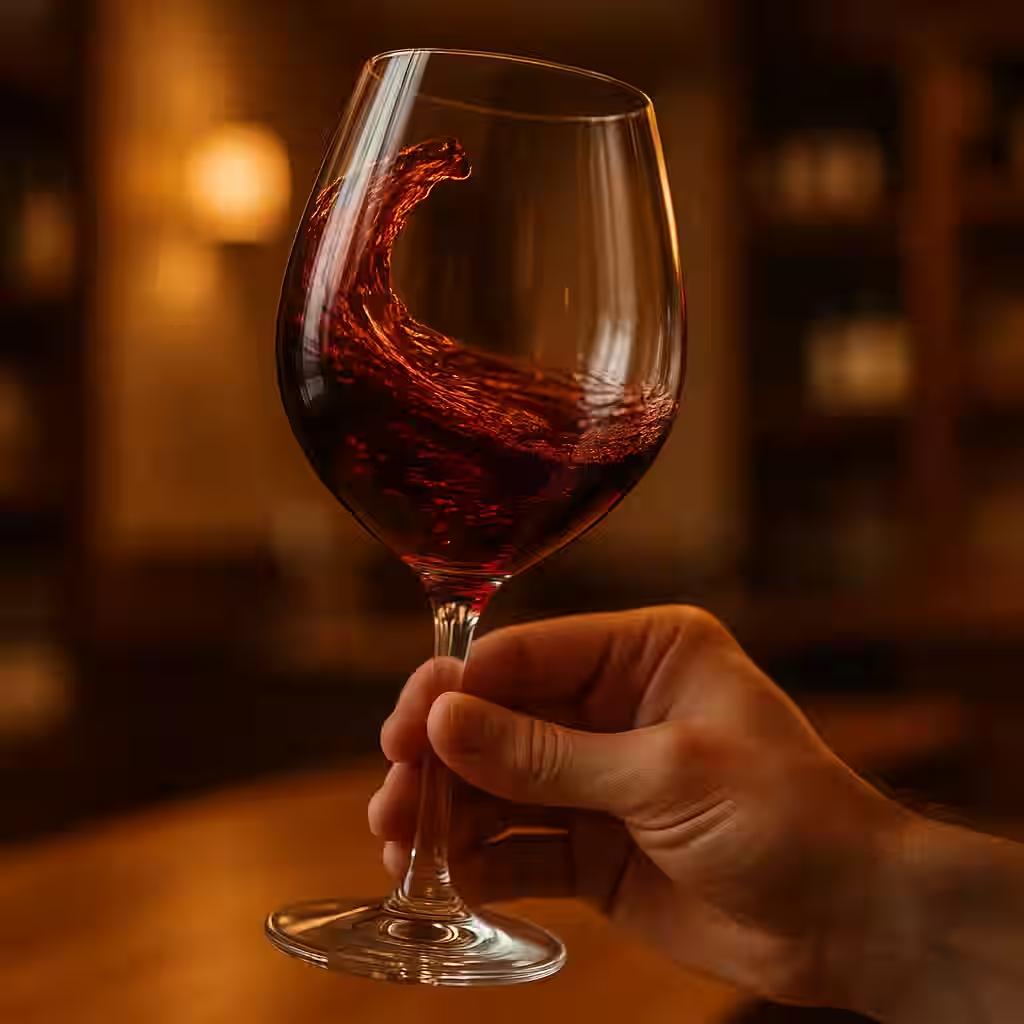
Keep it simple:
- Hold the glass by the stem.
- Swirl in small circles (on a table is easiest).
- Notice the “legs” or “tears” if you want, but don’t overinterpret them.
Legs can correlate with alcohol or sweetness, but they’re not a quality score. Beginners often get distracted here. Swirl to smell, not to judge.
3) Sniff: identify aromas (without getting lost)
Smell is where wine becomes three-dimensional.
Most people struggle here because they think they’re supposed to name exact fruits or flowers. You’re not. Start broader.
Try this three-layer approach:
Primary aromas (from the grape and freshness): fruit, flowers, herbs.
Secondary aromas (from fermentation and winemaking): yeast, bread, butter, yogurt-like tang.
Tertiary aromas (from aging): vanilla, spice, leather, tobacco, nuts, dried fruit.
If you can’t name anything specific, choose a direction:
- Fruit: fresh vs dried
- Tone: bright vs deep
- Feel: floral vs savory
That’s real progress. Specificity comes later.
4) Sip: taste and analyze (structure is the shortcut)
Take a small sip and let it coat your entire mouth.
Your palate doesn’t need a hundred descriptors. It needs structure words that are consistent.
Use this structure table to guide your attention:
| Component | What to Notice |
|---|---|
| Sweetness | Dry to sweet |
| Acidity | Low to high (mouth-watering quality) |
| Tannins | Soft to grippy (in reds) |
| Body | Light to full |
| Alcohol | Warmth in finish |
Here’s what those components feel like in practice:
Sweetness is straightforward, but many dry wines can taste sweet if they are ripe and fruity. Try to separate “sugar” from “fruitiness.”
Acidity is the mouth-watering sensation that makes you want another sip. High acidity feels refreshing and often pairs well with food.
Tannin is the drying, grippy sensation in many reds (like strong tea). Tannin can feel silky or aggressive.
Body is the wine’s weight: light like water, full like cream.
Alcohol is warmth, often in the finish. Too warm in serving temperature can make alcohol feel louder than it should.
5) Savor: evaluate the finish (and the coherence)
The finish is what lingers after you swallow.
- Short: a few seconds
- Medium: 10–20 seconds
- Long: 30+ seconds
But beyond length, ask a better question: does the wine feel coherent?
Coherence means the components work together: acidity supports fruit, tannin feels integrated, alcohol doesn’t dominate. A coherent wine often tastes “finished,” even if it’s simple.
A beginner’s aroma vocabulary that actually helps
Descriptors are useful when they help you remember patterns.
Instead of trying to be poetic, choose one word from each bucket:
Fruit family: red fruit / black fruit / citrus / stone fruit / tropical
Non-fruit: floral / herbal / spicy / earthy / smoky / nutty
Structure: crisp / round / silky / grippy / light / full
That’s enough to build taste memory.
If you want examples, here are common descriptor families:
For red wines
Fruit: cherry, plum, blackberry, raspberry
Spice: pepper, clove, cinnamon
Other: leather, tobacco, earth, cocoa
For white wines
Fruit: apple, pear, citrus, tropical
Flowers: jasmine, honeysuckle
Other: butter, honey, mineral, toast
Common beginner mistakes (and how to correct them)
Mistake: tasting wine too cold or too warm
Temperature changes aroma and balance dramatically.
If a white tastes bland and sharp, it may be too cold. If a red tastes boozy and harsh, it may be too warm.
Small temperature adjustments can make an ordinary bottle taste surprisingly good. For practical ranges, see Serving Temperature and Decanting.
Mistake: searching for one “correct” answer
Wine tasting is not a test. Your job is to describe what you perceive consistently.
If you and a friend smell different fruits, that doesn’t mean one of you is wrong. You might be noticing different parts of the aroma spectrum.
Mistake: overvaluing legs, color, or one dramatic note
Wine is a system. One cue doesn’t define it.
Focus on structure first. Structure is what determines pairing and preference.
Practice that makes you better (fast)
Palate improvement comes from comparison.
If you want a simple practice plan, do this once a week for a month:
The two-wine contrast
Buy two wines that are similar in price but different in structure.
Examples:
- A crisp white vs a fuller white
- A light red vs a structured red
- A dry wine vs an off-dry wine
Taste them side-by-side and answer only three questions:
Which is higher acid?
Which is heavier-bodied?
Which would you rather drink with food?
That is enough to calibrate your palate.
Notes that don’t become homework
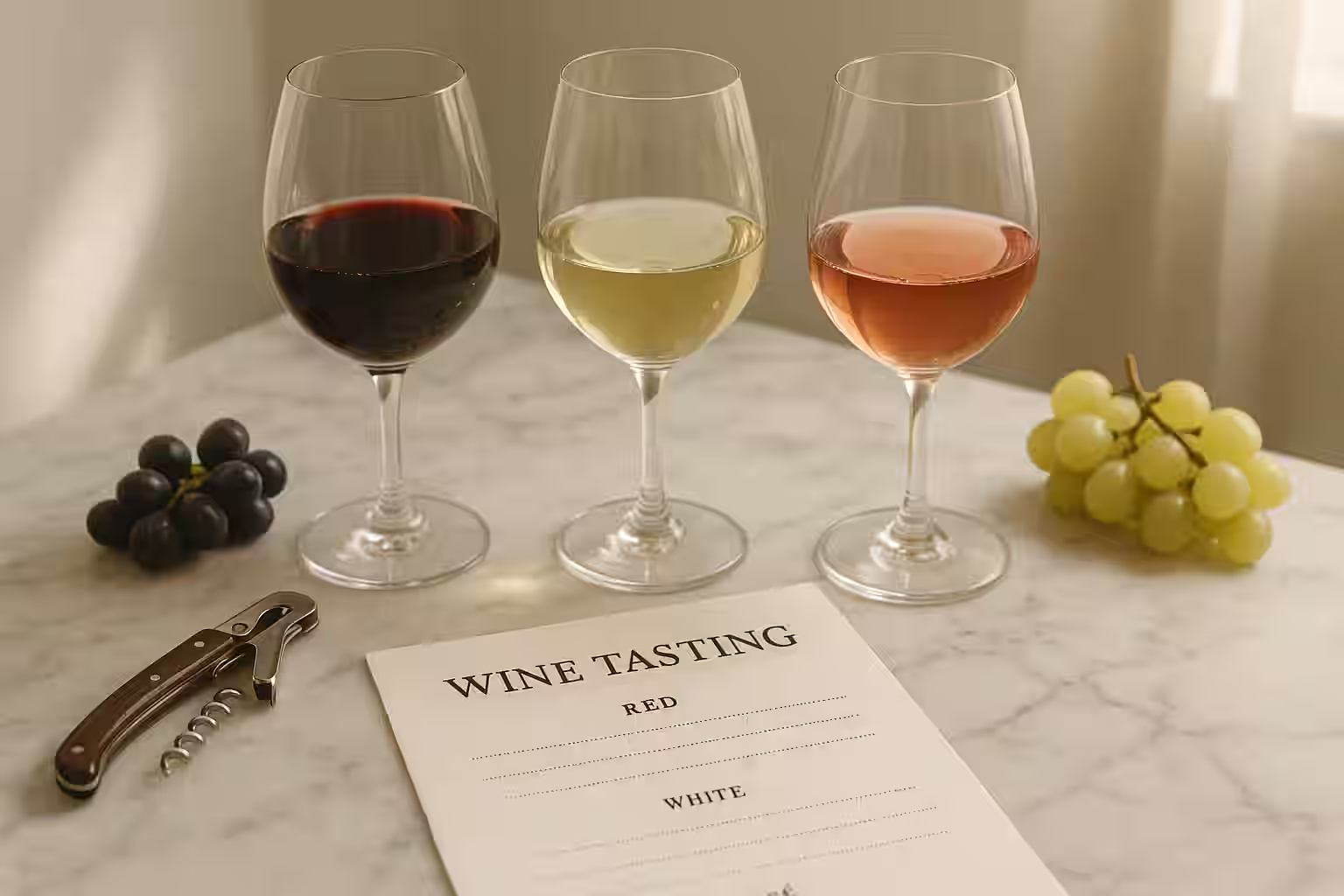
Use a tiny template and keep it honest:
- Wine: (grape/region/producer if known)
- Nose: (3 words)
- Palate: (sweetness, acidity, tannin, body)
- Finish: (short/medium/long + 1 descriptor)
- Would you buy again? (yes/no, why)
The one skill that separates “I can taste” from “I can learn”
If you want your palate to improve quickly, focus on a single meta-skill: comparison with a purpose.
The fastest progress rarely comes from tasting twenty random wines. It comes from tasting two wines and asking one clear question.
Here are three comparison drills that work for beginners:
1) The acid check
Taste two wines and decide which makes your mouth water more. That’s acidity. You’re training your palate to notice freshness and pairing potential.
2) The tannin check (reds)
Taste two reds and decide which leaves your gums drier. That’s tannin. You’re training your palate to predict what will pair well with protein and what might fight spicy food.
3) The body check
Take a sip of each and ask which feels heavier. That’s body. You’re training your palate to match weight with food.
Each drill is simple, but repeated a few times it builds a mental map faster than any vocabulary list.
Tasting with food (the secret third classroom)
Many wines make more sense with food than they do on their own.
If you want to understand why acidity and tannin matter, do a tiny pairing test at home:
Taste the wine alone.
Take a bite of something salty or fatty (cheese, olive oil on bread, roasted chicken).
Taste the wine again.
You’ll often notice that:
- acidity feels even more refreshing,
- tannin can feel smoother with protein,
- fruit can feel clearer after salt.
This is one reason “restaurant wine” often tastes better: you’re rarely drinking it in isolation.
A quick sanity check for common faults (so you don’t blame your palate)
Most bottles you open will be fine. But occasionally you’ll encounter a flaw that makes a wine smell or taste wrong in a way that has nothing to do with your skill.
Here are a few common signals worth knowing:
Cork taint (often described as musty)
This can smell like damp cardboard, wet basement, or muted fruit that feels strangely absent. It’s not subtle when it’s strong, and it doesn’t “blow off” with air.
Oxidation (stale, bruised, tired)
Oxidized wines can smell like bruised apple, flat nutty sweetness, or “wine that’s been open too long.” Some styles intentionally lean oxidative, but if a fresh white tastes like yesterday, oxidation may be the reason.
Volatile acidity (vinegar/nail-polish edge)
In tiny amounts, some sharpness can be part of a style. But if the wine smells like vinegar or nail-polish remover, something is off.
If you suspect a fault, the simplest test is comparison: pour a second glass or ask someone else to smell. If both of you independently reach for the same “wrong” descriptor, trust that signal.
Next steps
- Explore our Wine Database to discover new wines
- Read about Food and Wine Pairings
- Learn about Wine Regions to understand terroir